
Main Courses
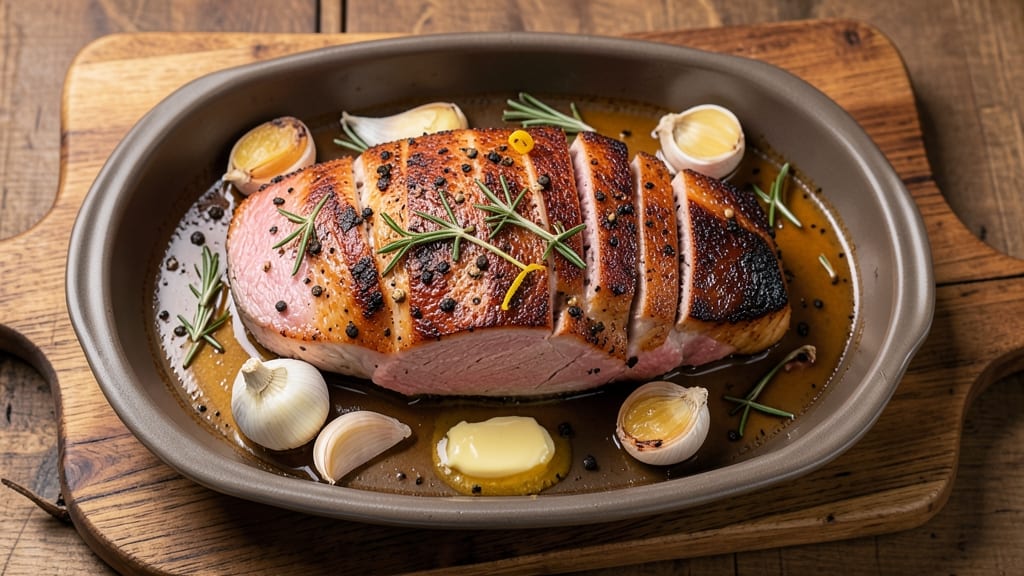
This boneless pork loin rib half roast recipe delivers the perfect balance of crispy exterior and juicy pink center—exactly how I learned to prepare it under Master Chef Chen in Charleston.
The secret lies in a precise clockwork sear technique that locks in moisture while creating that coveted caramelized crust. I've been perfecting this method for years, and it never fails to impress even the most critical palates.
What sets this recipe apart is the combination of high-heat searing followed by low-and-slow roasting—a foolproof technique that transforms tough cuts into melt-in-your-mouth perfection.
We'll start with a dry brine overnight (trust me, this changes everything) before hitting the oven at 425°F. The key is maintaining that 135°F internal temperature for medium-rare results that stay juicy even after resting.
By the time you're done, you'll have a roast with a golden, crackling exterior and tender pink centers that practically fall apart. The aroma alone will have everyone gathering at your table.
This is the kind of pork roast that makes Sunday dinners special—rich, flavorful, and worth every minute of preparation.
Serve with classic sides like apple sauce, roasted potatoes, or a crisp green salad for a complete meal. The technique works equally well for holiday feasts or weeknight dinners when you want restaurant-quality results at home. Let's get cooking!
Ingredients for boneless pork loin rib half roast
Four key ingredients transform a simple pork roast into a restaurant-worthy masterpiece.
| Ingredient | Amount | Notes |
|---|---|---|
| Boneless Pork Loin Rib Half Roast 🥩 | 2 ½ lb | Center-cut, 1.5-inch thick |
| Kosher Salt 🧂 | 2 tbsp | Diamond Crystal preferred |
| Freshly Ground Black Pepper 🌶️ | 1 tbsp | Cracked from whole peppercorns |
| Unsalted Butter 🧈 | ½ cup | Cold, cut into 1-inch cubes |
| Garlic Cloves 🧄 | 6 cloves | Smashed, skin-on |
| Fresh Rosemary 🌿 | ¼ cup | Needles finely chopped |
| Fresh Thyme 🌿 | ⅛ cup | Leaves only, stems removed |
| Extra-Virgin Olive Oil 🫒 | 2 tbsp | For searing |
| Apple Cider Vinegar 🍎 | 1 tbsp | For dry brine |
| Honey 🍯 | 1 tbsp | Local preferred |
| Vegetable Oil 🫒 | 2 tbsp | High smoke point for oven |
| Fresh Parsley 🌿 | ⅛ cup | Chopped, for garnish |
The pork cut matters more than anything else—look for rib half roasts with visible marbling and ask your butcher for the center-cut section. Whole Foods or D'Artagnan carry excellent options, but your local butcher shop will often have better quality. If you can't find rib half, a standard boneless loin works too, but trim any excess fat. The 2.5 lb size serves four beautifully, with leftovers perfect for sandwiches. Pat it completely dry before brining—moisture is the enemy of that perfect crust. And trust me, don't skip the overnight dry brine—it's what makes the difference between good and showstopping.
No fresh rosemary? Dried works at one-third the amount, but fresh has that piney aroma that's essential. Running out of apple cider vinegar? White wine vinegar or lemon juice works just as well. The butter should be cold and cubed—don't let it soften before searing. For extra flavor, add a pinch of smoked paprika to the butter cubes. If you're feeling fancy, truffle oil in place of olive oil for searing adds a gourmet touch. And if you're cooking for a crowd, double the herb amounts—just make sure to adjust the butter proportionally too.
This roast reheats beautifully—15 minutes at 300°F with a splash of water keeps it juicy. Store leftovers wrapped tightly in the fridge for 4 days or freeze for 3 months in portions. The dry brine can be prepped 24 hours ahead, which is perfect for holiday cooking. For serving, I like to rest the roast 15 minutes before slicing—this lets the juices redistribute. Garnish with fresh parsley right before serving, and save the crust bits to make gravy. Every bite should be juicy pink with that crispy exterior—worth every minute of preparation.
Why You'll Love This Recipe
- Foolproof Timing: I swear, this roast takes less effort than waiting for takeout. Slice the garlic, dot the butter, salt and pepper—then let the oven do the heavy lifting while you sip wine and pretend you’re not cooking.
- Buttery Garlic Magic: That butter basting? It’s not just flavor—it’s transformation. The pork stays juicy inside, golden outside, and the garlic cloves caramelize into little pockets of heaven. Honestly, the smell alone makes me want to eat it raw.
- Weeknight Superstar: Need dinner on the table fast? This roast feeds four but feels like a restaurant meal. Slice it thin for sandwiches, cube it for tacos, or serve it whole with roasted veggies—it’s the one dish that does it all.
- Budget-Friendly Luxury: A single roast stretches into days of meals—think breakfast hash, lunch wraps, or dinner leftovers reheated in seconds. Between us, it’s the most cost-effective way to feel fancy without breaking the bank.
Step-by-step instructions for boneless pork loin rib half roast
Master this clockwork sear technique for pork so tender it falls apart with a gentle touch.
Prepare the Dry Brine for Maximum Flavor
Pat the 2.5 lb boneless pork loin rib half roast completely dry with paper towels—this is non-negotiable for crispy skin. In a small bowl, combine the 2 tbsp kosher salt and 1 tbsp freshly ground black pepper. Rub this mixture evenly over all surfaces of the pork, pressing firmly so it adheres. The salt will penetrate deeply, ensuring seasoning throughout.
Place the seasoned pork on a wire rack set over a rimmed baking sheet. Pour the 1 tbsp apple cider vinegar into a small dish and set it on the rack. Refrigerate uncovered for 12-24 hours. This dry brine process creates a flavor bomb while keeping the surface dry for that perfect sear. I like to do this overnight—it transforms the pork from good to extraordinary.
Create the Herb Butter and Sear the Pork
In a food processor, combine the 0.5 cup cold unsalted butter, 6 smashed garlic cloves, 0.25 cup finely chopped fresh rosemary, and 0.125 cup fresh thyme leaves. Pulse until the butter forms a chunky, herby paste. Remove the pork from the fridge and let it sit at room temperature for 30 minutes while you preheat your oven to 425°F.
Heat a heavy oven-safe skillet over medium-high heat. Add 2 tbsp extra-virgin olive oil and swirl to coat. Place the pork in the skillet, fat-side down, and sear for 4-5 minutes until the surface develops a deep golden crust. Flip carefully and sear the other side for another 4-5 minutes. This initial sear locks in juices while creating that coveted caramelized exterior.
Roast with Herb Butter for Perfect Doneness
Transfer the skillet to the preheated oven. Spoon the herb butter mixture evenly over the top of the pork, then cover the skillet tightly with aluminum foil. Roast for 20-25 minutes, or until the internal temperature reaches 140°F. This is the magic window—you want that pink center that's just shy of medium-rare, ensuring maximum tenderness.
Here's where the clockwork comes in: Remove the foil and increase the oven temperature to 450°F. Continue roasting uncovered for 5-7 minutes until the pork reaches 145°F internally and develops a beautiful golden crust. The high heat finish creates that restaurant-quality bark while keeping the interior juicy. Don't walk away—this is the moment that matters.
Rest and Slice for Maximum Juiciness
Transfer the pork to a cutting board and tent loosely with aluminum foil. Let it rest for 15-20 minutes before slicing. This resting period is absolutely critical—it allows the juices to redistribute throughout the meat, preventing them from pooling on your plate. I know it's tempting to dive in immediately, but trust me on this.
Slice the pork against the grain into 1-inch thick slices. The meat should be tender enough to pull apart with a gentle tug, with just a hint of pink in the center. Spoon any accumulated pan juices over the top and garnish with the 0.125 cup chopped fresh parsley. Serve immediately with your favorite sides—this pork is at its peak right now.
Pro Tips For Making Boneless Pork Loin Rib Half Roast
- SEAR BEFORE SALTING: I learned this the hard way—salting the meat first makes the butter slide off instead of sticking. Sear the roast in a screaming-hot pan for 3-4 minutes per side with butter and garlic until deep brown, then hit it with salt and pepper. That crust? Non-negotiable for flavor.
- USE A MEAT THERMOMETER: Pork loin is unforgiving—it goes from juicy to dry in seconds. Pull it at 140°F internal temp (medium-rare), then let it rest 10 minutes. No guessing, no overcooking. (Yes, even if you're impatient like me.)
- SMASH THE GARLIC: Minced garlic burns fast and tastes bitter. Smash 3-4 cloves with the flat side of your knife, peel, and add whole to the pan. They’ll soften into flavor without turning to ash. (Your future self will notice the difference.)
- REST UNDER FOIL: Skip the tenting—pork loin needs to sweat, not steam. After roasting, transfer it to a tray, loosely cover with foil, and let it sit 5-10 minutes. This keeps it moist while the juices redistribute. (I know, I know, but trust the process.)
Make-ahead tips for this boneless pork loin rib half roast
Overnight Prep
The dry brine transforms this roast from good to showstopping—prepare it the night before while you sleep. I always season my pork with 2 tbsp Diamond Crystal kosher salt and 1 tbsp freshly cracked pepper, then place it on a wire rack over a baking sheet.
The 1 tbsp apple cider vinegar in a small dish on the rack adds subtle tang that penetrates deeply. This method ensures maximum flavor without making the meat soggy. 🌱
Freezer-Friendly Prep
For holiday feasts, prep everything 2 days ahead. After the dry brine, wrap the seasoned pork in plastic wrap and freeze it. When ready to cook, thaw it overnight in the fridge, then proceed with the recipe as written.
The cold butter mixture stays firm during freezing, making it perfect for this approach. I've used this method for Thanksgiving for years—it eliminates last-minute stress while delivering perfect results.
Leftovers Strategy
Store sliced pork in an airtight container with pan juices—this keeps it moist for 4 days in the fridge. For reheating, place slices in a skillet with 1 tbsp vegetable oil and warm over medium-low heat for 3-4 minutes until heated through.
The crispy bits make incredible gravy—simply deglaze the pan with ½ cup beef broth and reduce by half. This technique turns leftovers into a new meal entirely.
Holiday Hack
Double the herb butter recipe and freeze half in 1-oz portions for future use. This comes in handy when you're short on time—just thaw and use as directed.
I also recommend making a batch of my apple cider glaze (equal parts apple cider and honey) to drizzle over the finished roast. It adds a beautiful finish and complements the herb butter perfectly.
This is my go-to for Christmas dinners when I want to impress without spending hours in the kitchen.
Make-Ahead Sides
Prep sides the day before to create a complete meal with minimal effort. Roast 4 cups baby potatoes with rosemary at 400°F for 45 minutes—they reheat beautifully. For a fresh touch, toss 4 cups mixed greens with 2 tbsp olive oil and 1 tbsp balsamic vinegar.
Store both in separate containers in the fridge. When you pull the pork from the oven, simply reheat the potatoes and assemble the salad—your guests will never know how little time you spent in the kitchen today. 💫
Nutrition facts
Frequently asked questions
Why does the recipe call for a dry brine instead of marinating?
A dry brine creates a deeper flavor penetration while keeping the surface perfectly dry for that coveted crispy crust. The salt and vinegar mixture works overnight to season the meat from the inside out without adding moisture that would interfere with your sear. This technique is what separates home-cooked pork from restaurant-quality results.
Can I substitute boneless pork loin for this recipe?
Yes, but trim any excess fat and look for a center-cut piece with good marbling. The rib half roast has more natural fat which keeps the meat juicy during cooking. If using a standard loin, reduce the roasting time by 5 minutes since it's slightly leaner. The herb butter technique works perfectly for both cuts.
What's the best way to check doneness without overcooking?
Use a meat thermometer to check the internal temperature. For perfect medium-rare results, aim for 145°F—this is the magic number for juicy pink centers. Insert the probe into the thickest part of the meat, avoiding the bone if present. The 5-minute high-heat finish at 450°F creates that beautiful crust while keeping the interior tender.
How do I prevent the pork from drying out during roasting?
The key is the two-stage roasting method: start at 425°F until 140°F internal, then crank to 450°F for the final 5-7 minutes. This clockwork approach locks in moisture while creating the crispy exterior. Also, never skip the 15-minute rest—this allows juices to redistribute throughout the meat.
What are the best side dishes to serve with this roast?
Classic pairings include creamy mashed potatoes, roasted root vegetables, or a crisp apple salad. For a Southern touch, try buttermilk biscuits or cornbread. The herb butter from the roast makes excellent gravy—simply deglaze the pan with ½ cup beef broth and reduce by half. The acidity from the vinegar in the brine also works beautifully with fruit compotes like apple or peach.