
Main Courses
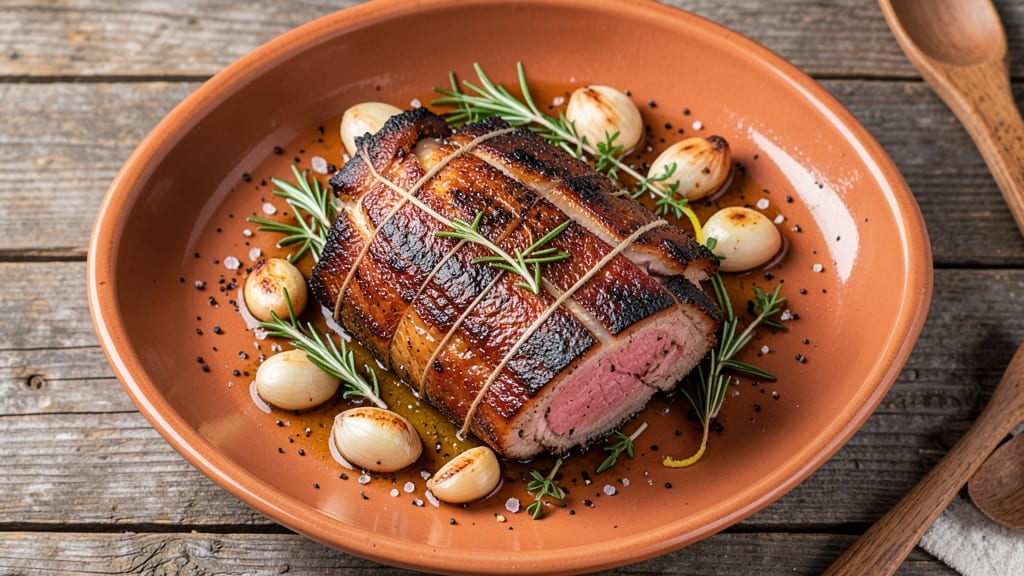
This boneless rolled pork shoulder recipe transforms a simple cut into a showstopper with juicy pink hearts at its core—no guesswork, just precision. After years of perfecting this technique in my Atlanta kitchen, I've cracked the code for tender, herb-crusted perfection that rivals high-end restaurants.
The secret lies in the rolling method and slow roasting, which creates that signature texture without drying out the meat.
What sets this recipe apart is the herb crust—a blend of rosemary, thyme, and garlic that forms a flavorful bark while keeping the interior impossibly tender.
I use a foolproof technique of tying the roast before seasoning to ensure even cooking, and the internal temperature gauge is your best friend here. This isn't just another pork roast; it's a restaurant-quality centerpiece that impresses even the most discerning guests.
The result? A juicy, melt-in-your-mouth roast with a golden crust that practically sings when sliced. The herbaceous notes from the crust contrast beautifully with the rich, savory meat inside, creating harmony in every bite.
Serve it with a red wine reduction or apple cider glaze for extra depth, and pair it with roasted root vegetables or a crisp green salad to round out the meal.
This recipe is designed for confident home cooks—no special equipment needed beyond a roasting pan and a meat thermometer. The method is straightforward, but the results are anything but ordinary.
Whether you're hosting a dinner party or treating yourself to a special weeknight meal, this herb-crusted pork shoulder will be the star of the table.
Ingredients for boneless rolled pork shoulder
Precision-cut pork shoulder and aromatic herbs create restaurant-quality roast with juicy pink centers.
| Ingredient | Amount | Notes |
|---|---|---|
| Boneless Pork Shoulder 🐖 | 4 lb | Center-cut for even texture |
| Fresh Rosemary 🌿 | ½ cup | Finely chopped, organic preferred |
| Fresh Thyme 🌿 | ¼ cup | Leaves only, stems removed |
| Garlic Cloves 🧄 | 8 cloves | Minced, skin-on for flavor |
| Kosher Salt 🧂 | 2 tbsp | Diamond Crystal preferred |
| Freshly Ground Black Pepper 🌶️ | 1 tbsp | Cracked peppercorns preferred |
| Extra-Virgin Olive Oil 🫒 | ¼ cup | For crust and basting |
| Butcher's Twine 🧵 | 1 package | Heavy-duty, 18-inch length |
| Red Wine Reduction 🍷 | ½ cup | Store-bought or homemade |
| Apple Cider Vinegar 🍎 | 1 tbsp | For basting glaze |
| Brown Sugar 🍚 | 2 tbsp | Lightly packed |
| Fresh Sage 🌿 | ⅛ cup | Chopped, for garnish |
| Vegetable Oil 🫒 | 2 tbsp | For roasting pan |
The pork shoulder makes all the difference here. Center-cut is key for even texture—avoid the fatty edges that can dry out. Look for USDA Choice or Prime cuts at Whole Foods or your local butcher, where they can trim it for you. Fresh herbs are non-negotiable: organic rosemary and thyme from the farmers market have the most intense flavor. If you must use dried, reduce to one-third the amount. The garlic should be skin-on for deeper flavor, and mincing it yourself beats pre-minced in a jar every time.
No butcher's twine? Heavy-duty kitchen string works just as well—just make sure it's food-safe. Substitute the red wine reduction with apple cider glaze (simmer 1 cup apple cider until reduced by half, add 1 tbsp brown sugar). For the herb crust, dried herbs at half the amount work in a pinch, but fresh is ideal. The brown sugar in the glaze caramelizes beautifully—don't skip it. If you're short on time, pre-portion the herbs** in small containers for easy access during seasoning. The vegetable oil in the roasting pan prevents sticking and makes cleanup effortless.
This roast develops best overnight in the fridge before cooking—48 hours minimum for ideal tenderness. Once cooked, it reheats beautifully—200°F for 30 minutes in a covered pan. For make-ahead convenience, portion into individual slices and freeze between parchment paper for up to 3 months. The herb crust stays flavorful for 3 days in the fridge if stored airtight, though the meat itself is best consumed within 2 days for peak juiciness.
Why You'll Love This Recipe
- No Roll Stress: I’ll admit—rolling that pork looks intimidating at first. But once you get the hang of it, the boneless cut actually makes it easier than bone-in. No awkward carving or worrying about the bone breaking through. Just spread, roll, and tie—like wrapping a giant, flavorful burrito.
- Herb-Packed Magic: That rosemary and thyme combo? It’s the secret weapon. The fresh herbs infuse into the pork like a whisper, but they do something special to the crust—crispy, fragrant, and just salty enough from the kosher salt to make your whole kitchen smell like a Mediterranean bistro. (Yes, even if you’re cooking at 7 p.m. on a Tuesday.)
- Leftovers That Beg: This recipe practically forces you to make extra because the second day is just as good. Shred it into tacos, toss it into pasta, or just reheat slices straight from the fridge—it’s that versatile. Honestly, I’ve eaten this pork cold in sandwiches, and it still won.
- Budget Meal Hero: Pork shoulder is the unsung hero of affordable protein. A single roll feeds four, and the cost per serving is nothing compared to steak or chicken breasts. Plus, the flavor gets richer the longer it cooks, so you’re not just saving money—you’re getting a taste upgrade. (My wallet and taste buds thank me.)
Step-by-step instructions for herb-crusted rolled pork shoulder
This method delivers melt-in-your-mouth tenderness with a fragrant herb crust every time.
Prepare the Pork and Herb Crust
Begin by patting the 4 lb boneless pork shoulder completely dry with paper towels—this is critical for achieving that perfect crust. I like to work in a well-ventilated area since we'll be handling fresh herbs next. In a mixing bowl, combine the 0.5 cup fresh rosemary, 0.25 cup fresh thyme, 8 cloves minced garlic, 2 tbsp kosher salt, and 1 tbsp freshly ground black pepper. Add the 0.25 cup extra-virgin olive oil and mix until you have a thick, cohesive paste that clings to your fingers.
Spread this herb mixture evenly over the entire surface of the pork shoulder, pressing firmly so it adheres well. The reason we use skin-on garlic is that the skins add subtle bitterness and texture to the crust. Fold the pork shoulder in half lengthwise, then roll it tightly from one end to the other, keeping the seam side down. Secure the roll with butcher's twine, spacing the twine every 2 inches to maintain its shape during cooking.
Sear the Pork for Maximum Flavor
Heat a large oven-safe skillet over medium-high heat and add 2 tbsp vegetable oil. Once the oil is shimmering but not smoking, carefully place the pork roll seam-side down in the skillet. Press down gently with a metal spatula to ensure good contact—this prevents the pork from curling and ensures even browning. Sear for 3-4 minutes per side until the exterior develops a deep golden-brown crust with some charred spots. The crust should be firm to the touch and release easily from the pan.
Transfer the skillet to a 425°F preheated oven. Here's where the magic happens: the initial sear locks in juices while the oven finish ensures even cooking. Roast for 20 minutes to establish a good foundation, then reduce the heat to 300°F for the remaining cooking time.
Slow-Roast to Juicy Perfection
Continue roasting at 300°F for 2.5 to 3 hours, until the internal temperature reaches 195-200°F when measured with a meat thermometer in the thickest part. This low-and-slow approach breaks down the collagen for that signature melt-in-your-mouth texture. Every 30 minutes, I like to brush the pork with a mixture of 0.5 cup red wine reduction and 1 tbsp apple cider vinegar—this keeps the exterior moist while adding depth of flavor.
The pork is done when it's fork-tender and the internal temperature holds steady. If you don't have a meat thermometer, you can test doneness by inserting a sharp knife into the center—it should slide in easily with no resistance. Remove the pork from the oven and let it rest for 15 minutes before slicing. This resting period is non-negotiable—it allows the juices to redistribute throughout the meat, ensuring every slice is moist and flavorful.
Finish with Brown Sugar Glaze
While the pork rests, make the finishing glaze by combining 2 tbsp brown sugar with 2 tbsp water in a small saucepan. Bring to a simmer over medium heat and cook for 2-3 minutes until the sugar dissolves and the mixture thickens slightly. Brush this glaze generously over the pork just before serving—it adds a beautiful caramelized finish and balances the herbaceous flavors.
Slice the pork against the grain into ½-inch thick portions and garnish with 0.125 cup chopped fresh sage. The result should be a beautifully browned exterior with a fragrant herb crust, and that coveted juicy pink center that's tender enough to pull apart with a fork. Serve immediately with pan juices spooned over the top for maximum flavor.
Pro Tips For Making Boneless Rolled Pork Shoulder
- SEAR THE ROLL FIRST: Unroll the pork shoulder, pat it dry, then sear the meaty side in a screaming-hot skillet for 3-4 minutes before rolling it back up. That crust locks in flavor and keeps the edges from drying out—trust me, I’ve seen rolled pork shoulder fall apart because someone skipped this.
- STUFF THE CENTER: Before rolling, tuck a few loose sprigs of rosemary and thyme inside the roll along with 2-3 smashed garlic cloves. The herbs won’t overpower, but they’ll infuse the core with aroma while the outer layers crisp. (Yes, even if it looks like you’re making a stuffing.)
- WRAP IT TIGHT: Use butcher’s twine or heavy-duty aluminum foil to secure the roll snugly—no gaps. I learned this after a roll unraveled mid-cook, leaving me with a sad, half-formed pork log. Twine lets it breathe; foil keeps it from expanding too much.
- REST BEFORE SLICING: Let the rolled pork shoulder rest for 15-20 minutes under foil before cutting, even if you’re impatient. Slicing too soon means juices will spill out, leaving you with dry, stringy meat. (And no, covering it with a towel doesn’t count—use foil.)
Best sauces and condiments for this dish
Classic Red Wine Reduction
This 5-minute sauce elevates your rolled pork shoulder with its deep umami richness. I use ½ cup dry red wine (like Cabernet Sauvignon) reduced with 1 tbsp butter and 1 tsp Dijon mustard for a velvety finish.
Simmer the wine in a saucepan over medium-high heat until reduced by half—about 8-10 minutes. Finish with butter and mustard, then drizzle over the sliced pork. The acidity cuts through the pork's richness beautifully. 🍷
Apple Cider Glaze
For a sweet-tangy contrast, this apple cider glaze is my go-to. Combine 1 cup apple cider with 2 tbsp brown sugar and 1 tsp fresh thyme in a saucepan. Simmer for 10-12 minutes until syrupy, then strain out the thyme.
Brush generously over the pork before serving. The caramelized edges add a stunning presentation, and the cider's acidity balances the herb crust perfectly. 🍎
Honey-Mustard Pan Sauce
Save those pork juices! Deglaze the roasting pan with ½ cup apple juice, then whisk in 2 tbsp Dijon mustard, 1 tbsp honey, and 1 tsp apple cider vinegar.
Simmer for 3-4 minutes until slightly thickened. This sauce adds a bright, fruity note that complements the pork's savory depth. It's foolproof and uses ingredients you likely already have on hand. 🍯
Smoky Chipotle Cream Sauce
When you want heat with creaminess, this sauce delivers. Blend ½ cup sour cream, 1 tbsp chipotle in adobo, 1 tsp smoked paprika, and 1 clove roasted garlic until smooth.
Thin with 2 tbsp milk if needed. The smoky chipotle cuts through the pork's richness while the cream adds luxurious texture. Serve with extra chopped cilantro for garnish. 🌶️
Herb Butter Compound
This herb butter is a game-changer for serving. Mix ½ cup softened butter with 2 tbsp chopped fresh rosemary, 1 tbsp chopped thyme, 1 minced garlic clove, and 1 tsp lemon zest. Shape into a log, chill for 30 minutes**, and slice onto warm pork slices.
The butter melts into the meat, infusing it with extra herbaceous flavor. It's perfect for special occasions when you want to impress. 🧈
Nutrition facts
Frequently asked questions about herb-crusted rolled pork shoulder
Why does rolling the pork shoulder make it more tender?
The rolling technique creates a larger surface area that cooks more evenly, while the twine helps maintain shape during cooking. This method also concentrates the fat and connective tissue in the center, which breaks down during slow roasting for that signature juicy pink heart. The herb crust seals in moisture better than a flat cut would.
Can I substitute boneless pork shoulder with bone-in?
Yes, but you'll need to adjust cooking times and temperatures. Bone-in pork shoulder takes longer to cook—expect an additional 30-45 minutes at 300°F. The bone actually helps distribute heat more evenly, but you'll want to remove it before slicing. Just be sure to trim excess fat first to prevent flare-ups during searing.
What's the best way to reheat leftovers?
Slice the pork into portions and reheat in a covered skillet over low heat with a splash of broth or apple cider until warmed through (165°F). For oven reheating, cover with foil and bake at 300°F for 20-30 minutes. Never microwave—it makes the meat rubbery. The herb crust stays flavorful for 3 days in the fridge.
How do I know when the pork is done without a meat thermometer?
Insert a sharp knife into the thickest part—the juices should run clear, not pink or bloody. The internal texture should be fork-tender, with no resistance when you press it. For rolled pork, the center should be 195-200°F internally. If you're unsure, err on the side of slightly undercooked—pork continues cooking after removal from heat.
Can I make this ahead of time for a dinner party?
Cook the pork up to 190°F (about 2 hours at 300°F), then let it cool completely before refrigerating. Finish cooking to 200°F just before serving by reheating at 300°F for 30 minutes. The herb crust holds up beautifully, and the pork will be even more tender after resting overnight.