
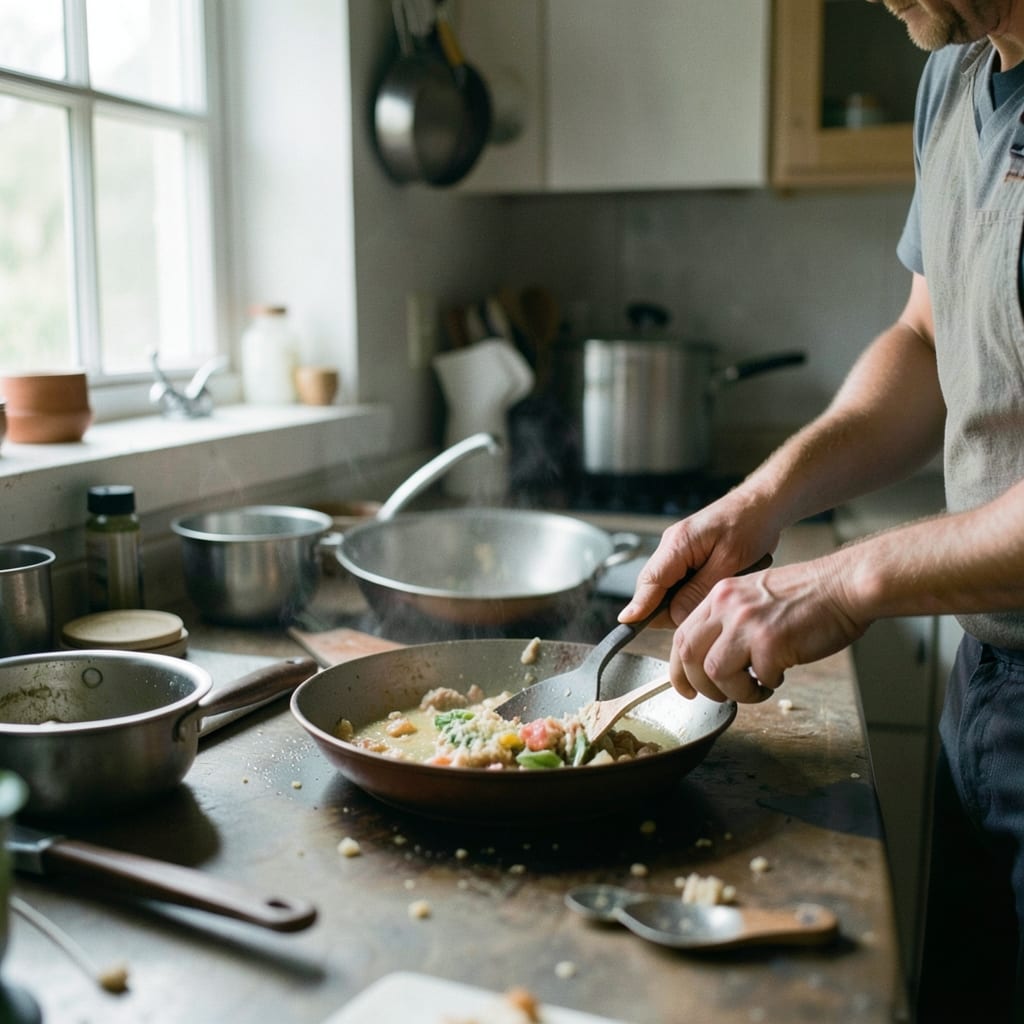
Welcome to Rice Recipes Field
You’ve opened a recipe that promises ‘perfect rice’ but skips the part where the grain splits unevenly or the texture turns out gummy. Maybe you’ve spent twenty minutes stirring a pot, only to end up with something that looks like a science experiment gone wrong.
Or perhaps you’re just tired of rice dishes that taste the same as every other one you’ve tried.
This is where the first grain decides the dish. Here, every recipe starts with the right variety—jasmine for its floral kiss, basmati for its long, fragrant strands, or short-grain for its creamy cling. The spices aren’t just thrown in; they’re cracked and toasted to wake up their flavors.
And the method isn’t just a list of steps—it’s the story of how heat, time, and a little patience turn simple grains into something unforgettable.
Our story
The first time Bridget Ibarra burned a pot of rice, she was 12 years old, following a recipe her grandmother had scribbled on the back of a grocery list. The instructions read *‘cook until done’*—no timer, no ratio, no warning about how fast basmati absorbs water.
By the time she realised it was ruined, the kitchen smelled like overcooked glue, and her grandmother was already laughing, shaking her head. That was the day the ‘perfect rice’ myth started unraveling.
The next year, she stole her grandmother’s rice cooker—a heavy, dial-driven model from the 1980s—and began timing every batch, adjusting water levels by the teaspoon. She kept a notebook.
Then she started testing: long-grain vs. short-grain, the difference between toasting spices in a dry pan and blooming them in oil, how a splash of vinegar at the end could turn mushy rice into something silky.
The notes turned into drafts, the drafts into recipes, and the recipes into a quiet obsession.
The turning point came at 3 a.m. in a rented apartment in Portland, where she was living while working as a line cook. A customer at the diner where she was waiting tables asked for ‘that Thai rice dish’ she’d mentioned once in passing.
Bridget had no notes, no measuring cups—just the memory of her grandmother’s voice saying *‘listen to the rice’*. She used a ladle, a kitchen scale she’d borrowed, and a pinch of salt she’d eyeballed. It turned out perfect.
That night, she decided to stop writing about food and start teaching how to make it.
What we stand for
This site exists for the people who’ve ever walked away from a pot of rice wondering what went wrong—or who’ve spent years cooking it ‘by feel’ and still can’t get it right. We believe a recipe should be a conversation, not a command.
That means admitting when a method fails (and how to fix it), explaining why a step matters (even if it seems unnecessary), and never pretending that ‘foolproof’ means anything but practice.
What you will always get here
- Recipes that work the first time—or a clear path to making them work if they don’t.
- Spices and techniques that actually change the flavor, not just ‘add depth’.
- Honest timings: if a dish takes 30 minutes of active work, that’s what you’ll read.
- The ‘why’ behind every step, so you can trust the method or adapt it.
Meet the team

Behind *Rice Recipes Field* is a small group of writers and testers who share one thing in common: they’ve all spent too long staring at a pot of rice, willing it to turn out right.
Some of them grew up in kitchens where rice was a daily ritual; others learned by trial, error, and the occasional burnt batch.
What unites them is a refusal to accept that ‘good rice’ is just luck—or that the best dishes are the ones that look like they came from a restaurant, not a home kitchen.
Bridget Ibarra
Bridget Ibarra is the founder and editor of *Rice Recipes Field*, though she’d rather be called a ‘rice troubleshooter’—a role that began in her grandmother’s kitchen and now extends to the inboxes of frustrated home cooks.
Before launching this site, she worked as a line cook and pastry apprentice, where she learned that the difference between a dish that ‘works’ and one that ‘wows’ often comes down to the grain.
She keeps a jar of her grandmother’s original rice cooker’s dials on her desk as a reminder: even the best tools need the right hands.
Her desk is cluttered with three things: a well-worn copy of *The Rice Book*, a digital scale she refuses to trust until it’s recalibrated twice, and a notebook where she scribbles adjustments mid-recipe.
She’s terrible at remembering to preheat pots and always burns the first batch of any new dish—though she’ll never admit that out loud.
I still measure rice by weight, even when I’m in a hurry. And if you tell me a recipe ‘doesn’t need’ toasting the spices, I’ll side-eye you so hard you’ll reconsider. The first grain *always* matters—it’s the difference between a dish that’s ‘fine’ and one that makes someone stop mid-bite and say, *‘How did you do that?’*
Bridget Ibarra
How we create our content
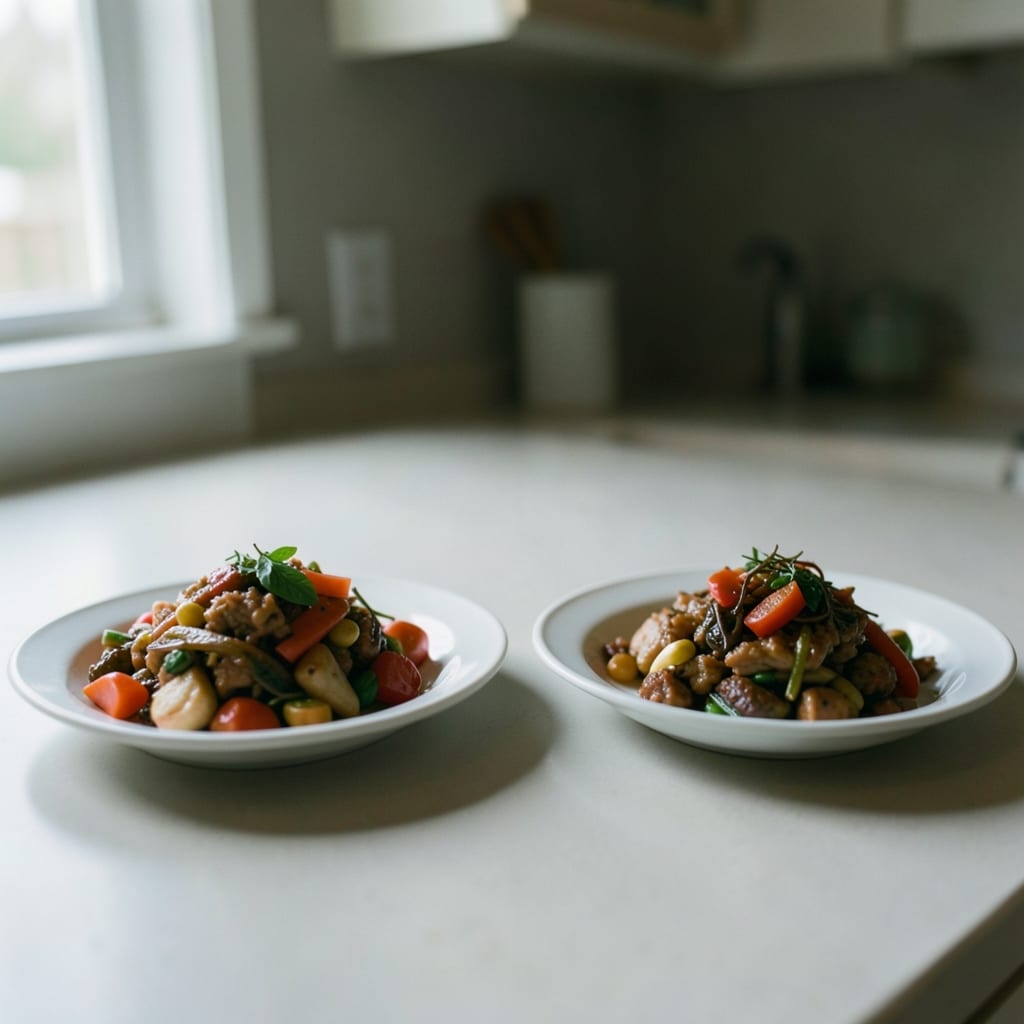
Every recipe here starts with a question: *‘What’s the one thing that makes this rice dish fail?’* It might be a ratio no one bothers to check, a spice that’s added too late, or a cooking method that doesn’t account for altitude. The answer becomes the foundation.
From there, the work is equal parts science and instinct—testing, tasting, and adjusting until the result is something that holds up to scrutiny (and second helpings).
The first draft: testing the grain
The first step is always the rice itself. We cook a 1:1.25 ratio of grain to water—jasmine, basmati, or short-grain—using a heavy-bottomed pot and a timer set for exactly 12 minutes. The pot is never stirred during cooking; we let the grains expand undisturbed.
If the rice is undercooked, we add a splash of boiling water and cover it for another 5 minutes. Overcooked? We drain it immediately and fan it with a fork. The goal isn’t perfection on the first try—it’s finding the *range* where the texture works.
Spices come next. Each one is toasted in a dry pan until it smells ‘alive’—cinnamon until it’s fragrant but not burnt, cumin until it’s deep brown and crackling.
We never use pre-ground spices; the difference between freshly cracked and jarred is the difference between a dish that’s ‘good’ and one that’s ‘unforgettable.’ Every recipe includes a ‘spice wake-up’ time—usually 30 seconds to a minute—because rushing this step is how you end up with flavorless rice.
The fix: balancing heat and time
The second stage is where the recipe becomes *yours*. If the rice is too dry, we add a teaspoon of water at a time, stirring gently with a wooden spoon. If it’s mushy, we spread it on a baking sheet and let it cool for 10 minutes before fluffing.
The key is temperature: rice should finish cooking off the heat, not over it. We always let it sit, covered, for at least 5 minutes before serving—this is when the starches redistribute and the texture becomes silky. And if a dish calls for a ‘rest,’ we mean it.
Skipping this step is how you end up with a pot of glue.
Join our community
This site is for the people who’ve ever emailed a friend at 2 a.m. asking *‘Why is my rice still crunchy?’* or scrolled through 20 recipe videos only to give up in frustration.
Here, you’ll find answers to questions like *‘How do I cook rice without a rice cooker?’* or *‘Why does my basmati turn out sticky?’*—plus a few surprises, like how a pinch of sugar can save a burnt batch.
The best suggestions get tested and added to the site; the worst get a polite note about why they won’t work (and how to fix them).
Let's connect
We love hearing about the rice dishes that changed your life—or the ones that still give you trouble. Send us your questions, your failures, and your victories (especially the victories). If you’ve got a rice-related mystery, we’d love to help solve it. Start on the contact page.
The recipes are grouped by category: Appetizers, Beverages, Breakfast & Brunch, Desserts, Main Courses and Salads.