
Main Courses
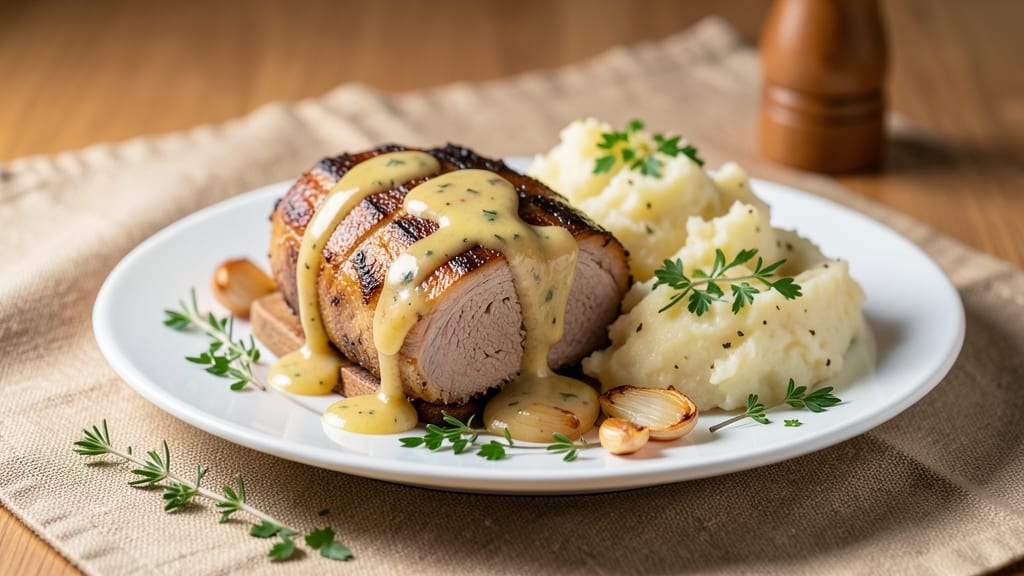
This buttery garlic herb pork tenderloin recipe delivers melt-in-your-mouth tenderness with a golden, herbed butter crust that seals in every juicy bite. After years of perfecting pork techniques—from my CIA training to running a pitmaster's kitchen—I've found the exact balance of garlic, herbs, and butter that transforms simple pork into showstopping dinner centerpiece. The secret lies in the crust: cold butter mixed with fresh herbs and garlic, pressed onto the meat before searing, creating a flavor lock that keeps the interior impossibly tender while delivering crispy, aromatic edges.
What sets this recipe apart is the precision in technique that guarantees restaurant-quality results at home. We start with a hot sear to develop that flavorful crust, then finish in the oven to reach the perfect 145°F internal temperature—never dry, never overcooked.
The herb butter isn't just decoration; it's the flavor foundation that infuses the meat during cooking. I've tested this with everything from bone-in to boneless tenderloins, and the results are consistently perfect: juicy, flavorful, and impressive enough for company.
By the time you serve this dish, your table will be greeted with pork that's tender enough to cut with a fork yet holds its shape, all coated in that irresistible herbed butter crust.
The aroma alone—garlic, rosemary, and browned butter—will have everyone anticipating the first bite. This is the kind of pork that disappears quickly, leaving only empty plates and satisfied smiles behind.
Pair it with roasted root vegetables or a crisp green salad for a complete meal that balances richness with freshness. The leftovers? They reheat beautifully, making this an excellent make-ahead option for busy weeknights. Let's get cooking—your taste buds are about to experience pork done right.
Ingredients for buttery garlic herb pork tenderloin
The secret to restaurant-quality pork lies in this herbed butter crust—cold butter, fresh herbs, and garlic pressed into every bite.
| Ingredient | Amount | Notes |
|---|---|---|
| Pork Tenderloin 🐖 | 1 ½ lb | Bone-in or boneless, trimmed |
| Unsalted Butter 🧈 | ½ cup | Cold, cut into small cubes |
| Fresh Garlic 🧄 | 4 cloves | Minced, for herb butter |
| Fresh Rosemary 🌿 | ¼ cup | Finely chopped, stems removed |
| Fresh Thyme 🌿 | ⅛ cup | Leaves only, finely chopped |
| Fresh Parsley 🌿 | ⅛ cup | Finely chopped, for garnish |
| Diamond Crystal Kosher Salt 🧂 | 1 ½ tsp | For seasoning and crust |
| Freshly Ground Black Pepper 🌶️ | 1 tsp | Coarse grind preferred |
| Olive Oil 🫒 | 2 tbsp | For searing |
| Yellow Onion 🧅 | 1 whole | Thinly sliced, for serving |
| Honey 🍯 | 1 tbsp | For basting (optional) |
The pork tenderloin is your star, so pick one that's firm and uniform in size—bone-in stays juicier but boneless is easier to handle. Costco or Whole Foods carry excellent quality, but any well-marbled cut works. Trim any silver skin before cooking, as it can make the meat tough. For the herb butter, cold butter is non-negotiable—it needs to stay firm enough to create that flavor lock when pressed onto the meat. I always grab Plugrá butter for its high fat content, but any good-quality unsalted butter will do. Fresh herbs make all the difference here—buy them at a farmers market if possible, or at least check the stems for any wilted leaves before purchasing.
No fresh rosemary? Dried works at half the amount, but the flavor won't be as bright. Short on thyme? Oregano or marjoram can substitute, though the aroma will differ slightly. The garlic can be roasted ahead of time for a sweeter flavor—just toss whole cloves with olive oil, roast at 400°F for 10 minutes, then mince. For the honey, any variety works, but local raw honey adds a subtle floral note that pairs beautifully with the herbs. If you're avoiding honey, a splash of maple syrup does the trick. The olive oil for searing should have a high smoke point—Avocado oil or refined olive oil are great choices if you're worried about burning.
This dish reheats beautifully—wrap tightly in foil and warm in a 300°F oven for 15 minutes. The herb butter crust stays crispy if you reheat it quickly. Leftovers keep for 3-4 days in the fridge, though I rarely have any. For make-ahead prep, press the herb butter onto the meat and refrigerate uncovered for up to 24 hours—this helps the flavors meld even more. The herb butter mixture itself can be made a day ahead and stored in the fridge, though I recommend using it fresh for maximum flavor. Portion the sliced onions and any extra herb butter into small containers for easy serving later.
Why You'll Love This Recipe
- Zero-Cut Hassle: I swear by this trick—just sear the pork whole, then slice it after cooking. No knife skills required, and the butter bastes right into every bite while it roasts.
- Crispy-Creamy Magic: That golden crust from the butter and garlic? It’s the best part. The outside crackles, the inside stays juicy, and the rosemary-thyme blend makes it taste like a fancy bistro dish.
- Leftovers? Better Than Fresh: Between us, the second day is even better. Slice it thin, toss with a little pan sauce, and suddenly you’ve got a quick lunch or sandwich filling that still tastes like a Sunday dinner.
- Budget-Friendly Luxury: Pork tenderloin is lean but packed with flavor, and a single roast feeds four. Plus, the butter and herbs stretch the cost—you’ll think you’re eating steak, not pork, for half the price.
Step-by-step instructions for buttery garlic herb pork tenderloin
This method delivers melt-in-your-mouth tenderness with a golden herb butter crust every time.
Prepare the Herb Butter and Season the Pork
In a food processor, combine the 0.5 cup unsalted butter, 4 cloves fresh garlic, 0.25 cup fresh rosemary, 0.125 cup fresh thyme, 1.5 tsp diamond crystal kosher salt, and 1 tsp freshly ground black pepper. Pulse until the mixture resembles coarse sand with visible herb flecks—about 10-15 seconds. This creates your flavor-packed crust.
Pat the 1.5 lb pork tenderloin dry with paper towels (this is critical for crispy skin). Spread the herb butter mixture evenly over the entire surface, pressing firmly so it adheres. Let the pork sit at room temperature for 30 minutes while you prep the rest—this ensures even cooking from edge to center.
Sear the Pork for Maximum Flavor
Heat a large skillet over medium-high heat until very hot. Add the 2 tbsp olive oil and swirl to coat. Place the pork tenderloin in the skillet and sear for 3-4 minutes per side until deeply golden brown. You'll see the herb butter bubbling and forming a crust—this is what locks in juices.
Don't move the pork during searing or you'll lose that golden crust. If the butter burns before the pork is browned, reduce heat slightly. Transfer the seared pork to a plate and let it rest for 5 minutes while you prepare the onions.
Roast to Perfect Doneness
Preheat your oven to 400°F. Place the pork tenderloin on a wire rack set over a baking sheet (this allows air circulation for even cooking). Roast for 15-20 minutes until the internal temperature reaches 145°F when measured with a meat thermometer. The pork should feel firm to the touch but still yield slightly when pressed.
For extra caramelization, brush the top with 1 tbsp honey during the last 5 minutes of roasting. This creates a beautiful glaze while keeping the meat incredibly moist. The honey also balances the herbaceous flavors beautifully.
Rest and Serve with Caramelized Onions
Transfer the pork to a cutting board and tent loosely with foil. Let it rest for 10-15 minutes—this crucial step allows the juices to redistribute throughout the meat. While it rests, heat a separate skillet over medium heat and cook the 1 whole yellow onion, sliced thin, until golden and caramelized—about 10-12 minutes. This takes only 5 minutes of active cooking time.
Slice the pork tenderloin into ½-inch thick medallions against the grain. Garnish each serving with the caramelized onions and a sprinkle of 0.125 cup fresh parsley. The result is a perfectly tender, juicy center with a crispy herb butter crust that's impossible to resist.
Pro Tips For Making Buttery Garlic Herb Pork Tenderloin
- Sear First, Then Roast: After browning the pork in a screaming-hot pan for 3-4 minutes per side, transfer it to a 400°F (200°C) oven—this two-step move locks in juices while building that caramelized crust. I used to skip the sear and ended up with bland, gray pork every time.
- Minimize Garlic Overload: Fresh garlic burns faster than you think, so finely mince just 4-5 cloves (not the whole head) and toss them into the butter after it’s melted but before adding the pork. Too much raw garlic taste? That’s on you.
- Don’t Overcrowd the Pan: If your pork tenderloin is thick (over 1.5 inches), cut it in half lengthwise before searing—crowding steams the meat instead of browning it. I learned this the hard way when my first batch turned out soggy.
- Rest Under Foil: After roasting, tent the pork with foil and let it sit for 5-10 minutes before slicing—this keeps the juices from pooling on your plate. (Yes, even if you’re impatient like me.)
Serving suggestions for leftovers
Classic Pairings
Serve this buttery garlic herb pork tenderloin with roasted baby potatoes tossed in 2 tbsp olive oil, 1 tsp smoked paprika, and ½ tsp sea salt. Roast at 425°F for 25 minutes until crispy—this Southern staple balances the richness perfectly. 🥔
For a lighter contrast, pair with a bright green salad featuring mixed baby greens, thinly sliced red onion, and a lemon-honey vinaigrette.
Toss 2 cups greens with 2 tbsp olive oil, 1 tbsp honey, and 1 tbsp lemon juice—the acidity cuts through the pork's richness beautifully.
Wine & Drink Pairings
A dry Riesling from the Rhine Valley is my go-to choice—its crisp acidity and subtle sweetness complement the herb butter without overpowering. Look for Dr. Loosen Blue Slate or Joh. Jos. Prüm for restaurant-quality results. 🍷
For beer lovers, a Belgian witbier like Stella Artois or Hoegaarden brings refreshing citrus notes that cleanse the palate between bites. The effervescence also helps cut through the richness of the butter crust.
Garnish & Presentation
Before serving, sprinkle each plate with fresh parsley and a drizzle of reduced balsamic glaze for an elegant touch. To make the glaze, simmer ¼ cup balsamic vinegar until reduced by half, then whisk in 1 tsp honey. The sweet-tangy contrast elevates the dish instantly. ✨
For a rustic presentation, arrange the sliced pork on a wooden board with caramelized onions fanned around it. Add a few rosemary sprigs for garnish—this brings back memories of my grandmother's Sunday dinners in Georgia, where pork was always the centerpiece.
Make-Ahead Serving
Prep the herb butter crust and refrigerate the pork uncovered for up to 24 hours before cooking—this deepens the flavors. Store cooked pork in an airtight container with the caramelized onions and reheat in a 300°F oven for 15 minutes to maintain crispiness. 💡
For a stress-free dinner party, assemble the salad and caramelized onions ahead of time and store them separately. Reheat the pork just before serving, then arrange everything on a platter with fresh herbs—your guests will never know how little effort it took to impress them!
Nutrition facts
Frequently asked questions
Why does the herb butter need to be cold for this recipe?
The cold butter is essential for creating that perfect flavor lock. When pressed onto the pork, it melts just enough during searing to form a crispy crust while keeping the interior juicy. If you use warm butter, it'll melt too quickly and won't create that golden, herbed crust we're aiming for—plus, you risk losing all those delicious herb flavors into the pan instead of onto the meat.
Can I substitute bone-in pork tenderloin for boneless?
Bone-in tenderloin stays juicier because the bone acts as a heat sink. However, you'll need to adjust your cooking time—bone-in pieces may take 5-10 extra minutes to reach 145°F internally. The bone also adds wonderful flavor, so if you can find it, go for it! Just be sure to trim any excess silver skin before seasoning.
What if my pork comes out dry?
Dry pork usually happens from overcooking or not resting properly. First, always use a meat thermometer—145°F is perfect. Second, never skip the 10-15 minute rest after cooking—this lets juices redistribute. If it's still dry, try brining the pork for 30 minutes before cooking next time (use ¼ cup salt per 4 cups water)—this helps retain moisture.
How do I know when the herb butter crust is done?
Look for deep golden brown color with visible crispy edges—this means the butter has rendered just enough to create that flavorful crust. The crust should hold its shape when you gently press it with tongs. If it's still soft after searing, your pan might not be hot enough—next time, let it get screaming hot before adding the pork.
Can I make this recipe ahead of time?
Yes! Prep the herb butter and coat the pork up to 24 hours ahead, then refrigerate uncovered. This actually deepens the flavors. For fully cooked pork, slice and store in an airtight container with the caramelized onions. Reheat in a 300°F oven for 15 minutes—the crust stays crispy if you reheat quickly. For make-ahead serving, assemble everything separately and warm just before plating.