
Main Courses
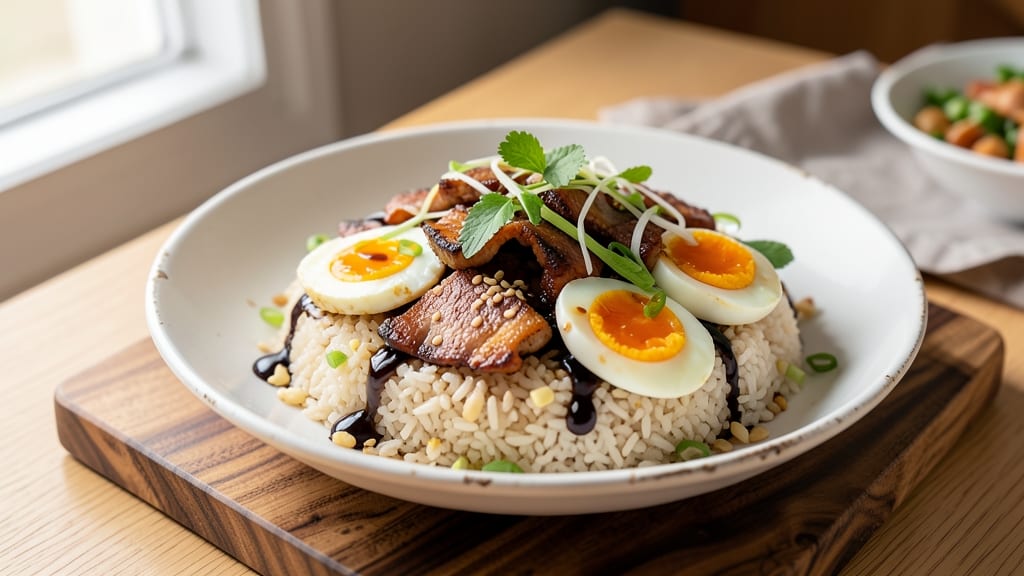
This Chinese pork fried rice recipe is the best pork fried rice recipe ever—delivering wok-heated flavor with perfect egg ribbons and tender pork, just like your favorite takeout. I've perfected this version after years of testing, balancing smoky wok hei with authentic soy-ginger aromatics.
The secret lies in high-heat stir-frying and proper rice texture, transforming day-old rice into crispy, flavorful bites.
What sets this recipe apart is the foolproof technique for achieving restaurant-quality results at home. We'll start with properly cooked day-old rice (never fresh!) and build layers of flavor through garlic, ginger, and a perfect soy-vinegar base.
The pork gets marinated in a simple sauce before being stir-fried to juicy perfection, while the eggs form delicate ribbons that melt into every bite.
By the time you're done, you'll have a sizzling wok full of golden fried rice with crisp edges, tender pork, and silky egg threads. The aroma alone—smoky, savory, with hints of garlic and ginger—will have everyone gathering around the table.
This is comfort food at its finest, packed with authentic Chinese flavors that taste better than takeout.
Ready in just 30 minutes, this recipe scales perfectly for family dinners or meal prep. The ingredients list is simple but powerful, using common pantry staples to create a dish that's both impressive and approachable. Let's get cooking!
Ingredients for best pork fried rice recipe ever chinese
Foolproof ingredients for restaurant-quality pork fried rice with smoky wok hei and perfect egg ribbons.
| Ingredient | Amount | Notes |
|---|---|---|
| Day-Old Jasmine Rice 🍚 | 4 cups | Uncooked weight equivalent |
| Boneless Pork Shoulder 🥩 | 1 lb | Thinly sliced, marinated |
| Large Eggs 🥚 | 3 whole | Fresh, room temperature |
| Green Onions 🧅 | 1 bunch | Thinly sliced, white and green parts |
| Fresh Garlic Cloves 🧄 | 6 cloves | Minced, aromatic |
| Fresh Ginger 🌿 | 1 ½ tbsp | Grated, aromatic |
| Light Soy Sauce 🍶 | ½ cup | High-quality brand |
| Dark Soy Sauce 🍶 | 1 tbsp | For color depth |
| Rice Vinegar 🍶 | 1 ½ tbsp | White or seasoned |
| Sesame Oil 🫒 | 1 tbsp | Toasted, aromatic |
| Vegetable Oil 🫒 | 3 tbsp | High smoke point |
| White Pepper 🌶️ | ½ tsp | Freshly ground |
| Salt 🧂 | 1 tsp | Kosher or sea |
| Black Pepper 🌶️ | ¼ tsp | Freshly ground |
| Toasted Sesame Seeds 🌾 | 1 tbsp | Optional garnish |
The pork shoulder is non-negotiable—it stays juicy during stir-frying while boneless, skinless chicken thighs work too if you're in a rush. Costco sells pre-sliced pork for fried rice, saving you time, but ask for thin cuts if buying from the butcher. Fresh ginger and garlic? Penzeys or the bulk bins at Whole Foods have the best quality. I always buy extra—ginger keeps for weeks in the freezer, and garlic? Use it all before it sprouts. The rice must be day-old; fresh rice turns mushy when fried. Cook a big batch the night before and store it in the fridge for perfect texture.
No light soy sauce? Kikkoman is my go-to, but any good brand works—just avoid the cheap stuff that tastes salty and flat. Subbing dark soy sauce? Use half the amount—it's stronger. Short on sesame oil? A dash of toasted peanut oil gives similar nuttiness. The eggs? Room temperature—they scramble better. No fresh ginger? Powdered works at half the amount, but fresh is worth the effort. The green onions can be swapped for scallions or chives—whatever you've got on hand. And if you're feeling fancy, add a splash of Shaoxing wine to the pork marinade for depth.
Leftover fried rice? Even better the next day—flavors meld overnight. Store in airtight containers for 4 days in the fridge or freeze for 3 months. Pro tip: Spritz cold water on the rice before reheating to revive crispiness. The pork marinade keeps for 3 days in the fridge—double it and save half for next time. Sesame seeds lose their crunch fast, so toast them fresh before garnishing. This dish reheats beautifully; microwave in 30-second bursts**, stirring between each, for best results.
Why You'll Love This Recipe
- No Chopping Nightmare: I swear by this recipe because the pork shoulder gets pre-cooked—just shred it, and you’re golden. The eggs? Scrambled in a flash while the rice sizzles, no fancy techniques required.
- Umami Bomb: That pork shoulder, slow-cooked until tender, melts into the rice with every bite. Add a splash of soy sauce and a hit of garlic, and suddenly you’ve got restaurant-level depth—no shortcuts, just pure flavor.
- Lunchbox Legend: Between us, this is my go-to for packed lunches. The day-old rice soaks up all the savory goodness, and the green onions add a bright finish. Taste it cold or reheated—it’s just as good both ways.
- Budget Win: Pork shoulder stretches across three meals, and the ingredients won’t break the bank. Honestly, it’s the kind of dish that makes you feel like you’re feeding a crowd without stressing your wallet.
Step-by-step instructions for perfect Chinese pork fried rice
This is where the magic happens—crispy pork, silky egg ribbons, and wok-heated aromas come together.
Prep the Pork and Rice for Maximum Flavor
Start by cutting the 1 lb boneless pork shoulder into ¼-inch thick slices—thin enough to cook quickly but not so thin they fall apart. I like to marinate these slices for 15 minutes in a mix of ½ cup light soy sauce, 1 tbsp dark soy sauce, and 1 tbsp rice vinegar. This jumpstarts the flavor infusion and keeps the pork tender during the high-heat cooking.
While the pork marinates, spread the 4 cups day-old jasmine rice on a baking sheet and microwave it for 2-3 minutes to dry it out slightly. This prevents mushy rice—day-old rice is ideal because it's already cooled and slightly dry, but if you're in a rush, this quick drying step works wonders. Break up any clumps with your hands and set aside.
Cook the Pork to Crispy Perfection
Heat 2 tbsp vegetable oil in a wok or large skillet over high heat until shimmering. Add the marinated pork slices in a single layer and let them sear undisturbed for 2-3 minutes until the edges turn golden brown and crispy. This is where the real flavor develops—don't crowd the pan or the pork will steam instead of crisp.
Once crispy, flip the pork and cook for another 1-2 minutes, then remove it from the wok and set it aside. You'll add it back later, but this two-step process ensures the pork stays tender while developing that irresistible crust. If you're worried about overcooking, remember: the pork will finish cooking when combined with the rice.
Create Silky Egg Ribbons (The Secret Weapon)
In the same wok, add 1 tbsp vegetable oil and swirl to coat the surface. Crack the 3 large eggs into a bowl, add ½ tsp white pepper, ¼ tsp black pepper, and ½ tsp salt, then whisk vigorously until the yolks and whites are fully combined. The eggs should be at room temperature—this ensures even cooking and prevents rubbery ribbons.
Pour the eggs into the wok and let them sit undisturbed for 5-10 seconds until the edges begin to set. Then, using a spatula, quickly push the eggs from one side of the wok to the other in a swirling motion, creating thin, delicate ribbons. Cook for another 10-15 seconds until just set but still slightly runny in the center—this residual heat will finish cooking when combined with the rice. Remove the eggs and set aside with the pork.
Wok-Heat the Aromatics and Rice
Add the remaining 1 tbsp vegetable oil to the wok and set it over high heat. Toss in the 6 cloves minced garlic and 1.5 tbsp grated ginger, stirring constantly for 30 seconds until fragrant and slightly charred—this adds depth of flavor that raw aromatics can't match. Immediately add the 1 bunch thinly sliced green onions (white parts only) and stir for another 20 seconds until they soften slightly.
Now, add the 4 cups day-old jasmine rice and stir-fry for 1-2 minutes, breaking up any remaining clumps. The rice should sizzle and release its aroma—this is your signal that the wok is properly heated. Pour in the ½ cup light soy sauce, 1 tbsp dark soy sauce, and 1 tbsp sesame oil, tossing everything together until the rice is evenly coated and glistening.
Combine and Finish with Finesse
Return the crispy pork and egg ribbons to the wok, tossing everything together for 1-2 minutes until the rice is heated through and the pork is warmed. The residual heat will carry the pork to 160°F internally—perfectly cooked without overcooking. Taste and adjust seasoning with additional light soy sauce or salt if needed, but it should already be perfectly balanced.
Transfer the fried rice to a serving platter and garnish with the remaining green onion tops and 1 tbsp toasted sesame seeds. Serve immediately while the rice is still steaming and the pork is crispy. Each bite should deliver a perfect harmony of textures—crispy pork, silky eggs, and fluffy rice—with layers of savory, umami, and aromatic flavors. This is the kind of dish that makes you want to make it again and again!
Pro Tips For Making Best Pork Fried Rice Recipe Ever Chinese
- CUT PORK INTO ½-INCH PIECES: I learned this the hard way—thin, even slices of pork shoulder cook faster and stay juicier than big chunks. Use a sharp knife and work against the grain so they melt in your mouth instead of turning rubbery.
- USE COLD RICE, NOT WARM: Break up day-old rice with your fingers first—it’s already dry enough to cling to the pork. If you use warm rice, you’ll end up with a gummy mess that sticks to the wok like glue.
- SCRAMBLE EGGS SEPARATELY: Push the eggs to the side of the wok after cooking them—this keeps them creamy instead of breaking apart when you toss in the rice. A quick scramble in a small pan first makes all the difference.
- SALT THE PORK BEFORE COOKING: Season the pork shoulder with soy sauce and a pinch of salt before frying, not after. This guarantees flavor penetration, and the meat won’t dry out from sitting in seasoning too long. (Yes, even if you’re impatient like me.)
Flavor customization for this dish
Spicy Sichuan Twist
For a fiery kick, stir in 1 tbsp Sichuan chili paste or ½ tsp ground Sichuan peppercorns when cooking the pork. The numbing heat from Sichuan peppercorns—available at Penzeys—adds a unique tingle that pairs perfectly with the pork's richness.
Garnish with chili oil and extra green onions for a restaurant-style finish. 🌶️
Sweet and Tangy Glaze
Add a touch of sweetness by tossing the cooked pork in 1 tbsp hoisin sauce and 1 tsp honey before combining with the rice. The glaze caramelizes beautifully during stir-frying, creating a sticky contrast to the crispy pork.
For extra tang, finish with 1 tsp rice vinegar and a sprinkle of toasted sesame seeds.
Vegetable-Packed Fusion
Incorporate ½ cup diced bell peppers, ½ cup shredded carrots>, and ½ cup snap peas> for a vibrant, crunchy twist. Stir-fry these vegetables with the aromatics before adding the rice—this ensures they stay crisp.
I love adding shredded cabbage> for extra texture and a refreshing bite. 🥦
Umami Bomb Boost
Elevate the dish with 1 tbsp fish sauce or 1 tsp mushroom powder> when seasoning the rice. These ingredients add deep umami flavor that complements the pork beautifully.
For a smoky depth, swap ½ tbsp sesame oil> with sesame paste> (available at Asian markets) and toast it in the wok before adding the rice.
Creamy Coconut Fusion
For a tropical twist, stir in 2 tbsp coconut milk> with the soy sauce and sesame oil. The creaminess balances the savory flavors while adding a hint of sweetness.
Garnish with toasted coconut flakes> and lime zest> for a fresh finish. This version works especially well with chicken or shrimp> instead of pork.
Herb-Infused Freshness
Brighten the dish with 2 tbsp chopped cilantro> or 1 tbsp Thai basil> mixed into the rice. The herbs add a bright, aromatic note that cuts through the richness.
For a Pacific Northwest touch, add chopped chives> and a squeeze of lemon juice**>—it’s a nod to my Portland garden where I grow fresh herbs year-round. 🌿
Nutrition facts
Frequently asked questions
Why does my Chinese pork fried rice turn out mushy?
Fresh rice is the #1 culprit—it releases too much moisture when stir-fried. Always use day-old rice (or microwave pre-cooked rice for 2-3 minutes to dry it out). Spread it on a baking sheet before reheating to break up clumps. Pro tip: Undercook the rice slightly when first cooking it (about 2 minutes less than package instructions) for perfect texture.
Can I make this with chicken instead of pork?
Swap pork for 1 lb boneless chicken thighs (skin-on for extra flavor) and marinate in the same sauce for 10 minutes. Chicken stays juicier than breast meat—never use white meat for fried rice. For extra authenticity, add ½ tsp five-spice powder to the marinade. The cooking time remains identical to the pork method.
How do I get those perfect egg ribbons?
Room temperature eggs are key—cold eggs scramble unevenly. Whisk them vigorously with white pepper (not black) for that signature Chinese flavor. Pour into the hot wok, let sit 5-10 seconds undisturbed, then swirl quickly with a spatula. The eggs should be just set but still slightly runny when you remove them—they'll finish cooking with the rice.
What's the secret to wok hei (that smoky flavor)?
High, consistent heat is everything. Use a carbon steel or cast iron wok (or heavy skillet) and crank the heat to high before adding oil. Keep the food moving constantly—this creates steam that carries flavorful particles into the air, which then settle back onto the food. A gas stove works best, but electric stoves can achieve wok hei with proper technique and a well-seasoned pan.
Can I make this ahead of time?
Yes! This dish actually tastes better the next day as flavors meld. Store in airtight containers for 4 days in the fridge or 3 months frozen. To reheat: Spritz with cold water, microwave in 30-second bursts stirring between each, or pan-fry in a dry wok over medium heat for 5 minutes to revive crispiness. Garnish fresh with sesame seeds before serving.