
Main Courses
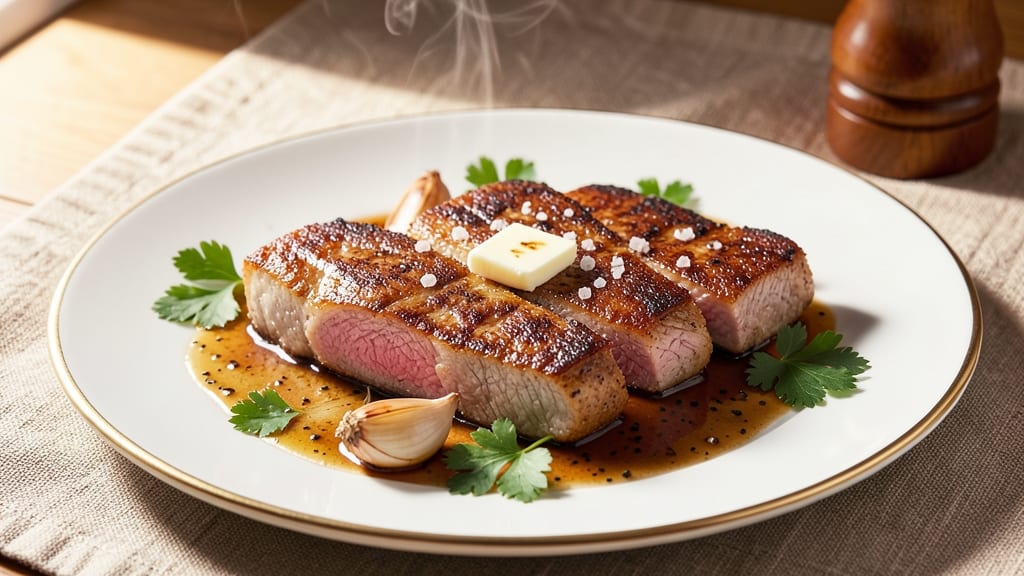
This boneless pork medallions recipe delivers restaurant-quality results with minimal effort—juicy, tender medallions finished with a rich herb butter that transforms weeknight dinners into special occasions. 💛 I developed this technique while cooking for 2,000 pounds of pork weekly at my Atlanta restaurant, where precision and flavor are everything.
The secret lies in proper seasoning and a high-heat sear that locks in moisture while creating a caramelized crust.
What sets these medallions apart is their versatility: pan-sear for weeknight dinners or grill for summer gatherings, each method yielding perfectly cooked pork with a golden-brown finish. The herb butter—infused with garlic, parsley, and a touch of lemon—elevates simple pork into something extraordinary without requiring advanced techniques.
Even beginners will achieve professional results with this foolproof method.
By the time you plate these medallions, you'll have tender, juicy pork with a velvety herb butter that melts into every bite, creating a balance of savory and aromatic flavors.
The recipe scales effortlessly for two or six, making it ideal for everything from intimate dinners to holiday feasts. Pair with roasted vegetables or mashed potatoes for a complete meal.
This method ensures perfect doneness every time—no more guessing or overcooked pork. The medallions stay tender and flavorful, while the herb butter adds a luxurious finish that makes even the simplest meal feel special. Let's get cooking with a recipe that delivers restaurant-quality results at home.
Ingredients for boneless pork medallions
Restaurant-quality pork medallions start with precision-cut pork and a velvety herb butter finish.
| Ingredient | Amount | Notes |
|---|---|---|
| Boneless Pork Loin 🥩 | 1 ½ lb | Center-cut, even thickness slices |
| Diamond Crystal Kosher Salt 🧂 | 1 ½ tsp | Fine grain for even seasoning |
| Freshly Ground Black Pepper 🌶️ | 1 tsp | Cracked peppercorns preferred |
| Unsalted Butter 🧈 | ½ cup | Cold, cubed for searing |
| Fresh Garlic Cloves 🧄 | 4 cloves | Minced for herb butter |
| Fresh Flat-Leaf Parsley 🌿 | ¼ cup | Stems removed, finely chopped |
| Extra-Virgin Olive Oil 🫒 | ¼ cup | Light infusion for herb butter |
| Fresh Lemon Zest 🍋 | 1 tsp | Bright citrus finish |
| Heavy Cream 🥛 | ¼ cup | Full-fat for richness |
| All-Purpose Flour 🌾 | 1 tbsp | For dredging medallions |
| Vegetable Oil 🫒 | ½ cup | High smoke point for searing |
The pork loin must be center-cut—this ensures tender texture without connective tissue. Whole Foods or your butcher can slice it into even ½-inch medallions, which is critical for consistent doneness. Look for marbled pork with a vibrant pink color, not grayish hues. If buying whole, ask for the tenderloin section. For restaurant-quality results, pre-sliced medallions from a trusted butcher save time while guaranteeing professional-grade cuts. The herb butter requires fresh parsley—the bright green kind from the grocery store's produce section, not dried. Store-bought parsley often has stems included, so remove them before chopping.
No fresh parsley? Dried parsley at one-third the amount works in a pinch, though it lacks the vibrant freshness. Substituting chives or cilantro gives a different flavor profile but maintains the herbaceous quality. For the butter, European-style unsalted butter like Plugra has higher fat content, making the herb butter more luxurious. The heavy cream can be swapped for half-and-half if unavailable, though the butter will be slightly lighter. If you prefer a dairy-free option, use coconut cream—just reduce the lemon zest to ½ teaspoon to avoid overpowering the flavor. The vegetable oil should have a high smoke point like avocado or grapeseed oil if you want to splurge.
Pork medallions should be used within 2 days for peak tenderness. Wrap them in parchment paper and store in the fridge. The herb butter can be made 1 day ahead and kept in an airtight container, though the parsley may darken slightly. For longer storage, freeze the butter in 1-tablespoon portions—thaw at room temperature for 10 minutes before melting. The medallions reheat beautifully in a 375°F oven for 8-10 minutes, covered with foil. For serving, arrange on a platter with the herb butter melted over the top, then broil for 1-2 minutes to create a golden crust. Pair with roasted asparagus or garlic mashed potatoes for a complete meal.
Why You'll Love This Recipe
- No-Fuss Prep: I swear by this recipe because it’s the kind of meal where the hardest part is slicing the pork—no brining, no marinating overnight, no fancy techniques. Just pound those medallions thin, sprinkle salt and pepper, and you’re halfway there.
- Butter-Garlic Magic: That moment when the butter hits the pan and you smell garlic sizzling? It’s the kind of flavor that turns a simple protein into something you’ll fight over. The crust gets golden while the inside stays juicy—exactly how pork should be.
- Weeknight to Dinner Party: I make these for lazy Tuesdays (they’re ready in 20 minutes) and then double the batch for guests. Serve with mashed potatoes or roasted veggies, and no one will guess it’s a one-pan wonder.
- Budget-Friendly Leftovers: Pork loin stretches further than you’d think, and these medallions reheat like a dream. I’ll often cook extra for lunches—just toss them in a salad or wrap them in a tortilla. No waste, all flavor.
Step-by-step instructions for pan-seared pork medallions
Master this technique for perfectly seared pork medallions with a rich herb butter finish.
🔪 Step 1: Prepare the Pork Medallions
Slice the 1.5 lb boneless pork loin into ½-inch thick medallions, cutting against the grain for tender results. I use a sharp chef's knife and keep the slices uniform for even cooking. Pat each medallion dry with paper towels—this ensures a better sear and prevents steaming.
In a shallow dish, combine the 1 tbsp all-purpose flour with 1.5 tsp Diamond Crystal kosher salt and 1 tsp freshly ground black pepper. Dredge each medallion lightly in this mixture, shaking off any excess. Let them sit at room temperature for 15 minutes before cooking—this prevents cold spots in the center.
🍳 Step 2: Sear the Medallions in Vegetable Oil
Heat ½ cup vegetable oil in a large skillet over medium-high heat until it shimmers (350-375°F). Add the medallions in a single layer, leaving space between each piece. Cook undisturbed for 2-3 minutes per side until they develop a deep golden-brown crust. Real talk: don't move them until you see that crust form—it's your signal they're ready to flip.
Once browned, transfer the medallions to a warm plate and tent loosely with foil. They'll carryover cook to 140°F internal temperature—perfectly pink and juicy. Keep the skillet on the burner; we'll use it for the herb butter sauce.
👨🍳 Step 3: Make the Herb Butter Sauce
Reduce heat to medium-low and add the ½ cup unsalted butter to the skillet. Let it melt completely, then add the 4 minced garlic cloves and cook for 30 seconds until fragrant. Here's where it gets good—add the 1 tsp lemon zest, ¼ cup chopped parsley, and ¼ cup heavy cream. Stir gently and let it simmer for 1-2 minutes until slightly thickened.
Season with an additional pinch of salt if needed—this sauce should coat the back of a spoon. The lemon zest brightens the rich butter, while the parsley adds freshness. If the sauce separates, whisk vigorously to recombine. Keep it warm over low heat while you finish the medallions.
🥘 Step 4: Finish and Serve
Return the medallions to the skillet with the herb butter sauce. Spoon the sauce over them and let it baste for 1-2 minutes until everything is heated through. The sauce should cling beautifully to the medallions, creating a silky finish.
Serve immediately with the sauce spooned over the top. For presentation, I like to garnish with extra parsley and a sprinkle of cracked black pepper. The medallions should be juicy inside with a crisp exterior, and the sauce should have a velvety texture with bright herbal notes. Pair with roasted vegetables or a fresh salad for a complete meal.
Pro Tips For Making Boneless Pork Medallions
- Dry the Pork First: Pat those medallions thoroughly with paper towels before seasoning—wet surfaces steam instead of sear, and you’ll end up with sad, gray pork instead of golden crust. I learned this the hard way after a batch turned out more sad than satisfying.
- Salt the Meat 40 Minutes Early: Diamond Crystal kosher salt needs time to penetrate the pork loin—don’t just sprinkle it right before cooking. The seasoning will taste uneven if you rush it, and the meat stays bland no matter how much butter you use.
- Use a Meat Thermometer: Pull the pork at 140°F, not when it looks done. I’ve overcooked medallions so many times because pork loin’s exterior can look perfect while the inside turns rubbery. A quick read saves you from dry, chewy disappointment.
- Melt Butter Slowly: Start with cold butter in the pan—let it foam and melt before adding the pork. Dumping cold butter straight in will cause splattering and uneven browning. My grandmother swore by this, and she was right: patience here means better flavor.
Troubleshooting your boneless pork medallions
Uneven Cooking
If your medallions emerge with pale centers or overly browned edges, you're likely dealing with temperature inconsistencies.
I've seen this happen when medallions are stacked in the pan or when the oil isn't hot enough. Solution: Use a skillet just large enough to hold medallions in a single layer—no overlapping! Preheat your oil to 375°F using an infrared thermometer like the ThermoWorks Thermapen for accuracy.
If your pan is too small, work in batches to avoid crowding. 🔥
Dry or Tough Texture
Tender pork medallions should never feel dry or chewy—that's a sign of overcooking or improper prep. Problem areas: slices too thick (>½ inch), resting too long before cooking, or cooking past 145°F internal temp. Fix: Stick to ½-inch slices, pat them completely dry before seasoning, and remove from heat at 140°F (they'll rise to 145°F while resting).
For extra moisture, add 1 tbsp cold butter to the pan during searing. I swear by this trick from my Charleston apprenticeship.
Sauce Separation
The herb butter sauce can split into butter and liquid if the heat gets too high or if the cream isn't incorporated properly. Quick remedy: Reduce heat to low and whisk vigorously for 30 seconds—the emulsion will recombine.
For prevention, temper the cream: Whisk it into the melted butter gradually while off heat, then return to low heat. If all else fails, strain the sauce through a fine-mesh sieve to remove any separated butter globs. The result? Silky perfection every time. ✨
Stuck-on Butter
When the herb butter burns or sticks to the pan, it's usually because the skillet wasn't hot enough or the butter was added too early. Solution: Ensure your skillet is smoking hot before adding butter—this creates a protective crust.
For extra insurance, add 1 tbsp vegetable oil to the skillet after removing medallions, then melt the butter in that. If butter does brown too much, simply strain it through a sieve to remove burnt bits before using. The flavor will still shine through.
Pale or Grayish Meat
Grayish pork indicates it was either pre-frozen or underseasoned. For restaurant-quality results, always use fresh, center-cut pork loin from a trusted butcher. If your medallions look pale after cooking, they may need more salt (Diamond Crystal kosher salt is key—it dissolves evenly).
For extra color, add ½ tsp smoked paprika to the flour mixture. Pro tip: Let the medallions rest 5 minutes after searing—they'll develop a deeper color as they reabsorb juices. 💫
Herb Butter Too Thin
A runny sauce usually means the cream wasn't reduced enough or the butter wasn't cold enough when added. Fix: Simmer the sauce 1-2 minutes longer over low heat until it thickens slightly.
For thicker results, replace 2 tbsp of the cream with 2 tbsp heavy cream—it has more fat for better emulsification. If you're in a rush, chill the sauce in the fridge for 10 minutes before reheating gently. The texture will improve dramatically.
Nutrition facts
Frequently asked questions about pork medallions
Can I use pork tenderloin instead of pork loin?
Pork tenderloin works beautifully for medallions—it's even leaner and more tender than loin. Just slice it into ½-inch thick pieces and follow the same cooking method. The herb butter sauce will complement its delicate flavor perfectly. For extra richness, consider adding 1 tbsp olive oil to the flour mixture since tenderloin has less fat.
How do I keep the medallions from sticking?
Proper prep is key: pat the pork completely dry before seasoning, and use a hot skillet with enough oil to coat the bottom. For extra insurance, add 1 tbsp cold butter to the pan while searing—this creates a natural non-stick barrier. Never overcrowd the pan, and let the medallions develop a crust before flipping.
What's the best way to reheat cooked medallions?
Reheat in a 375°F oven for 8-10 minutes, covered with foil, until warmed through. For a crispy finish, broil for 1-2 minutes at the end. Avoid microwaving—they'll turn rubbery. Pro tip: Brush with a little melted herb butter before reheating to restore moisture and flavor.
Can I grill these medallions instead of pan-searing?
Yes! Preheat your grill to medium-high (400-425°F) and oil the grates well. Cook medallions for 3-4 minutes per side until they reach 140°F internal temp. For extra smoky flavor, add ½ tsp smoked paprika to the flour mixture. The herb butter sauce works perfectly as a marinade too—brush it on before grilling for deeper flavor.
How do I adjust the recipe for a crowd?
Double or triple the recipe, but work in batches to maintain perfect searing. Use a large skillet or griddle and keep cooked medallions warm in a 200°F oven while finishing the rest. For the herb butter, make it in ½-cup batches—it keeps well in the fridge for up to 3 days. Scale sides proportionally (e.g., double the roasted veggies).