
Main Courses
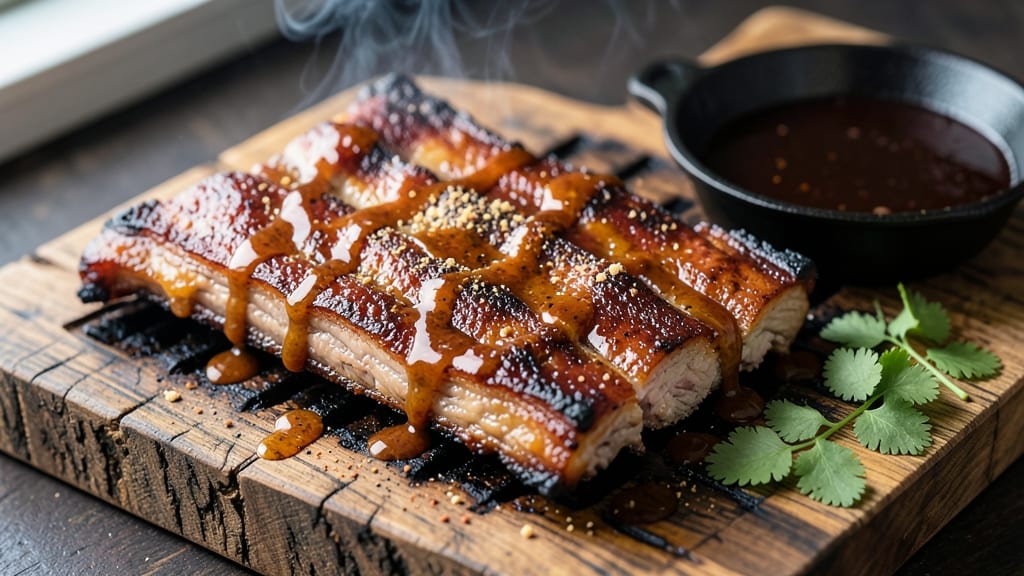
Barbecue pork spare ribs recipe grill delivers the perfect balance of smoky crispy bark and tender pink centers—exactly what turns a cookout into a showstopper. I spent years perfecting this method, learning from Ohio barbecue legends while adapting techniques for home grills. The secret lies in patience: low-and-slow cooking that transforms tough meat into melt-in-your-mouth perfection.
This recipe starts with a dry rub of brown sugar, paprika, and garlic powder that caramelizes into that coveted bark while keeping the meat moist. Whether you're using a pellet grill, smoker, or charcoal setup, the principles remain the same: maintain consistent temperature and never rush the process.
The ribs develop layers of flavor that take hours to build—this isn't a quick weeknight meal, but the results are worth every minute.
By the time you're done, you'll have ribs with a crispy exterior that shatters at every bite and juicy meat that falls off the bone. The bark should be dark and crackly, while the centers remain tender and pink—this is the hallmark of properly cooked spare ribs.
Serve with classic barbecue sides like coleslaw and cornbread for the full experience.
The best part? These ribs reheat beautifully, making them perfect for meal prep or leftovers. I've tested this recipe on everything from backyard charcoal grills to electric smokers, and it delivers consistent results every time. Let's get started on creating ribs that'll have your guests asking for seconds—and thirds.
Ingredients for barbecue pork spare ribs recipe grill
Six ingredients for the rub, plus wood and patience. That's all it takes for ribs that'll have your neighbors begging for your secret.
| Ingredient | Amount | Notes |
|---|---|---|
| Pork Spare Ribs 🍖 | 4 lb | Bone-in, meaty ends included |
| Brown Sugar 🍚 | ½ cup | Light or dark, packed |
| Smoked Paprika 🌶️ | 2 tbsp | For deep smoky flavor |
| Garlic Powder 🧄 | 2 tsp | Freshly ground preferred |
| Kosher Salt 🧂 | 1 ½ tbsp | Diamond Crystal preferred |
| Black Pepper 🌶️ | 1 tsp | Freshly cracked |
| Onion Powder 🧅 | 1 tsp | For subtle depth |
| Mustard Powder 🍯 | 1 tsp | Yellow or Dijon |
| Apple Cider Vinegar 🍎 | ¼ cup | For tangy balance |
| Yellow Mustard 🍯 | ¼ cup | For sauce binding |
| Wood Chips 🌳 | 2 cups | Hickory or applewood |
| Charcoal Chunks 🔥 | 2 lb | For consistent heat |
| Beer 🍺 | ½ cup | Optional, for mop sauce |
The ribs are the star, so grab bone-in spare ribs—those meaty ends are where all the flavor happens. Costco or local butcher shops usually have them pre-cut, but if you're buying whole racks, trim off the silver skin for better bark. Look for ribs with good marbling—they'll stay juicier. I always buy extra, because 4 lbs per person is the sweet spot for leftovers. The wood chips? Hickory gives classic BBQ flavor, but applewood adds a touch of sweetness that pairs perfectly with pork. Soak them in water for 30 minutes before grilling to prevent flare-ups.
No smoked paprika? Regular paprika plus a pinch of liquid smoke works in a pinch. Short on brown sugar? White sugar plus molasses mimics the caramelization (use half the amount of molasses). The apple cider vinegar can be swapped for red wine vinegar if that's what you've got. For the mop sauce, beer is optional—just use more apple cider vinegar and yellow mustard. The key is balancing sweet, smoky, and tangy. If you're using a pellet grill, hickory pellets are a game-changer—they keep the smoke consistent without babysitting the fire. Charcoal chunks? Lump charcoal burns hotter and longer than briquettes, which is exactly what you want for low-and-slow cooking.
These ribs are a marathon, not a sprint—plan for at least 4-5 hours of cooking time. Store your dry rub in an airtight container for up to 1 month** (it gets better with age). The ribs themselves? Wrap them in foil with a splash of apple juice or beer to keep them moist during the long cook. Reheat in the oven at 300°F for 20 minutes—they'll taste even better the next day. I always make a double batch and freeze half. Vacuum-sealed portions keep for 3 months in the freezer, and they reheat like a dream. Just thaw overnight in the fridge before reheating.
Why You'll Love This Recipe
- Five-Ingredient Magic: I swear, these ribs only need five things—no fancy rubs or secret sauces. Toss the ribs in brown sugar, smoked paprika, garlic powder, and salt, then let the grill do the rest. That’s it. Honestly, the simplicity makes me feel like a genius every time.
- Smoky-Sweet Obsession: The brown sugar caramelizes into a sticky, glossy crust while the smoked paprika adds that deep, smoky punch. Between us, the first bite has me closing my eyes—it’s that good. The garlic powder ties it all together without overpowering, like a cozy hug for your taste buds.
- Tailgate or Tuesday: Grill these for a backyard cookout, and they’ll disappear faster than the chips. Or make them on a random Tuesday night when you’re craving something indulgent but don’t want to fuss. My kids don’t even care if it’s a special occasion—these ribs are always a win.
Step-by-step instructions for smoky crispy grilled pork spare ribs
Here's how to transform tough pork ribs into fall-off-the-bone tender morsels with that perfect smoky bark.
Prepare the Ribs and Dry Rub
Start by removing the membrane from the bone side of the 4 lb pork spare ribs. I use a butter knife to slide it off—just grab one corner and pull firmly. Rinse the ribs and pat them completely dry with paper towels; moisture is the enemy of crispy bark.
In a large bowl, combine the 0.5 cup brown sugar, 2 tbsp smoked paprika, 2 tsp garlic powder, 1.5 tbsp kosher salt, 1 tsp black pepper, 1 tsp onion powder, and 1 tsp mustard powder. Mix thoroughly with your hands to break up any sugar clumps. Generously coat each rib with the dry rub, pressing it into the meat so it sticks. Let the ribs sit uncovered on a wire rack for at least 1 hour—this helps the rub penetrate and creates that perfect crust.
Set Up the Grill for Indirect Heat
Fill a smoker box or pouch with the 2 cups wood chips (hickory or applewood work perfectly) and place it on one side of your grill. Arrange the 2 lb charcoal chunks on the opposite side, creating a two-zone fire. Close the lid and let the grill preheat for 15-20 minutes until you see clean, blue smoke and the temperature reaches 225°F. This low-and-slow approach is crucial for tenderizing the meat without drying it out.
Move the ribs to the cooler side of the grill, placing them bone-side down. This positioning lets the meat cook gently while the fat renders down, basting the ribs as they cook. Keep the lid closed as much as possible—every time you open it, you lose heat and add precious time to your cook.
Smoke the Ribs Low and Slow
Cook the ribs for 3 hours, maintaining a steady temperature of 225°F. You'll know it's working when you see a thin layer of smoke clinging to the surface. After 3 hours, flip the ribs bone-side up and continue cooking for another 2 hours. This two-sided cooking ensures even exposure to the heat and smoke, creating that beautiful bark on both sides.
Here's the thing—don't be tempted to peek or move the ribs. The magic happens when they're undisturbed. The ribs are done when they reach an internal temperature of 195°F at the thickest part of the meat (use a meat thermometer for accuracy). At this point, they should be fork-tender with just a slight resistance.
Wrap and Finish for Maximum Tenderness
Once the ribs hit 195°F, it's time for the wrap. I use heavy-duty aluminum foil and wrap the ribs tightly, including the wood chips and any accumulated juices. This technique, known as the "Texas crutch," helps push the ribs through the stall and keeps them moist. Return them to the grill and cook for another 1-1.5 hours, or until the internal temperature reaches 203°F.
During this time, prepare your mop sauce by mixing the 0.25 cup apple cider vinegar, 0.25 cup yellow mustard, and 0.5 cup beer in a small bowl. Brush this sauce on the ribs every 30 minutes to keep them moist and add extra flavor. The ribs are done when they're fork-tender and the bark is deep, dark, and crispy.
Rest and Serve
Remove the ribs from the grill and let them rest for 10-15 minutes before serving. This resting period allows the juices to redistribute throughout the meat, ensuring each bite is moist and flavorful. Cut the ribs between the bones and serve them with extra mop sauce for dipping.
You'll know you've succeeded when each bite delivers that perfect combination of crispy, smoky bark and tender, juicy meat. The ribs should have a deep mahogany color and a rich, complex flavor that balances sweet, smoky, and tangy notes. Enjoy your masterpiece while it's still warm—these ribs are best served fresh off the grill!
Pro Tips For Making Barbecue Pork Spare Ribs Recipe Grill
- CRANK THE HEAT FIRST: The ribs need a sear, not a slow start. Blast the grill to 450°F for the first 10 minutes—this locks in juices and kicks off that smoky crust. I used to skip this, and my ribs ended up soggy under all that sugar.
- TRIM THE FAT, NOT THE FLAVOR: Cut the thick silver skin off the ribs, but leave the fat cap intact—it renders and baste the meat. I learned this the hard way after trimming too much and ending up with dry ribs. The fat is your friend here.
- SALT BEFORE YOU SMOKE: Apply kosher salt twice—once right after trimming (let it sit 30 minutes) and again before hitting the grill. This seasons deep and prevents the ribs from curling up like a scared cat. Yes, it’s extra work, but it’s worth it.
- WRAP IN FOIL AT 165°F: Don’t pull the ribs when they’re still tough. Wrap them in foil when they hit 165°F and let them rest another 30 minutes. This turns the collagen into melt-in-your-mouth goodness. I used to rush it, and the texture suffered.
Make-ahead tips for this dish
Prep Ahead
Start your dry rub mix the night before—it develops deeper flavors when rested. Store it in an airtight container with a parchment paper barrier to prevent moisture. I like to make a double batch and keep it in the freezer for future projects.
The ribs themselves can sit in the fridge, coated and uncovered on a wire rack, for up to 24 hours before cooking. This jumpstarts the bark formation and saves you time on cook day. 💡
Freezer Strategy
For maximum convenience, freeze the uncooked ribs after applying the rub. Wrap each rack tightly in plastic wrap, then place in a ziplock freezer bag** with all the air squeezed out. Label with the date—they'll keep for 3 months.
Thaw overnight in the fridge before grilling. I've even cooked them straight from frozen on my pellet grill, adding 1-2 extra hours to the cook time. Just monitor the temperature closely. ❄️
Sauce Prep
Make your mop sauce the day before and store it in a small jar in the fridge. The flavors meld beautifully overnight, and you won't have to fuss with it during the long cook. I like to double the recipe—extra sauce is perfect for basting and serving on the side.
If you're using beer in your mop, let it come to room temperature first to prevent temperature fluctuations when brushing. 🍺
Partial Cook Method
Save time on busy weekends by cooking the ribs halfway, then finishing them later. After the initial 3-hour cook (when they reach 195°F), wrap them in foil with a splash of apple juice and refrigerate.
Reheat in the oven at 300°F for 1 hour, then finish on the grill for 30-45 minutes to develop that final crispy bark. This works especially well for holiday gatherings when you need to time things perfectly. 📅
Leftovers Magic
Reheat leftovers in the oven at 300°F for 20 minutes with a splash of apple juice or beer to restore moisture. For sandwiches, pile the ribs high on toasted brioche buns with coleslaw and a drizzle of extra sauce.
I also love wrapping them in tortillas with avocado and cilantro for a Pacific Northwest twist. These ribs reheat better than most meats—proof that good technique matters more than freshness. 🌟
Gift-Worthy Packaging
Turn your spare ribs into a showstopping gift by wrapping them in butcher paper with twine and a sprig of rosemary. Include a small jar of your mop sauce and a handwritten note about the cooking time. I've given these as gifts at holiday parties, and they're always a hit.
For extra flair, add a wooden serving board and a bottle of craft beer. The presentation makes them feel special while keeping the focus on the incredible flavor. 🎁
Nutrition facts
Frequently asked questions
How do I know when pork spare ribs are fully cooked?
Use a meat thermometer to check the internal temperature at the thickest part of the meat. Ribs are perfectly done at 195-203°F—they should be fork-tender with just a slight resistance. The bark should be deep mahogany and crispy, while the meat should pull away from the bone easily.
Can I use a gas grill instead of charcoal or a smoker?
For gas grills, create indirect heat by turning on only one side of the burners. Place a drip pan on the hot side and your smoker box (with soaked wood chips) on the cool side. Maintain 225°F and cook using the same low-and-slow method. The flavor will be slightly different but still delicious.
What's the best way to store leftover ribs?
Store cooked ribs in an airtight container with a splash of apple juice or mop sauce to keep them moist. They'll stay fresh in the fridge for 4-5 days. For longer storage, wrap tightly in foil or plastic and freeze for up to 3 months. Reheat in the oven at 300°F for 20 minutes for best results.
Why did my ribs turn out dry instead of tender? Most likely, your cooking temperature was too high or you didn't maintain consistent heat. Keep the grill at 225°F and avoid opening the lid frequently. Also,
Can I make these ribs in an oven instead of on a grill?
Yes! Preheat your oven to 225°F and place the ribs on a wire rack over a baking sheet. Add wood chips to a foil pouch and place it near the ribs for smoke flavor. Cook for 4-5 hours, wrapping in foil with liquid at 195°F to finish. This method works especially well if you don't have outdoor grilling access.