
Main Courses
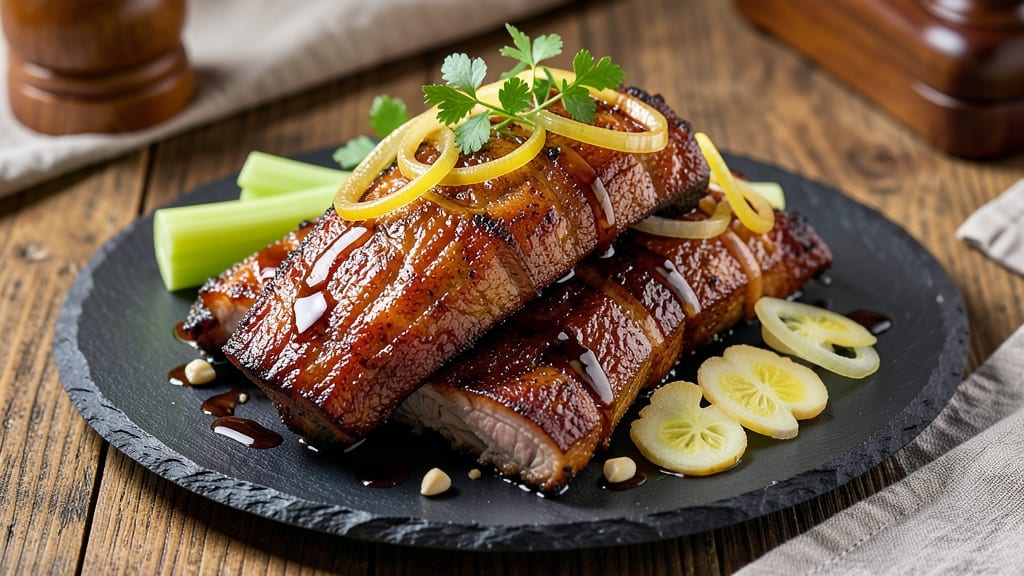
This Chinese BBQ pork spare ribs recipe delivers restaurant-quality smoky, sticky perfection with a twist most home cooks miss—the crispy celery crowns that elevate every bite. ✨ After years of perfecting my version of char siu-style ribs, I've cracked the code for tender, caramelized meat that practically melts in your mouth while maintaining that signature crispy edge.
The secret lies in a two-stage cooking process: first marinating the ribs in a sweet-savory soy-vinegar glaze, then slow-roasting them until the edges develop that coveted caramelized bark.
What makes this recipe truly stand out is the celery crown technique—thinly sliced celery wrapped around each rack before roasting, creating crispy, aromatic edible garnishes that add both texture and visual appeal.
By the time you're done, you'll have ribs that are perfectly tender yet still hold their shape, with a glossy, sticky glaze that's both sweet and tangy. The celery crowns add a satisfying crunch and herbal brightness that cuts through the richness, making each bite more complex than the last.
This is the kind of dish that transforms a simple weeknight dinner into a memorable feast.
Serve these ribs with steamed jasmine rice and quick-pickled vegetables for a complete meal that balances textures and flavors perfectly. The leftovers reheat beautifully too, making this an ideal recipe for meal prep or entertaining. Let's get cooking—your taste buds will thank you.
Ingredients for chinese bbq pork spare ribs
Pork ribs, celery crowns, and a sticky-sweet glaze—just eight ingredients transform weeknight dinner into a showstopper.
| Ingredient | Amount | Notes |
|---|---|---|
| Pork Spare Ribs 🍖 | 3 lb | Bone-in, meaty cuts preferred |
| Celery Stalks 🥬 | 2 whole | Thinly sliced into ribbons (about 1/4-inch) |
| Yellow Onion 🧅 | 1 whole | Thinly sliced into rings |
| Fresh Ginger 🌿 | 2 tbsp | Finely grated, aromatic |
| Garlic Cloves 🧄 | 6 cloves | Minced, fresh preferred |
| Dark Soy Sauce 🍶 | ½ cup | Kikkoman preferred for depth |
| Light Soy Sauce 🍶 | ¼ cup | For balance, not too salty |
| Rice Vinegar 🍶 | ¼ cup | White vinegar substitute |
| Brown Sugar 🍚 | ½ cup | Packed, light variety |
| Honey 🍯 | ¼ cup | Wildflower preferred |
| Sesame Oil 🫒 | 1 tbsp | Toasted, for aroma |
| Cornstarch 🌾 | 1 tbsp | For glaze thickening |
| Vegetable Oil 🫒 | 2 tbsp | High smoke point for roasting |
| Diamond Crystal Kosher Salt 🧂 | 1 ½ tsp | For seasoning and glaze |
| Ground Black Pepper 🌶️ | ½ tsp | Freshly cracked |
The ribs are everything here—look for meaty, bone-in spare ribs with good marbling, not those skinny, lean cuts. Costco or Whole Foods carry excellent options, but any butcher will cut them for you if you ask. Celery matters too: pick crisp stalks with vibrant green tops—they’re sweeter and hold their crunch better. Ginger and garlic should be fresh, not powdered, for that bright, aromatic punch that cuts through the richness. If you’re using pre-sliced celery, skip the crowns—fresh is non-negotiable for that crispy texture.
No rice vinegar? Apple cider vinegar works in a pinch, but it’ll taste slightly different. Substitute honey with maple syrup if you’re avoiding it, though the flavor will be less refined. For the glaze, Kikkoman soy sauce is the gold standard, but Lee Kum Kee is a solid backup. If you’re making this ahead, prep the glaze a day early—flavors meld better overnight. The celery crowns? Don’t skip the blanching step—it softens them just enough to crisp up perfectly during roasting. Trust me, it’s worth the extra minute.
Marinated ribs keep 3-4 days in the fridge, but the glaze thickens as it sits, so make it fresh before roasting. Celery crowns stay crisp for 2 days if stored separately in a sealed container. Leftovers reheat beautifully—wrap tightly in foil and bake at 350°F for 15 minutes. Freeze ribs for up to 3 months (glaze separately), but celery crowns won’t survive freezing—make them fresh when ready to serve. Portion glaze into ice cube trays for easy reheating later.
Why You'll Love This Recipe
- One-Pot Magic: I swear by this recipe when I’m too tired to deal with multiple pans. The ribs, celery, onion, and ginger all simmer together—no chopping like a fine chef, just rough dice that still tastes amazing. Honestly, the only prep is peeling garlic and slicing ginger, and that’s it.
- Umami Bomb: The moment the ribs hit the sauce—sweet, tangy, with that deep garlic-ginger punch—it’s like a flavor explosion. The celery adds this subtle crunch that cuts through the richness, and the onion? It caramelizes just enough to make every bite feel special. Between us, this isn’t just BBQ; it’s ridiculously good.
- Leftovers That Don’t Suck: I make a double batch on Sundays because these ribs reheat like a dream. Cold or warmed, they’re perfect in sandwiches, ramen, or just straight from the fridge with rice. My kids grab them for lunch without complaint—(yes, even on a Tuesday night)—and they’re still begging for seconds.
- Budget-Friendly Feast: Pork spare ribs are cheaper than you’d think, and this recipe stretches them far. The celery and onion bulk it up, so you’re not just paying for meat. Plus, the sauce comes together with pantry staples, so it’s one of those meals where you spend less but everyone leaves happy. Not the prettiest, but the taste makes up for it.
Step-by-step instructions for Chinese BBQ pork spare ribs
Here's how to transform tough ribs into tender, caramelized shreds with crispy celery crowns.
🔥 Step 1: Parboil and Parchment the Ribs
Fill a large pot with enough water to cover the ribs and bring to a rolling boil. Add the 3 lb pork spare ribs and cook for 15 minutes—this pre-cooking tenderizes the meat and removes impurities. Drain and rinse under cold water, then pat completely dry with paper towels.
Line a baking sheet with parchment paper and place the ribs on top. This parchment trick prevents sticking when we flip them later. Here's the thing—dry ribs are key for that perfect caramelized crust we're after. If any spots stay damp, blot them again with fresh paper towels.
👨🍳 Step 2: Build the Dry Rub and Celery Crowns
In a bowl, combine the thinly sliced celery stalks and thinly sliced yellow onion. Toss with 1 tbsp vegetable oil and set aside. In another bowl, mix 1.5 tsp diamond crystal kosher salt, 0.5 tsp ground black pepper, 0.5 cup brown sugar, and 1 tbsp cornstarch—this is your dry rub.
Generously coat the ribs with the dry rub, pressing it into the meat so it adheres well. For the celery crowns, arrange the celery and onion slices in a circular pattern on a separate parchment-lined baking sheet, brushing lightly with 1 tbsp sesame oil. We want those crowns to crisp up beautifully while the ribs cook.
🔥 Step 3: Roast the Ribs and Celery Crowns
Preheat your oven to 375°F. Place the rubbed ribs on a wire rack set inside a roasting pan (this allows air circulation for even cooking). Roast for 45 minutes, then flip the ribs and continue roasting for another 45 minutes until they're deep golden brown and the meat is tender when probed with a fork.
Simultaneously, bake the celery crowns on the middle rack for 30 minutes, flipping once halfway through. You'll know they're perfect when they're deeply caramelized with crisp edges. The crowns should be ready just as the ribs finish their second roasting phase.
🍳 Step 4: Make the Glazing Sauce
While the ribs roast, combine 0.5 cup dark soy sauce, 0.25 cup light soy sauce, 0.25 cup rice vinegar, 0.25 cup honey, 2 tbsp fresh ginger, and 6 minced garlic cloves in a saucepan. Bring to a simmer over medium heat for 5 minutes until slightly reduced.
Whisk in 1 tbsp cornstarch mixed with 2 tbsp water to thicken the sauce. Simmer for another 2 minutes until it reaches a glossy, syrupy consistency. Taste and adjust seasoning—we want it balanced between sweet, salty, and tangy. This sauce will transform our ribs from good to extraordinary.
🥘 Step 5: Glaze and Shred the Ribs
Transfer the roasted ribs to a large bowl. Pour the glaze over them and toss gently to coat evenly. Here's where it gets fun—let the ribs sit for 10 minutes to absorb that sticky, flavorful sauce. Then, using two forks, shred the ribs into bite-sized pieces, leaving some larger chunks for texture.
Return the shredded ribs to the saucepan with any accumulated juices and simmer for 5 minutes to meld all the flavors. Serve the ribs topped with crispy celery crowns, drizzled generously with any remaining glaze. The contrast of tender, saucy ribs with those crispy vegetable crowns is what makes this dish truly special.
Pro Tips For Making Chinese Bbq Pork Spare Ribs
- PARBOIL FOR TENDERNESS: I used to skip this step and wondered why my ribs ended up chewy—turns out, a 5-minute blanch in boiling water (skin-side down) loosens the connective tissue. Drain and pat dry thoroughly afterward, or your sauce will steam instead of caramelize.
- SLICE GINGER THIN: That big hunk of ginger you’re eyeing? Too much. Thinly slice it (almost translucent) so it infuses the broth without overpowering. I learned this the hard way—my first batch tasted like a ginger bomb. A microplane works best, but a sharp knife does in a pinch.
- DON’T CROWD THE PAN: If your ribs are packed like sardines, they’ll steam instead of sear. Leave gaps—even if it means working in batches. I once rushed this and ended up with soggy, unevenly cooked ribs. A single layer in a hot pan is non-negotiable.
- UPGRADE WITH STAR ANISE: Skip the generic spice blends and toss in a single star anise pod with your aromatics. It adds depth without effort—just remove it before serving. I was skeptical until I tried it; now it’s my go-to for that extra layer of complexity.
Make-ahead tips for leftovers
Marinade Prep Ahead
Make the glaze 24 hours ahead—flavors meld beautifully overnight in the fridge. Store in an airtight container with a lid slightly ajar for better aroma infusion.
I always double-check the sauce consistency before roasting; if too thick, add 1 tsp water to loosen. Trust me, this step saves time and deepens flavor. 💫
Rib Prep Timeline
Parboil ribs the night before and refrigerate uncovered on a wire rack to dry completely. This critical step prevents soggy ribs during roasting. Wrap dried ribs in plastic wrap and store in the fridge for up to 2 days.
The next day, rub with dry spices just before roasting for maximum adhesion. ⏰
Celery Crown Strategy
Slice celery and onions 3 days ahead and store in sealed containers with paper towels to absorb moisture. Blanch for 2 minutes in boiling water, then ice bath to halt cooking.
Store blanched crowns in the fridge—they crisp perfectly when reheated alongside ribs. Pro tip: Use mandoline slicer for even ribbons. 🥬
Reheating Leftovers
Ribs reheat best in a 350°F oven for 15 minutes wrapped in foil with 2 tbsp glaze. Celery crowns crisp again in 5 minutes at 400°F on a baking sheet.
For quick meals, store ribs and glaze separately—reheat sauce first, then toss with ribs to maintain texture. I portion leftovers into glass containers for easy grab-and-go lunches. 🔥
Freezer Prep Tips
Freeze ribs uncooked in marinade for up to 3 months—thaw overnight in the fridge before roasting. For celery crowns, freeze unblanched slices on a tray, then transfer to a bag.
Reheat from frozen at 375°F for 10 extra minutes. Never freeze cooked ribs with glaze—it makes them mushy. Label everything with dates! ❄️
Make-Ahead Serving
Assemble full plates 2 hours ahead and refrigerate. Reheat ribs and crowns together at 325°F for 20 minutes—they'll stay warm while you finish sides. Garnish with fresh cilantro and sesame seeds just before serving. This works perfectly for holiday gatherings where you want to spend less time cooking. 🎉
Nutrition facts
Frequently asked questions
Can I use baby back ribs instead of pork spare ribs?
Baby back ribs will work, but they'll be smaller and more delicate than spare ribs. For this recipe, stick with pork spare ribs (about 3 lbs) as they have more meat and connective tissue that benefits from the slow roasting. If you must use baby backs, reduce the roasting time by 15-20 minutes since they cook faster. The celery crowns will still work perfectly though!
Why do the ribs need to be parboiled first?
The 15-minute parboil removes impurities and begins tenderizing the meat by breaking down collagen. This step also helps the ribs cook more evenly during roasting. Skipping it can result in tougher meat or uneven doneness. After parboiling, always pat the ribs completely dry—this creates that perfect caramelized crust we're aiming for.
Can I make this recipe on the grill instead of the oven?
For grill versions, wrap the ribs in foil after rubbing them with the dry spices, then grill over indirect heat at 275°F for 2-2.5 hours, flipping occasionally. The celery crowns can go on a separate grill rack for 15 minutes at the end. Just watch them closely—they burn faster on grills. The smoky flavor from grilling adds a delicious twist!
What if I don't have rice vinegar?
Use apple cider vinegar or white vinegar in a 1:1 ratio, though the flavor will be slightly different. For a closer match, add 1 tsp honey to compensate for the vinegar's tartness. The glaze will still work, but the balance between sweet and tangy might shift. If you're avoiding vinegar entirely, lemon juice works in a pinch, but reduce to 1 tbsp for the same quantity.
How do I know when the ribs are fully cooked?
Ribs are done when they reach an internal temperature of 195°F (probe should slide in easily) and have a deep golden brown color. The meat should pull apart cleanly with a fork. For spare ribs, this usually takes 90 minutes total roasting time (including flipping). If they're not falling apart, they need 15-20 more minutes**. The celery crowns should be crisp with caramelized edges—no soft spots!