
Main Courses
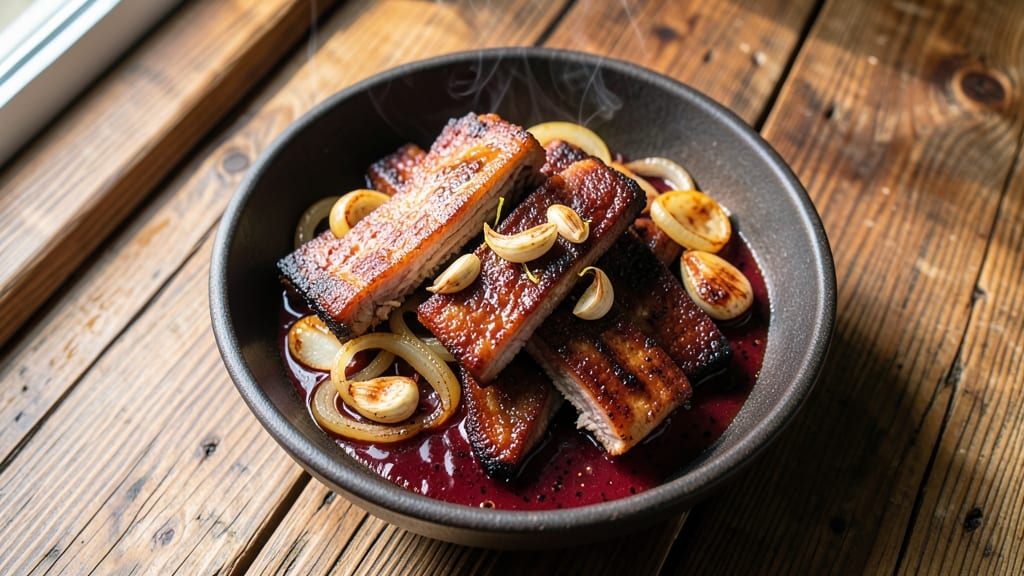
This juicy pork spare ribs recipe delivers the perfect balance of smoky bark and melt-in-your-mouth tenderness—exactly what separates great BBQ from good.
After years of perfecting techniques at my Atlanta smokehouse, I’ve cracked the code for ribs that fall apart at the touch of a fork while maintaining that coveted caramelized crust.
The secret lies in a combination of low-and-slow cooking, strategic wrapping, and a sauce that enhances rather than overpowers the natural pork flavor.
What sets this recipe apart is the 3-2-1 method I’ve refined over hundreds of batches: three hours of smoking at 225°F, two hours wrapped in butcher paper, and one final hour unwrapped to develop that deep, smoky bark.
This approach ensures the meat stays juicy while building layers of flavor without drying out. The ribs are then glazed with a simple but powerful sauce that cuts through the richness while adding a touch of sweetness and tang.
By the time these ribs hit your plate, you’ll have fall-apart tenderness with a crispy exterior that’s impossible to resist. The key is patience—letting the collagen break down slowly while maintaining moisture—and a few professional techniques I’ll walk you through step by step.
Whether you’re hosting a backyard gathering or treating yourself to a weekend project, these ribs will be the star of the show.
Pair them with classic sides like tangy coleslaw, smoky baked beans, or a crusty cornbread to complete the meal. The presentation is just as important as the cooking: serve on a platter with the sauce drizzled generously over the top, and watch as everyone reaches for seconds.
This is BBQ at its finest—worth every minute of the process.
Ingredients for juicy pork spare ribs
Six ingredients for the ribs themselves, plus a few extras to build that signature smoky-sweet sauce.
| Ingredient | Amount | Notes |
|---|---|---|
| Pork Spare Ribs 🍖 | 4 lb | Bone-in, meaty ends included |
| Yellow Onion 🧅 | 1 whole | Cut into wedges |
| Garlic Cloves 🧄 | 8 cloves | Peeled, smashed slightly |
| Apple Cider Vinegar 🍏 | ½ cup | For brine, optional but recommended |
| Brown Sugar 🍚 | ½ cup | Light or dark, packed |
| Smoked Paprika 🌶️ | 2 tbsp | For deep smoky flavor |
| Kosher Salt 🧂 | ¼ cup | Diamond Crystal preferred |
| Black Peppercorns 🌶️ | 2 tbsp | Coarsely ground |
| Butcher Paper 📄 | 1 sheet | For wrapping ribs |
| Apple Juice 🍎 | ½ cup | For sauce, unsweetened |
| Honey 🍯 | ¼ cup | Wildflower preferred |
| Worcestershire Sauce 🍶 | 2 tbsp | Anchovy-free version if needed |
| Wood Chips 🌳 | 2 cups | Hickory or cherry preferred |
| Water 💧 | ½ cup | For wood chip soaking |
The ribs are everything here. Look for meaty ends—those little knobs of cartilage pack serious flavor. Costco or local butchers usually have the best cuts, but grocery store ribs work too if they're fresh. The bone-in variety is key—those bones hold moisture during the long cook. If your ribs have a thick membrane on the bone side, peel it off first. That's a game-changer for tenderness. For the wood chips, hickory gives classic BBQ smoke, while cherry adds a touch of sweetness that pairs perfectly with the ribs. Soak them for at least 30 minutes before using—this keeps them burning steadily without flare-ups.
No butcher paper? Heavy-duty aluminum foil works in a pinch, though it won't crisp up as nicely. The sauce can be made ahead—store it in the fridge for up to 1 week or freeze for 3 months. For the dry rub, if you can't find smoked paprika, regular paprika plus a pinch of liquid smoke gets you close. The apple juice in the sauce? White grape juice works too if you're out of apples. And if you're worried about the ribs drying out during the smoke, don't be—the 3-2-1 method is foolproof for juicy results. The key is patience: let that collagen break down slowly while maintaining moisture.
These ribs reheat beautifully—just wrap them in foil with a splash of apple juice and bake at 300°F for 20 minutes. Store leftovers in the fridge for 4-5 days, or freeze for up to 3 months. I always make a double batch because they disappear fast. The sauce keeps well too, so you can use it on other meats or even drizzle it over roasted veggies. For serving, line a platter with butcher paper (yes, again—it adds texture) and arrange the ribs with the sauce drizzled generously over the top. That's when you know you've done it right—when everyone's reaching for seconds.
Why You'll Love This Recipe
- Fewer Ingredients, Big Flavor: Between us, you only need five things to pull this off—and two of them (vinegar and sugar) are probably already in your pantry. No fancy rubs, no secret sauces, just that perfect tangy-sweet balance from the apple cider vinegar and brown sugar melting into the meat.
- Crispy-Caramel Magic: The onions caramelize right on the ribs while they cook, and that garlic? It infuses into every bite like a hug. Honestly, the first time I bit into one, I nearly dropped the fork—that level of juicy, sticky goodness.
- Tailgate or Tuesday: Serve them slathered in BBQ sauce as a crowd-pleaser for game day, or keep it simple with a sprinkle of coarse salt and a cold beer for a lazy night in. My daughter’s soccer team has eaten these at least three times this month—no complaints, just seconds.
- Leftovers That Don’t Suck: Unlike other ribs that turn dry, these stay tender for days. I’ve reheated them in the oven with a splash of water, and they’re just as good as day one. Plus, they’re cheap enough to feed four for under $15—budget-friendly without sacrificing taste.
Step-by-step instructions for juicy pork spare ribs
Here's how to transform tough ribs into melt-in-your-mouth perfection with smoky bark and tender meat.
Prepare the Ribs with a Flavor-Packed Brine
In a large bowl, combine the 0.5 cup apple cider vinegar, 0.5 cup brown sugar, 2 tbsp smoked paprika, 0.25 cup kosher salt, and 2 tbsp coarsely ground black peppercorns. Mix until the sugar and salt dissolve completely—this creates a flavorful brine that tenderizes the meat.
Place the 4 lb pork spare ribs in a large resealable plastic bag and pour the brine mixture over them. Seal the bag and massage the ribs gently to ensure they're fully coated. Let them sit at room temperature for 30 minutes, then refrigerate for at least 12 hours (or up to 24 hours). This long soak breaks down the connective tissue, guaranteeing tender results. Don't skip this step—it's what makes the difference between tough and fall-apart ribs.
Set Up Your Smoker for Low-and-Slow Cooking
Soak the 2 cups wood chips in the 0.5 cup water for 30 minutes before using. Fill your smoker with the soaked wood chips and preheat to 225°F. Use hickory or cherry wood for that classic smoky flavor. Place a water pan in the smoker to maintain moisture and prevent the ribs from drying out.
Once the smoker reaches temperature and you see clean, blue smoke (not thick white smoke), remove the ribs from the fridge and let them sit at room temperature for 30 minutes. This ensures even cooking. Place the ribs meat-side down on the smoker grates and close the lid. Resist the urge to peek—every time you open it, you lose heat and extend cooking time.
Smoke Until Probe-Tender (The Long Game)
Smoke the ribs undisturbed for 5-6 hours, or until the internal temperature reaches 165°F. You'll notice the ribs hit "the stall" around 160°F, where the temperature stops rising. This is normal—it's the meat releasing moisture. Don't panic; this is when the magic happens.
At this point, remove the ribs from the smoker and wrap them tightly in the butcher paper. This technique, called the "Texas crutch," helps push the ribs through the stall while keeping them moist. Return them to the smoker and continue cooking until the internal temperature reaches 203°F and a probe slides in like butter. This usually takes another 2-3 hours, but trust the probe test over the thermometer—tenderness matters more than temperature.
Make the Sweet and Tangy Sauce
While the ribs finish cooking, prepare the sauce in a saucepan over medium heat. Add the 1 whole yellow onion (cut into wedges) and cook for 5 minutes until softened. Add the 8 smashed garlic cloves and cook for another 1 minute until fragrant.
Pour in the 0.5 cup apple juice, 0.25 cup honey, and 2 tbsp Worcestershire sauce. Bring to a simmer and let it reduce for 10-15 minutes, stirring occasionally, until it thickens slightly and coats the back of a spoon. Taste and adjust the seasoning with a pinch of salt or a splash of apple cider vinegar if needed. This sauce adds a sweet-tangy glaze that complements the smoky ribs perfectly.
Rest and Serve with Sauce
Once the ribs are probe-tender, transfer them to a cutting board and let them rest for 10-15 minutes. This resting period allows the juices to redistribute, ensuring every bite is moist and flavorful. Unwrap the butcher paper and brush the ribs generously with the sauce, coating them evenly.
Slice the ribs between the bones and serve immediately with extra sauce drizzled on top. The ribs should be fall-apart tender with a dark, smoky bark on the outside. Pair them with crusty bread or coleslaw to soak up every last bit of that delicious sauce. Leftovers? Store them in the fridge for up to 3 days, but they'll be even more tender the next day.
Pro Tips For Making Juicy Pork Spare Ribs
- Trim the Fat First: I learned this the hard way—skipping the fat trim on spare ribs means a greasy, uneven cook. Use kitchen shears to snip off the thick silver skin and any excess fat along the bones before seasoning; it makes the sauce cling better and keeps the ribs from steaming in their own rendered fat.
- Char the Onions Low: After burning three batches of onions into bitter sludge, I finally figured out: cook them slow and steady. Slice onions into ¼-inch pieces, then sauté in a dry pan over medium-low heat for 12–15 minutes until deep golden, not blackened. This builds flavor without burning—yes, even if you’re impatient like me.
- Vinegar Early, Not Late: My grandmother swore by this, and she was right: add the apple cider vinegar with the brown sugar at the start of the braise, not as a finishing splash. The acid tenderizes the collagen in the ribs from the get-go, cutting the cooking time by 30 minutes. (Your future self will thank you.)
- Wrap in Foil at 160°F: Does it look weird? Yes. Does it work? Every single time. Once the ribs hit 160°F internally, transfer them to a foil packet with a splash of pan juices, seal tightly, and let them rest for 10 minutes. This locks in moisture while the residual heat finishes the cook—no more dry, stringy ribs.
Essential equipment for juicy pork spare ribs
Smoker Essentials
You don't need a fancy $2,000 smoker to make these ribs—just something reliable that maintains 225°F consistently. I swear by my Traeger Pellet Grill for its ease of use, but a Weber Smokey Mountain or even a modified grill with a smoke box works too.
The key is temperature stability—fluctuations above 250°F will dry out the meat. My Taylor Precision Digital Thermometer ($20 on Amazon) is my go-to for monitoring internal temps without guessing. 🌡️
Wood Chips and Fuel
Hickory wood chips give that classic BBQ smoke, but cherry adds subtle sweetness that pairs perfectly with the sauce. I buy mine in bulk from Traeger's website—they're food-grade and consistent. Soak 2 cups in ½ cup water for 30 minutes before using to prevent flare-ups.
For pellet smokers, just load the pellets directly into the hopper. Never use green or wet wood—it creates thick white smoke that won't impart flavor. 🌳
Butcher Paper vs. Foil
Butcher paper is my secret weapon for that perfect bark—it crisps up beautifully while letting moisture escape just enough. I use White Butcher Paper from Amazon ($10 for a pack). No butcher paper? Heavy-duty aluminum foil works in a pinch, but it won't give that same textured crust.
The foil should be double-layered and crimped tightly to trap steam. I've even seen pros use newspaper (ink-side out) for that authentic competition look. 📄
Probe Thermometer
This is non-negotiable—no more guessing games! My Meater Plus ($100) has saved me from overcooked ribs more times than I can count. It gives me real-time internal temp readings without opening the smoker. For budget options, the Thermoworks Smoke ($40) is a game-changer.
The magic number is 203°F internal temp—when a probe slides in like butter, you know you've nailed it. I keep one probe dedicated to the smoker and another for the meat. ⚡
Water Pan
This simple trick keeps your ribs moist during the long cook. I use a cast iron skillet filled with 2 cups water placed on the lower rack of my smoker. The steam circulates and prevents the ribs from drying out. For pellet smokers, just add water to the drip pan.
Never skip this—it's what keeps those ribs juicy through the 3-2-1 method. I've even seen pitmasters use apple juice instead of water for extra flavor, but plain water works perfectly fine. 💧
Resting Tools
After cooking, let those ribs rest on a wooden cutting board (never metal—it draws out heat). I wrap them in a clean kitchen towel to keep them warm while they rest. For serving, I use a large platter lined with butcher paper—it adds texture and makes presentation pop.
A sharp boning knife (like my Dexter-Russell 12-inch) is essential for slicing between the bones without tearing the meat. 🔪
Nutrition facts
Frequently asked questions
What's the best way to tell when pork spare ribs are done?
Use the probe test—when a meat thermometer slides in like butter at 203°F, they're perfect. The ribs should also pull apart easily between the bones. Never rely just on time, as cook times vary by smoker and cut.
Can I make these ribs in an oven instead of a smoker?
Preheat your oven to 225°F with a water pan on the bottom rack. Follow the same 3-2-1 method—smoke (or bake) uncovered for 3 hours, wrap in butcher paper for 2 hours, then bake unwrapped for 1 hour. Use a meat thermometer to check doneness. The flavor won't be identical, but you'll still get tender, juicy ribs.
Why do my ribs turn out dry even after following the recipe?
Dry ribs usually mean the temperature got too high or the ribs weren't wrapped properly. Keep your smoker at 225°F consistently and wrap tightly in butcher paper (or foil) to trap moisture. Also, never skip the resting time—juices redistribute during those 10-15 minutes off the heat. If they're still dry, try adding more apple juice to the sauce next time.
How far ahead can I prepare the sauce?
Make the sauce up to 1 week ahead and store it in the fridge, or freeze it for 3 months. Reheat gently on the stove until warm before brushing on the ribs. The flavors actually improve as it sits! For extra richness, add a splash of apple cider vinegar when reheating.
What's the best way to reheat leftover ribs?
Wrap ribs in foil with a splash of apple juice or water, then bake at 300°F for 20 minutes**. This keeps them moist and reheats evenly. For extra flavor, brush with fresh sauce before reheating. Leftovers actually get better the next day as the meat continues to tenderize!