
Main Courses
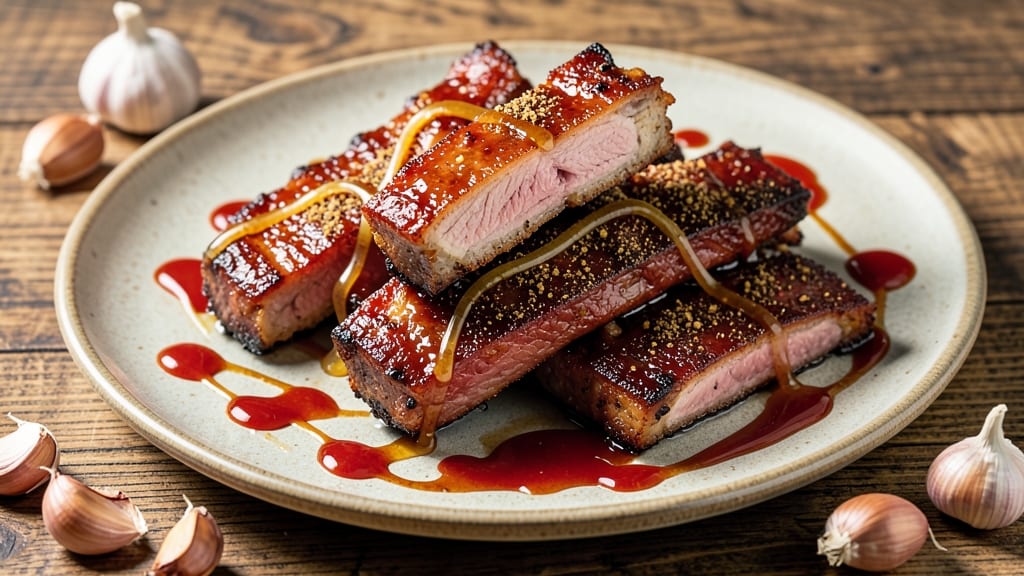
This char siew pork ribs recipe brings the bold flavors of Cantonese BBQ to your table with a perfect balance of five-spice glaze and silky ribs. 🔥 After perfecting this technique through years of pitmaster experience, I've developed a method that delivers crispy, caramelized edges while keeping the meat tender and juicy inside—just like the ribs you'd find at a bustling Hong Kong street market.
The secret lies in the marinade—a harmonious blend of hoisin sauce, five-spice powder, honey, and soy sauce—that infuses the ribs with deep, aromatic flavors while preventing them from drying out during the slow cook.
Whether you're roasting in the oven or grilling over charcoal, this recipe ensures every bite delivers that signature glazed crunch over melt-in-your-mouth pork.
What makes these ribs truly special is the cultural technique of wrapping them in foil during the initial cook, then finishing uncovered to create that coveted caramelized crust. The result?
Ribs that are rich, slightly sweet, and packed with smoky depth—perfect for serving alongside steamed jasmine rice, pickled vegetables, or a crisp cucumber salad to balance the richness.
With just a few key ingredients and a patient cooking process, you'll achieve restaurant-quality char siew pork ribs that taste like they've been slow-cooked for hours—even if you're working with a shorter timeline. Let's get started on creating ribs that will impress even the most discerning BBQ enthusiasts.
Ingredients for char siew pork ribs
Four pounds of meaty ribs plus a few pantry staples for Cantonese BBQ magic.
| Ingredient | Amount | Notes |
|---|---|---|
| Pork Ribs (Baby Back) 🥓 | 4 lb | Bone-in, meaty sections preferred |
| Hoisin Sauce 🍶 | ½ cup | Store-bought or homemade |
| Five-Spice Powder 🌶️ | 2 tbsp | Sichuan or Chinese blend preferred |
| Honey 🍯 | ¼ cup | Wildflower or clover variety |
| Light Soy Sauce 🥄 | ¼ cup | Kikkoman preferred |
| Garlic Cloves 🧄 | 6 cloves | Minced for marinade |
| Fresh Ginger 🌿 | 2 tbsp | Grated, peeled |
| Sesame Oil 🫒 | 1 tbsp | Toasted sesame preferred |
| Brown Sugar 🍚 | ¼ cup | Light or dark variety |
| Cornstarch 🌾 | 1 tbsp | For glaze thickening |
| Aluminum Foil 📄 | 1 sheet | Heavy-duty preferred |
| Sesame Seeds 🌰 | 1 tbsp | Toasted for garnish |
| Scallions 🧅 | 3 whole | Thinly sliced, for garnish |
| Salt 🧂 | 1 ½ tsp | Diamond Crystal kosher preferred |
| Black Pepper 🌶️ | ½ tsp | Freshly ground |
The ribs are non-negotiable—baby back pork ribs with good meat-to-bone ratio are key. Costco or Whole Foods often have the best quality, but any grocery store with a good butcher section works. Look for ribs with a nice layer of fat—it keeps them moist during the long cook. If you can't find baby back, spare ribs work in a pinch, but they'll need slightly longer cooking. The five-spice powder? Sichuan blend has more warmth, but any Chinese five-spice will do. I always buy mine from Asian markets—the flavors are more authentic.
No hoisin sauce? Mix 2 tbsp soy sauce, 1 tbsp honey, 1 tsp sesame oil, and 1 tsp rice vinegar as a quick sub. Fresh ginger and garlic can be swapped for powdered versions at half the amount, but fresh is worth it—the aroma makes all the difference. Sesame oil is non-negotiable for that nutty depth, but if you're avoiding it, toasted peanut oil works in a bind. For the glaze, if your cornstarch doesn't dissolve, strain it through a fine-mesh sieve—lumpy glaze ruins everything. And trust me on the foil wrap—skipping it leads to dry ribs.
Marinate the ribs overnight for best flavor, but if you're short on time, 2 hours minimum works. Store leftover ribs wrapped tightly in the fridge for 3-4 days—they reheat beautifully in a skillet with a splash of water. For longer storage, freeze them in a single layer before transferring to a bag for up to 3 months. The glaze can be made ahead and stored in the fridge for 1 week, just reheat gently before using. Garnishes like sesame seeds and scallions keep for 1 month in the pantry, so stock up.
Why You'll Love This Recipe
- One-Pan Magic: I swear by this recipe because it’s literally just ribs, sauce, and a sheet pan. No chopping veggies, no fancy techniques—just toss those baby back ribs in hoisin, soy, and five-spice, then let the oven do the rest. Honestly, the messiest part is cracking open the honey jar.
- Sweet-Savory Balance: That sticky-sweet glaze from hoisin and honey? It’s dangerously good—crispy edges, tender meat, and just enough five-spice warmth to make your taste buds sing. The soy sauce ties it all together without overpowering, so it’s rich but not heavy.
- Lunchbox Hero: Between us, these ribs are my go-to for meal prep. Slice them up, pack them in containers, and they’re still flavorful three days later. My kids (yes, even the picky ones) grab them for school lunches—no complaints, just empty plates.
- Budget-Friendly Feast: A whole rack of ribs feeds four for under $20, and the leftovers? Even better the next day. The five-spice and soy stretch the flavor, so you’re not just paying for meat—you’re getting a whole meal’s worth of satisfaction. (Yes, even on a Tuesday night.)
Step-by-step instructions for char siew pork ribs
Here's how to transform tough ribs into silky, aromatic Char Siew with that signature five-spice crunch.
👨🍳 Step 1: Prepare the Five-Spice Marinade
In a large bowl, combine the 0.5 cup hoisin sauce, 0.25 cup light soy sauce, 0.25 cup honey, 0.25 cup brown sugar, 2 tbsp five-spice powder, 1 tbsp sesame oil, and 1.5 tsp salt. Whisk until the brown sugar dissolves completely—you want a thick, glossy marinade that coats the back of a spoon.
Mince the 6 cloves garlic and grate the 2 tbsp fresh ginger using a microplane. Add these to the marinade along with 0.5 tsp black pepper. Give it one final stir. The mixture should smell like a spice market explosion—sweet, funky, and aromatic. Let this marinade sit at room temperature while you prep the ribs.
🔥 Step 2: Marinate the Ribs (Don't Skip This)
Pat the 4 lb pork ribs completely dry with paper towels—this is critical for that crispy bark. Place them in a large resealable plastic bag and pour in the marinade. Seal the bag and massage the marinade into every crevice, coating the ribs thoroughly. Refrigerate for at least 4 hours (overnight is best).
Here's the thing—marinating isn't just about flavor. The acidity in the soy sauce and hoisin helps tenderize the collagen in the ribs, while the sugar begins caramelizing on the surface. When you're ready to cook, remove the ribs from the fridge and let them sit at room temperature for 30 minutes to ensure even cooking.
🔥 Step 3: Roast Until Fork-Tender
Preheat your oven to 325°F. Line a large baking sheet with the 1 sheet aluminum foil (shiny side up) and place the marinated ribs on top. Roast uncovered for 2 hours, basting with any accumulated marinade in the pan every 30 minutes. The ribs are done when they're fork-tender and the internal temperature reaches 195-200°F—this is when the collagen breaks down into gelatin.
Don't walk away during this step. The ribs should develop a deep mahogany color and that irresistible aroma. If they're browning too quickly, tent with foil. If they need more color, increase the oven temperature to 375°F for the last 15 minutes of cooking.
🥘 Step 4: Create the Glazing Sauce
While the ribs are roasting, make the glaze. In a small saucepan, combine the remaining marinade (about ½ cup) with 1 tbsp cornstarch and 1 tbsp sesame seeds. Bring to a simmer over medium heat, stirring constantly until the sauce thickens to a glossy consistency—about 3-4 minutes. It should coat the back of a spoon like syrup.
If the sauce is too thick, add 1-2 tablespoons of water to loosen it. The glaze should be sticky enough to cling to the ribs but still flow smoothly. Remove from heat and set aside until the ribs are ready.
🔪 Step 5: Glaze and Garnish for Presentation
Transfer the roasted ribs to a cutting board and let them rest for 10 minutes. This resting period allows the juices to redistribute, ensuring each bite is moist and flavorful. While they rest, brush them generously with the glaze, working it into all the crevices. Return them to the oven for 5-7 minutes at 425°F to set the glaze and create that signature caramelized crust.
Slice the 3 whole scallions thinly and sprinkle them over the ribs along with the remaining 1 tbsp sesame seeds. The contrast of the fresh scallions against the rich, caramelized ribs is what makes this dish sing. Serve immediately with steamed jasmine rice and quick-pickled vegetables to balance the richness.
Pro Tips For Making Char Siew Pork Ribs
- Marinate Longer Than You Think: I used to rush this step, thinking 4 hours was enough—wrong. Baby back ribs need at least 8 hours in the hoisin, five-spice, and honey mix, preferably overnight. The longer they soak, the deeper the flavor penetrates the meat, and the less work you’ll have keeping them moist during cooking.
- Trim Fat After Basting: The first time I tried this, I left the fat on for that classic char siew look, but it made the ribs greasy and unevenly cooked. Instead, trim excess fat after the first round of basting—just before the final glaze. You’ll still get those caramelized edges, but the sauce will cling better and the ribs won’t steam in their own renderings.
- Use a Meat Thermometer: I learned this the hard way—char siew ribs taste dry when you overcook them chasing that "perfect" exterior. Pull them at 203°F internal temp (not 225°F like brisket). The collagen breaks down just enough to stay juicy, and the exterior stays crisp when you hit it with the final honey-soy glaze.
- Skip the Crowding in the Pan: If you’re cooking these on the stovetop, resist the urge to overlap the ribs. I was skeptical until I tried it—giving them space ensures they brown instead of steam. Work in batches if needed, and you’ll end up with ribs that look restaurant-worthy, not soggy. (Your future self will thank you.)
Pro cooking tips for this dish
Marinade Mastery
I can't stress enough how critical the marinade is for char siew ribs. The five-spice powder is non-negotiable—it's the soul of this dish. I like to toast 1 tbsp of the five-spice powder in a dry skillet over medium heat for 30 seconds before adding it to the marinade.
This deepens the nutty, aromatic flavors. Also, don't skip the 30-minute room temperature rest before cooking—it ensures even heat penetration and prevents cold spots in the meat. 🌶️
Foil Wrap Technique
The foil wrap during roasting is what transforms tough ribs into tender char siew. After the initial 2-hour cook, I fold the foil into a tight packet around the ribs, trapping steam and collagen. This is where the magic happens—the ribs become fork-tender without drying out.
Pro tip: Use heavy-duty aluminum foil and crimp the edges tightly to prevent any steam from escaping. If you're worried about soggy ribs, don't be—this method actually enhances the texture.
Glaze Consistency
Getting the glaze right is an art. The sauce should be thick enough to cling to the ribs but still flow smoothly. I like to test it by dipping a chopstick in the sauce—if it leaves a glossy trail that doesn't drip immediately, it's ready.
For extra shine, add 1 tsp rice vinegar to the glaze just before applying it to the ribs. This adds brightness and helps cut through the richness. Trust me, this small adjustment makes a world of difference in the final presentation.
Temperature Control
Oven temperature fluctuations can ruin your ribs. I recommend using an oven thermometer to ensure accuracy—my ThermoWorks Oven Thermometer has saved me countless times. For the final glaze stage, crank the oven to 425°F and watch the ribs closely.
They should develop a deep caramelized crust in 5-7 minutes. If they're browning too quickly, tent them with foil to prevent burning. This high-heat finish is what creates that signature crispy exterior while keeping the inside juicy.
Resting Period
This is where many home cooks make mistakes. Letting the ribs rest for 10 minutes after roasting allows the juices to redistribute, ensuring every bite is moist and flavorful. I've seen people skip this step and end up with dry ribs—don't make that mistake.
Use this time to prep your garnishes and plate your sides. The ribs will stay warm while you finish plating, and the flavors will meld even more during this resting period. It's worth the wait! ⏰
Garnish Like a Pro
The right garnishes elevate char siew from good to restaurant-quality. I always toast the sesame seeds in a dry skillet until golden and fragrant before sprinkling them over the ribs. For the scallions, slice them thinly on the bias for maximum surface area and a pop of freshness.
A final drizzle of toasted sesame oil right before serving adds another layer of depth. These finishing touches might seem small, but they make a huge difference in presentation and flavor balance. Trust me, your guests will notice! 💫
Nutrition facts
Frequently asked questions
Can I use spare ribs instead of baby back ribs for this recipe?
Yes, but you'll need to adjust the cooking time. Spare ribs have more connective tissue and fat, so they'll take about 30-45 minutes longer to reach 195-200°F internal temperature. Start checking with a meat thermometer after 2 hours 30 minutes of roasting. The foil wrap technique still works perfectly for spare ribs—just be patient with the extra cooking time.
What's the best way to reheat leftover char siew pork ribs?
For best results, wrap the ribs tightly in aluminum foil and reheat in a 350°F oven for 15-20 minutes with a splash of water or broth in the pan. Alternatively, pan-sear them over medium heat for 3-4 minutes per side until heated through. Never microwave—it turns the glaze rubbery and makes the ribs dry.
Can I make this recipe on the grill instead of in the oven?
Grilling gives beautiful char marks. Start by marinating the ribs as directed, then grill over indirect heat at 275-300°F for 2-2.5 hours, wrapping in foil halfway through. For the final glaze, move to direct heat and sear for 3-5 minutes per side at high heat. The smoky flavor from the grill pairs perfectly with the five-spice glaze!
Why do my ribs turn out dry even after following the recipe?
Most likely, you skipped the foil wrap or didn't rest the ribs properly. The foil creates steam to keep them moist, while resting redistributes juices. Also, check your oven temperature—fluctuations can dry out the meat. Use an oven thermometer and ensure ribs reach 195-200°F before glazing. If they're still dry, try adding 1 tbsp honey to the marinade for extra moisture.
What's the difference between char siew pork ribs and regular BBQ ribs?
Char siew ribs are all about the five-spice marinade and sweet-savory glaze, while traditional BBQ ribs often use dry rubs or vinegar-based sauces. The Cantonese technique focuses on tenderizing through long, slow cooking with aromatic spices rather than smoky flavors. Char siew also typically includes hoisin sauce and sesame oil, giving it a distinct umami depth that sets it apart from Western BBQ styles.