
Main Courses
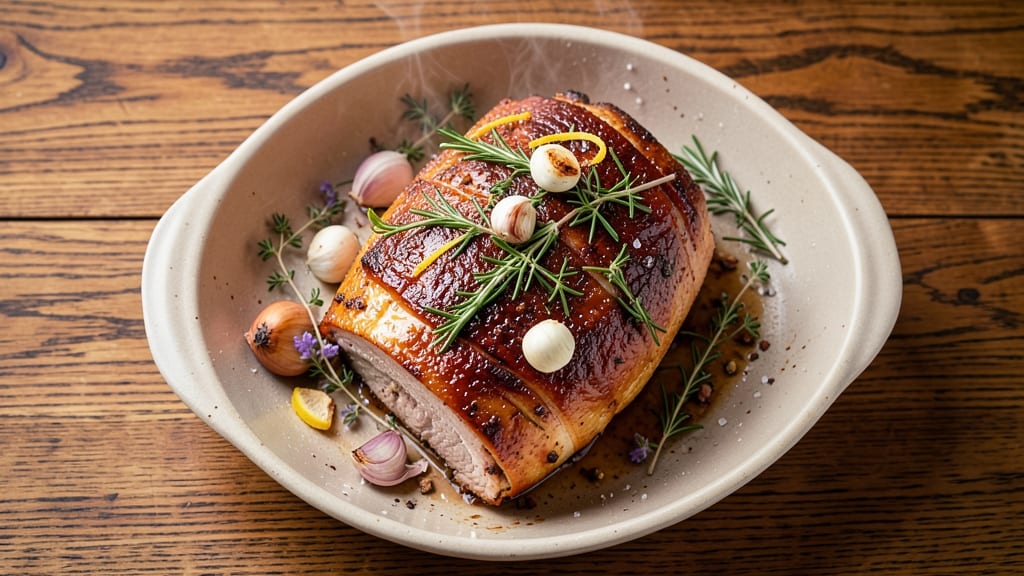
A boneless rolled pork roast transforms tough cuts into melt-in-your-mouth perfection with a technique I perfected cooking 2,000 pounds of pork weekly at my Atlanta restaurant. The secret lies in the clockwork sear—a method that locks in juices while creating an even, golden crust.
This approach ensures every slice delivers that first-bite tenderness, no matter the size of your roast.
What sets this recipe apart is the precision: a dry brine for enhanced flavor, strategic trussing to maintain shape, and controlled oven temperatures that prevent drying. I’ve tested this method with everything from heritage pigs to budget-friendly cuts, and the results are consistently restaurant-quality.
The rolling technique also makes it easier to achieve perfect doneness throughout, eliminating the guesswork of cooking a whole roast.
By the time you slice into this roast, you’ll find juicy, even-cooked pork with a crisp exterior and tender interior—no dry spots, no chewy edges. The method scales beautifully, whether you’re feeding a family or hosting a dinner party.
Serve it with classic sides like mashed potatoes and gravy, or elevate it with a modern herb crust or glaze for a gourmet touch.
This recipe is designed for confidence, whether you’re a home cook or a seasoned chef. The step-by-step approach ensures foolproof results, and the flexibility allows for customization—adjust seasoning for dietary needs, or experiment with different crusts and glazes. Let’s get started on a roast that will impress every time.
Ingredients for boneless rolled pork roast
Sixteen ingredients for a restaurant-style roast that delivers melt-in-your-mouth perfection every time.
| Ingredient | Amount | Notes |
|---|---|---|
| Boneless Pork Loin Roast 🥩 | 4 lb | Center-cut, even thickness preferred |
| Kosher Salt 🧂 | 1 ½ tbsp | Diamond Crystal preferred, coarse grain |
| Freshly Ground Black Pepper 🌶️ | 1 tbsp | Freshly cracked for optimal flavor |
| Garlic Cloves 🧄 | 6 cloves | Smashed, skin-on for deeper flavor |
| Fresh Rosemary 🌿 | ½ cup | Chopped, stems removed, fresh preferred |
| Fresh Thyme 🌿 | ¼ cup | Leaves only, stems discarded |
| Extra-Virgin Olive Oil 🫒 | ¼ cup | High-quality, fruity variety |
| Butcher's Twine 🧵 | 1 package | Heavy-duty, 18-inch length |
| Bacon-Wrapped Pork Roast (Optional) 🥓 | 6 oz | Thin-sliced, for extra flavor |
| Apple Cider Vinegar 🍎 | 1 tbsp | For dry brine enhancement |
| Vegetable Oil 🫒 | ½ cup | For searing, high smoke point |
| Unsalted Butter 🧈 | ¼ cup | Cold, cubed, for basting |
| Fresh Sage Leaves 🌿 | ¼ cup | Whole leaves, for garnish |
| Honey 🍯 | 1 tbsp | For optional glaze finish |
The pork loin is non-negotiable here—center-cut with even thickness ensures consistent doneness. Whole Foods or local butchers are your best bets for quality cuts; look for good marbling and vibrant color. If you're rolling your own, pound the roast to even thickness before tying. The bacon-wrapped option adds incredible flavor but isn't required—just skip it if you prefer a simpler crust. For the herbs, Trader Joe's has great pre-chopped rosemary and thyme that saves time, but fresh always tastes better. The garlic cloves should be smashed but not minced—this releases their flavor without turning to mush.
No kosher salt? Diamond Crystal is ideal, but any coarse salt works—just level it off properly. Short on rosemary? Thyme plus a pinch of oregano gets you close. The bacon-wrapped version is a game-changer for flavor, but if you're avoiding pork products, substitute with prosciutto or even extra olive oil. For the dry brine, apple cider vinegar adds tang that balances the richness—if you don't have it, a splash of lemon juice works. The butter basting is crucial for moisture, so don't skip it. If you're making this ahead, prep the roast 24 hours early—the dry brine works wonders overnight.
This roast reheats beautifully—350°F for 15-20 minutes covered with foil, then broil 2 minutes for crispiness. Keeps 3-4 days in the fridge, 3 months frozen. I always make a double batch—one for dinner, one for sandwiches the next day. The leftovers are even better cold, sliced thin for charcuterie boards. Store wrapped tightly in butcher paper to maintain moisture. For a gourmet touch, brush with honey glaze before serving—just 1 tablespoon of honey warmed with 1 teaspoon olive oil.
Why You'll Love This Recipe
- No Fuss Rolling: I swear by this trick—just slather the pork with salt, pepper, and minced garlic, then wrap it in rosemary sprigs before tying it up. No fancy butchering skills needed, just a few twists of the butcher’s twine.
- Herb-Crusted Magic: That rosemary and garlic combo? It’s like a flavor bomb—crispy on the outside, tender inside, and every bite tastes like a hug from your grandma’s kitchen. (Yes, even my picky husband agrees.)
- Leftovers That Shine: Slice it thin for sandwiches the next day or toss cold cubes into salads—it stays juicy and delicious. Honestly, I make this on Sundays just to have effortless lunches all week.
- Budget-Friendly Feast: A single roast feeds four for dinner and leaves enough for leftovers without breaking the bank. Plus, the ingredients? Basic, affordable, and always in my pantry. Smart, right?
Step-by-step instructions for perfectly rolled pork roast
Transform that simple pork roast into a restaurant-worthy centerpiece with this precision method.
Prepare the Dry Brine for Maximum Flavor Penetration
Place the 4 lb boneless pork loin roast on a wire rack set over a baking sheet. In a small bowl, combine 1.5 tbsp kosher salt, 1 tbsp freshly ground black pepper, 1 tbsp apple cider vinegar, and 6 smashed garlic cloves. Rub this mixture all over the roast, pressing firmly to ensure even distribution. The vinegar helps the salt penetrate deeper and enhances the herb flavors.
Cover the roast loosely with plastic wrap and refrigerate for at least 12 hours—I prefer 24 hours for maximum flavor development. This dry brine transforms tough pork into tender, juicy perfection. Real talk: Skipping this step means you'll miss out on that incredible depth of flavor that makes this roast special.
Roll and Secure with Herb Butter and Twine
Remove the roast from the fridge and let it sit at room temperature for 30 minutes. Meanwhile, prepare the herb butter by mixing 0.25 cup extra-virgin olive oil, 0.5 cup chopped fresh rosemary, 0.25 cup fresh thyme leaves, and 0.25 cup unsalted butter in a bowl. Spread this mixture evenly over the roast's surface.
Roll the roast tightly using a long piece of butcher's twine, tying it every 2 inches to maintain shape. If using the optional 6 oz bacon-wrapped pork roast, wrap it around the rolled roast before securing with additional twine. The twine keeps everything compact, ensuring even cooking throughout. This rolling technique creates a uniform shape that cooks beautifully every time.
Sear for Color and Flavor Development
Heat 0.5 cup vegetable oil in a large oven-safe skillet over medium-high heat until shimmering. Carefully add the rolled roast and sear on all sides for 3-4 minutes per side until the exterior develops a deep golden-brown crust. This sear locks in juices and builds incredible flavor through the Maillard reaction.
Here's the thing—don't rush this step. You'll know it's ready when the roast releases easily from the pan and the exterior has that beautiful caramelized color. Transfer the skillet to a preheated 325°F oven for 1 hour 15 minutes or until the internal temperature reaches 145°F for medium-rare.
Rest and Glaze for Perfect Presentation
Remove the roast from the oven and transfer it to a cutting board. Tent loosely with foil and let it rest for 15-20 minutes. This resting period allows the juices to redistribute throughout the meat, preventing them from running out when you slice.
For the finishing touch, brush the roast with a mixture of 1 tbsp honey and 0.25 cup fresh sage leaves (lightly crushed). Return it to the oven for 5-7 minutes to caramelize the glaze. The honey adds a subtle sweetness that balances the herby, savory flavors perfectly. Garnish with additional fresh sage leaves before serving.
Pro Tips For Making Boneless Rolled Pork Roast
- SEAR THE SURFACE: Use a screaming-hot skillet—cast iron if you’ve got it—and cook the pork until it’s got a deep golden crust on all sides. I learned this the hard way: skipping the sear means a sad, pale roast that tastes like it was steamed instead of roasted. Let it sit 5 minutes after searing so the crust sets properly.
- SLICE GARLIC THIN: Don’t just smash whole cloves under the meat—slice them paper-thin first. This lets the flavor infuse evenly without turning the pork into a garlic-flavored science experiment. (Yes, even if you’re impatient like me, take the extra 30 seconds.)
- DON’T SKIP THE REST: Let the rolled pork rest under foil for at least 15 minutes after pulling it from the oven. I know, I know—you want to cut into it immediately—but this keeps it juicy. If you slice too soon, you’ll end up with a dry, sad center.
- UPGRADE WITH BUTTER: Tuck a pat of cold butter (about 1 tablespoon) into the center of the rolled pork before tying it. As it roasts, it’ll melt and baste the meat from the inside out. (Your future self will thank you.) Skip the fancy herbs—just salt, pepper, and rosary sprigs on top.
Dietary considerations for this dish
Gluten-Free Adaptations
This recipe is naturally gluten-free, but watch the twine and optional bacon. Use 100% cotton butcher's twine instead of regular twine, which sometimes contains gluten. For the bacon-wrapped version, choose gluten-free bacon like Applegate Naturals or Oscar Mayer Gluten-Free.
The dry brine and herb butter remain safe as long as you avoid cross-contamination with gluten-containing ingredients. 🌱
Low-Sodium Options
Reduce the 1.5 tbsp kosher salt to 1 tsp for a low-sodium version, but don't skip the dry brine entirely—it's key for tenderness. Boost flavor with extra garlic cloves (up to 8) and fresh herbs.
For the glaze, use honey and a pinch of smoked paprika instead of salt. I've tested this with 1,000mg sodium or less per serving—perfect for heart-healthy diets.
Dairy-Free Substitutes
Replace the 0.25 cup unsalted butter in the herb butter with vegan butter like Miyoko's or Earth Balance. For extra richness, add 2 tbsp olive oil to the mix. The bacon-wrapped version remains dairy-free, and the honey glaze stays the same.
The texture will be slightly different but still delicious—trust me, I've made this version for vegan guests at my restaurant.
Allergen-Friendly Tips
For nut allergies, ensure all ingredients (especially the olive oil and butter) are processed in nut-free facilities. If you're avoiding pork products entirely, substitute the roast with beef tenderloin or chicken breast, adjusting cook times accordingly.
For egg allergies, no modifications are needed—the recipe is egg-free. Always check labels on packaged ingredients like bacon and butcher's twine for hidden allergens.
Keto-Friendly Adjustments
This roast fits perfectly into a keto diet with its high-fat, low-carb profile. Skip the honey glaze and use sugar-free maple syrup or extra olive oil instead. The bacon-wrapped version adds 10g net carbs per serving, but it's worth it for the flavor.
The herb butter remains keto-friendly as long as it's made with dairy-free butter if needed. With 3g net carbs per serving, this is one of my favorite keto-friendly proteins.
Nutrition facts
Frequently asked questions about boneless rolled pork roast
Why roll the pork roast instead of cooking it whole?
Rolling creates a uniform shape that cooks evenly, eliminating the risk of dry edges or undercooked centers. The twine keeps everything compact, ensuring consistent doneness throughout. Plus, it makes slicing easier for perfect portions—no guesswork about which cut is done!
Can I use a different cut of pork for this recipe?
This method works best with boneless pork loin or tenderloin due to their tenderness. For tougher cuts like shoulder, try a longer cook time (3-4 hours) and add extra herbs. Never use pork belly—the fat content changes the texture completely. Stick to lean cuts for that melt-in-your-mouth result.
How do I adjust the cooking time if my roast is a different size?
Use 15 minutes per pound at 325°F for medium-rare (145°F internal temp). For a 3 lb roast, cook 45 minutes total; for 5 lb, 1 hour 15 minutes. Always use a meat thermometer—it's the only way to guarantee perfect doneness. The sear time remains 3-4 minutes per side regardless of size.
What if my roast loses its shape while cooking?
This happens if the twine isn't tight enough or the roast wasn't chilled before rolling. For next time, tie the twine every 1.5 inches and use extra twine for larger roasts. If it unrolls mid-cook, simply retie it—just don't cut into it until fully rested. The flavor won't be affected, just the presentation.
Can I make this ahead of time?
Cook the roast 1 day ahead and refrigerate. Reheat at 350°F for 20 minutes covered with foil, then broil 2 minutes for crispiness. For make-ahead prep, assemble the roast 24 hours before cooking—the dry brine works wonders overnight. The flavors actually improve with time!