
Main Courses
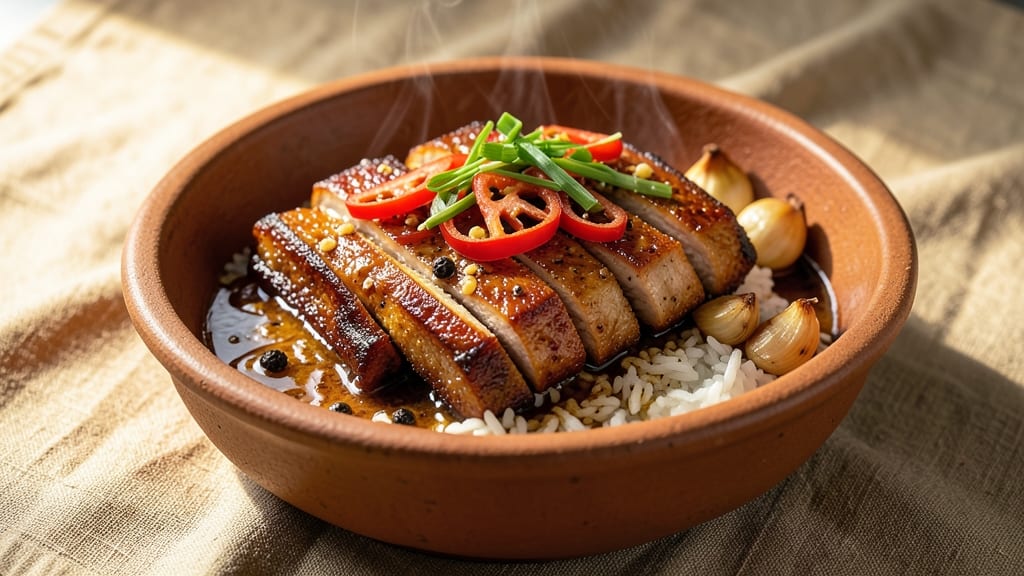
This braised Filipino pork belly recipe transforms tough cuts into melt-in-your-mouth perfection with a caramelized vinegar-glaze that's crisp on the outside and tender inside.
The secret lies in slow cooking with soy sauce, garlic, and vinegar—a classic Filipino flavor combination that creates a rich, tangy sauce while keeping the meat juicy. After years of perfecting this dish, I've developed a foolproof method that delivers restaurant-quality results at home, every time.
The process begins with marinating the pork belly in a blend of soy sauce, vinegar, and spices, which tenderizes the meat and infuses it with deep umami flavors. As it braises, the pork belly releases its natural fats, creating a glossy, caramelized crust that adds texture and richness.
This method ensures the meat stays moist while developing layers of flavor that make it irresistible.
By the end, you'll have a dish that's rich, savory, and slightly tangy—a perfect balance of textures and flavors that pairs beautifully with steamed rice, atchara (Filipino pickled vegetables), or a simple green salad.
The aroma alone will have everyone gathering around the table, and the first bite will confirm why this recipe is a staple in Filipino households.
What makes this recipe truly special is its versatility—serve it as a main course for family dinners or bring it to gatherings where it's sure to be a crowd-pleaser. The slow-cooked method means you can prepare it ahead of time, allowing the flavors to deepen even more.
Let's get started on creating this comforting, flavorful dish that's sure to become a favorite.
Ingredients for braised pork belly recipe filipino
Six ingredients transform tough pork belly into restaurant-quality Filipino comfort food.
| Ingredient | Amount | Notes |
|---|---|---|
| Pork Belly 🥓 | 3 lb | Skin-on, cut into 2-inch cubes |
| Soy Sauce 🥄 | ½ cup | High-quality, preferably Japanese |
| White Vinegar 💧 | ¼ cup | White or cane vinegar preferred |
| Garlic Cloves 🧄 | 8 cloves | Minced, fresh preferred |
| Brown Sugar 🍯 | ¼ cup | Packed, light or dark |
| Black Peppercorns 🌶️ | 1 tsp | Freshly cracked, coarse grind |
| Bay Leaves 🌿 | 2 whole | Dried, standard size |
| Onion 🧅 | 1 whole | Yellow or white, sliced |
| Canola Oil 🫒 | 2 tbsp | For searing, neutral flavor |
| Water 💧 | 1 cup | For deglazing |
| Salt 🧂 | 1 ½ tsp | Kosher salt, adjust to taste |
| Green Onions 🧅 | 4 whole | Sliced, for garnish |
| Filipino Chili Sauce 🌶️ | 1 tbsp | Optional, for heat |
The pork belly is non-negotiable here—look for thick-cut, skin-on pieces at your local butcher or Asian market. Costco often carries pre-cut pork belly, but check the marbling; more fat means more flavor. If you can't find it fresh, frozen works in a pinch, just thaw it overnight in the fridge. The skin should be crispy and golden by the end, so don't skip it. For the soy sauce, Japanese brands like Kikkoman or Yamasa add depth, while vinegar should be white or cane—avoid apple cider if you want that classic tang. Garlic? Fresh, never powdered—it's the backbone of the flavor profile.
No soy sauce? Coconut aminos or tamari work in a bind, though the flavor will be slightly different. Vinegar substitute? Lemon juice at half the amount, but the dish won't have the same depth. Brown sugar can be swapped for white sugar or coconut sugar, though the caramelization will vary. The bay leaves are optional but recommended—they add an earthy note that balances the richness. If you're avoiding chili, skip the Filipino chili sauce entirely; the dish is still bold without it. For the onions, yellow or white are traditional, but red adds a nice pop of color if you're feeling adventurous.
This dish tastes even better the next day, so plan ahead. Store leftovers in an airtight container in the fridge for up to 5 days, or freeze for 3 months. The sauce thickens as it cools, so add a splash of water or vinegar to loosen it before reheating. Garnish with green onions just before serving—they add a fresh contrast to the rich, caramelized pork. Double the batch if you're feeding a crowd; it reheats beautifully and freezes like a dream. The pork belly stays tender for days, making this a perfect make-ahead meal for gatherings.
Why You'll Love This Recipe
- One-Pot Magic: I swear by this for lazy nights—just sear the pork belly, toss in garlic and vinegar, then let it simmer. No chopping, no fussing, and the house smells like heaven while you’re still deciding what to watch on TV.
- Sweet-Savory Bomb: That balance of soy, vinegar, and brown sugar? It’s ridiculously good—crispy edges, tender meat, and a glossy sauce that clings like it’s been best friends with the pork forever. My kids fight over the last bite (and I don’t even care).
- Leftovers That Don’t Suck: Honestly, this tastes better the next day. The flavors meld into something deeper, and it reheats like a dream—perfect for packed lunches or feeding unexpected guests. I’ve fed a crowd with just this dish, and no one’s ever complained.
- Budget Stretch King: Pork belly’s cheaper than you think, and a slab lasts forever. Between the braising and reheating, I get at least four meals out of one cut. Plus, the ingredients? Basic pantry stuff—no specialty trips or wasted money. Smart, simple, and satisfying.
Step-by-step instructions for braised Filipino pork belly
Master this technique and you'll achieve tender, caramelized pork belly with a glossy vinegar glaze every time.
Sear the Pork Belly for Maximum Flavor
Heat a large Dutch oven over medium-high heat and add the 2 tablespoons canola oil. Once shimmering, carefully add the 3 pounds pork belly in a single layer, skin-side down. Press down gently with a spatula for 1 minute to render fat and create a solid crust. This prevents curling and ensures even browning.
Cook undisturbed for 5-6 minutes until the pork develops a deep golden brown crust on all sides. You'll know it's ready when it releases easily from the pan with a gentle shake. Flip the pieces and repeat on the second side, working in batches if needed to avoid overcrowding. The rendered fat will bubble vigorously—this is normal and essential for flavor development.
Build the Caramelized Vinegar Base
Remove the seared pork from the pot and set aside. Reduce heat to medium and add the 1 whole sliced onion and 8 cloves minced garlic to the Dutch oven. Cook for 3-4 minutes until the onions soften and begin to caramelize at the edges—this adds sweet depth to the braise.
Increase heat to medium-high and pour in the 0.5 cup soy sauce and 0.25 cup white vinegar. Scrape up all the browned bits from the bottom with a wooden spoon—these contain concentrated flavor. Add the 0.25 cup packed brown sugar and 1 teaspoon cracked black peppercorns, stirring to dissolve the sugar completely. This creates the foundation for your glossy glaze.
Braise Until Fork-Tender
Return the pork belly to the Dutch oven along with the 2 whole bay leaves and 1.5 teaspoons salt. Pour in the 1 cup water until the pork is just covered. Bring to a gentle simmer, then reduce heat to low and cover partially with a lid. Braise for 1 hour and 30 minutes, turning the pork occasionally, until it's fork-tender and the meat pulls away from the bone easily.
Here's the thing—you'll notice the liquid reduces significantly during cooking. This is normal as the pork renders its own fat. If the liquid appears too thin after 1 hour, uncover and simmer for 10-15 minutes to thicken the sauce. The pork is done when it reaches an internal temperature of 200-205°F at its thickest part.
Finish with Glossy Glaze
Once the pork is tender, increase heat to medium-high and uncover the pot. Simmer vigorously for 5-7 minutes to reduce the sauce until it coats the back of a spoon with a glossy sheen. This is where the magic happens—the vinegar and sugar combine to create that signature Filipino caramelized glaze.
Stir in the 1 tablespoon Filipino chili sauce (if using) and taste the braising liquid. Adjust seasoning with additional soy sauce or salt as needed. The sauce should be balanced—tangy from the vinegar, sweet from the caramelization, and savory from the soy. Transfer the pork to a serving platter, spooning the glaze generously over the top.
Rest and Garnish for Presentation
Let the pork belly rest for 10 minutes before serving. This allows the juices to redistribute throughout the meat, ensuring each bite is moist and flavorful. During this time, slice the 4 whole green onions into ½-inch pieces for garnish.
Serve the pork belly hot, garnished with green onions and an extra drizzle of the braising sauce. The skin should be crispy and crackling, the meat fork-tender with a beautiful pink smoke ring, and the sauce should cling to every bite with its glossy, caramelized finish. For best results, serve with steamed rice and a simple green salad to balance the rich flavors.
Pro Tips For Making Braised Pork Belly Recipe Filipino
- Brown Sugar First: Toss the pork belly in 1 tablespoon of brown sugar before searing—this caramelizes into a sticky crust that locks in flavor. I used to add it later, but the difference in texture and depth is noticeable. (Yes, even if you’re impatient like me.)
- Sear Until Dark: Get those pork belly slices deep golden-brown before adding liquid—this isn’t a quick sear, it’s a 5-7 minute cook until the edges are almost black. I learned this the hard way after serving pale, bland pork that tasted like it was barely cooked.
- Vinegar Last: Stir in the white vinegar only in the final 5 minutes of braising—adding it too early makes the pork belly tough. It’s the acid that brightens the sauce, but it needs time to work its magic without overworking the meat.
- Garlic Crush Hard: Smash those garlic cloves with the flat side of your knife before adding them—this releases more flavor and prevents them from floating like decorative garnishes. I skip this sometimes, and the dish still works, but it’s better when you do.
Dietary considerations for this braised pork belly recipe filipino
Gluten-Free Adaptations
Filipino braised pork belly relies on soy sauce for depth, but gluten-free cooks can swap it for tamari or coconut aminos. Use the same 0.5 cup measurement—tamari has a slightly saltier profile, so reduce added salt by ½ teaspoon.
The vinegar and sugar balance will remain identical, ensuring the signature tangy-sweet glaze stays intact. 🌱
Low-Sodium Options
Store-bought soy sauce packs 1,000mg+ sodium per 2 tablespoons, but this recipe uses 0.5 cup—nearly double that! For lower sodium, dilute with 2 tablespoons water per 0.5 cup soy sauce, or use low-sodium soy sauce and add ½ teaspoon salt to compensate.
The flavor remains rich, just with better heart health balance.
Vegetarian Substitutes
While pork belly is central to this dish, you can create a vegetarian version using extra-firm tofu or king oyster mushrooms. Press 3 pounds firm tofu for 30 minutes to remove moisture, then cube and sear in 2 tablespoons oil until golden.
Braise with the same sauce (replace pork fat with 1 tablespoon neutral oil), reducing liquid by ¼ cup to account for tofu’s lower fat content.
Dairy-Free Notes
This recipe is naturally dairy-free, but watch for hidden sources in Filipino chili sauce—some brands contain whey. Opt for Sriracha or homemade chili sauce instead. The glaze’s caramelized depth comes from vinegar and sugar, so no dairy adjustments are needed.
For extra richness, stir in 1 tablespoon coconut cream at the end for a velvety finish. ✨
Allergen-Friendly Swaps
Nut allergies? Skip the optional chili sauce and boost flavor with 1 teaspoon fish sauce (if seafood is safe) or 1 tablespoon miso paste for umami. For egg allergies, this recipe is inherently safe—no eggs are used.
Always check labels on soy sauce and vinegar for cross-contamination warnings if severe allergies are present.
Nutrition facts
Frequently asked questions
Can I use regular pork shoulder instead of pork belly?
The fat content in pork belly is essential for that signature crispy skin and rich sauce. If you must substitute, use pork shoulder with extra fat (at least 20% fat content) and reduce the braising time by 20-30 minutes. The texture will be slightly less tender, but the flavor profile remains similar. For best results, stick with pork belly—it's what makes this Filipino classic special!
How do I know when the pork belly is fully cooked?
Use a meat thermometer to check the internal temperature at the thickest part—it should reach 200-205°F. The meat should also pull away from the bone easily with a fork and be fork-tender. If you don't have a thermometer, cut into a small piece: the meat should be opaque with no pink center, and the fat should render cleanly when pressed.
Can I make this recipe in a slow cooker?
Sear the pork belly first as directed, then transfer it to your slow cooker with all the braising ingredients. Cook on low for 6-7 hours or high for 4-5 hours until tender. The slow cooker method is perfect for hands-off prep, but you'll need to reduce the sauce separately on the stovetop afterward to achieve that glossy glaze.
What's the best way to reheat leftovers?
Reheat in a skillet over medium-low heat with a splash of water or vinegar to restore moisture. Avoid microwaving—it can make the skin soggy. For extra crispiness, broil for 2-3 minutes at the end. Leftovers taste even better the next day as the flavors meld further!
Is there a quicker version of this recipe?
For a faster method, use 1-inch pork belly cubes and reduce braising time to 1 hour. Skip the long rest and serve immediately with a quick-pickled vegetable side. The texture won't be as fall-apart tender, but you'll still get that delicious caramelized glaze in half the time.