
Main Courses
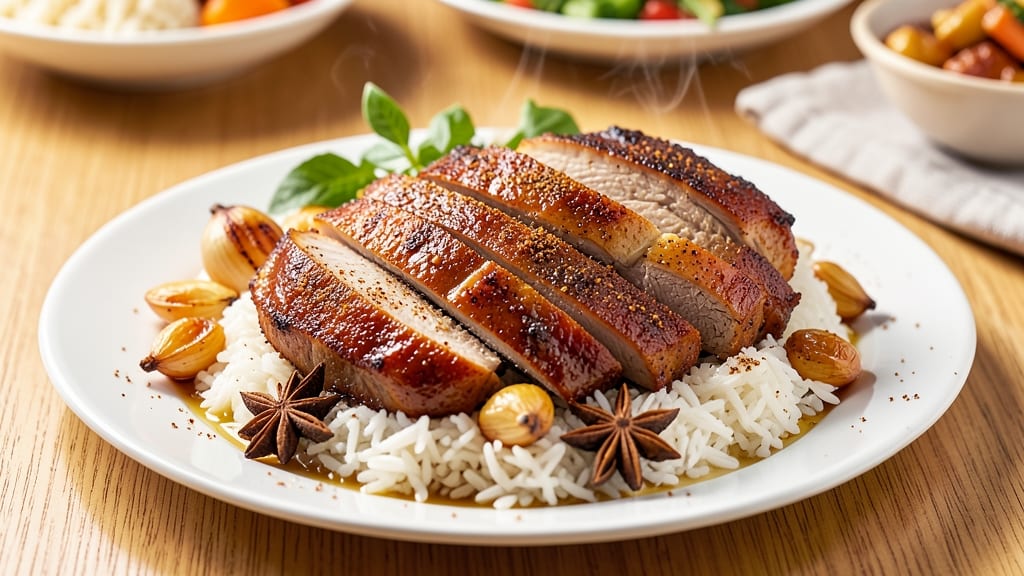
This Filipino five-spice crunch over silky caja china pork recipe transforms humble ingredients into a dish that tastes like home. 🌟 The secret lies in the precise balance of five-spice powder and toasted garlic, which creates that signature crunch while the pork braises into tender perfection.
I first tasted this dish at a family gathering in Manila, and it's been my go-to recipe ever since—simple yet deeply flavorful, with layers of aroma that fill the kitchen before the first bite.
The magic happens in the braising process, where pork shoulder cooks low and slow until it practically melts in your mouth, while the rice absorbs the rich, spiced broth. The five-spice blend—star anise, cloves, cinnamon, black pepper, and fennel—adds warmth and complexity that elevates this dish beyond ordinary pork recipes.
What makes it truly special is the contrast: crispy, toasted garlic and shallots on top against the tender, shredded pork below.
By the time you serve this dish, your table will be filled with the scent of slow-cooked pork and aromatic spices, and every bite will deliver that perfect balance of texture and flavor.
The dish is hearty enough for a family dinner but elegant enough for guests, with a depth of flavor that comes from patience and precision. This is comfort food at its finest—warm, inviting, and impossible to resist.
Pair it with steamed rice to soak up every last bit of that flavorful broth, and you've got a meal that feels like a hug. The leftovers, if there are any, reheat beautifully, making this a perfect recipe for meal prep or feeding a crowd.
Let's get started on creating this Filipino classic in your own kitchen.
Ingredients for caja china pork
Pork shoulder, rice, and five-spice blend—simple ingredients that pack deep Filipino flavor.
| Ingredient | Amount | Notes |
|---|---|---|
| Pork Shoulder 🥩 | 2 lb | Bone-in for more flavor |
| White Rice 🍚 | 2 cups | Uncooked, long-grain preferred |
| Five-Spice Powder 🌶️ | 2 tbsp | Homemade or store-bought blend |
| Garlic Cloves 🧄 | 8 cloves | Minced, for topping |
| Shallots 🧅 | 4 whole | Thinly sliced, for topping |
| Star Anise 🌿 | 1 whole | For spice blend (optional) |
| Cloves 🌿 | 4 whole | For spice blend (optional) |
| Cinnamon Stick 🌿 | 1 whole | For spice blend (optional) |
| Black Peppercorns 🌶️ | 1 tsp | Crushed, for spice blend |
| Fennel Seeds 🌿 | 1 tsp | Crushed, for spice blend |
| Olive Oil 🫒 | 2 tbsp | For toasting garlic |
| Salt 🧂 | 1 ½ tsp | Kosher or sea salt |
| Water 💧 | 4 cups | For cooking rice |
| Soy Sauce 🥢 | 2 tbsp | For braising liquid |
| Brown Sugar 🍯 | 1 tbsp | For braising liquid |
The pork shoulder is where the magic happens. Bone-in gives you more flavor, but boneless works too if you're short on time. Look for cuts with good marbling at Filipino markets—they often have the best quality. If you can't find it fresh, frozen pork shoulder works just fine. The five-spice blend is non-negotiable here; if you can't find pre-made, Penzeys Spices sells individual spices to mix your own. Toast the whole spices (star anise, cloves, cinnamon) for 30 seconds in a dry pan before grinding—this brings out their aroma. For the garlic and shallots, Asian markets usually have the freshest, but any grocery store will do.
No five-spice powder? Mix 1 tsp each of ground cinnamon, cloves, and fennel seeds with ½ tsp black pepper and ½ tsp ground star anise. The soy sauce can be swapped for coconut aminos if you're avoiding soy. For the garlic and shallots, toast them in olive oil until golden—this is key for that signature crunch. If you're prepping ahead, cook the rice separately and store it in the fridge; reheat the pork and rice together with a splash of water. The brown sugar in the braising liquid caramelizes slightly, adding a touch of sweetness that balances the spices. Don't skip it, even if you're not sweet-toothed—it's part of the magic.
This dish tastes even better the next day, so make extra. Store the pork and rice separately in airtight containers for up to 4 days in the fridge. Freeze the pork for up to 3 months—just thaw it in the fridge overnight before reheating. The garlic and shallot topping is best added fresh after reheating, but you can toast it ahead and store it in a jar for up to 1 week. Serve with extra rice to soak up all that delicious broth—trust me, you'll want seconds.
Why You'll Love This Recipe
- One-Pot Magic: I swear by this—just brown the pork, toss in shallots and garlic, sprinkle that five-spice powder, and let it slow-cook while you stir rice. Minimal chopping, zero fuss, and the flavors meld into something ridiculously good without you needing to be a chef.
- Five-Spice Secret Weapon: Honestly, the five-spice powder is where this dish shines. It’s not just "spicy"—it’s warm, earthy, and a little sweet, cutting through the richness of the pork while the garlic and shallots add that deep, savory punch. My kids fight over the last bite, and I don’t even pretend to be modest.
- Lunchbox Hero: Between us, this is my go-to for meal prep. The pork stays juicy for days, and the rice? Perfectly fluffy if you cook it right. Pack it in containers, and you’ve got a week’s worth of lunches that taste like you actually cooked them—no sad, dry leftovers here.
- Budget Feast: Pork shoulder is cheap, rice is cheap, and a little five-spice goes a long way. I’ve fed six people for under $15, and no one left hungry. Plus, the leftovers? Even better the next day—crispy edges, tender meat, and that spice lingering like a hug. (Yes, even on a Tuesday night.)
Step-by-step instructions for Filipino five-spice pork
Here's how to transform tough pork shoulder into melt-in-your-mouth shreds with that signature five-spice crunch.
🔥 Step 1: Build the Five-Spice Rub and Sear the Pork
In a small bowl, combine the 2 tbsp Five-Spice Powder, 1 tsp crushed Black Peppercorns, 1 tsp crushed Fennel Seeds, 1 whole Star Anise (lightly crushed), 4 whole Cloves (lightly crushed), and 1 whole Cinnamon Stick (lightly crushed). This aromatic blend is the soul of Caja China. Pat the 2 lb Pork Shoulder dry with paper towels—this ensures maximum crispiness later.
Generously coat the pork with the spice mixture, pressing it into every crevice. In a large Dutch oven, heat 2 tbsp Olive Oil over medium-high heat until shimmering. Sear the pork on all sides for 4-5 minutes per side until deeply browned. This step develops that rich, caramelized crust that'll give your dish its signature depth. Don't rush—you want that Maillard reaction working its magic.
🍳 Step 2: Braise with Aromatics and Sweet-Savory Sauce
Remove the seared pork and set it aside. In the same Dutch oven, add the 4 whole Shallots (thinly sliced) and 8 cloves Garlic Cloves (minced). Sauté for 2-3 minutes until the shallots turn golden and fragrant. Return the pork to the pot, fat-side up.
Pour in 4 cups Water, 2 tbsp Soy Sauce, and 1 tbsp Brown Sugar, scraping up any browned bits from the bottom. Sprinkle with 1.5 tsp Salt and bring to a gentle simmer. The liquid should just barely cover the pork—this ensures tender, not soggy, results. Cover tightly with a lid and transfer to a 325°F oven.
⏰ Step 3: Slow Cook Until Fork-Tender
Cook for 3-3.5 hours until the pork is fork-tender and pulls apart easily. I check around the 2.5-hour mark by inserting a meat thermometer—the pork should register 195-200°F internally. If it's not there yet, give it another 30 minutes. Patience is key here; rushing leads to dry, stringy pork.
Here's the thing—don't peek! Every time you lift that lid, you're losing heat and moisture. Trust the process and let that pork cook undisturbed. The aromatics will infuse the meat, creating layers of flavor that make this dish unforgettable.
👨🍳 Step 4: Shred and Prepare the Crunchy Topping
Once the pork is tender, remove it from the pot and let it rest for 10 minutes before shredding. Using two forks, pull the meat apart into ¼-inch thick shreds. Return the shredded pork to the pot and keep it warm. In a small skillet, heat 1 tbsp Olive Oil over medium heat and sauté the 4 whole Shallots (thinly sliced) and 8 cloves Garlic Cloves (minced) for 2-3 minutes until golden and crispy.
This crispy shallot-garlic topping is what makes Caja China special—it adds a delightful crunch that contrasts perfectly with the tender pork. Keep it separate until serving so it maintains its texture. The braising liquid should now be rich and slightly reduced—this is your silky sauce.
🥘 Step 5: Assemble with Steamed Rice
Cook the 2 cups White Rice according to package instructions using 4 cups Water, fluffing it gently with a fork when done. Divide the rice among plates and top generously with the shredded pork and its flavorful braising sauce. Spoon the crispy shallot-garlic topping over each serving just before eating—this preserves that perfect crunch.
Serve immediately while the pork is still steaming and the rice is hot. The contrast of textures—tender pork, fluffy rice, and crispy shallots—along with the aromatic five-spice blend, makes every bite a celebration of Filipino comfort food. Don't forget to save some of that delicious braising liquid for second helpings!
Pro Tips For Making Caja China Pork
- CRISP THE SHALLOTS: Slice those shallots paper-thin—less than 1/8-inch—before frying. I used to chop them like onions, and they’d just turn mushy instead of sweet and caramelized. Do this step first while your pork rests, and keep them in ice water until you’re ready to cook to stop browning.
- LOW AND SLOW PORK: After searing the pork shoulder, drop the heat to 275°F (135°C) and wrap it in foil. I learned this the hard way—rushing it with high heat makes the meat tough. Check internal temp every 30 minutes; it’ll hit 205°F (96°C) when ready, falling apart like butter.
- SKIP THE FIVE-SPICE OVERLOAD: Start with 1 teaspoon of five-spice powder, then add more to taste. Too much cloves or cinnamon can overpower the pork’s natural flavor. Toast the spices in the oil first—this wakes up their aroma without bitterness.
- REST THE PORK PROPERLY: Pull the pork at 205°F (96°C) and let it rest under foil for 15 minutes before slicing. I used to cut into it too soon, and all the juices would run out. This keeps the meat tender and the rice from turning soggy when you plate it.
Best sauces and condiments for caja china pork
Crispy Garlic-Shallot Topping
This is the star of Caja China—where the magic happens. Sauté 4 thinly sliced shallots and 8 minced garlic cloves in 1 tbsp olive oil over medium heat until golden brown and crispy, about 2-3 minutes. The key is patience; don't walk away or they'll burn.
I like to use a 12-inch cast iron skillet for even heat distribution. This topping should be crisp enough to stand up to the tender pork but not so hard it's crunchy like a chip. 🌟
Five-Spice Braising Liquid
The foundation of your dish starts here. After searing the pork, deglaze the Dutch oven with 4 cups water, 2 tbsp soy sauce, and 1 tbsp brown sugar. Let it simmer gently to develop a rich, slightly caramelized flavor.
The brown sugar isn't just for sweetness—it helps balance the earthy five-spice blend. I always add a splash of Filipino calamansi juice (if available) for brightness, but it's optional. This liquid should coat the pork but not drown it—aim for a 1:1 ratio of pork to liquid.
Silky Soy-Ginger Glaze
For an extra layer of depth, reduce ½ cup of the braising liquid in a saucepan until it thickens slightly, then whisk in 1 tbsp soy sauce and 1 tsp grated ginger. This glaze adds a glossy finish and extra umami.
Drizzle it over the shredded pork just before serving. I keep a small bowl of this glaze on the table so guests can add as much as they like. The ginger cuts through the richness of the pork beautifully. 💛
Spicy Chili Oil Drizzle
Want to kick things up? Heat 2 tbsp neutral oil with 1 tbsp chopped Filipino siling labuyo peppers (or serrano peppers) until fragrant. Strain out the peppers and drizzle this fiery oil over the finished dish.
The heat contrasts perfectly with the sweet-savory pork. For a milder version, use ½ tsp red pepper flakes instead. This is my go-to when serving to guests who love a little kick—it's always a crowd-pleaser. 🌶️
Creamy Coconut Milk Sauce
For a richer, more decadent version, stir ½ cup coconut milk into the braising liquid during the last 30 minutes of cooking. This adds a velvety texture that pairs wonderfully with the crispy topping. I like to use full-fat coconut milk for the best results.
The coconut flavor complements the five-spice blend beautifully, giving the dish a tropical twist. This variation is especially popular in coastal Filipino regions. 🥥
Sweet Tamarind Drizzle
Finish with a tangy-sweet touch by whisking 1 tbsp tamarind paste with 1 tsp honey and a splash of water. Drizzle this over the pork just before serving. The tamarind adds a bright acidity that cuts through the richness.
I keep this on the side for those who want to adjust the sweetness to their taste. This is a nod to my time in the Philippines, where tamarind is a staple in many dishes. 🍯
Nutrition facts
Frequently asked questions about Caja China pork
What makes Caja China pork different from regular braised pork?
The five-spice blend (star anise, cloves, cinnamon, fennel, and pepper) creates a unique aromatic profile that sets it apart. Plus, the crispy garlic-shallot topping adds texture contrast that regular braised pork lacks. The slow cooking method keeps the pork incredibly tender while developing deep flavor layers.
Can I substitute bone-in pork shoulder with another cut?
Yes! Use pork butt (shoulder blade) or pork picnic (near the ham) as direct substitutes. For boneless options, pork loin works but will be less flavorful. If using boneless, increase cooking time by 30 minutes since it cooks faster. The bone adds natural collagen that makes the dish extra juicy.
How do I make the garlic-shallot topping extra crispy?
Cook the shallots and garlic in 1 tbsp olive oil over medium-low heat (not high) for 3-4 minutes until deep golden. For extra crunch, transfer to a paper towel-lined plate and press gently with another paper towel. Pro tip: Add ½ tsp sugar to the oil before cooking to help caramelization.
Can I make Caja China pork in a slow cooker?
Sear the pork first, then transfer everything to a slow cooker and cook on low for 8 hours or high for 5 hours. The key difference is the garlic-shallot topping—make it fresh after cooking since it won't crisp properly in the slow cooker. The pork will be just as tender, though oven-braising gives slightly better color.
What's the best way to reheat leftovers?
Reheat in a skillet with 1 tbsp water or broth over medium heat for 5-7 minutes, stirring occasionally. For extra flavor, add ½ tsp soy sauce and ¼ tsp five-spice powder. Never microwave—it makes the pork dry. The crispy topping should be added fresh after reheating.