
Main Courses
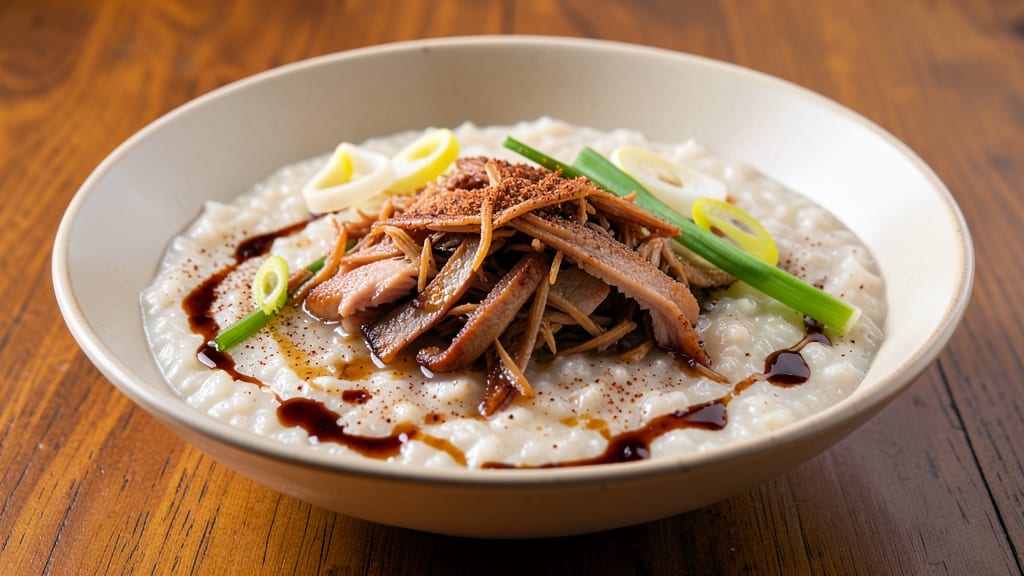
This Cantonese pork congee recipe transforms simple ingredients into a deeply comforting bowl of silky rice porridge and tender five-spice pork bites. 💛 After years of perfecting the balance between creamy texture and aromatic broth, I've developed a method that delivers restaurant-quality results at home—whether you're using a pressure cooker or traditional stovetop approach.
The secret lies in the pork—charred, five-spice marinated cuts that dissolve into the broth while maintaining their savory essence. I start with heritage pork shoulder for maximum flavor, but any well-marbled cut works.
The rice soaks overnight for that signature silky consistency, while ginger and scallions add fresh brightness that cuts through the richness.
What you'll end up with is a bowl of congee so smooth it practically melts in your mouth, topped with tender pork bites that burst with five-spice warmth.
The broth is deeply flavorful yet light enough to let the rice shine, creating that perfect harmony of textures and tastes that makes this dish so universally loved.
This recipe serves as both a healing comfort food and a celebration dish—ideal for recovery meals, family gatherings, or when you simply crave something nourishing. The best part? It's easier than it looks, with techniques you can adapt to your kitchen setup. Let's get started on this Cantonese classic.
Ingredients for cantonese pork congee
Four servings of restaurant-quality congee start with these 14 essential ingredients.
| Ingredient | Amount | Notes |
|---|---|---|
| Heritage Pork Shoulder 🥓 | 1 ½ lb | Well-marbled, cut into 1-inch cubes |
| Jasmine Rice 🍚 | 1 cup | Uncooked, long-grain preferred |
| Fresh Ginger 🧄 | 2 tbsp | Finely grated, aromatic variety |
| Green Onions 🧅 | ½ cup | White and green parts separated |
| Five-Spice Powder 🌶️ | 1 ½ tsp | Homemade or store-bought blend |
| Light Soy Sauce 🥄 | ½ cup | Kikkoman preferred for balance |
| Dark Soy Sauce 🥄 | 1 tbsp | For color and depth |
| Sesame Oil 🫒 | 1 tbsp | Toasted, for aroma |
| Shaoxing Wine 🍷 | ¼ cup | Dry, aromatic variety |
| Chicken Stock 💧 | 6 cups | Homemade or high-quality store-bought |
| Neutral Oil 🫒 | 1 tbsp | Peanut or vegetable oil |
| Salt 🧂 | 1 tsp | Kosher or sea salt |
| White Pepper 🌶️ | ¼ tsp | Freshly ground preferred |
| Sesame Seeds 🌰 | 1 tbsp | Toasted for garnish |
The pork shoulder is non-negotiable—heritage pork with good marbling delivers the best flavor. I grab mine from Whole Foods or my local butcher, but any well-marbled cut works. Look for 1-inch cubes for even cooking. The jasmine rice? Rice Barn or Trader Joe's have the best quality in bulk. Soak the rice overnight in cold water—this is the secret to that signature silky texture. Fresh ginger matters too; organic ginger from the produce section has the most punch. If you can't find it fresh, powdered works in a pinch but lacks that bright zing.
No five-spice powder? Mix 1 tsp each of star anise, cinnamon, fennel, clove, and Sichuan peppercorn—it's worth the effort. Substituting soy sauces? Light soy for flavor, dark soy just for color. No Shaoxing wine? Dry sherry or even white wine works in a bind. The chicken stock can be store-bought, but homemade with roasted bones takes this to the next level. For the green onions, separate the whites and greens—you'll use them differently. And if you're short on time, pre-grated ginger saves steps, though fresh is always better.
This congee tastes even better the next day—plan ahead. Store leftovers in the fridge for 4-5 days or freeze for 3 months. The rice soaks up flavors beautifully, so reheating is a breeze. For extra richness, add a splash of stock when reheating. The pork cubes keep well too; reheat separately if you're making this ahead. Garnish with toasted sesame seeds right before serving—they add that final crunch and aroma that makes it feel special.
Why You'll Love This Recipe
- One-Pot Magic: I swear by this recipe when I’m too tired to wash pots—just a single pot for rice, pork, and broth. The pork shoulder practically melts into the congee, and the ginger and five-spice powder infuse everything in one go. Honestly, I’ve made it on nights when I’d rather be scrolling than cooking.
- Five-Spice Secret Weapon: That jar of five-spice powder isn’t just a spice—it’s the soul of this dish. The warmth of star anise, cinnamon, and cloves lingers in every spoonful, while the ginger adds a bright, zesty kick. Between us, I’ve tried skipping it, and I immediately regretted it.
- Weeknight to Weekend: This congee is my lazy Sunday breakfast and my post-work dinner. Add a fried egg on top for protein, or serve it with pickled veggies for crunch—it adapts without losing its charm. My roommates joke that it’s my “I don’t care what day it is” dish, and they’re not wrong.
- Budget-Friendly Luxury: Heritage pork shoulder might sound fancy, but it stretches across three meals for my family. The rice is cheap, the spices last forever, and leftovers taste just as good reheated the next day. I’ll be real: it’s the kind of meal that makes me feel like I’m feeding everyone well without breaking the bank.
Step-by-step instructions for Cantonese pork congee
Here's how to create restaurant-quality congee with tender pork bites and aromatic five-spice flavor.
🔥 Step 1: Render the Pork Shoulder for Flavorful Bites
Heat the 1 tablespoon neutral oil in a large pot over medium-high heat. Add the 1.5 lb heritage pork shoulder cut into 1-inch cubes, working in batches if needed to avoid crowding. Let the pork sear undisturbed for 3-4 minutes per side until deep golden brown and crispy on the edges.
This initial sear builds deep flavor through the Maillard reaction. Once all pieces are browned, reduce heat to medium and add the 2 tablespoons grated fresh ginger and 1.5 teaspoons five-spice powder. Stir for 1 minute until fragrant—you should smell warm spices and citrusy ginger. Remove the pork with a slotted spoon and set aside temporarily.
👨🍳 Step 2: Build the Congee Base with Aromatics
In the same pot, add 1 tablespoon sesame oil and swirl to coat the browned bits. Pour in the 0.25 cup Shaoxing wine and scrape up all the flavorful residue from the bottom. Let it simmer for 1 minute until the alcohol smell dissipates completely.
Add the 0.5 cup light soy sauce and 1 tablespoon dark soy sauce (the dark sauce adds that signature mahogany color). Stir for 30 seconds to combine, then pour in the 6 cups chicken stock. Bring to a gentle boil, then immediately reduce heat to low—we're aiming for a barely simmering state where you see tiny bubbles at the edges.
🍳 Step 3: Cook the Jasmine Rice to Silky Perfection
Add the 1 cup jasmine rice all at once and stir gently to distribute. The rice will immediately begin to break down—this is normal. Cover the pot with a tight-fitting lid and maintain that gentle simmer for 45-50 minutes. Check periodically and add ¼ cup hot water if the congee gets too thick.
Here's the thing—you want the rice to disintegrate completely into a creamy, porridge-like consistency. The congee should be thick enough to coat the back of a spoon but still flow gently. If it looks too thick, add more hot water 1 tablespoon at a time. The texture should be silky, not gluey.
🥘 Step 4: Finish with Pork and Seasoning
Return the pork bites to the pot and gently stir to combine. Add the 1 teaspoon salt and 0.25 teaspoon white pepper. Let the congee simmer uncovered for another 10-15 minutes to allow the pork to absorb all those wonderful flavors. The pork should be fork-tender but still hold its shape slightly.
Taste and adjust seasoning—you might need a touch more soy sauce or salt depending on your stock. The congee should be savory with bright five-spice notes and a subtle ginger warmth. Real talk: this is where home cooks often miss the mark. Don't be shy with the seasoning—Cantonese congee should sing with flavor.
🍽️ Step 5: Serve with Fresh Garnishes
Transfer the congee to serving bowls and let each person add their own garnishes. I recommend the 0.5 cup green onions (white parts only for the base, green parts on top), and a sprinkle of 1 tablespoon toasted sesame seeds. The green onions add freshness that cuts through the richness, while the sesame seeds provide a nutty crunch.
Serve immediately while piping hot. The congee should be thick enough to eat with a spoon but still have that luxurious, velvety mouthfeel. Each bite should deliver tender pork, aromatic rice, and that perfect balance of salty-sweet-spicy flavors. And here's a pro tip: if you have leftovers, reheat them gently with a splash of water—they'll be even better the next day!
Pro Tips For Making Cantonese Pork Congee
- Blister the Ginger First: Slice your fresh ginger into ¼-inch planks, then sear them directly in the pot over medium-high heat until they develop deep char marks—about 2 minutes per side. This unlocks a smoky depth that just sprinkling raw ginger can’t match, and it sticks to the pork better than you’d expect.
- Salt the Pork Overnight: Toss the pork shoulder in 1 tablespoon kosher salt (and 1 teaspoon five-spice powder) at least 8 hours before cooking. The meat stays juicier when simmered, and the seasoning penetrates deeper than last-minute rubbing—trust me, the congee tastes like it’s been simmering all day.
- Simmer at 180°F (Low and Slow): Once the pork is tender (fork-test it after 2 hours), drop the heat to the lowest setting that maintains a gentle simmer—around 180°F. I used to rush this, and the rice would turn mushy or the pork dry out. Patience here means creamy, intact pork strands that hold their shape.
- Stir the Rice Early: After the pork and broth are ready, add the rice and stir vigorously for 2 full minutes before lowering the heat. This prevents clumping and ensures even cooking—no one wants a pot of congee where half the rice is al dente and the other half is glue. (Yes, I’ve made that mistake.)
Troubleshooting this dish
Broth Too Thin?
If your congee ends up watery, you likely didn't reduce the broth enough. I've learned the hard way—this dish requires patience! Simmer the broth uncovered for at least 30 minutes after the pork is cooked, stirring occasionally.
For extra richness, add ½ cup more chicken stock and reduce again. The goal is a syrupy consistency that coats the back of a spoon.
Another trick: Use a heavy-bottomed pot—I swear by my Le Creuset Dutch oven—to prevent scorching while you reduce. If you're in a hurry, finish with a 10-minute simmer on high heat in your pressure cooker's "sauté" function. Just watch it like a hawk!
Rice Too Mushy?
Over-soaking or overcooking turns rice into glue. I've ruined batches by skipping the 10-minute draining step after soaking. Rinse the rice 3 times in cold water, then drain completely in a fine-mesh strainer.
For the cook, maintain a gentle simmer—never a rolling boil. If your rice is still too soft, add 1-2 tbsp uncooked rice and simmer another 10 minutes.
Pro tip: Use a thermometer to keep temps between 185-195°F. Too hot and the starches break down too fast. If you're using a pressure cooker, cook on high pressure for 12 minutes after the pork is tender, then quick-release. The instant pressure drop helps maintain texture.
Pork Too Tough?
Under-marinating or overcooking the pork leads to chewy bites. I marinate my pork cubes for at least 4 hours (overnight is best) in the five-spice mixture. For the cook, remove pork when it reaches 195°F internal temp—it'll carry over to 205°F.
If using a pressure cooker, cook pork for 20 minutes on high pressure, then quick-release.
For extra tenderness, I like to par-cook the pork in the broth for 10 minutes before adding the rice. This jumpstarts the cooking process. If your pork is still tough, try braising it separately in Shaoxing wine and soy sauce for 1 hour before adding to the congee.
The acid helps break down the fibers.
Burnt Bottom?
This is my biggest pet peeve—nothing ruins congee faster than burnt bits. Always use neutral oil (like peanut or vegetable) and heat it gently before adding aromatics. I like to bloom the spices in oil for 30 seconds before adding ginger and onions.
For pressure cookers, use the "sauté" function on low heat to prevent scorching.
If you do get a burnt bottom, don't panic. Simply scrape it off with a spatula, then add ½ cup fresh chicken stock to deglaze. Stir well and continue cooking.
For future batches, I recommend using a non-stick pot or adding a silicon mat under your pot to prevent direct heat contact.
Nutrition facts
Frequently asked questions
Can I substitute regular rice for jasmine rice in this recipe?
Jasmine rice is ideal for its delicate, floral aroma and perfect texture, but you can use long-grain white rice in a pinch. The flavor won't be as aromatic, but the silky consistency will still work. For best results, soak the rice for at least 4 hours (overnight is ideal) to mimic jasmine's natural starch properties. Avoid short-grain or sticky rice varieties—they'll make the congee too thick.
How do I make this recipe vegetarian?
Replace the pork with shiitake mushrooms or firm tofu marinated in soy sauce, Shaoxing wine, and five-spice powder. For texture, use 1-inch cubes of king oyster mushrooms that hold their shape when cooked. The broth remains the same, but add 1 teaspoon mushroom powder to deepen the umami. Garnish with extra scallions and sesame seeds for freshness.
Can I make this in a slow cooker or Instant Pot?
For the Instant Pot, sear the pork first, then add all ingredients except rice. Cook on high pressure for 20 minutes, quick-release, then add rice and cook on low for 12 minutes. For a slow cooker, follow the same steps but use low heat for 6-8 hours (or high for 3-4 hours). The key is patience—both methods work best with gentle, prolonged cooking to achieve that signature creamy texture.
Why does my congee turn out gluey instead of silky?
Gluey congee usually means overcooked rice or insufficient stirring. First, rinse the rice thoroughly after soaking to remove excess starch. Second, maintain a gentle simmer—never a rolling boil. Stir the rice every 10 minutes to prevent sticking. If it's still too thick, add ¼ cup hot water and simmer uncovered for 5 more minutes. The texture should coat the spoon lightly, not stick like paste.
What's the best way to reheat leftovers?
Reheat congee gently on the stove over low heat with a splash of hot water or chicken stock to restore creaminess. Never microwave—it makes the rice gummy. For extra richness, add a teaspoon of sesame oil or a pinch of five-spice powder. Leftovers actually improve overnight as flavors meld! Store in an airtight container for up to 5 days in the fridge or 3 months in the freezer.