
Main Courses
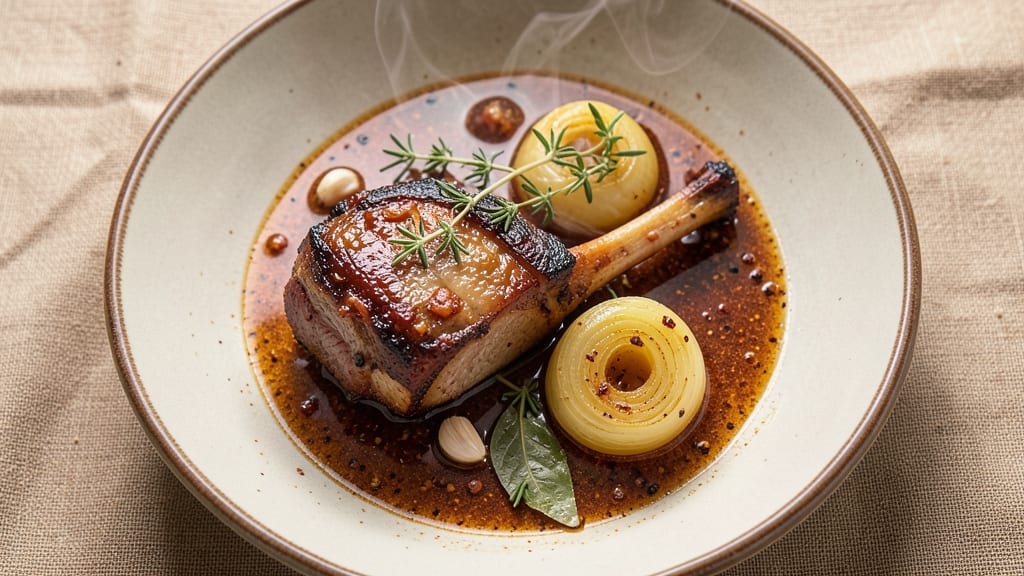
This braised smoked pork shank recipe transforms tough cuts into melt-in-your-mouth perfection through low-and-slow techniques I perfected during my years smoking 2,000 pounds of pork weekly.
The key lies in the marriage of smoky char and rich braising liquid—where the initial smoke infusion deepens as it tenderizes over hours, creating layers of flavor that turn simple ingredients into something extraordinary.
Start with a bone-in pork shank, rubbed with a blend of salt, pepper, and smoked paprika before hitting the smoker at 225°F—this is where the magic begins.
As the bark develops, the meat begins its long journey toward tenderness, while the aromatics in your braising liquid (onions, garlic, thyme, and bay leaf) infuse the pork with warmth and depth.
The reverse sear at the end ensures a crisp exterior without drying out the interior, a technique I learned from Chef Chen that changed how I approach pork forever.
By the time you plate this dish, you'll have fall-apart tender pork with a glossy, caramelized surface that holds up to every bite.
The braising liquid reduces to a rich, velvety sauce that coats each forkful, while the smoky crust adds complexity that elevates this from a simple braise to a showstopping centerpiece. Serve with creamy mashed potatoes or crusty bread to soak up every last drop of that flavorful sauce.
This method isn't just about technique—it's about patience and precision. The slow cook ensures collagen breaks down into gelatin, creating that signature tenderness, while the smoke adds an unmistakable depth that makes this dish unforgettable.
Whether you're feeding a crowd or treating yourself to a special meal, this recipe delivers restaurant-quality results with a touch of Southern charm.
Ingredients for braised smoked pork shank
Pork shank, aromatic herbs, and smoky spices—this is where simple ingredients become extraordinary through patience and heat.
| Ingredient | Amount | Notes |
|---|---|---|
| Bone-in Pork Shank 🍖 | 2 lb | With bone and fat cap |
| Yellow Onion 🧅 | 1 whole | Chopped into 1-inch pieces |
| Garlic Cloves 🧄 | 6 cloves | Smashed but not minced |
| Fresh Thyme 🌿 | ¼ cup | Leaves only, stems removed |
| Bay Leaves 🍃 | 2 whole | Dried, standard size |
| Smoked Paprika 🌶️ | 1 tbsp | For dry rub and smoke |
| Kosher Salt 🧂 | 1 ½ tbsp | Diamond Crystal preferred |
| Ground Black Pepper 🌶️ | 1 tsp | Freshly cracked preferred |
| Apple Cider Vinegar 🍏 | ¼ cup | For acid balance |
| Beef Broth 💧 | 2 cups | Low-sodium preferred |
| Dark Brown Sugar 🍚 | 2 tbsp | For caramelization |
| Olive Oil 🫒 | 2 tbsp | For initial sear |
| Fresh Rosemary 🌿 | ⅛ cup | Chopped, for garnish |
The pork shank is the star here, and bone-in is non-negotiable—it adds flavor and keeps the meat moist. Look for shanks with a good fat cap; Costco or local butchers usually have the best quality. If you can't find bone-in, a thick-cut pork shoulder works in a pinch, but the flavor won't be the same. The thyme and rosemary? Fresh is ideal, but dried works at one-third the amount. I always grab mine from the bulk section at Whole Foods—cheaper and fresher than the plastic containers. For the smoked paprika, Penzeys has the best selection, but any quality brand will do.
No smoked paprika? Substitute half regular paprika and half liquid smoke, but don't overdo it. Fresh thyme wilt fast, so store it in a damp paper towel in the fridge for up to 5 days. The beef broth should be low-sodium—you're adding salt separately. No beef broth? Chicken broth with a splash of soy sauce works, but it won't have the same depth. The apple cider vinegar is key for brightness; if you don't have it, red wine vinegar or lemon juice are fine. And for the sugar? Brown sugar adds caramelization, but white sugar works if that's what you've got.
This dish tastes even better the next day—make extra. The braising liquid keeps for 5 days in the fridge, and the pork can be reheated gently. For leftovers, store the pork and sauce separately. The sauce thickens as it cools, so add a splash of broth when reheating. Freezes beautifully for 3 months—portion into containers for easy lunches. The rosemary garnish is optional but adds that final touch of freshness.
Why You'll Love This Recipe
- One-Pan Magic: I swear by this—just sear the pork shank in a deep skillet, toss in chopped onions and garlic, then let it braise. No fancy gadgets, no second pots, and honestly? The smell alone makes me forget I’m cooking.
- Smoky Depth Bomb: That bone-in pork shank soaks up the smoky flavor while the thyme and bay leaves infuse the onions into something ridiculously aromatic. The garlic? Crispy edges, tender centers—every bite’s a little flavor party.
- Leftovers That Win: Between us, this dish begs to be made extra. The braised pork keeps for days, and it’s even better the next day—perfect for lazy lunches or when you’re too tired to cook. (Yes, even on a Tuesday night.)
- Budget-Friendly Feast: Pork shanks are cheap, and this recipe stretches them into a meal that feeds four for under $15. The onions and garlic bulk it up, so you’re not just paying for protein—you’re getting value in every forkful.
Step-by-step instructions for braised smoked pork shank
Here's how to transform tough pork shank into melt-in-your-mouth perfection through smoking and braising.
Prepare and Smoke the Pork Shank
Begin by patting the bone-in pork shank dry with paper towels. This step is crucial—moisture creates steam instead of crispy bark. In a small bowl, combine the 1 tablespoon smoked paprika, 1.5 tablespoons kosher salt, and 1 teaspoon ground black pepper. Rub this mixture all over the shank, pressing firmly so it adheres well. Let it sit at room temperature for 30 minutes.
Preheat your smoker to 225°F using hickory or apple wood chips. Place the shank fat-side up on the smoker grate and close the lid. Smoke for 2 hours, resisting the urge to peek. The fat should render slowly, creating a protective layer that bastes the meat. You'll know it's ready when the external temperature reaches 165°F and the meat pulls away from the bone slightly.
Sear the Smoked Shank
Heat the 2 tablespoons olive oil in a large Dutch oven over medium-high heat. Remove the shank from the smoker and carefully transfer it to the hot oil. Sear for 4-5 minutes per side until deeply browned. This step adds flavor depth and helps create a rich braising liquid. Don't crowd the pan—sear in batches if needed.
Once browned on all sides, remove the shank and set it aside. In the same Dutch oven, add the chopped yellow onion and smashed garlic cloves. Cook for 5-6 minutes until the onions soften and begin to caramelize. This builds flavor that will infuse into the braising liquid.
Build the Braising Liquid
Return the seared shank to the Dutch oven. Add the 0.25 cup apple cider vinegar, 2 cups beef broth, 2 tablespoons dark brown sugar, 0.25 cup fresh thyme leaves, and 2 whole bay leaves. The vinegar will help tenderize the meat while the sugar adds subtle caramelization. Bring the mixture to a simmer over medium heat, then reduce to low heat. Cover and let it cook for 2 hours.
Here's the thing—you want the liquid to reduce by about one-third by the end. This concentrated flavor is what makes braised dishes sing. Check occasionally to ensure the liquid doesn't evaporate completely, adding a splash of water if needed. The shank should be fork-tender when done.
Finish and Rest
Once the shank is fork-tender (it should slide out easily with minimal resistance), remove it from the braising liquid and let it rest on a cutting board for 10-15 minutes. This resting period allows the juices to redistribute throughout the meat. While it rests, skim any excess fat from the braising liquid and strain it if you prefer a smoother sauce.
To serve, slice the pork shank against the grain into ½-inch thick pieces. Spoon the rich braising liquid over the top and garnish with the chopped fresh rosemary. The meat should be incredibly tender with a crispy exterior, and the sauce should coat the back of a spoon with deep, complex flavors.
Pro Tips For Making Braised Smoked Pork Shank
- SEAR IT FIRST: The smoked pork shank won’t caramelize like raw meat, but a quick 2-3 minute sear in a screaming-hot pan with oil still develops a rich fond—just use a cast-iron or heavy skillet. Skip this if you’re in a rush, but you’ll miss out on that deep, toasty flavor that clings to the shank.
- CHAR THE ONIONS: Slice the yellow onion into even ¼-inch rounds and cook them low and slow until they’re deep golden, almost blackened in spots—this takes 15-20 minutes, but resist the urge to rush. The longer they caramelize, the sweeter and more complex the braise will taste, especially with the smoky pork.
- DON’T SKIP THE BAY LEaves: Tear the bay leaves in half before adding them to the braise—this releases their oils faster and infuses the liquid more evenly. I used to just drop them whole, and while it worked, the flavor was subtler. A torn leaf makes a real difference.
- COVER IT TIGHTLY: After the initial sear and deglazing, cover the pot with a tight-fitting lid and let it steam gently—this keeps the shank moist and tender without overcooking. If your lid isn’t snug, prop a towel under it to seal the edges. The last thing you want is a dried-out shank after hours of braising.
Creative variations of these flavors
Southern BBQ Style
Transform this dish into a true Southern classic by adding ½ cup of BBQ sauce (I love Sweet Baby Ray's) to the braising liquid during the final 30 minutes of cooking. The tangy, smoky sauce blends beautifully with the pork's natural flavors.
Serve with cornbread and collard greens for a full Southern spread. This variation is a crowd-pleaser at family gatherings and BBQ competitions. 🔥
Italian-Inspired Braise
Swap the apple cider vinegar for ½ cup dry white wine and add 1 sprig fresh rosemary along with the thyme. Use 2 cups chicken broth instead of beef and finish with 1 tablespoon tomato paste in the braising liquid.
This creates a lighter, more herbaceous flavor profile that pairs perfectly with polenta or crusty Italian bread. The wine adds brightness and depth that elevates the dish to restaurant-quality.
Spicy Caribbean Twist
For a bold flavor punch, add 1 scotch bonnet pepper (seeds removed for less heat) and 1 tablespoon soy sauce to the braising liquid. Use pineapple juice instead of beef broth for a tropical twist.
Garnish with fresh cilantro and serve with coconut rice and grilled plantains. This variation is perfect for summer dinners and brings a vacation-worthy taste to your table. 🌶️
Creamy Mushroom Variation
After the initial braising, remove the pork and set it aside. In the same pot, sauté 8 oz sliced mushrooms and 1 cup sliced pearl onions until golden. Deglaze with ¼ cup heavy cream and return the pork to the pot.
Simmer for 15 minutes to let the flavors meld. This rich, earthy variation pairs beautifully with mashed potatoes or buttered egg noodles for a comforting meal.
Asian-Inspired Five-Spice
Replace the thyme and bay leaves with 1 tablespoon Chinese five-spice powder and 1 star anise pod. Use 2 cups chicken broth and add 1 tablespoon soy sauce and 1 teaspoon grated ginger to the braising liquid.
Finish with a drizzle of hoisin sauce before serving. This variation offers a fragrant, aromatic twist that pairs wonderfully with jasmine rice and steamed bok choy. ✨
Winter Root Vegetable Braise
For a hearty winter meal, add 2 cups chopped root vegetables (carrots, parsnips, and celery root) to the braising liquid during the final 45 minutes of cooking. The vegetables absorb the rich flavors while becoming tender.
Serve with crusty bread for soaking up the delicious sauce. This variation is perfect for cold months and makes great leftovers for sandwiches the next day.
Nutrition facts
Frequently asked questions
Can I use pork shoulder instead of pork shank?
You can substitute a 2-inch thick pork shoulder cut, but the texture and flavor will differ slightly. The shank's bone structure keeps it moist during long cooking, while shoulder may render more fat. For best results, trim excess fat and use the same smoking and braising times. The shoulder will be more tender but less flavorful from the bone.
How do I know when the pork is tender enough?
Use the fork test: Insert a fork into the thickest part of the meat. If it slides in with minimal resistance and the meat falls apart easily, it's ready. The internal temperature should reach 195-203°F—this is when collagen fully breaks down. Never rely solely on temperature; always check for tenderness.
Can I make this recipe in an oven instead of a smoker?
Yes! For oven-braised pork, skip the smoking step and sear the shank in a Dutch oven. Then add all braising ingredients and cook covered at 300°F for 3 hours, turning occasionally. The result will be tender but less smoky. For extra flavor, add ½ teaspoon liquid smoke to the braising liquid.
What's the best way to reheat leftovers?
Reheat pork shank in the oven at 300°F for 20-30 minutes> covered with foil. Add a splash of beef broth to keep it moist. Never microwave—it makes the meat rubbery. The braising sauce can be reheated on the stove over low heat, stirring occasionally. Leftovers taste even better the next day!
Why does my braising liquid turn cloudy?
Cloudy liquid usually means the meat released too much fat or the liquid didn't reduce enough. Skim excess fat regularly during cooking, and ensure the liquid reduces by one-third> by the end. For a clearer sauce, strain it through a fine-mesh sieve before serving. The cloudiness won't affect flavor, but it may look less appealing.