
Main Courses
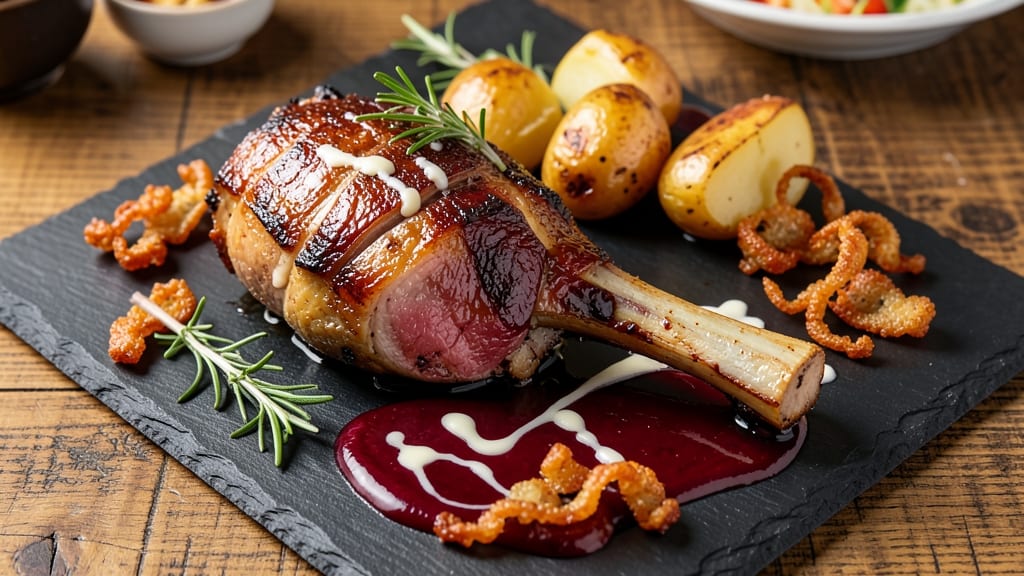
This bone-in pork shank recipe transforms tough cuts into melt-in-your-mouth perfection—just like my grandma used to make. The secret lies in slow braising, where collagen-rich connective tissue melts into rich, umami-filled sauce that coats every bite.
I've been perfecting this technique for years, and it never fails to impress even the toughest meat skeptics.
We start with a deep sear to develop that caramelized crust, then deglaze with red wine and aromatics to build flavor. The shank braises low and slow in the oven until fork-tender, while the bone infuses the sauce with depth.
This isn't just dinner—it's an experience that transforms your kitchen into a French bistro. The key is patience, but trust me, the results are worth every minute.
By the time it's done, you'll have perfectly tender meat that falls off the bone, swimming in a sauce so rich it'll make you close your eyes and savor every bite.
The aroma alone will have your whole house asking what's for dinner. Serve with creamy mashed potatoes or crusty bread to soak up every last drop of that precious sauce.
This method works beautifully in Dutch ovens or slow cookers, making it adaptable to any kitchen. Whether you're cooking for a crowd or treating yourself to a special meal, this pork shank will become your new go-to recipe. Let's get started on creating something truly memorable.
Ingredients for bone in pork shank
The secret to this melt-in-your-mouth pork shank lies in these quality ingredients and simple techniques.
| Ingredient | Amount | Notes |
|---|---|---|
| Bone-In Pork Shank 🐖 | 3 lb | With bone and connective tissue |
| All-Purpose Flour 🌾 | 2 tbsp | For dredging |
| Kosher Salt 🧂 | 1 ½ tbsp | Coarse grain preferred |
| Ground Black Pepper 🌶️ | 1 tsp | Freshly ground |
| Dry Red Wine 🍷 | 1 cup | Bold variety like Cabernet |
| Beef Broth 🥫 | 2 cups | Low-sodium preferred |
| Yellow Onion 🧅 | 1 whole | Chopped into 1/2-inch pieces |
| Garlic Cloves 🧄 | 4 cloves | Smash lightly before adding |
| Fresh Thyme 🌿 | ¼ cup | Leaves only, chopped |
| Fresh Rosemary 🌿 | ½ tsp | Chopped, not the dried stuff |
| Carrots 🥕 | 3 whole | Cut into 1-inch chunks |
| Fresh Parsley 🌿 | ⅛ cup | Chopped, for garnish |
| Olive Oil 🫒 | 2 tbsp | Extra-virgin for searing |
| Tomato Paste 🍅 | 2 tbsp | Smooth, not chunky |
The pork shank is the star—look for thick, meaty cuts with good marbling at your butcher or grocery store's meat counter. Whole Foods or local butchers often have the best selection. If it smells funky or has a grayish tint, walk away. The bone should be intact, not broken. I usually grab 3 lbs—enough for 4 servings with leftovers. For the wine, any bold, dry red works—Cabernet, Merlot, whatever's open. The beef broth? Low-sodium is key here; otherwise, you'll need to adjust seasoning later. Fresh thyme and rosemary make all the difference—Trader Joe's usually has great bundles, but any farmers market will have fresher options.
No red wine? Beef broth with a splash of balsamic gets you close. Fresh herbs wilt fast, so dried thyme at one-third the amount works in a pinch. The carrots can be baby carrots if that's what's in the fridge—just cut them into even chunks. For the tomato paste, squeeze tubes from Trader Joe's are perfect—no waste, keeps forever. The pork shank should be room temperature before searing for even cooking. If you're short on time, just pat it dry and start—it'll still turn out great, just maybe a little less crispy crust. The key is patience; don't rush the braising process.
This dish tastes even better the next day—honestly, it's a crime to eat it fresh. Keeps for 4-5 days in the fridge, freezes for 3 months. I always make a double batch—portion into containers so lunches are sorted for the week. The sauce thickens as it sits, so add a splash of broth if it gets too thick when reheating. Store with the sauce on top to keep everything moist. Leftovers reheat beautifully—just warm on the stove with a splash of water or broth.
Why You'll Love This Recipe
- Same recipe, different vibes: toss it over pasta for a quick weeknight meal or serve it whole with crusty bread when company’s over. The bone-in version feels special without the fuss.
- Foolproof Prep: I swear by this—just pat the pork shank dry, toss it in flour and salt, then let the oven do the work while I sip my coffee. No fancy knife skills or last-minute stress.
- Wine-Infused Magic: That red wine doesn’t just disappear—it lingers in every bite, turning tough meat into melt-in-your-mouth perfection. Honestly, the first time I made this, my partner stole half before dinner.
- Weeknight to Dinner Party: Same recipe, different vibes: toss it over pasta for a quick weeknight meal or serve it whole with crusty bread when company’s over. The bone-in version feels special without the fuss.
Step-by-step instructions for bone-in pork shank braise
Here's how to transform tough pork shank into melt-in-your-mouth perfection.
Season and Sear the Pork Shank
Pat the 3 lb bone-in pork shank dry with paper towels—this ensures a proper sear. Place it in a shallow dish and rub all sides with 2 tbsp all-purpose flour, pressing gently so it adheres evenly. This creates a golden crust and helps thicken the braising liquid later.
Heat 2 tbsp olive oil in a large Dutch oven over medium-high heat until shimmering. Add the pork shank and sear for 4-5 minutes per side until deeply browned. Don't rush this step—the caramelized crust packs serious flavor. Once browned, remove the shank and set it aside on a plate.
Build the Flavor Base
In the same Dutch oven, reduce heat to medium and add the 1 whole yellow onion (chopped into ½-inch pieces) and 3 whole carrots (cut into 1-inch chunks). Cook for 5-6 minutes, stirring occasionally, until softened and slightly caramelized. This develops their natural sweetness and forms the foundation of your braise.
Add the 4 cloves garlic cloves (lightly smashed) and the 2 tbsp tomato paste, stirring to coat everything in the rich, concentrated flavors. Cook for 1 minute until fragrant—this ensures the garlic doesn't burn and the tomato paste blends smoothly into the base.
Deglaze and Simmer
Pour in the 1 cup dry red wine, scraping up any browned bits from the bottom of the pot with a wooden spoon. This deglazing step captures all the flavor you worked so hard to create. Let the wine simmer for 3-4 minutes until reduced by half, intensifying its bold flavors.
Add the 2 cups beef broth, 1.5 tbsp kosher salt, and 1 tsp ground black pepper. Stir to combine, then return the pork shank to the pot, bone-side up. The bone adds depth to the broth as it braises. Bring the liquid to a gentle simmer—you should see small bubbles breaking the surface, but it shouldn't be a rolling boil.
Braise Until Fork-Tender
Cover the Dutch oven and transfer it to a preheated 325°F oven. Braise for 2.5-3 hours, turning the shank halfway through cooking time. This slow process breaks down the connective tissue, transforming tough meat into something silky and rich.
Check for doneness by inserting a fork into the thickest part of the meat—it should slide in easily with no resistance. The pork should be fork-tender, falling apart slightly when prodded. If it's not quite there, return it to the oven for another 30-45 minutes.
Finish with Herbs and Rest
Remove the pork shank from the oven and let it rest for 10 minutes in the braising liquid. This resting period allows the meat to reabsorb its juices, ensuring each bite is moist and flavorful. While it rests, stir in the 0.25 cup fresh thyme and 0.5 tsp fresh rosemary, letting the aromatic herbs infuse the sauce.
Skim any excess fat from the surface of the braising liquid, then ladle the pork shank and some of the sauce over 0.125 cup fresh parsley for garnish. Serve immediately with crusty bread to soak up every last drop of that rich, umami-packed sauce.
Pro Tips For Making Bone In Pork Shank
- SEAR THE SHANK HARD: Get that pan screaming hot—like, the smoke-starting kind of heat—before adding the pork shank. I used to rush this, and the crust turned out pale and sad. A deep, dark brown sear locks in flavor and makes the wine reduction sing later.
- SALT THE MEAT BEFORE FLOUR: Toss the shank with salt and pepper first, then dredge in flour. The salt draws out moisture, so the flour sticks better and creates a proper crust. I learned this the hard way when my first batch just slid out like a greased pig.
- DEGLAZE WITH WINE IMMEDIATELY: As soon as you remove the shank, pour in that red wine right away—the pan will still be hot, and the wine won’t just evaporate. Scrape up those browned bits; they’re the flavor foundation. Skipping this step means a dull sauce.
- BRAISE LOW AND LONG: Cover the pot and simmer at 300°F (150°C) for at least 2.5 hours—no cheating. The collagen needs time to melt into tender, fork-shreddable magic. I once rushed it to 2 hours and got tough, chewy pork. Your patience will pay off.
Storing and reheating your bone in pork shank
Refrigerator Storage
Let your braised pork shank cool completely before transferring to airtight containers—I use glass Pyrex with snap-on lids for best results. Store in the refrigerator for up to 4-5 days, but honestly, it tastes even better the next day as the flavors meld together.
The sauce will thicken slightly, so add a splash of beef broth when reheating if needed. 💫
Freezer Storage
For longer storage, portion the pork shank and sauce into freezer-safe containers or heavy-duty freezer bags, leaving 1 inch of headspace for expansion. It keeps beautifully for 3 months—just thaw overnight in the fridge before reheating.
I always double the batch because leftovers make incredible lunches or a quick weeknight dinner. 🥶
Stovetop Reheating
My preferred method is stovetop reheating—it preserves the sauce's richness. Place the pork shank and sauce in a pot over medium-low heat, then add ¼ cup beef broth to prevent drying.
Simmer for 10-12 minutes until heated through, stirring occasionally. Taste and adjust seasoning—sometimes a pinch of kosher salt or black pepper brings it back to perfection. 🔥
Microwave Reheating
For a quick fix, transfer the pork shank and sauce to a microwave-safe dish, cover with a microwave-safe lid, and heat on 50% power for 3-4 minutes, stirring halfway.
Add 2-3 tablespoons of water or beef broth if the sauce looks too thick. This keeps the meat tender without overcooking it. ✨
Leftovers Reinvention
Turn leftover pork shank into tacos by shredding the meat and serving it in warm tortillas with avocado and lime. Or make pork shank sandwiches with crusty bread, caramelized onions, and a drizzle of the braising sauce. The possibilities are endless—don’t waste a bite! 🌟
Sauce Preservation
If you want to save just the sauce, strain it through a fine-mesh sieve to remove any solids, then store it in a small jar in the fridge for up to 5 days.
Use it to enhance pasta, mashed potatoes, or even as a marinade for grilled meats. Every drop of that umami-rich sauce is pure gold. 💛
Nutrition facts
Frequently asked questions
Why does the pork shank need to be bone-in for this recipe?
The bone adds incredible depth of flavor to the braising liquid as it cooks. It infuses the sauce with rich, gelatinous collagen that makes every bite more tender and umami-packed. Plus, the bone helps stabilize the meat during braising, preventing it from falling apart prematurely.
Can I substitute bone-in pork shank with boneless pork shoulder?
You can, but the texture and flavor will differ. Boneless pork shoulder will cook faster and won't provide the same depth of flavor from the bone. If using it, increase cooking time by 30-45 minutes and reduce the liquid slightly to prevent a watery sauce. The meat will still be delicious but less rich.
What's the best way to check if the pork shank is fully cooked?
The most reliable method is the fork test: Insert a fork into the thickest part of the meat. If it slides in easily and the meat falls apart slightly, it's done. The internal temperature should reach 195-205°F—this is where the collagen fully breaks down into gelatin. Never rely on color alone, as pork can still be tough if undercooked.
How can I make this recipe in a slow cooker?
Sear the pork shank as directed, then transfer it to your slow cooker along with all the vegetables, wine, and broth. Cook on low for 8-10 hours or high for 5-6 hours. The slow cooker's gentle heat will achieve the same tender results without monitoring the oven. Just skip the oven step and let it cook until fork-tender.
What if my pork shank doesn't brown properly during searing?
If the pork isn't browning, your pan might not be hot enough. Increase the heat to medium-high and make sure your Dutch oven is properly preheated. Pat the pork completely dry first—any moisture will steam instead of sear. If it still won't brown, try adding a bit more oil or working in batches. A proper sear is crucial for flavor, so don't rush this step!