
Main Courses
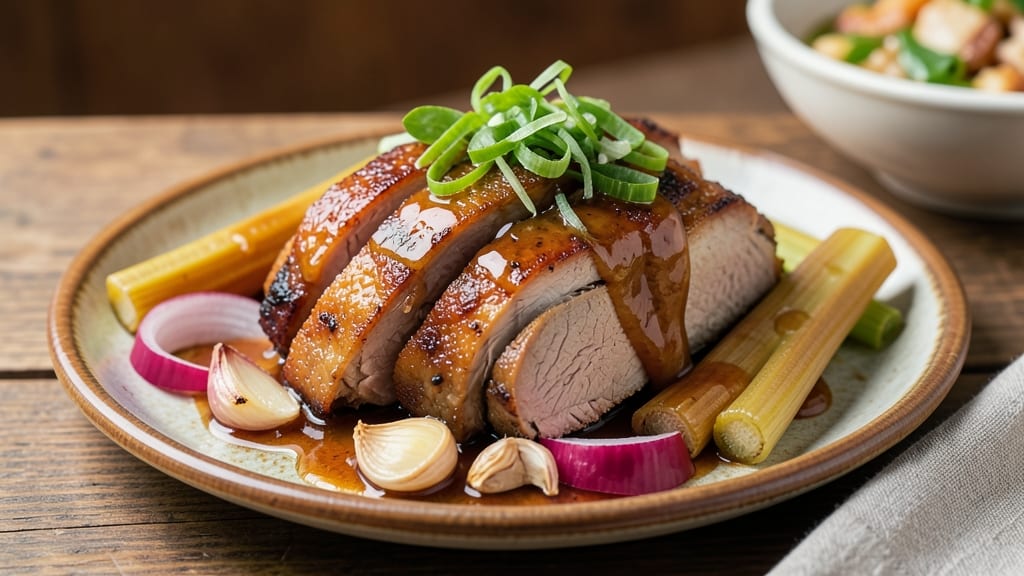
This Chamorro pork recipe brings the rich flavors of Guam’s islands to your table with tender, braised pork that’s as comforting as it is flavorful. 🌺 Growing up in Georgia, I’ve always loved how pork connects cultures—here, it’s slow-cooked with local spices until fall-apart tender, then crowned with crispy celery for that signature island crunch.
The secret lies in the long braise, where the meat absorbs the smoky, savory broth until every bite feels like a taste of the Pacific.
The dish pays homage to traditional kelaguen, a Chamorro staple where pork is simmered with garlic, vinegar, and spices until meltingly soft. I’ve adapted it with a modern twist—grilling the pork first for depth, then braising it low and slow to develop those rich, caramelized flavors.
The celery crown isn’t just garnish; it’s a textural game-changer, adding a satisfying crunch that balances the tender meat. This is the kind of recipe that turns a simple weeknight dinner into a celebration of island heritage.
What makes this recipe special is its versatility—serve it with fines (taro leaves) for an authentic touch, or pair it with red rice for a vibrant contrast. The braising liquid is so flavorful, it doubles as a sauce for rice or even a quick gravy.
Whether you’re cooking for family or hosting a gathering, this dish delivers restaurant-quality results with minimal fuss. The aroma alone will have everyone at the table asking for seconds.
For those new to Chamorro cuisine, don’t be intimidated—the technique is straightforward, and the flavors are hard to resist. The key is patience; letting the pork braise until it’s fork-tender ensures every bite is packed with flavor.
Once you try it, you’ll understand why this dish is a cornerstone of Guam’s culinary tradition. Let’s get cooking—your taste buds are in for a treat.
Ingredients for chamorro pork
Six ingredients for the base, plus celery and spices to transform simple pork into island magic.
| Ingredient | Amount | Notes |
|---|---|---|
| Boneless Pork Shoulder 🐖 | 3 lb | Cut into 2-inch chunks |
| Yellow Onion 🧅 | 1 whole | Sliced into half-moons |
| Garlic Cloves 🧄 | 8 cloves | Minced for depth of flavor |
| Celery Stalks 🥬 | 4 whole | Cut into 2-inch pieces |
| White Vinegar 🍶 | ½ cup | Distilled or apple cider |
| Soy Sauce 🍶 | ¼ cup | Light or dark preferred |
| Brown Sugar 🍚 | ¼ cup | Packed for caramelization |
| Ground Black Pepper 🌶️ | 1 tbsp | Freshly cracked for heat |
| Ground Cinnamon 🌿 | 1 tsp | Warm, aromatic touch |
| Bay Leaves 🌿 | 2 whole | Fresh if possible |
| Olive Oil 🫒 | 2 tbsp | Extra-virgin for grilling |
| Celery Stalks 🥬 | 3 whole | For crispy crown garnish |
| Salt 🧂 | 1 ½ tbsp | Kosher or sea salt |
| Water 💧 | 2 cups | For braising liquid |
The pork shoulder is the heart of this dish—look for one with good marbling at Costco or your local butcher. I love the Georgia Farms brand if you're in the Southeast, but any boneless pork shoulder works. The key is cutting it into even 2-inch chunks so it cooks uniformly. Skip the pre-cut packages; they’re often inconsistent. For the celery crown, grab organic celery from the store—it holds its crunch better when fried. The garlic? Freshly minced makes all the difference, so don’t skip this step.
No brown sugar? White sugar works in a pinch, but the caramelization won’t be as rich. Short on vinegar? Apple cider vinegar or even lemon juice will do, though the flavor shifts slightly. The soy sauce can be swapped for coconut aminos if you’re avoiding soy, but traditionalists swear by the original. For the celery crown, if you’re nervous about frying, broiling works too—just watch it closely. The bay leaves? Dried are fine, but fresh adds a brighter aroma. And if you’re feeling fancy, add a star anise pod for extra depth.
This dish tastes even better the next day—4-5 days in the fridge, honestly. The braising liquid makes an amazing sauce for rice or even toast, so don’t toss it. For leftovers, store in an airtight container with a splash of the braising liquid to keep it moist. Freezes beautifully for 3 months, though I’d recommend reheating gently to avoid drying out the pork. The celery crown? Best eaten fresh, but you can reheat it in the oven at 350°F for 5 minutes if needed.
Why You'll Love This Recipe
- One-Pot Magic: That’s right—just chop, simmer, and let the vinegar and garlic work their magic. No fancy equipment, no stress. My slow cooker does most of the work while I sip coffee.
- Tangy, Savory Bite: The white vinegar tenderizes the pork and adds that bright, almost funky edge—like a cross between a braise and a quick-pickled punch. Honestly, the celery and onion caramelize into something addictive.
- Leftovers? Never Wasted: This stuff tastes better the next day—seriously. I freeze portions for lazy weeknights or pack it in lunches. (Yes, even on a Tuesday night.) The flavors deepen, and the texture stays perfect.
- Budget Stretch: Pork shoulder is affordable, and this recipe stretches it far. Between us, I’ve fed six people for under $15 with this—plus, the vinegar and spices cost pennies. Practical and delicious? That’s my kind of win.
Step-by-step instructions for island-style braised pork
This method brings the rich flavors of Guam's Chamorro tradition to life—tender pork with a sweet-savory sauce and crispy celery crown.
🔥 Step 1: Sear the Pork for Deep Flavor
Heat a large Dutch oven over medium-high heat and add the 2 tablespoons olive oil. Once shimmering, add the 3 lb boneless pork shoulder cut into 2-inch chunks in a single layer. Let them sear undisturbed for 3-4 minutes until deeply golden brown on one side.
Here's the thing—don't crowd the pan. If you have to work in batches, that's fine, but searing creates that beautiful crust that locks in juices. Flip the chunks and sear the other sides until golden all around. You'll know it's ready when the pork releases easily from the pan—this ensures maximum flavor transfer to the sauce later.
👨🍳 Step 2: Build the Aromatic Base
Remove the seared pork and set aside. In the same Dutch oven, add 1 whole yellow onion sliced into half-moons, 4 whole celery stalks cut into 2-inch pieces, and 8 cloves garlic minced. Cook for 5-6 minutes until the vegetables soften and the garlic becomes fragrant.
This is where the magic starts. The vegetables release their natural sugars, which will caramelize and form the foundation of your sauce. Stir occasionally so nothing sticks to the bottom—those browned bits are pure flavor. If the vegetables start to stick, add 1-2 tablespoons water to deglaze and keep everything moving.
🥘 Step 3: Combine Wet Ingredients for Perfect Balance
Pour in the 2 cups water, 0.5 cup white vinegar, 0.25 cup soy sauce, and 0.25 cup brown sugar. Stir well to combine, scraping up any browned bits from the bottom of the pot. Return the seared pork to the Dutch oven, along with the 1.5 tablespoons salt, 1 tablespoon ground black pepper, 1 teaspoon ground cinnamon, and 2 bay leaves.
The vinegar adds tanginess that cuts through the richness, while the brown sugar creates a subtle caramelization. The cinnamon gives that warm island touch you'd expect from Chamorro cooking. Bring everything to a gentle simmer—you should see small bubbles forming around the edges but not a rolling boil.
⏰ Step 4: Braise Until Fork-Tender
Cover the Dutch oven and transfer to a 325°F oven. Braise for 2.5-3 hours, until the pork is fork-tender and easily pulls apart. I like to check the internal temperature with a meat thermometer—it should read 195-205°F when you're ready to serve.
Here's the secret: don't peek or stir during cooking. Every time you open the lid, you lose heat and moisture. The pork will release its own juices as it cooks, creating that rich, velvety sauce. If the liquid reduces too much before the pork is done, add ¼ cup water to keep it moist.
🍳 Step 5: Finish with Crispy Celery Crowns
Once the pork is tender, remove it from the pot and set aside. In a separate skillet, heat 1 tablespoon olive oil over medium-high heat. Add the 3 whole celery stalks cut into 1-inch pieces and cook for 8-10 minutes, stirring occasionally, until golden brown and crispy.
These celery crowns add a delightful crunch that contrasts beautifully with the tender pork. They should be golden brown with some charred spots—that's what gives them that irresistible texture. Add them to the braising liquid and let them soak up the flavors for 5 minutes before serving.
🍽️ Step 6: Serve with Island Flair
Return the pork to the Dutch oven and spoon the braising liquid and crispy celery crowns over the top. Let it sit for 5 minutes to meld all the flavors together. Serve family-style with steamed rice and extra celery crowns on the side for crunch.
Each bite should deliver tender, fall-apart pork with a sweet-savory sauce and that perfect contrast of crispy celery. This dish tastes even better the next day as the flavors deepen, so make extra if you can—it disappears quickly around here!
Pro Tips For Making Chamorro Pork
- SEAR THE PORK FIRST: The vinegar in Chamorro pork does amazing things, but if you skip the initial sear, you’ll end up with mushy meat instead of tender, flavor-packed chunks. Hit that pork shoulder with high heat in a Dutch oven—no oil needed—until it’s deep golden brown. That crust locks in moisture and carries the tangy-sweet sauce like a boss.
- CHOP ONIONS AND CELERY SMALL: I used to leave the onion and celery in big chunks, thinking it looked rustic. Bad move. For Chamorro pork, you want those veggies to break down into the sauce, not just sit there like stubborn guests. Dice the onion into ¼-inch pieces and the celery into ½-inch coins—this way, they melt into the vinegar and garlic, making every bite richer.
- DON’T RUSH THE VINEGAR: Some recipes say to dump the vinegar in all at once, but that’s how you end up with a watery, weak sauce. Instead, add it gradually—start with half, let it simmer for 10 minutes, then add the rest. This lets the acid work its magic without turning your pork into a sad, diluted stew. Patience here makes all the difference.
- USE COLD WATER FOR THE SOAK: If you’re using a boneless pork shoulder, give it a quick soak in cold water before cooking—even just 15 minutes. This washes off any surface blood or residue that can make the sauce taste off. Rinse it well, pat it very dry, and season it generously. Trust me, your sauce will thank you.
Best sauces and condiments for chamorro pork
Sweet-Savory Braising Sauce
The heart of this dish is the braising liquid—a perfect balance of vinegar’s tang, soy sauce’s umami, and brown sugar’s caramelization. I use ½ cup white vinegar and ¼ cup soy sauce to create a glossy, slightly sticky sauce that clings beautifully to the pork.
The ¼ cup brown sugar isn’t just for sweetness; it deepens the sauce’s complexity as it caramelizes during the long braise. For extra depth, I often add a star anise pod or black peppercorns to the pot while braising. 🌺
Pro tip: If you’re short on time, reduce the braising liquid by 25% before serving to intensify the flavors. Just simmer it uncovered on the stovetop for 10-15 minutes—the pork will absorb the concentrated sauce like a sponge.
This works especially well if you’re making it ahead, as the flavors deepen overnight. The sauce pairs perfectly with steamed rice or even buttered noodles for a fusion twist.
Crispy Celery Crowns
These aren’t just garnish—they’re the star of the show! The 3 celery stalks fried in 1 tablespoon olive oil until golden and crispy add a textural contrast that makes every bite exciting. I like to cut them into 1-inch chunks so they crisp evenly without burning.
For extra crunch, I sometimes toss them with a pinch of salt and smoked paprika before frying. Serve them on top of the pork or on the side for dipping into the sauce. 🥬
No deep-frying skills? No problem! Broil them on a baking sheet at 400°F for 8-10 minutes, flipping halfway, for a lighter but still crispy result. Just watch them closely—they go from perfect to burnt in seconds.
The celery crowns also make a great topping for grilled fish or roasted vegetables if you’re looking to repurpose them.
Spicy Chamorro Chili Oil
For a kick, drizzle the finished dish with Chamorro chili oil—a staple in island cuisine. Simmer ¼ cup neutral oil (like avocado or grapeseed) with 2 tablespoons dried red chilies, 1 teaspoon coriander seeds, and 1 crushed garlic clove for 5 minutes until fragrant.
Strain and drizzle over the pork just before serving. The oil’s heat cuts through the richness of the braised pork beautifully. 🌶️
Short on time? Use ½ teaspoon cayenne pepper mixed with 1 tablespoon olive oil as a quick substitute. This adds heat without the extra prep. The chili oil also works as a marinade for grilled meats or a dip for spring rolls.
Store it in an airtight container for up to 2 weeks—it’s worth making extra!
Coconut-Lime Crema
Balance the richness with a coconut-lime crema—a refreshing contrast to the savory pork. Blend ½ cup coconut milk, 2 tablespoons lime juice, 1 tablespoon honey, and 1 teaspoon salt until smooth.
Thin with a splash of water if needed. Drizzle it over the pork or use it as a dipping sauce for the celery crowns. The tangy, creamy texture is pure island magic. 🥥
For a lighter version, substitute coconut milk with Greek yogurt and add a pinch of ground turmeric for color. This crema also works as a marinade for grilled shrimp or a dressing for mango salads.
Keep it in the fridge for up to 5 days—it’s perfect for meal prep!
Nutrition facts
Frequently asked questions
What makes this Chamorro pork recipe different from other braised pork dishes?
This recipe captures the unique flavors of Guam's Chamorro cuisine through its signature blend of vinegar, soy sauce, and brown sugar—creating a sweet-savory sauce that's distinctly different from Western braising methods. The addition of cinnamon and crispy celery crowns gives it that island-inspired texture and aroma you won't find in traditional pork dishes.
Can I use a different cut of pork for this recipe?
While pork shoulder is ideal for its fat content and tenderness, you can substitute with pork butt or even pork loin (cut into smaller chunks). For leaner cuts, add 1 extra tablespoon olive oil to prevent drying out. Avoid ground pork—it won't achieve the same texture or flavor profile.
How do I know when the pork is fully cooked?
The pork is done when it reaches an internal temperature of 195-205°F and easily pulls apart with two forks. For best results, use a meat thermometer inserted into the thickest part. If you don't have one, press the pork with a fork—if it separates cleanly, it's ready.
What are some traditional Chamorro sides to serve with this dish?
For an authentic experience, serve with fines (steamed taro leaves) or red rice (made with achote or tomato). Other great options include taro root mash, grilled bananas, or sautéed greens. The crispy celery crowns also make a great standalone side!
Can I make this recipe in a slow cooker?
Brown the pork first, then transfer everything (including veggies and spices) to the slow cooker. Cook on low for 8-10 hours or high for 5-6 hours. The celery crowns should be added fresh before serving. The slow cooker method actually enhances the tenderness of the pork while keeping the flavors concentrated.