
Sauces & Condiments
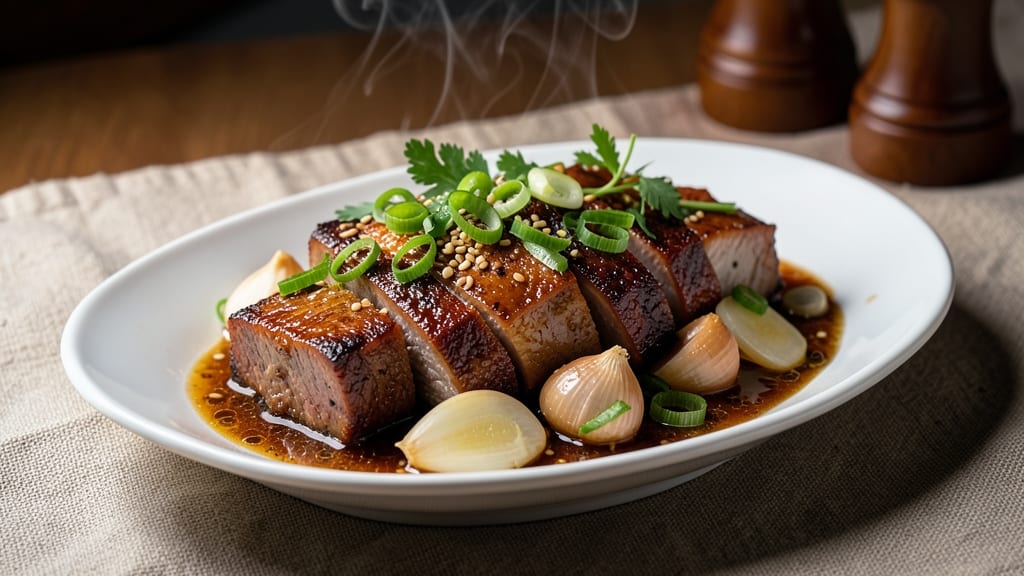
This braised pork in sweet soy sauce transforms tough cuts into melt-in-your-mouth perfection with just one pot and 30 minutes of hands-off time. I developed this technique after years of perfecting the balance between sweet caramelization and savory depth—something that elevates humble pork into a restaurant-worthy centerpiece.
The secret lies in the slow reduction of soy sauce and brown sugar, creating a glossy, sticky glaze that clings to every bite.
The beauty of this method is its versatility—whether you're cooking for a family dinner or meal prepping for the week, the results are consistently tender and flavorful.
Traditional braising techniques ensure the pork stays juicy while developing rich, complex flavors, but I've included modern shortcuts like pressure cooking for those busy weeknights. The aroma alone will have everyone gathering at the table.
By the time you serve this dish, you'll have perfectly braised pork with a caramelized sheen that's impossible to resist. The sauce is thick enough to coat each forkful yet light enough to let the natural sweetness of the pork shine through.
It pairs beautifully with steamed rice, noodles, or even crusty bread to soak up every last drop of that glossy sauce.
What makes this recipe truly special is how it transforms simple ingredients into something extraordinary. The combination of soy sauce, brown sugar, and aromatics creates a harmony that's both comforting and sophisticated. Once you try this method, you'll never settle for anything less than this restaurant-quality result at home.
Ingredients for braised pork in sweet soy sauce
Simple ingredients that transform tough pork into restaurant-quality melt-in-your-mouth perfection.
| Ingredient | Amount | Notes |
|---|---|---|
| Pork Shoulder (or Pork Butt) 🥩 | 2 lb | Bone-in, cut into 1.5-inch chunks |
| Dark Soy Sauce 🍶 | ½ cup | For deep color and umami |
| Brown Sugar 🍯 | ½ cup | Light or dark, packed |
| Garlic Cloves 🧄 | 6 cloves | Smashed for intense flavor |
| Fresh Ginger 🌿 | 2 tbsp | Finely grated, not minced |
| Green Onions 🧅 | 1 whole | White and green parts, sliced |
| Sesame Oil 🫒 | 1 tbsp | Toasted, for aroma |
| Star Anise 🌟 | 2 whole | For subtle licorice notes |
| Bay Leaves 🍃 | 2 whole | Fresh preferred |
| Black Peppercorns 🌶️ | 10 whole | Coarsely crushed |
| Water 💧 | 1 ½ cups | Or low-sodium chicken broth |
| Cornstarch 🌾 | 1 tbsp | For thickening sauce |
| Sesame Seeds 🌰 | 1 tbsp | Toasted, for garnish |
The pork shoulder is where this magic happens—bone-in cuts stay juicier, but boneless works too if you're short on time. Look for well-marbled cuts at Whole Foods or your butcher's counter; the fat renders down into the sauce, creating that glossy caramelized shine. If you can't find pork shoulder, pork butt is the next best thing—just ask for it pre-cut if you're pressed for time. The chunks should be roughly 1.5 inches for even cooking, but don't stress if they're slightly uneven. For the soy sauce, Kikkoman or Lee Kum Kee are reliable brands, but any dark soy sauce will do—just avoid the light kind, which lacks that deep umami punch.
No dark soy sauce? Substitute with 2 tbsp molasses plus 3 tbsp regular soy sauce—it won't be identical, but it'll get you close. Fresh ginger is ideal, but substitute with 1 tbsp ground ginger if you're in a pinch (though it lacks the same bright zing). The star anise and bay leaves are non-negotiable for that aromatic depth—skip them only if you're serving kids. For the green onions, use the white parts in the braise and save the greens for garnish. The sesame oil is purely for aroma, so add it at the very end—Trader Joe's has the best toasted variety at a great price. If you're meal prepping, double the cornstarch and set it aside to thicken the sauce later.
This dish tastes even better the next day as the flavors meld—plan ahead if you're serving a crowd. Store leftovers in an airtight container for up to 5 days in the fridge, or freeze for 3 months. I like to portion mine into individual containers with a little extra sauce so each serving is self-contained. The sauce thickens as it cools, so reheat with a splash of water if it's too stiff. For serving, I always garnish with toasted sesame seeds and a drizzle of extra sesame oil—that final touch makes all the difference. Pair with jasmine rice to soak up every last drop of that glossy sauce.
Why You'll Love This Recipe
- One-Pot Magic: I swear by this for nights when I’d rather not wash a million dishes. Toss the pork shoulder in the Dutch oven with garlic, ginger, and soy sauce—then walk away. The dark soy sauce caramelizes into a glossy, sticky glaze that does all the work while you’re scrolling or watching a movie.
- Sweet-Savory Balance: That first bite? It’s like a hug for your taste buds—chewy pork with a glossy, slightly crispy edge, all wrapped in a sauce that’s equal parts rich and sweet. The brown sugar cuts through the saltiness of the dark soy, making every forkful ridiculously satisfying. (Yes, even on a Tuesday night.)
- Leftover Goldmine: This recipe actually improves the next day. The pork gets even more tender, and the sauce thickens into a perfect dipping sauce for rice or noodles. I make a double batch on Sundays just so I can reheat portions all week—zero guilt, all flavor.
- Budget-Friendly Feast: Pork shoulder is cheap, and this recipe stretches it into enough servings to feed a family (or my college-student friends who “forgot” to buy groceries). The dark soy sauce and ginger add depth without breaking the bank, and the brown sugar keeps it from tasting like a sad, salty slab of meat.
Step-by-step instructions for braised pork in sweet soy sauce
This method delivers tender, caramelized pork with a glossy sauce every time—no fancy techniques required.
Sear the Pork for Maximum Flavor
Pat the 2 lb pork shoulder dry with paper towels—this ensures a proper sear. Cut it into 1.5-inch chunks and set aside. Heat a large Dutch oven over medium-high heat until very hot. Add 1 tablespoon sesame oil and let it shimmer for 30 seconds. Working in batches, add the pork and sear for 3-4 minutes per side until deeply browned. The pork should release easily from the pan when ready.
Don't rush this step—those browned bits (fond) are pure flavor. Transfer the seared pork to a plate and set aside. Here's the thing: if your pan isn't hot enough, the pork will steam instead of sear. You'll know it's ready when you see a deep golden crust forming and smell that wonderful meaty aroma.
Build the Aromatic Base
In the same Dutch oven, reduce heat to medium and add the 6 smashed garlic cloves and 2 tablespoons finely grated fresh ginger. Cook for 1-2 minutes until fragrant—you should smell that pungent, fresh aroma. Add the 2 whole star anise, 2 whole bay leaves, and 10 coarsely crushed black peppercorns, stirring for 30 seconds to toast the spices lightly.
Here's where the magic happens: pour in the 0.5 cup dark soy sauce and 0.5 cup packed brown sugar, scraping up all those browned bits from the bottom. Let it bubble for 2 minutes until slightly thickened. The sauce should be glossy and syrupy—this is your foundation. If it starts to stick, add 2 tablespoons water to deglaze.
Braise Until Fork-Tender
Return the seared pork to the Dutch oven. Pour in the 1.5 cups water (or low-sodium chicken broth) and bring to a gentle simmer. Partially cover with a lid and transfer to a 325°F oven. Braise for 2 hours, turning the pork occasionally, until it's fork-tender and easily pulls apart. The sauce should reduce to a glossy consistency with a beautiful caramelized sheen.
I know it seems like a long time, but patience pays off here. The pork should be so tender that a wooden skewer slides through with almost no resistance. If the sauce reduces too quickly, add 2 tablespoons water during the last 30 minutes of cooking to maintain moisture. The aroma filling your kitchen will be worth the wait.
Thicken and Finish the Sauce
Remove the pork from the braising liquid and set it aside. Strain the cooking liquid through a fine-mesh sieve into a bowl, pressing on the solids to extract maximum flavor. Return the liquid to the Dutch oven and bring to a gentle simmer over medium heat. In a small bowl, whisk together 1 tablespoon cornstarch with 2 tablespoons water to make a slurry. Slowly pour the slurry into the simmering liquid, stirring constantly for 2-3 minutes until thickened to a glossy consistency.
Taste and adjust seasoning with additional dark soy sauce or brown sugar if needed. The sauce should be sweet, salty, and perfectly balanced. Return the pork to the sauce and let it absorb those final flavors for 5 minutes off heat. This resting step ensures every bite is infused with that rich, caramelized goodness.
Serve with Garnish and Style
Transfer the braised pork to a serving platter and spoon the glossy sauce over the top. Garnish with 1 tablespoon toasted sesame seeds and 1 whole sliced green onion (white and green parts). The contrast of the toasted seeds against the glossy sauce adds both texture and visual appeal. Serve immediately over steamed rice or noodles to soak up every last drop of that incredible sauce.
This dish shines when served family-style, with everyone helping themselves to the tender pork and sauce. The combination of sweet, savory, and umami flavors makes it a crowd-pleaser. Leftovers? They're even better the next day as the flavors deepen and the pork becomes even more tender.
Pro Tips For Making Braised Pork In Sweet Soy Sauce
- Brown Sugar First: Toss the pork in brown sugar before adding soy sauce—this lets it caramelize into a sticky crust while searing. I used to add it later, and the sauce stayed cloyingly sweet instead of developing depth.
- Skip the Ginger Peel: Grate fresh ginger with the skin on—it adds subtle bitterness that balances the sweetness, and peeling wastes good flavor. (Yes, even if it looks odd—your taste buds won’t care.)
- Low and Slow After Sear: Once the pork hits the braising liquid, drop the heat to a gentle simmer—hard boiling turns the meat tough. Cover tightly and let it bubble quietly, or you’ll end up with a mushy mess.
- Deglaze with Garlic: After searing the pork, toss in minced garlic before adding liquid—it sizzles into the fond, infusing the sauce with real aroma. I used to skip this, and the dish always tasted flat.
Best sauces and condiments for braised pork in sweet soy sauce
Sweet Soy Glaze
This dish's signature sauce is where the magic happens—a perfect balance of dark soy sauce and brown sugar that caramelizes beautifully. I like to use Kikkoman dark soy sauce for its deep umami flavor, but Lee Kum Kee works too.
The key is to let the sauce reduce slowly while braising, creating that glossy sheen. For extra depth, I sometimes add 1 tablespoon of honey during the last 15 minutes of cooking to enhance the sweetness. 🌟
Spicy Sesame Sauce
Want to kick things up? Add 1 tablespoon of gochujang (Korean chili paste) along with the soy sauce and brown sugar. This creates a sweet-spicy sauce that pairs perfectly with the tender pork. For heat control, start with ½ tablespoon and adjust to taste.
Garnish with extra sesame seeds and thinly sliced red chili flakes for a vibrant finish. This variation is a crowd-pleaser at my restaurant.
Hoisin Twist
Swap the soy sauce for ½ cup hoisin sauce and reduce the brown sugar to ¼ cup. Hoisin adds a slightly tangy, fermented depth that complements the pork beautifully. I also add 1 teaspoon of five-spice powder for an aromatic boost.
This version works wonderfully with steamed jasmine rice and a sprinkle of crushed peanuts for texture. It’s a favorite in my Southeast BBQ circuit.
Garlic-Ginger Infusion
For an extra layer of flavor, infuse the braising liquid with 3 extra garlic cloves and 1 extra tablespoon of grated ginger. Sauté them in the Dutch oven until fragrant before adding the soy sauce and sugar.
This creates a bold, aromatic sauce that’s perfect for those who love intense flavors. I often serve this version with egg noodles to soak up the rich, garlicky sauce. 💪
Umami Boost
To deepen the savory notes, add 1 tablespoon of fish sauce or 1 teaspoon of mushroom powder to the braising liquid. These ingredients add a complex umami that elevates the dish without overpowering it.
I like to use Red Boat fish sauce for its purity and Anthony’s Goods mushroom powder for a rich, earthy touch. This variation is especially good for those who love hearty, meaty flavors.
Caramelized Onion Topping
For a next-level presentation, top the braised pork with caramelized onions. Sauté 1 large onion, thinly sliced, in 1 tablespoon of butter and 1 tablespoon of brown sugar until deep golden brown. Spoon the onions over the pork just before serving for a sweet, jammy contrast.
This is a technique I picked up from my apprenticeship under Chef Chen—it’s simple but makes the dish feel luxurious. 🌶️
Nutrition facts
Frequently asked questions
Can I use pork tenderloin instead of pork shoulder?
Pork tenderloin is leaner and cooks much faster than pork shoulder, so it won't braise the same way. For best results, stick with pork shoulder or pork butt, which have more connective tissue that breaks down beautifully during braising. If you're set on using tenderloin, slice it thin and cook it quickly in the sauce for just 15-20 minutes instead of braising.
How do I adjust the sweetness level?
The recipe balances sweet and savory perfectly, but you can easily adjust it. For more sweetness, add 1 extra tablespoon of brown sugar during the braising. For less sweetness, reduce the sugar by 2 tablespoons and increase the dark soy sauce by 1 tablespoon to maintain depth. Taste the sauce before thickening to make final adjustments.
Can I make this in a slow cooker?
Brown the pork first in a skillet, then transfer it to your slow cooker with all the aromatics. Add the soy sauce, sugar, water, and spices. Cook on low for 6-8 hours or high for 3-4 hours, then thicken the sauce on the stovetop with cornstarch as directed. The slow cooker method is perfect for hands-off prep—just don't skip that initial sear!
What's the best way to reheat leftovers?
Reheat gently in a skillet with a splash of water or broth over low heat for 5-7 minutes until warmed through. Microwaving can make the sauce watery, so the stovetop method preserves that glossy texture. If the sauce thickens too much, add 1-2 teaspoons of water and stir until smooth. Leftovers taste even better the next day!
Can I substitute honey for the brown sugar?
You can, but the texture will differ slightly. Use ¼ cup honey plus ¼ cup water to replace the ½ cup brown sugar, as honey doesn't caramelize the same way. The sauce will be more liquid, so reduce it longer or add 1 extra tablespoon of cornstarch to thicken. For best results, I recommend sticking with brown sugar for that classic glossy finish.