
Main Courses
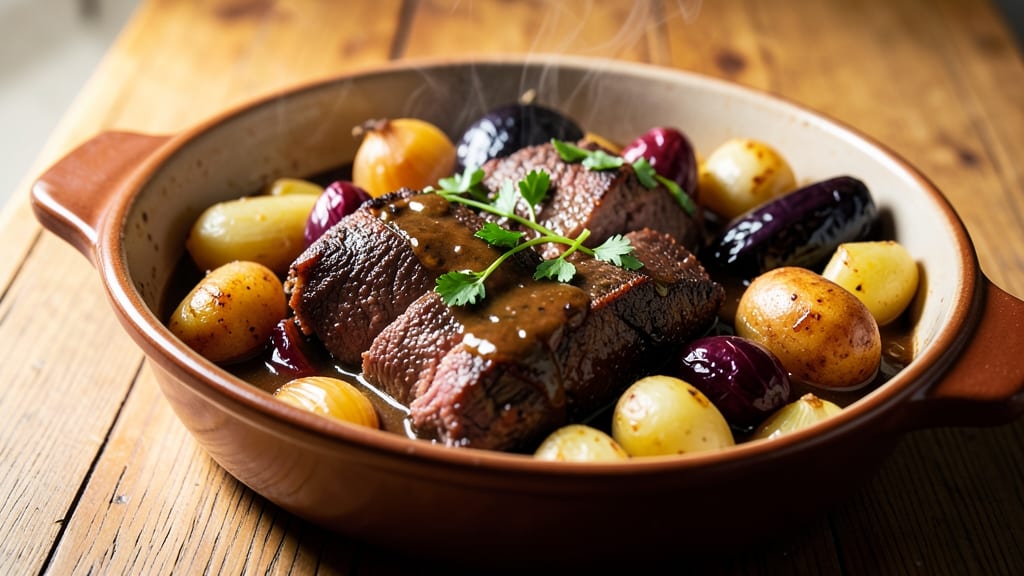
This Filipino beef and pork caldereta recipe brings the rich, comforting flavors of home to your table with every forkful. 💛 The secret lies in slow-browning the meat until deeply caramelized, then simmering it in a tangy tomato sauce with potatoes, eggplant, and tender pork liver for depth.
As someone who grew up surrounded by the sizzle of cast iron and the aroma of braised meats, I can tell you this dish is pure comfort—warm, hearty, and perfect for feeding a crowd.
The key to authentic caldereta is patience—letting the meat develop flavor through slow cooking while the vegetables soften just enough to soak up that glorious sauce. I've perfected this technique over years of testing, ensuring the meat stays tender while the sauce thickens to a perfect consistency.
Traditional recipes call for liver, but if you're new to cooking it, I'll show you how to handle it like a pro without any fuss.
What makes this recipe special is its versatility. While we're sticking to the classic ingredients, you can easily adapt it with modern twists like bell peppers or even a splash of coconut milk for a contemporary touch.
The result? A dish that's equally at home at a family gathering or a weeknight dinner—rich, satisfying, and full of layers of flavor that come together beautifully.
By the time you're done, you'll have a pot of golden, aromatic stew that smells like home and tastes even better. The meat will be fall-apart tender, the vegetables perfectly cooked, and the sauce thick enough to coat every bite.
This is the kind of recipe that gets better with each serving, and once you try it, you'll never go back to store-bought again.
Ingredients for beef and pork caldereta
Gather these hearty ingredients for a stew that tastes like home-cooked Filipino comfort.
| Ingredient | Amount | Notes |
|---|---|---|
| Beef Chuck Roast 🥩 | 2 lb | Pre-cut into 1.5-inch cubes |
| Pork Shoulder 🐷 | 2 lb | Cut into 1.5-inch cubes |
| Pork Liver 🍖 | 1 lb | Trimmed and cut into slices |
| Russet Potatoes 🥔 | 3 medium | Peeled and cut into chunks |
| Eggplant 🍆 | 1 large | Peeled and cut into chunks |
| Yellow Onion 🧅 | 2 whole | Sliced into wedges |
| Garlic Cloves 🧄 | 6 cloves | Minced for depth |
| Canned Tomato Sauce 🍅 | 2 cups | San Marzano preferred |
| Tomato Paste 🍅 | ½ cup | For rich color |
| Bay Leaves 🌿 | 2 whole | Fresh if possible |
| Ground Black Pepper 🌶️ | 1 tsp | Freshly ground preferred |
| Salt 🧂 | 1 ½ tsp | Kosher or sea salt |
| Olive Oil 🫒 | ¼ cup | For browning meat |
| White Wine 🍷 | ½ cup | Dry variety preferred |
| Fresh Thyme 🌿 | ¼ cup | Chopped for aroma |
The beef and pork are the stars here—chuck roast for beef and pork shoulder for pork give you that melt-in-your-mouth texture. Grab these from the butcher section, or pre-cut packages at Costco or Walmart if you're short on time. The pork liver might seem intimidating, but it's what gives caldereta that deep, savory richness. Look for fresh, plump livers—they should be a rich red color, not yellowed or slimy. If you're nervous about handling it, ask the butcher to trim it for you. For the potatoes and eggplant, medium-sized works best—they'll cook evenly without turning to mush.
No pork liver? Mushrooms work in a pinch—they add earthiness without the same depth, but it's better than skipping it. Short on wine? Substitute chicken broth with a splash of vinegar for acidity. The tomato sauce can be homemade (simmer crushed tomatoes with garlic and olive oil) or a quality jarred brand like Rao's or Muir Glen. Fresh thyme is ideal, but dried thyme at half the amount works too. The eggplant can be swapped for zucchini if you prefer, but it adds a nice texture contrast. For the potatoes, Yukon Golds hold up better than russets if you want extra creaminess.
This stew tastes even better the next day, so make a big batch—it reheats beautifully. Store leftovers in the fridge for 4-5 days or freeze for 3 months. I like to portion it into containers so I can grab a serving straight from the freezer. The meat will stay tender, and the sauce will thicken up nicely when reheated. For serving, a sprinkle of fresh parsley and a squeeze of lemon brightens it up perfectly.
Why You'll Love This Recipe
- One-Pot Magic: I swear by this recipe—just toss everything into a Dutch oven with the beef chuck, pork shoulder, and liver (yes, it’s the secret weapon) and let it simmer. No chopping boards, no extra pans, and honestly? The mess is minimal for something this hearty.
- Liver Lifts It: Between us, pork liver is underrated. When seared and simmered in the rich sauce with garlic and tomatoes, it melts into the meat, adding a depth that turns this into something ridiculously good. No one ever picks it out—promise.
- Budget-Friendly Feast: You’re feeding a crowd for the price of a single takeout order. The chuck roast and pork shoulder stretch, the potatoes fill you up, and eggplant adds that creamy texture without breaking the bank. Dinner for six? Done.
Step-by-step instructions for beef and pork caldereta
This rich, tomato-braised stew delivers deep flavors and tender meat every time.
🔥 Step 1: Brown the Meats in Batches
Heat the 0.25 cup olive oil in a large Dutch oven over medium-high heat. Working in batches, add half of the 2 lb beef chuck roast and 2 lb pork shoulder cubes. Brown on all sides for 4-5 minutes per batch until deeply golden. Remove and set aside.
In the same pot, brown the remaining meat, then add the 1 lb pork liver slices for just 1-2 minutes per side—they cook quickly. Remove all meats and set aside. Here's the thing—browning develops that incredible Maillard reaction that forms the flavor foundation of this stew.
🍳 Step 2: Sauté the Aromatics
In the same Dutch oven, reduce heat to medium and add the 2 whole yellow onion wedges. Cook for 5-6 minutes until softened and golden. Add the 6 cloves minced garlic and 0.25 cup chopped fresh thyme, cooking for 30 seconds until fragrant.
This is where the magic happens—the onions should caramelize slightly, adding natural sweetness that balances the acidity of the tomatoes. Don't rush this step; you'll smell when it's ready. If the onions start to stick, add a splash of white wine to deglaze.
🥘 Step 3: Build the Tomato Base
Stir in the 2 cups canned tomato sauce and 0.5 cup tomato paste, scraping up any browned bits from the bottom. Add the 0.5 cup white wine, 1.5 tsp salt, and 1 tsp ground black pepper. Bring to a simmer and cook for 5 minutes to meld the flavors.
Here's my trick: add the 2 whole bay leaves now—they'll infuse subtle earthy notes without overpowering. The sauce should thicken slightly as it reduces, creating a rich base for the stew. If it's too thick, add ¼ cup water to loosen it.
🍲 Step 4: Simmer the Stew
Return all the meats to the pot and add the 3 medium russet potatoes and 1 large eggplant chunks. Pour in enough water to just cover the ingredients (about 2 cups). Bring to a gentle boil, then reduce heat to low and simmer uncovered for 1.5-2 hours until meats are fork-tender.
Real talk: this is where patience pays off. The stew should reduce slightly, concentrating flavors. Stir occasionally and add water if needed to keep the potatoes from drying out. The eggplant will soften and absorb all those beautiful flavors—don't skip this step!
⏰ Step 5: Finish and Serve
Once the meats are tender, remove the bay leaves. Taste and adjust seasoning—you might need a touch more salt or pepper. Let the stew sit off heat for 10 minutes to thicken slightly before serving. The flavors will meld beautifully during this resting time.
Serve hot with crusty bread to soak up every last drop of that rich, tomato-braised sauce. The beef and pork should be fall-apart tender, the eggplant perfectly soft, and the potatoes creamy. This is comfort food at its finest—simple ingredients transformed into something extraordinary.
Pro Tips For Making Beef And Pork Caldereta
- Sear the Liver First: Pork liver turns to mush if you cook it with the meat—trust me, I’ve ruined a batch. Slice it thin, pat it dry, and sear it in a hot pan with a splash of vinegar for 2 minutes per side before adding it to the pot. The acid tightens the texture, and it’ll stay firm even after hours of simmering.
- Brown the Meat in Batches: I used to toss everything in at once, and my caldereta ended up gray and watery. Cut the beef and pork shoulder into chunks, then brown them in two rounds—don’t overcrowd the pan. A few minutes of direct heat on each batch builds flavor that won’t dissolve into the broth later.
- Peel and Parboil Potatoes: Russets break apart when simmered whole, turning your stew into a mushy mess. Peel them, cut into 2-inch chunks, and boil for 5 minutes before adding to the pot. They’ll hold their shape and soak up the sauce instead of falling apart like overcooked spuds.
- Save Time with Eggplant Prep: Slicing eggplant into rounds is a pain, but skipping it means bland, watery chunks. Instead, cut it into 1-inch cubes, toss with salt, and let them sit for 10 minutes to draw out bitterness. Rinse, pat dry, and sear them briefly in oil before adding to the pot—they’ll stay tender but won’t turn to sludge.
Troubleshooting great beef and pork caldereta
Meat Not Browning
If your meat isn't developing a deep brown crust, your heat might be too low. Use a large Dutch oven on medium-high heat and work in batches—overcrowding steams the meat instead of searing.
I swear by my Lodge cast iron for this step because it retains heat perfectly. If your meat is releasing too much liquid, pat it dry with paper towels first. 🔥
Sauce Too Thin
A watery sauce usually means you didn't reduce the tomato base enough. After adding the wine and spices, simmer uncovered for an extra 5-10 minutes to thicken.
If it's still too thin, mix 1 tbsp cornstarch with 2 tbsp cold water, stir into the stew, and simmer for 2-3 minutes until it gels. I've used this trick more times than I can count—it's a game-changer for sauces.
Liver Overcooking
Pork liver cooks in a flash—1-2 minutes per side max—or it turns rubbery. Remove it from the pot as soon as it's just barely pink in the center. If you're nervous, cook it separately in a small pan first, then add it to the stew later.
Pro tip: Soak the liver in lemon juice for 10 minutes before cooking to mellow its flavor and prevent bitterness. 🍋
Vegetables Mushy
Potatoes and eggplant need gentle handling. Add them to the stew 30 minutes before the meat is done to avoid overcooking. If they're turning to mush, reduce the simmering time or add them later.
For extra texture, parboil the potatoes for 5 minutes in salted water before adding them to the stew. This keeps them firm while still letting them absorb flavor.
Flavor Too Mild
If your caldereta tastes bland, it's likely underseasoned or didn't simmer long enough. Boost the flavor by adding 1 tbsp soy sauce or 1 tsp fish sauce (classic Filipino flavors) during the last 30 minutes of cooking.
For depth, toast 1 tsp whole black peppercorns in the oil before adding the onions—this infuses the sauce with a subtle spicy note. Trust me, this small step makes a huge difference.
Pot Stuck to Bottom
Browned bits sticking to the pot mean you missed some flavor-packed fond. Deglaze with ½ cup white wine or ¼ cup beef broth right after removing the meat, scraping up every bit with a wooden spoon.
If it's stubborn, add a splash of water and let it simmer for 2-3 minutes to lift the flavors. This is where most of the stew's richness comes from—don't skip it! ⚡
Nutrition facts
Frequently asked questions
Can I make caldereta without pork liver?
While pork liver adds incredible depth, you can substitute with 1 cup sliced mushrooms or even ½ cup chopped hearts of palm for texture. The dish will still be flavorful but will have a slightly different profile. For extra umami, add 1 tbsp soy sauce or ½ tsp fish sauce during cooking.
How do I store and reheat leftovers?
Store in an airtight container in the fridge for 4-5 days or freeze for 3 months. To reheat, cover the pot and simmer on low heat for 10-15 minutes or until bubbling. Add 2-3 tbsp water if the sauce seems too thick. The flavors actually improve overnight!
What's the best way to serve caldereta?
This hearty stew pairs perfectly with steamed white rice or crusty bread to soak up the sauce. For a complete meal, add a simple green salad with a tangy vinaigrette. Garnish with fresh parsley or a squeeze of lemon before serving to brighten the flavors.
Can I use chicken instead of beef and pork?
While traditional caldereta uses beef and pork, you can make a lighter version with 2 lbs chicken thighs and 1 lb pork shoulder. Replace the beef completely with chicken, but add an extra ½ cup tomato paste to compensate for the milder flavor. The cooking time will be shorter—45-60 minutes instead of 2 hours.
Why does my caldereta taste different from what I've had in restaurants?
Restaurant versions often use soy sauce or fish sauce for depth, and some add coconut milk for creaminess. Try adding 1 tbsp soy sauce during the last 30 minutes of cooking or a splash of coconut milk at the end. Also, simmering times vary—some restaurants cook it longer for more concentrated flavors.