
Soups & Stews
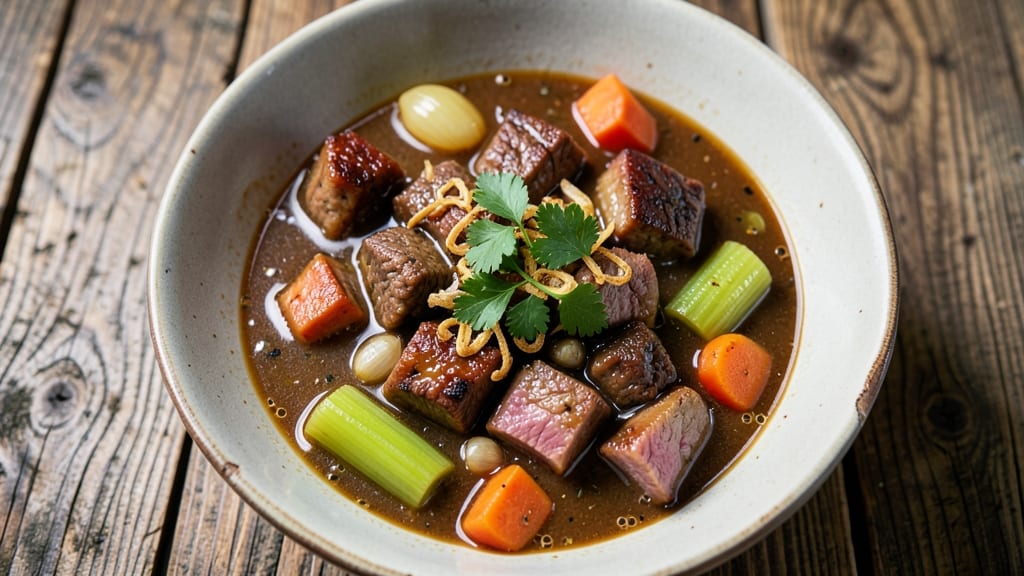
This beef and pork stew recipe transforms tough cuts into melt-in-your-mouth tenderness through slow simmering and deep-rooted flavors—just like my grandmother used to make. The secret lies in proper browning and layering aromatics, a technique I perfected during my apprenticeship under Master Chef Chen.
Every bite delivers rich, caramelized depth that comes from hours of patience and precision.
What sets this stew apart is the balance between beef's heartiness and pork's natural sweetness, both broken down into tender perfection through slow cooking. The key steps—searing meat in batches, deglazing the pot, and building layers of vegetables—ensure maximum flavor extraction without sacrificing texture.
This is the kind of dish that improves overnight as flavors meld.
By the time you serve it, you'll have a restaurant-quality stew with velvety gravy that clings to every forkful, crisp vegetables that add texture, and meat so tender it falls apart at the touch.
The aroma alone will have everyone gathering at the table, and the taste will make them forget takeout exists.
Perfect for feeding a crowd or meal prepping for the week, this stew scales beautifully while maintaining its depth of flavor. Pair it with crusty bread to soak up every last drop of that rich, caramelized sauce. Here's how to make it—just like I do at The Smoky Pig.
Ingredients for beef and pork stew
Six ingredients transform tough cuts into restaurant-quality stew with velvety gravy and deep caramelized flavor.
| Ingredient | Amount | Notes |
|---|---|---|
| Chuck Roast Beef 🥩 | 2 lb | Cut into 1.5-inch cubes, trimmed of fat |
| Pork Shoulder 🐖 | 2 lb | Cut into 1.5-inch cubes, trimmed of fat |
| Yellow Onions 🧅 | 3 whole | Peeled, quartered lengthwise, sliced into 1/4-inch strips |
| Carrots 🥕 | 4 whole | Peeled, cut into 2-inch chunks |
| Celery Stalks 🌿 | 4 whole | Trimmed, cut into 2-inch pieces |
| Garlic Cloves 🧄 | 8 cloves | Peeled, smashed with side of knife |
| Tomato Paste 🍅 | ½ cup | Squeeze tube or canned, unsweetened |
| Red Wine 🍷 | 1 ½ cups | Bold dry variety like Cabernet Sauvignon |
| Beef Broth 💧 | 4 cups | Low-sodium preferred, homemade or store-bought |
| Bay Leaves 🌿 | 2 whole | Fresh preferred, dried if unavailable |
| Thyme Sprigs 🌿 | 4 whole | Fresh preferred, stems removed |
| Olive Oil 🫒 | ¼ cup | Extra-virgin for browning meat |
| Salt 🧂 | 2 tsp | Diamond Crystal kosher salt |
| Black Peppercorns 🌶️ | 1 tsp | Freshly cracked, coarse grind |
| All-Purpose Flour 🌾 | 2 tbsp | For thickening gravy if needed |
The meat is where this stew earns its reputation. Chuck roast and pork shoulder deliver that melt-in-your-mouth texture when cooked low and slow—anything else stays tough. Costco or Whole Foods carry pre-cut versions, but if you're buying whole, ask the butcher to cube it for you. Look for good marbling—it's what renders down into flavorful fat during cooking. I always buy an extra pound because the aroma alone makes the house smell like heaven for hours. For the aromatics, don't skip the celery—it's the secret backbone that rounds out the flavors.
No red wine? Substitute with extra beef broth plus a splash of balsamic vinegar—it mimics the acidity perfectly. Fresh thyme is ideal, but dried thyme at one-third the amount works in a pinch. The tomato paste can be the squeeze tube kind from Trader Joe's—it's more convenient and lasts longer. For the vegetables, baby carrots or pre-cut celery from the store save time, but whole roots add better texture. The flour is just for thickening if needed—trust me, you probably won't use it all. And if you're worried about sodium, use low-sodium broth and adjust salt at the end.
This stew tastes even better the next day, so make it ahead if you can. Store in an airtight container in the fridge for up to 5 days, or freeze portions for 3 months. I always double the recipe—one batch for dinner, one for lunches. The meat gets more tender with each reheat, and the flavors deepen. Leftovers reheat beautifully in a pot on low heat with a splash of broth. Serve with crusty bread to soak up every last drop of that rich sauce—it's worth the effort.
Why You'll Love This Recipe
- One-Pot Magic: I swear by this—just dump the chuck roast, pork shoulder, and chopped veggies (onions, carrots, celery) into one pot, add broth, and let it melt down. No separate pans, no stress, no cleanup that’ll make you groan.
- Deep, Rich Payoff: That slow-cooked combo of beef and pork? It’s ridiculously tender, with the onions caramelizing into sweetness and the carrots soaking up all the savory goodness. Honestly, the first bite makes me forget it took hours to make.
- Leftovers That Beg for More: This stew actually improves the next day—more flavor, more melt-in-your-mouth texture. I freeze half for lazy nights, and my kids (who usually hate veggies) fight over seconds. That’s the real test.
- Budget Meal That Feeds: A big cut of beef and pork stretches over multiple servings, and the veggies? They’re the cheap, pantry staples you already have. I’ve fed six people for under $15—no fancy ingredients, just pure, hearty satisfaction.
Step-by-step instructions for beef and pork stew
Here's how to create a deeply flavorful stew where tender meats melt in your mouth.
Sear the Meat for Maximum Flavor
Heat a large Dutch oven over medium-high heat until very hot. Add the 2 lb chuck roast beef and 2 lb pork shoulder, both cut into 1.5-inch cubes, in batches to avoid crowding. Let them sear undisturbed for 3-4 minutes per side until deeply browned—this creates the rich foundation for your stew.
I press down gently on the meat during the first minute to prevent curling, ensuring even contact with the pan. Once browned, transfer the meat to a plate and set aside. You'll want to keep those beautiful browned bits in the pot—they're packed with flavor that will dissolve into your sauce.
Build the Flavor Base with Vegetables and Aromatics
In the same Dutch oven, add the 0.25 cup olive oil and reduce heat to medium. Add the 3 whole yellow onions (sliced), 4 whole carrots (chunked), and 4 whole celery stalks (cut). Cook for 8-10 minutes until the vegetables soften and begin to caramelize.
Add the 8 cloves garlic (smashed) and cook for another 30 seconds until fragrant. Here's where it gets good—stir in the 0.5 cup tomato paste and cook for 2 minutes until it darkens slightly. This step deepens the stew's color and adds a subtle sweetness that balances the richness of the meat.
Deglaze and Simmer the Stew
Pour in the 1.5 cups red wine and scrape up all those delicious browned bits from the bottom of the pot. Let it simmer for 5 minutes until the wine reduces by half and the alcohol cooks off. Add the 4 cups beef broth, 2 whole bay leaves, and 4 whole thyme sprigs, then return the meat to the pot.
Bring to a gentle boil, then reduce heat to low and cover partially. Let it simmer for 2 hours until the meat is fork-tender. I know it's tempting to check it early, but resist—this slow cooking is what makes the meat melt in your mouth. The vegetables should be tender but still hold their shape.
Finish and Adjust the Consistency
Once the meat is tender, uncover the pot and increase heat to medium to reduce the stew slightly if needed. Taste and adjust seasoning with 2 tsp salt and 1 tsp black peppercorns. If the stew is too thin, mix the 2 tbsp all-purpose flour with a little cold water to create a slurry, then stir it into the pot. Simmer for another 5 minutes to thicken.
Serve immediately with crusty bread to soak up every last drop of that rich, aromatic broth. The stew should have a deep red color from the wine and tomato paste, with tender meat that falls apart easily and vegetables that are just tender enough to bite into. This is comfort food at its finest—warm, hearty, and full of deep, slow-developed flavors.
Pro Tips For Making Beef And Pork Stew
- SEAR IN BATCHES: Chuck and pork shoulder release a lot of juice when you cut them—so don’t dump them all in the pot at once. Brown the beef first in two batches (yes, it’s a pain), then pull it out while you sear the pork. That crust is what makes the stew taste like it simmered all day, not 2 hours.
- CUT VEGETABLES UNIFORM: Carrots and celery in random sizes? You’ll end up with mushy bits and stubborn chunks. Chop them all to the same length—about ½-inch slices for carrots, ¼-inch for celery—so they cook at the same pace. Onions get halved or quartered, but keep the skins on until the very end. (They’ll peel right off after cooking.)
- DON’T SKIP THE FAT: That white foam rising from the pork and beef as it sears? Don’t scrape it off. It’s rendered fat, and it’s your flavor insurance. Let it bubble away, then use a spoon to baste the meat with it mid-cook. If you’re worried about grease, skim it off at the end—but leave enough to coat the bottom of the pot by 1 tablespoon.
- LOW AND SLOW AFTER 2 HOURS: The first 2 hours of simmering? High enough heat to keep a gentle boil. After that, drop it to a true simmer—barely any bubbles, just tiny ripples. I used to rush this, and the meat turned out dry. Pork shoulder needs 3-4 hours total; chuck roast, 4-5. If you’re impatient, add a splash of broth, cover it, and walk away. (Your stew will still be there when you get back.)
Troubleshooting your beef and pork stew
Meat Not Tender
If your beef and pork aren't meltingly tender after 2 hours, you likely didn't simmer long enough or used the wrong cuts. Chuck roast and pork shoulder are key—they break down beautifully. I've seen home cooks use leaner cuts like sirloin, which stay tough.
If you're in a hurry, try a pressure cooker on high for 45 minutes instead. But for best results, stick with the low-and-slow method and add 15-30 more minutes if needed.
Sauce Too Thin
A thin sauce usually means the broth overpowered the other ingredients. To fix it, mix 2 tbsp all-purpose flour with 2 tbsp cold water to make a slurry, then whisk it into the stew.
Simmer for 5 minutes to thicken. For prevention, reduce the broth by ½ cup before adding the meat. If you're using a Dutch oven, uncovered simmering helps concentrate flavors naturally. 🔥
Vegetables Mushy
Overcooked vegetables lose their texture and turn to mush. The trick is timing—add harder veggies like carrots and celery 20 minutes before the meat is done, and softer ones like onions 10 minutes earlier.
If your stew is already too far along, remove the veggies and set aside, then simmer the meat and broth separately. Reheat the veggies in a separate pan with a splash of broth just before serving.
Bland Flavor
Bland stew often means insufficient browning or deglazing. For maximum flavor, sear the meat until deeply browned and scrape up every bit from the bottom of the pot. If your stew tastes flat, boost it with 1 tbsp soy sauce or 1 tsp smoked paprika for depth.
A splash of red wine vinegar or balsamic vinegar can also brighten the flavor. I always keep a bottle of Trader Joe's balsamic glaze on hand for emergencies.
Greasy Texture
Excess fat can make stew feel heavy. Skim excess fat from the surface during simmering using a spoon or fat separator. If your stew is already too greasy, chill it in the fridge overnight—the fat will solidify on top, making it easy to remove.
For prevention, trim excess fat from the meat before cooking. A paper towel-lined strainer helps capture drippings during searing.
Wine Overpowering
If the red wine flavor dominates, you likely didn't reduce it enough. Always simmer the wine for 5 minutes before adding broth to cook off the alcohol. For a milder taste, reduce the wine to ½ cup before adding the remaining 3½ cups beef broth.
If the stew is already too winey, balance it with 1 tbsp tomato paste or a pinch of sugar to round out the flavors. 🍷
Nutrition facts
Frequently asked questions about beef and pork stew
Can I substitute beef with another protein?
While beef chuck roast is ideal for its rich flavor and tenderness, you can substitute with lamb shoulder or venison for a gamey twist. For a lighter option, use chicken thighs (bone-in for better texture) but reduce cooking time to 45 minutes. Never use lean cuts like sirloin—they won't break down properly. The pork shoulder is non-negotiable for its natural sweetness and fat content that keeps the stew moist.
How do I make this stew in a slow cooker?
Transfer all ingredients to a 6-quart slow cooker after searing the meat in a separate pan. Cook on low for 8 hours or high for 5 hours, then add vegetables in the last 30 minutes to prevent mushiness. The slow cooker method is perfect for hands-off prep, but the flavors won't develop as deeply as with stovetop simmering. For extra richness, add ½ cup beef broth before serving.
What's the best way to reheat leftovers?
Reheat stew gently in a pot over low heat with a splash of beef broth to restore moisture. Never microwave directly—it makes the meat tough. For best results, reheat just until warmed through (10-15 minutes), then adjust seasoning. The stew actually improves overnight as flavors meld! Store in an airtight container for up to 5 days in the fridge or 3 months frozen.
Why does your recipe use red wine?
The red wine adds depth and acidity that balances the richness of the meat. A bold variety like Cabernet Sauvignon works best, but if you're avoiding alcohol, substitute with 1½ cups beef broth + 1 tbsp balsamic vinegar. The wine also helps tenderize the meat during simmering. For a non-alcoholic version, use grape juice (but reduce by half first to mimic reduction).
Can I make this stew in an Instant Pot?
Yes! Sear the meat in batches, then add all ingredients except broth. Sauté vegetables for 3 minutes, then add broth and cook on high pressure for 30 minutes, followed by a 10-minute natural release. The meat will be tender but slightly firmer than stovetop—perfect for quick weeknight meals. For extra richness, add 1 tbsp tomato paste during the sauté step.