
Main Courses
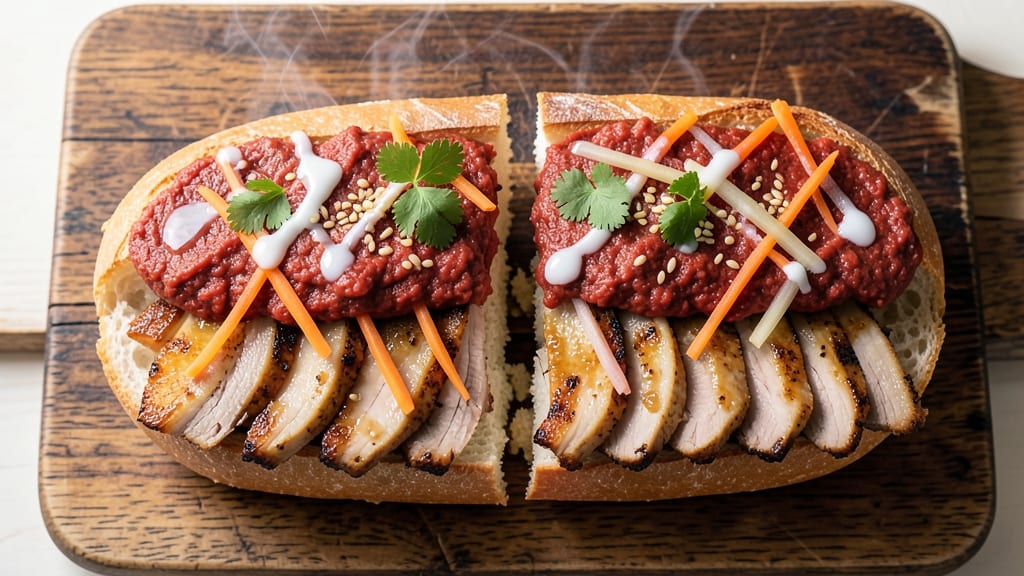
This banh mi recipe with pork shoulder transforms a simple sandwich into a masterpiece of Vietnamese-inspired flavor and texture.
The secret lies in slow-cooking the pork shoulder until it's so tender it practically melts in your mouth, then assembling it with all the classic elements—crusty baguette, savory pâté, bright pickled vegetables, and fresh herbs.
I've been perfecting this recipe for years, and it never fails to impress, whether you're serving it at a family gathering or enjoying a solo lunch.
What makes this recipe special is the balance of textures and flavors—crispy baguette, tender pork, creamy pâté, and the bright tang of pickled vegetables all come together in perfect harmony.
The pork shoulder is slow-cooked with a blend of spices that creates a rich, aromatic base, while the pickled carrots and daikon add a refreshing crunch that cuts through the richness. This isn't just a sandwich; it's a full sensory experience that brings a taste of Vietnam to your kitchen.
The assembly is where the magic happens. You'll slice the pork shoulder thinly, layer it with pâté, pickled vegetables, cilantro, jalapeño, and a drizzle of mayo or mustard, then press it all together in a crusty baguette.
The result is a sandwich that's packed with flavor in every bite, with each component complementing the others. It's the kind of dish that feels special yet is simple enough to make on a weeknight.
This recipe also offers plenty of room for creativity. You can adjust the spice level, swap out the pâté for something else like liver pâté or even a simple spread of mayo and mustard, or add extra toppings like cucumber or avocado.
Whether you're making it traditional or putting your own spin on it, the goal is to create a sandwich that's as satisfying as it is delicious.
Ingredients for banh mi recipe pork shoulder
Pork shoulder, crusty baguettes, and bold flavors—this is your banh mi shopping list.
| Ingredient | Amount | Notes |
|---|---|---|
| Pork Shoulder 🥓 | 2 lb | Bone-in for flavor, trimmed of excess fat |
| Crusty Baguettes 🍞 | 2 whole | Fresh from bakery, sliced lengthwise |
| Pâté 🥓 | ½ cup | Store-bought or homemade chicken liver pâté |
| Carrots 🥕 | 1 lb | Thinly sliced for pickling |
| Daikon Radish 🥕 | ½ lb | Julienned for pickling |
| White Vinegar 💧 | ½ cup | For pickling liquid |
| Granulated Sugar 🍚 | ¼ cup | For pickling balance |
| Salt 🧂 | 1 tbsp | Kosher or sea salt |
| Fresh Cilantro 🌿 | ½ cup | Chopped, stems removed |
| Jalapeños 🌶️ | 2 whole | Sliced thin for heat |
| Mayonnaise 🥛 | ¼ cup | For binding and creaminess |
| Yellow Mustard 🍯 | 2 tbsp | For tangy kick |
| Garlic Cloves 🧄 | 4 cloves | Minced for pork marinade |
| Fish Sauce 🍶 | 2 tbsp | For umami depth |
| Brown Sugar 🍚 | 2 tbsp | For pork marinade |
The pork shoulder is non-negotiable here—bone-in for flavor, but trim any thick fat for cleaner slices. Trader Joe's or Whole Foods often carry pre-trimmed cuts, but if you're buying whole, ask the butcher to remove excess. Look for good marbling—it keeps the meat juicy during slow cooking. For the baguettes, fresh from a bakery is key. The crust needs to be crispy, so avoid pre-packaged ones—they're usually stale. If you can't find fresh ones, Costco or local bakeries are your best bets. The pâté can be store-bought (check the ingredients—some contain liver, others just chicken), but homemade is a game-changer if you're feeling ambitious.
No pâté? Chicken salad or mayo-mustard mix works in a pinch, though it won't have that same rich, savory depth. For the pickled veggies, substitute cucumber or green beans if daikon is hard to find, but the crunch is essential—it cuts through the richness of the pork. Fresh cilantro is ideal, but dried won't work here (the flavor's too different). The fish sauce is crucial for that authentic umami—no substitutes here. If you're avoiding fish sauce, soy sauce plus a splash of oyster sauce can mimic it, but it won't be identical. For the mayo, Duke's or Hellmann's are reliable, but any good-quality mayo will do.
Pork keeps 3-4 days in the fridge once cooked, but it's even better the next day—flavors meld beautifully. The pickled veggies stay crisp for 1 week if stored in their liquid. Baguettes? Eat them the day you buy them—they lose their crunch fast. Portion the pâté and pickles into small containers for easy assembly. This sandwich is all about freshness, so don't prep everything ahead—just the pork and pickles. The rest can wait until you're ready to eat.
Why You'll Love This Recipe
- Slow-Cooker Magic: I swear by this method—just toss the pork shoulder with fish sauce, sugar, and garlic, then let the slow cooker do its thing. No babysitting, no burnt edges, just melt-in-your-mouth tenderness that makes the baguette taste like a revelation.
- Umami Bomb Combo: That pâté spread? Chef’s kiss. Slathered on crusty bread with the carrot-daikon slaw, it’s like a little flavor party in every bite—salty, sweet, tangy, all while the pork shoulder delivers that deep, smoky richness.
- Picnic or Potluck Star: Between us, this is my go-to for gatherings. The baguettes stay fresh for days, the pork reheats like a dream, and the pickles keep everyone coming back for seconds. (Yes, even on a Tuesday night.)
- Budget-Friendly Feast: Pork shoulder is the ultimate stretch—one cut feeds a family, and leftovers? Even better cold the next day. Honestly, I’ve made this for $12 and still felt like I ordered takeout from a fancy spot.
Step-by-step instructions for Vietnamese-inspired pork shoulder banh mi
Here's how to transform simple ingredients into a sandwich with bold flavors and perfect textures.
Marinate and Slow-Cook the Pork Shoulder
In a large bowl, combine the 2 lb pork shoulder with the 4 minced garlic cloves, 2 tbsp brown sugar, 2 tbsp fish sauce, and 1 tbsp salt. Mix thoroughly until the pork is evenly coated. Cover and refrigerate for at least 4 hours or overnight for maximum flavor penetration.
Preheat your oven to 300°F. Place the marinated pork on a wire rack set over a baking sheet to allow air circulation. Roast for 3 hours until the internal temperature reaches 195°F and the meat is fork-tender. For extra crispiness, broil for 5 minutes at the end. Let the pork rest for 30 minutes before shredding with two forks.
Prepare the Pickled Vegetables
In a medium bowl, combine the 1 lb thinly sliced carrots and 0.5 lb julienned daikon radish. In a separate small bowl, whisk together the 0.5 cup white vinegar, 0.25 cup granulated sugar, and 1 tbsp salt. Pour the vinegar mixture over the vegetables and toss gently to coat. Let sit for 30 minutes to pickle, then drain and rinse briefly before using.
For the jalapeños, slice the 2 whole jalapeños thinly and set aside. The pickling process enhances their natural heat while adding a bright tang to balance the rich pork.
Assemble the Special Sauce
In a small bowl, mix together the 0.25 cup mayonnaise and 2 tbsp yellow mustard until smooth. This sauce acts as the perfect bridge between the crispy baguette and the savory pork. The combination of creamy and tangy creates that signature banh mi flavor.
Keep this mixture refrigerated until ready to use. The sauce should be thick enough to cling to the bread without being overly runny. If needed, chill for 10 minutes before spreading to achieve the right consistency.
Toast and Assemble the Baguettes
Slice the 2 whole crusty baguettes lengthwise into two equal halves. Toast the cut sides in a 400°F oven for 5-7 minutes until golden brown and crisp. This step is crucial for achieving that perfect crunch that defines a great banh mi.
Spread a generous layer of the special sauce on both halves of each baguette. Then, layer with the shredded pork, pickled vegetables, and sliced jalapeños. Top with the 0.5 cup chopped fresh cilantro and a dollop of 0.5 cup pâté for that authentic Vietnamese touch.
Serve Immediately for Maximum Freshness
Press the sandwich halves together gently and serve immediately. The contrast of crispy toasted bread, tender pork, tangy pickles, and creamy sauce makes every bite unforgettable.
For best results, assemble the sandwiches just before serving. The flavors meld beautifully when everything is fresh and warm. Enjoy with a side of extra pickled vegetables or a cold drink to complement the rich, savory flavors.
Pro Tips For Making Banh Mi Recipe Pork Shoulder
- Crush the Pork Shoulder: The fat cap is your friend—leave it on and score the meat in a crosshatch pattern before braising. I learned this the hard way: skipping the scoring means uneven cooking and a tougher bite, especially in the center.
- Toast Baguettes Low and Slow: Skip the broiler—it burns before it crisps. Instead, slice the baguettes open, place them on a wire rack over a baking sheet, and toast at 300°F (150°C) for 10–12 minutes until golden. The indirect heat guarantees a crispy crust without charring.
- Shave, Don’t Dice, the Pickles: Use a mandoline or sharp knife to shave daikon and carrots into thin, even slices—think 1/8-inch thick. Thick chunks stay crunchy but dull the bright, fresh contrast against the rich pork. (Yes, even if you’re impatient like me.)
- Rest the Meat Twice: Pull the pork shoulder at 195°F (90°C) internal temp, tent with foil, and rest for 30 minutes. Then, before slicing, let it sit another 10 minutes uncovered—this guarantees juicy slices that don’t fall apart when stacked. (Your future self will thank you.)
Troubleshooting this recipe
Pork Too Dry?
If your pork shoulder ends up dry, you likely cooked it too fast or didn't rest it long enough. Slow-cook at 275°F instead of 300°F for 4-5 hours—this gives collagen time to break down into juices.
Always rest the meat for 30-60 minutes before shredding. I've learned the hard way: skipping the rest means all the juices pool at the bottom of your pan. 💧
Bread Too Soft?
Your baguette might be stale if it's not fresh from the bakery. Toasting at 400°F for 5-7 minutes is key—any longer, and it burns. For extra crunch, brush the cut sides with 1 tbsp melted butter before toasting.
I once used day-old bread and ended up with a soggy mess. Trust me, fresh is non-negotiable here. 🍞
Pickles Too Bland?
If your pickled carrots and daikon lack tang, your vinegar mixture needs more acidity. Try adding 1 tbsp lemon juice to the brine, or let them pickle for 1-2 hours instead of 30 minutes.
For heat lovers, add ½ tsp red pepper flakes to the brine. I once forgot to salt my pickles enough—they tasted like watered-down juice. 🌶️
Sauce Too Thin?
A runny mayo-mustard sauce happens when ingredients aren't chilled long enough. Mix your sauce and refrigerate for 10 minutes before using—this thickens it naturally. For extra stability, add ½ tsp cornstarch to the mayo before mixing.
I've had to salvage thin sauces by simmering them in a small pan for 2-3 minutes to evaporate excess liquid. 🥛
Pâté Too Strong?
If the liver pâté overpowers your sandwich, balance it with more fresh herbs or pickled veggies. For a milder option, mix ¼ cup mayo with 1 tbsp Dijon mustard and spread that instead.
I once used too much pâté and nearly ruined a batch—now I start with just 1 tbsp per sandwich and adjust as needed. 🥓
Assembly Falling Apart?
Press the sandwich halves together firmly before serving to keep everything in place. For extra stability, lightly toast the cut sides again after assembly for 1-2 minutes. I've had sandwiches fall apart when I rushed—patience is key here. Assemble right before eating for the best texture contrast. ✨
Nutrition facts
Frequently asked questions
Can I substitute chicken or beef for the pork shoulder?
While pork shoulder gives banh mi its signature rich, tender texture, you can use chicken thighs (bone-in for moisture) or beef chuck roast. For chicken, cook until 165°F internal temp, and for beef, aim for 195°F for melt-in-your-mouth results. Just adjust cooking times—chicken will be ready in 2-2.5 hours at 300°F, while beef may need 4-5 hours. The flavor profile shifts slightly but still delivers delicious results.
How do I make this recipe gluten-free?
Swap the baguettes for gluten-free bread or a gluten-free baguette (check labels for certified options). For extra crunch, toast gluten-free bread with a light brush of olive oil. You'll also need to verify all ingredients—some pâtés and sauces contain hidden gluten. For pickles, ensure vinegar and sugar are certified gluten-free. The flavor stays intact, but texture may differ slightly.
Can I make the pork shoulder in a slow cooker?
Place the marinated pork in your slow cooker on low for 6-8 hours or high for 4-5 hours. The key is to maintain 195°F internal temp. After cooking, shred and let it rest as directed. Slow cookers work great for hands-off prep, but monitor for dryness—add ¼ cup broth if needed during cooking.
What's the best way to reheat leftovers?
Reheat pork in a 350°F oven for 10-15 minutes with a splash of broth to keep it moist. For sandwiches, lightly toast the baguette halves again for 2-3 minutes to restore crunch. Microwaving works in a pinch (30-second bursts), but textures suffer. Store components separately—pork lasts 3-4 days, pickles 1 week, and baguettes best fresh.
How do I adjust the spice level?
For milder heat, remove jalapeño seeds before slicing or use 1 jalapeño total. For extra spice, add ½ tsp cayenne to the pork marinade or include 1 serrano pepper in the pickling brine. Balance with more fresh herbs or a drizzle of sweet chili sauce. I once made this too spicy—next time, I'll add 1 tbsp honey to the pork marinade to mellow the heat.