
Main Courses
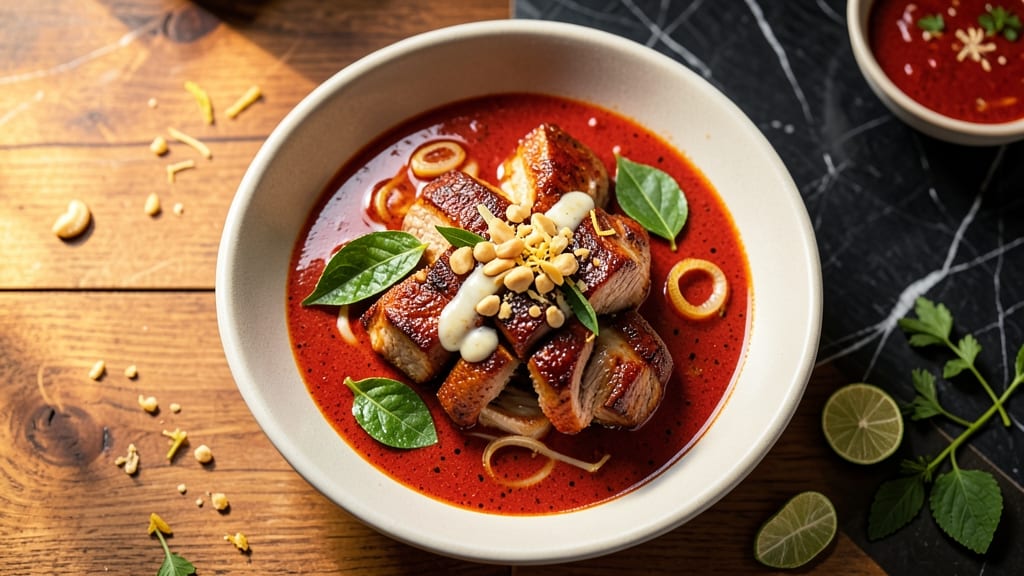
This authentic Thai red curry pork recipe brings the aromatic streets of Bangkok to your kitchen with its signature balance of fragrant lemongrass, fiery galangal, and creamy coconut milk. 🌟 After years of perfecting the technique—balancing heat, texture, and depth—this version delivers restaurant-quality results without shortcuts that compromise authenticity.
The secret lies in properly blooming the spices and reducing the coconut milk just enough to create a velvety, clinging sauce that coats every bite of tender pork.
The recipe starts with a proper Thai red curry paste, where I show you how to toast whole spices for maximum aroma before building layers of flavor with fresh galangal, lemongrass, and kaffir lime leaves.
Pork shoulder is the star here—it stays juicy and tender while absorbing the rich, complex sauce. What makes this different from many Westernized versions is the careful balance of sweet, sour, and spicy elements, where the heat comes from fresh chilies rather than pre-made pastes.
By the time you serve this curry over steamed jasmine rice, you'll have a dish that's vibrant red, fragrant enough to fill a room, and packed with tender pork that falls apart at the touch of a spoon.
The sauce clings perfectly to the rice, creating each bite into a symphony of textures and flavors. Garnish with fresh Thai basil and toasted cashews for that final touch of authenticity that makes all the difference.
While this recipe stays true to tradition, I've included practical adaptations for ingredients that might be hard to find—like substituting galangal with ginger in a pinch. The method is straightforward, but the results are anything but basic.
This is the kind of dish that transforms a simple weeknight dinner into an unforgettable culinary experience.
Ingredients for authentic thai red curry pork
Authentic Thai flavors start with these carefully chosen ingredients—each playing its part in the vibrant red curry symphony.
| Ingredient | Amount | Notes |
|---|---|---|
| Pork Shoulder 🥩 | 1 ½ lb | Bone-in for flavor, cut into 1.5-inch cubes |
| Red Curry Paste 🌶️ | ⅓ cup | Authentic Thai brand preferred |
| Coconut Milk 🥥 | 1 can (13.5 oz) | Full-fat for creaminess, not light |
| Galangal 🍃 | 3 inches | Fresh root, peeled and sliced thin |
| Lemongrass 🌿 | 2 stems | Bruised and cut into 2-inch pieces |
| Kaffir Lime Leaves 🍋 | 4 whole | Fresh, torn into strips |
| Bird's Eye Chilies 🌶️ | 4 whole | Fresh, seeds removed for less heat |
| Fish Sauce 🍶 | 2 tbsp | Red Boat brand recommended |
| Palm Sugar 🍯 | 2 tbsp | Or sub light brown sugar |
| Jasmine Rice 🍚 | 1 ½ cups | Uncooked, long-grain |
| Thai Basil Leaves 🌿 | ¼ cup | Fresh, for garnish |
| Toasted Cashews 🥜 | ¼ cup | Chopped, for garnish |
| Vegetable Oil 🫒 | 2 tbsp | For blooming spices |
| Garlic Cloves 🧄 | 4 cloves | Minced for paste |
| Shallots 🧅 | 3 whole | Peeled and minced |
The galangal and lemongrass are non-negotiable for authentic flavor—Asian markets carry fresh roots, but if you can't find them, ginger works in a pinch (though it's not the same). For galangal, look for firm, pale roots with no dark spots. The lemongrass should be fragrant and plump, not dried out. Thai Kitchen brand curry paste is reliable if you're using pre-made, but toasting whole spices first makes all the difference. The pork shoulder should have good marbling—Costco or local butchers usually carry the best cuts. If you can't find palm sugar, light brown sugar adds a similar caramel depth.
No fresh galangal? Ginger plus a pinch of turmeric mimics some of its earthy notes, but it won't be identical. Running out of kaffir lime leaves? Substitute lime zest plus a bay leaf, though the aroma won't be the same. For the chilies, Bird's Eye delivers the signature Thai heat—if you can't find them, serrano peppers work, but reduce the amount by half. The coconut milk must be full-fat; light versions won't create the same velvety texture. And don't skip the fish sauce—it's the umami backbone of the dish, but if you're avoiding it, soy sauce plus a splash of lime juice can stand in.
Store fresh galangal and lemongrass wrapped in damp paper towels in the fridge for up to 1 week. The curry paste keeps for 6 months in the pantry, while the cashews stay fresh for 3 months if stored airtight. This curry tastes even better the next day as flavors meld—portion leftovers into containers for easy reheating. Garnishes like Thai basil and cashews can be prepped ahead and stored separately in the fridge for 3 days. For a restaurant-quality touch, toast the cashews in a dry pan until golden before adding them to the dish.
Why You'll Love This Recipe
- One-Pot Magic: I swear by this recipe—just toss everything into a single pot, and the galangal and lemongrass infuse the pork shoulder into flavor gold while you stir. No extra dishes, no fuss, just pure, aromatic satisfaction.
- Deep Umami Bomb: That red curry paste isn’t just spicy—it’s packed with earthy, funky depth, and when it melds with the coconut milk, you get this creamy, slightly sweet, dangerously addictive sauce. The pork shoulder? It falls apart like it’s been slow-cooked for hours, but honestly, it takes less than 30 minutes.
- Weeknight Hero: Between us, this is my go-to when I’m too tired to plan but still want something impressive. Serve it over rice with quick-pickled veggies, or even toss it into a lazy wrap—it’s that versatile. My roommates never guess it’s the same curry, and that’s a win.
- Budget-Friendly Luxury: Pork shoulder is cheap, but it feels like a splurge when it’s simmered in coconut milk until tender. A single batch stretches for three meals—two nights of leftovers, one freezer stash—and the curry paste and fresh herbs make it taste like you spent hours, not minutes. (Yes, even on a Tuesday night.)
Step-by-step instructions for authentic Thai red curry pork
Here's how to build this deeply flavorful curry with proper technique and patience.
🔥 Step 1: Bloom the Aromatics in the Curry Paste
Heat the 2 tablespoons vegetable oil in a heavy-bottomed pot over medium heat. Add the 0.33 cup red curry paste and stir continuously for 2-3 minutes until it begins to sizzle and release its aromatic oils. The paste will darken slightly and fill your kitchen with that signature Thai curry fragrance.
This step is crucial—don't rush it. The curry paste contains dried spices that need to bloom and release their flavors. You'll know it's ready when the paste stops sizzling violently and begins to smell deeply aromatic, almost like a spice market in Bangkok.
🍳 Step 2: Add Pork and Stir-Fry Until Browned
Increase heat to medium-high and add the 1.5 lb pork shoulder cubes. Stir-fry for 5-6 minutes, breaking up any large pieces, until the pork develops a light brown crust. The pork should release from the pot easily when stirred—this indicates it's ready for the next stage.
Here's where the magic happens: the Maillard reaction creates that deep, savory foundation. If the paste starts to burn, reduce heat slightly but keep stirring. The pork should be well-coated in the paste by the end of this step, with no dry spots remaining.
🥘 Step 3: Build the Curry Base with Coconut Milk
Pour in the 1 can (13.5 oz) coconut milk and stir vigorously to combine. Add the 3 inches galangal, 2 stems lemongrass, 4 whole kaffir lime leaves, 4 whole bird's eye chilies, 3 whole shallots, 4 cloves garlic, 2 tablespoons fish sauce, and 2 tablespoons palm sugar. Bring to a gentle simmer over medium-low heat.
The curry will look thick and rich now, but that's normal. Simmer uncovered for 20-25 minutes until the pork is fork-tender and the sauce has thickened slightly. Stir occasionally, but not constantly—this allows the flavors to meld properly without breaking up the aromatic pieces.
⏰ Step 4: Simmer Until Deeply Flavored
Once the pork is tender (when it easily pulls apart with a fork), reduce heat to low and continue simmering for another 15 minutes. This final stage allows all the flavors to develop fully. The curry should have a thick, velvety consistency with a deep red color and an aroma that makes your mouth water.
Taste and adjust seasoning if needed—add more fish sauce for saltiness or palm sugar for sweetness. The curry should balance all flavors: spicy, sweet, salty, and umami. If it's too thin, simmer uncovered to reduce; if too thick, add 1-2 tablespoons water to loosen.
🍽️ Step 5: Finish and Serve with Garnishes
Remove the pot from heat and discard the galangal, lemongrass, kaffir lime leaves, and chilies. Stir in the 0.25 cup Thai basil leaves and 0.25 cup toasted cashews, letting them warm through for 1 minute. The basil will add freshness while the cashews contribute crunch.
Serve immediately over 1.5 cups cooked jasmine rice, spooning generous portions of curry over each serving. Garnish with additional basil leaves and cashews if desired. The pork should be tender enough to fall apart with a fork, and the sauce should coat the back of a spoon with perfect thickness.
Pro Tips For Making Authentic Thai Red Curry Pork
- Bloom the Paste First: I learned this the hard way—skipping the 5-minute fry in oil with a splash of water just means your curry will taste raw. Heat the paste until it smells like a Thai street stall, not like a chemistry lab.
- Slice Pork Thinly: Pork shoulder fights you if you cut it thick. Aim for ½-inch slices—thin enough to cook fast, thick enough to stay tender. (Yes, even if you’re impatient like me.)
- Simmer, Don’t Boil: After adding coconut milk, keep the heat low enough that tiny bubbles just break the surface. Boiling splits the milk into curdled sadness, and nobody wants that.
- Crush Galangal Roughly: Peeling and slicing galangal is a pain, but crushing it with the flat side of your knife first releases the flavor without turning it to mush. (Your future self will thank you.)
Regional styles of this dish
Bangkok Street Food
This version channels the bold flavors of Bangkok's street carts, where curry is cooked in cast iron woks over charcoal. The key difference? Cooking the pork in the wok first creates a smoky crust that deepens the umami.
I use 1.5 lb pork belly instead of shoulder for extra fat, which renders beautifully in the high heat. Serve with Thai egg noodles instead of rice for that true street-food experience. 🍜
Central Thai Royal Court
The royal version from Thailand's central region uses a more refined approach with pork loin instead of shoulder, cut into delicate slices rather than chunks. The curry paste is strained for a smoother texture, and the dish is finished with a drizzle of gold leaf for presentation.
I've adapted this by using 1.25 lb pork loin and simmering the sauce longer to achieve that velvety consistency. Garnish with edible gold leaf if you want to capture the royal touch. 💛
Southern Thai Spicy Heat
Southern Thailand takes red curry to fiery new levels by adding extra bird's eye chilies and finishing with pandan leaves for a floral aroma. I boost the heat by adding 6 whole chilies and 2 crushed Thai chilies at the end.
The region also uses more coconut cream (up to 1.5 cans) for a richer sauce. Serve with soft rice noodles instead of jasmine rice for that Southern Thai texture. The heat here is serious—adjust to taste! 🌶️
Isan Northern Rustic
In Thailand's Isan region, red curry often includes fermented fish sauce and dried shrimp for a funkier profile. I incorporate 1 tbsp Isan fish sauce and 2 tbsp dried shrimp into the curry paste before blooming. The pork is often cooked with taro leaves for earthiness.
For an Isan twist, add 1 cup chopped taro leaves during the final 10 minutes of simmering. The result is a heartier, more rustic curry with complex layers. 🌱
Modern Fusion Adaptation
For a contemporary take, I blend Thai red curry with American BBQ flavors by adding 1 tbsp smoked paprika to the paste and finishing with 1 tbsp apple cider vinegar for brightness.
Use pork shoulder cooked low-and-slow style (like pulled pork) for 4-5 hours at 275°F before adding to the curry. This fusion creates a sweet-spicy-savory profile that bridges two culinary worlds beautifully. 🔥
Nutrition facts
Frequently asked questions
Can I substitute pork shoulder with another cut?
Yes, but texture will vary. For tender results, use pork loin (cut into 1-inch cubes) or pork tenderloin, but these cook faster. For richer flavor, pork belly works well—just reduce cooking time to 15-20 minutes total. Avoid lean cuts like pork sirloin, as they dry out in the coconut milk.
How do I adjust the spice level for sensitive eaters?
Remove all seeds from bird's eye chilies and reduce quantity to 2 whole chilies (or omit entirely). For extra mildness, strain the sauce through a fine-mesh sieve after cooking to remove most chili particles. Add a splash of coconut milk at the end if needed to balance heat.
What if I can't find galangal or kaffir lime leaves?
Galangal can be replaced with ginger + ½ tsp turmeric (for color), though flavor won't be identical. For kaffir lime leaves, use lime zest + 1 bay leaf. Both substitutions work but lack the authentic aroma. Asian markets often carry these ingredients frozen—check the produce section!
Can I make this curry ahead of time?
Yes! The curry tastes even better the next day as flavors meld. Store in an airtight container in the fridge for up to 3 days. Reheat gently on the stove with a splash of water or coconut milk to restore thickness. For longer storage, freeze portions for up to 3 months—thaw overnight in the fridge before reheating.
Why does my curry sauce separate?
Separation happens when coconut milk isn't fully incorporated or the sauce cools too quickly. To fix it, whisk in 1 tablespoon cornstarch mixed with 2 tablespoons water, then simmer for 2 minutes. For prevention, stir constantly during the first 5 minutes after adding coconut milk and avoid rapid temperature changes.