
Sauces & Condiments
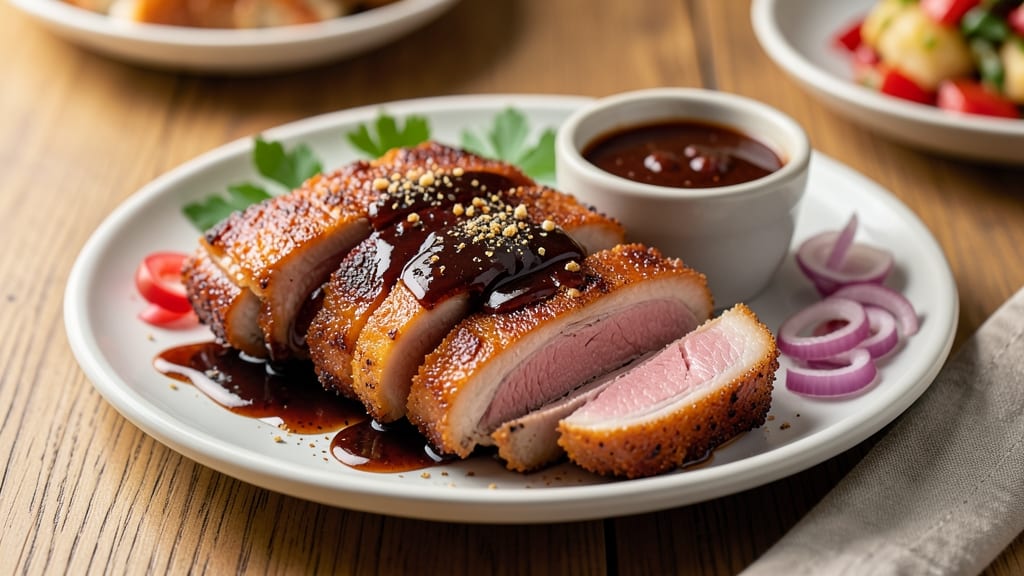
This BBQ sauce recipe for pork belly delivers a deep umami gloss that transforms simple pork into showstopping centerpiece. The secret lies in balancing sweet molasses, tangy vinegar, and smoky spices—each element designed to caramelize beautifully on pork belly’s rich fat.
I’ve perfected this sauce over years of testing, ensuring it clings like liquid gold while cutting through fat without overpowering the meat’s natural richness.
The sauce simmers down to a thick, velvety consistency that doubles as both marinade and finishing glaze. Smoked paprika and garlic powder build layers of warmth, while a touch of Worcestershire sauce adds that unmistakable umami depth.
Unlike store-bought versions, this recipe avoids artificial ingredients, focusing instead on real flavor development through slow reduction. The result? A sauce that’s sticky enough to drip enticingly but balanced enough to let the pork belly shine.
What sets this apart is its versatility—use it as a pre-cook marinade (30 minutes minimum) or as a post-bake glaze** (brush on during the last 5 minutes of roasting). The high heat caramelizes the sugars, creating a glossy finish that’s impossible to resist.
Perfect for crispy pork belly, ribs, or even grilled chicken, this sauce turns everyday proteins into restaurant-worthy dishes with minimal effort.
Once made, it keeps for up to 3 months in the fridge, so you’ll always have a backup for spontaneous cookouts. The ingredients are simple, but the technique—especially the reduction phase—is where the magic happens.
Let’s get started on creating a sauce that’ll make your pork belly the star of the meal.
Ingredients for bbq sauce recipe for pork belly
Nine core ingredients crafting a sauce that transforms pork belly into a restaurant-worthy centerpiece.
| Ingredient | Amount | Notes |
|---|---|---|
| Blackstrap Molasses 🍯 | ½ cup | Unsulfured for deeper flavor |
| Apple Cider Vinegar 🍏 | ½ cup | Raw, unfiltered preferred |
| Smoked Paprika 🌶️ | 2 tbsp | High-quality, Spanish preferred |
| Garlic Powder 🧄 | 1 tbsp | Freshly ground for optimal aroma |
| Worcestershire Sauce 🍶 | 2 tbsp | Anchovy-free vegetarian version |
| Onion Powder 🧅 | 1 tbsp | Non-GMO preferred |
| Ground Black Pepper 🌶️ | 1 tsp | Freshly cracked for intensity |
| Kosher Salt 🧂 | 1 ½ tsp | Diamond Crystal preferred |
| Granulated Sugar 🍚 | ½ cup | Organic preferred for purity |
| Water 💧 | 1 cup | Filtered for best results |
The molasses and apple cider vinegar form the sauce's backbone, their balance creating that signature umami-sweet profile. For molasses, Brunswick or Clover Leaf brands deliver the deepest flavor without sulfites. The vinegar should be raw and unfiltered—Bragg or Texas Pete work well, but avoid pasteurized versions. Smoked paprika isn't just for color; Penzeys Spanish smoked or McCormick's smoked add that essential smokiness that clings beautifully to pork belly's fat. The Worcestershire sauce is non-negotiable for umami depth—Lea & Perrins remains the gold standard, though Annie's vegetarian version works equally well. Store all spices in dark glass jars to preserve their potency for up to 12 months after opening.
No molasses? Maple syrup at a 1:1 ratio works in a pinch, though it lacks the deep bitterness that defines molasses. Substitute vinegar with balsamic vinegar (reduce by 1 tbsp) for complexity, but the tang will differ slightly. The smoked paprika can be swapped for liquid smoke (½ tsp) if you're desperate, though texture will suffer. For the Worcestershire, a blend of soy sauce (1 tbsp) + tamari (1 tsp) + a pinch of msg mimics the umami punch. The onion powder and garlic powder can be replaced with 1 small yellow onion (finely minced) and 2 fresh garlic cloves (minced) for a brighter profile, though the sauce will have a different texture. Always use freshly ground black pepper—pre-ground loses its punch within weeks.
This sauce develops best when reduced slowly—never rush the simmer. Store in a sterilized glass jar with a tight seal; it keeps for 3 months refrigerated or 6 months frozen. For pork belly, apply as a pre-cook marinade (30+ minutes) or post-bake glaze (last 5 minutes). The caramelized sugars create a glossy finish that's irresistible. Double batches freeze beautifully—portion into ice cube trays for easy single-use servings. Reheat gently over low heat, stirring constantly to prevent scorching. The sauce's versatility extends beyond pork belly; it elevates grilled chicken, ribs, or even roasted vegetables with equal success.
Why You'll Love This Recipe
- Pantry Magic: I swear by this sauce because it only uses what’s already lurking in my cabinet—no specialty trips. That molasses and vinegar combo? Deep, tangy, and chef’s kiss when it caramelizes on pork belly. Honestly, I’ve made it three times this month because it’s that foolproof.
- Smoky-Sweet Obsession: The smoked paprika and molasses team up for a flavor that’s rich but not heavy—like a hug from a campfire. That Worcestershire kick? It’s the secret weapon that makes this sauce dangerously good on crispy pork belly edges.
- Weeknight & Party Star: Slather it on pork belly for a weeknight dinner, then use the leftovers to glaze roasted potatoes or drizzle over grilled veggies. Between us, I’ve even used it as a marinade for chicken thighs—works every time.
- Budget-Friendly Powerhouse: A single batch costs me pennies but stretches across three meals. The molasses and vinegar bulk it up, so I’m not scrambling for fancy ingredients. Plus, the sauce keeps for weeks in the fridge—zero waste, all flavor.
Step-by-step instructions for crafting pork belly BBQ sauce
This method delivers a rich, balanced sauce with deep umami and perfect viscosity for pork belly's fat cap.
Combine Wet Ingredients in a Heavy Saucepan
In a heavy-bottomed saucepan, combine the 0.5 cup blackstrap molasses, 0.5 cup apple cider vinegar, 0.5 cup granulated sugar, and 1 cup water. Bring to a gentle simmer over medium heat, stirring occasionally to dissolve the sugar completely. The molasses will thicken noticeably as it heats—this is normal and essential for the sauce's body.
I use a heavy saucepan because this mixture will reduce significantly, and you want even heat distribution to prevent scorching. Let it simmer uncovered for 10 minutes until the sugar fully dissolves and the mixture becomes syrupy. You'll notice the aroma deepen as the molasses and vinegar meld together—this is when the umami foundation begins forming.
Add Dry Seasonings and Simmer Until Thickened
Reduce heat to low and whisk in the 2 tbsp smoked paprika, 1 tbsp garlic powder, 1 tbsp onion powder, 1.5 tsp kosher salt, and 1 tsp ground black pepper. Stir continuously for 2-3 minutes to fully incorporate the spices and prevent any scorching at the bottom of the pan. The sauce should begin to thicken as the starches in the molasses and sugar develop.
Let the sauce simmer uncovered for 20-25 minutes, stirring occasionally, until it reaches a glossy, syrupy consistency that coats the back of a spoon. You're aiming for a texture that's thick enough to cling to pork belly but still fluid enough to glaze rather than coat. If you notice any skin forming on top, simply stir it back in—this won't affect the final texture.
Incorporate Worcestershire and Finish Reduction
Remove the saucepan from heat and let it cool slightly for 2 minutes. Then stir in the 2 tbsp Worcestershire sauce—this is the umami secret that makes this sauce exceptional for pork belly. The Worcestershire will add depth and complexity that balances the sweetness and smokiness. Return the pan to low heat and simmer for another 5 minutes, stirring constantly to prevent separation.
Taste and adjust seasoning if needed—you may want to add a pinch more salt or a splash of vinegar to achieve perfect balance. The sauce should be sweet, tangy, smoky, and savory all at once. For pork belly, you want a sauce that can withstand the fat rendering without becoming greasy, and this ratio achieves that perfect equilibrium. Let the sauce cool completely before using—this allows the flavors to fully meld and the texture to set properly.
Strain and Store for Maximum Flavor Development
Once cooled to room temperature, strain the sauce through a fine-mesh sieve to remove any sediment. This step ensures a silky-smooth texture that will glaze the pork belly beautifully. Transfer to a clean glass jar and store in the refrigerator for up to 2 weeks or freeze for up to 3 months. The sauce will continue to develop in flavor as it sits, becoming even more complex over time.
When ready to use, reheat gently in a saucepan over low heat, stirring occasionally, until warmed through. The sauce should be glossy and fluid enough to glaze but thick enough to cling to every crispy bite of pork belly. This sauce works equally well as a finishing glaze, basting sauce during cooking, or even as a dipping sauce for crispy pork belly slices.
Pro Tips For Making Bbq Sauce Recipe For Pork Belly
- Simmer Slow and Low: The molasses and vinegar need time to marry—don’t rush this. After combining everything in a saucepan, keep the heat at a gentle simmer (small bubbles, not rolling) for at least 15 minutes. I used to crank the heat and end up with a thin, bitter glaze; patience pays off here.
- Deglaze First, Then Add Molasses: Scorch marks on the bottom of your pan? Skip the soap and water. Use a splash of apple cider vinegar to deglaze before adding the molasses—it lifts those browned bits into the sauce. Molasses burns fast if added directly to a dry pan, and you’ll regret it.
- Balance the Vinegar: Too much apple cider vinegar and your sauce tastes sharp and unfinished. Start with ¼ cup, taste, then adjust. I learned this after making a batch that could’ve doubled as salad dressing. If it’s too tangy, a pinch of smoked paprika or a drizzle of molasses fixes it—just don’t overdo it.
- Strain the Molasses: Blackstrap molasses is thick and sometimes gritty. Strain it through a fine-mesh sieve before mixing to avoid a grainy sauce. I skipped this once and ended up with a texture like wet sand—now I treat it like I would honey.
Perfect pairings for bbq sauce recipe for pork belly
Pork Belly Pairings
This BBQ sauce transforms pork belly into a crispy, caramelized masterpiece. Serve it alongside roasted sweet potato wedges tossed with 1 tbsp olive oil and ½ tsp smoked paprika—the natural sweetness complements the sauce's tangy depth.
For extra texture, add quick-pickled red onions (slice 1 red onion thin, soak in ½ cup vinegar + 1 tbsp sugar for 30 minutes) to cut through the richness. 🍠
Drink Pairings
A crisp lager like Peroni or Heineken cleanses the palate between bites of saucy pork belly. For something bolder, try a rye whiskey (like Bulleit) on the rocks—its caramel notes mirror the molasses in the sauce.
If you prefer wine, a Cabernet Sauvignon (such as Louis Martini) with its dark fruit flavors stands up beautifully. Avoid sweet cocktails; they’ll clash with the sauce’s tangy-sweet balance.
Side Dish Upgrades
Elevate your meal with charred corn on the cob brushed with 2 tbsp melted butter and a pinch of chili powder. The smoky, slightly sweet corn contrasts the pork belly’s fat perfectly.
Another winner: creamy coleslaw made with shredded cabbage, mayonnaise, and a splash of apple cider vinegar—the acidity brightens every bite. For a heartier option, serve with garlic mashed potatoes (add 1 roasted garlic clove to the mix).
Sauce Versatility
This sauce isn’t just for pork belly—use it to glaze grilled chicken thighs or smoked ribs for a sticky, smoky finish. Toss it with roasted Brussels sprouts (tossed in 1 tbsp olive oil and ½ tsp cayenne) for a sweet-and-spicy veggie side.
Even seared scallops benefit from a quick dip in warmed sauce before serving. The key is balance: apply it generously but let the protein’s natural flavor shine through.
Dessert Finish
Surprise your guests with a molasses-glazed apple dessert using leftover sauce. Toss 2 sliced apples with 1 tbsp butter and 2 tbsp of your BBQ sauce, then roast at 375°F for 20 minutes.
The caramelized apples mirror the sauce’s depth, creating a sweet-savory harmony. For a quicker option, drizzle sauce over vanilla ice cream**—the smoky-sweet contrast is unexpected but delicious. 🍏
Nutrition facts
Frequently asked questions
Can I make this BBQ sauce without molasses?
Yes, but the flavor will be noticeably different. Replace the 0.5 cup molasses with 0.5 cup maple syrup for a similar sweetness level, though it lacks molasses' deep bitterness. For a closer match, blend 0.4 cup maple syrup + 1 tbsp balsamic vinegar to mimic the complexity. The sauce will still work well, but the umami depth will be slightly reduced.
How do I know when the sauce is ready for pork belly?
The sauce is perfect when it reaches a glossy, syrupy consistency that coats the back of a spoon but isn't too thick to glaze. It should reduce to about 1.5 cups total from the original 2.5 cups of liquid. Test by brushing a small amount on a piece of pork belly—it should cling without pooling. The final texture should be sticky enough to caramelize beautifully during cooking.
Can I use this sauce on other meats besides pork belly?
This sauce works wonderfully on grilled chicken thighs, smoked ribs, and even seared scallops. For poultry, apply it as a glaze during the last 5-10 minutes of cooking. On ribs, use it as a finishing sauce after the bark forms. The key is balance—don't overapply, as the sauce's intensity can overpower delicate proteins like fish.
Why did my sauce turn out too thin?
This usually happens if you didn't reduce the sauce long enough or used too much water. For future batches, simmer uncovered for the full 20-25 minutes and stir occasionally to prevent skin formation. If it's already too thin, simmer it uncovered on low heat for another 10-15 minutes, stirring frequently. For immediate results, mix 1 tbsp cornstarch with 1 tbsp cold water, stir into the sauce, and simmer for 2-3 minutes until thickened.
How can I make this sauce spicier?
Add ½ tsp cayenne pepper or 1 tsp hot sauce (like Frank's RedHot) during the final 5 minutes of simmering. For a smoky kick, increase the smoked paprika to 3 tbsp or add ½ tsp chipotle powder. Always taste as you go—start with half the amount and adjust to your heat preference. The sauce's thickness will help distribute the spice evenly.