
Main Courses
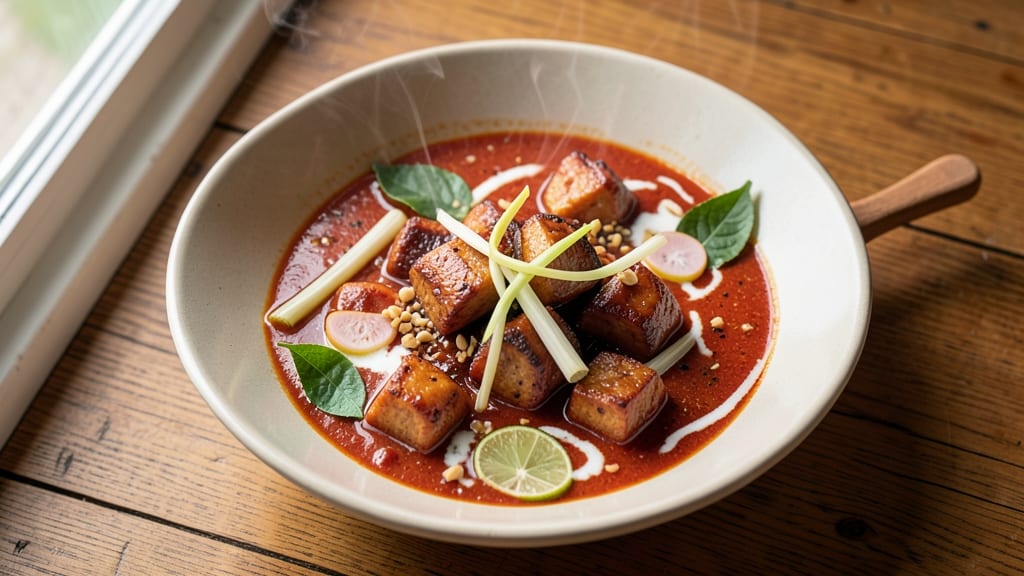
This authentic Thai red curry pork recipe brings the bold flavors of Bangkok to your kitchen with fragrant spices and velvety coconut milk. The secret lies in balancing traditional Thai aromatics—lemongrass, galangal, and kaffir lime leaves—while keeping the process accessible for home cooks.
I’ve perfected this dish over years of testing, ensuring every bite delivers that perfect harmony of spicy, sweet, and creamy.
The recipe starts with a proper curry paste, where toasted spices release their deep, earthy aromas before simmering tender pork in rich coconut milk. The key is patience—letting the flavors meld slowly transforms simple ingredients into a restaurant-quality dish.
You’ll need just 15 minutes of prep followed by 30 minutes of simmering, making it ideal for weeknight dinners that feel special.
What you’ll end up with is a fragrant, silky curry where tender pork swims in a vibrant red sauce—spicy yet balanced, creamy yet not too heavy. The aroma alone will have everyone gathering at the table, and the first bite delivers that perfect Thai restaurant experience.
Serve it over steamed jasmine rice or with a crisp cucumber salad to cut through the richness.
This isn’t just a recipe; it’s a flavor journey. Whether you’re cooking for family or impressing guests, the authentic techniques and bold spices will make this dish the star of your meal. Let’s get started—your taste buds will thank you.
Ingredients for authentic thai red curry pork recipe with coconut milk
Fragrant spices and tender pork transform into a silky coconut curry—just 15 minutes of prep, 30 minutes of simmering.
| Ingredient | Amount | Notes |
|---|---|---|
| Pork Shoulder 🥩 | 1 ½ lb | Boneless, cut into 1-inch cubes |
| Red Curry Paste 🌶️ | 3 tbsp | Authentic Thai brand preferred |
| Coconut Milk 🥥 | 1 can | Full-fat, 13.5 oz can |
| Lemongrass 🌿 | 2 whole | Lower stems only, bruised |
| Galangal 🌿 | 1 piece | 3-inch piece, peeled |
| Kaffir Lime Leaves 🍃 | 4 whole | Bruised for aroma |
| Shallots 🧅 | 4 whole | Minced finely |
| Garlic Cloves 🧄 | 6 cloves | Minced finely |
| Fish Sauce 🍶 | 2 tbsp | Red Boat preferred |
| Palm Sugar 🍯 | 2 tbsp | Or substitute brown sugar |
| Thai Basil Leaves 🌿 | ¼ cup | Packed, stems removed |
| Jasmine Rice 🍚 | 1 cup | Uncooked, for serving |
| Vegetable Oil 🫒 | 2 tbsp | For sautéing |
| Salt 🧂 | 1 tsp | To taste |
The curry paste is everything—Maesri or Maesod are my go-tos, but any authentic Thai brand works. Look for deep red color and no added MSG. Galangal and lemongrass might be tricky to find; Asian markets carry them fresh, or grab frozen galangal at Trader Joe's. The pork should be well-marbled for tenderness, and if you can't find pork shoulder, boneless pork loin works too—just cut it smaller so it cooks faster. Fresh kaffir lime leaves add that signature aroma, but if you can't find them, substitute lime zest plus a splash of lime juice.
No fish sauce? Soy sauce plus a pinch of sugar gets you close, though it won't be exactly the same. Palm sugar unavailable? Brown sugar or coconut sugar works in a pinch—just dissolve it first. Thai basil is non-negotiable for that authentic flavor, but regular basil plus a pinch of cinnamon can stand in. The coconut milk can be light or full-fat—full-fat gives richer texture, but light works if you're watching calories. For extra depth, toast the curry paste in the oil for 1-2 minutes before adding liquids—this releases those amazing aromas.
This curry tastes even better the next day as flavors meld. Store leftovers in an airtight container in the fridge for 4-5 days, or freeze for up to 3 months. I like to portion it into containers with a scoop of rice—microwave 2 minutes to reheat. The rice should be steamed separately; jasmine rice is ideal, but any long-grain works. Garnish with extra Thai basil and a squeeze of lime before serving—trust me on that final touch—it brightens everything up.
Why You'll Love This Recipe
- One-Pot Magic: I swear by this recipe when I’m too tired to scrub pots—just toss everything in one skillet. The pork shoulder falls apart tender, and the coconut milk thickens into that velvety sauce without a single extra dish.
- Flavor Bomb: That first spoonful of red curry paste—spicy, citrusy, with galangal’s peppery kick—hits different. The lemongrass infuses the coconut milk so the whole dish smells like a Thai street cart, but way better than takeout.
- Leftovers That Win: Between us, this curry tastes even richer the next day. I make a double batch on Sundays, and by Wednesday, it’s still the star of my lunch—just reheat with a splash of water and a squeeze of lime.
- Budget Stretch: Pork shoulder is cheap, and this recipe serves four for under $15. Honestly, the galangal might be the priciest part, but I buy it frozen and it lasts for months—every bite feels like a splurge without the price tag.
Step-by-step instructions for authentic Thai red curry pork
Here's how to create a restaurant-worthy Thai red curry that balances bold spices with creamy coconut richness.
Prepare the Aromatics and Pork
Start by cutting the 1.5 lb pork shoulder into 1-inch cubes—this size ensures even cooking without toughness. Set aside. Using a mortar and pestle or rolling pin, bruise the 2 whole lemongrass stems (just the lower halves) and 1 piece galangal (peeled). Tear the 4 whole kaffir lime leaves in half and place all aromatics in a small bowl.
Heat 2 tbsp vegetable oil in a large pot or deep skillet over medium heat. Add the 4 whole shallots and 6 cloves garlic cloves (minced finely) and sauté for 2-3 minutes until fragrant but not browned. Add the bruised lemongrass, galangal, and kaffir lime leaves, stirring for 1 minute to release their oils. This aromatic base forms the flavor foundation of your curry.
Build the Curry Base
Push the aromatics to one side of the pot and add the 3 tbsp red curry paste to the empty space. Stir continuously for 1-2 minutes until the paste darkens and becomes fragrant—this activates the spices and deepens their flavor. Add the pork cubes and stir to coat them evenly in the paste.
Pour in 1 cup water and bring to a gentle simmer. Let it cook uncovered for 10 minutes, stirring occasionally, until the pork begins to brown slightly and the curry thickens. This step develops the curry's depth—don't rush it. You'll know it's ready when the pork releases from the paste easily and the mixture smells rich and complex.
Add Coconut Milk and Simmer
Open the 1 can coconut milk and pour in half (about ¾ cup) of the thick cream from the top of the can. Stir well to combine with the curry. Then add the remaining ¾ cup coconut milk (the lighter liquid portion) and bring to a gentle simmer again. This two-step addition creates a velvety texture without breaking the curry's structure.
Add 2 tbsp fish sauce and 2 tbsp palm sugar, stirring until dissolved. The fish sauce adds umami depth while the sugar balances the heat. Simmer uncovered for 20-25 minutes until the pork is tender and the sauce has thickened to a luscious consistency. The curry should coat the back of a spoon but still move easily when stirred.
Finish with Thai Basil and Season
Remove the pot from heat and discard the lemongrass and galangal stems. Stir in the ¼ cup Thai basil leaves (stems removed) and season with 1 tsp salt. The basil adds freshness that brightens the rich curry. Taste and adjust seasoning—you might need a touch more fish sauce for saltiness or sugar for sweetness, depending on your preferences.
Let the curry rest for 5 minutes off the heat. This allows the flavors to meld completely. Serve immediately over 1 cup cooked jasmine rice, garnished with additional basil leaves if desired. The curry should be aromatic, slightly sweet, with a gentle heat from the red curry paste and a creamy coconut finish.
Pro Tips For Making Authentic Thai Red Curry Pork Recipe With Coconut Milk
- Bloom the Curry Paste: After I burned my first batch by tossing paste in raw, I learned to bloom it first—heat your oil until shimmering (not smoking), then add the paste and stir like your life depends on it for 2-3 minutes. This unlocks the flavors instead of letting them hide in the coconut milk.
- Slice Pork Against Grain: Thin, even slices cook faster and stay tender, but cutting against the grain makes the difference between chewy and melt-in-your-mouth. Use a sharp knife and work in one smooth motion—no sawing, or you’ll turn it into pork jerky.
- Strain the Coconut Milk: Store-bought coconut milk leaves a gritty texture? Strain it through a fine-mesh sieve after opening—it’s a 30-second fix that makes the curry silky. (Yes, even the "creamy" cans.) I skip this sometimes, and the dish still works, but the upgrade is noticeable.
- Char the Lemongrass First: Split the lemongrass stalks lengthwise, then sear the pale sides in the hot oil for 30 seconds before adding everything else. The slight char deepens the citrusy aroma—it’s the thing that makes your curry smell like a Thai street stall, not just a recipe.
Make-ahead tips for this recipe
Prep Ahead Components
Marinate the pork cubes in 1 tbsp fish sauce and 1 tbsp palm sugar for up to 4 hours ahead of time. Store in an airtight container in the fridge—this tenderizes the meat and infuses flavor.
I like to do this the night before so the pork is ready to go in the morning. 🥩
Curry Paste Prep
Toast the 3 tbsp red curry paste in a dry skillet over low heat for 2-3 minutes to deepen its flavors. Let it cool completely, then store in an airtight container in the fridge for up to 1 week.
This prepped paste can be used in any Thai curry recipe—it’s a game-changer for quick weeknight cooking. 🌶️
Simmering Shortcut
After adding the coconut milk, bring the curry to a simmer and let it cook on the stovetop while you prepare the rice. For a hands-off approach, transfer the simmering curry to a 350°F oven for 20 minutes—this keeps it warm without drying out.
Just stir once halfway through. 🔥
Freezer-Friendly Sauce
Make the full curry sauce (without pork) and freeze it in 1-cup portions for up to 3 months. When ready to cook, thaw overnight in the fridge, then add fresh pork and simmer for 15 minutes.
This is perfect for busy nights when you want that authentic Thai flavor with minimal effort. ✨
Rice Prep
Cook 1 cup jasmine rice in advance and store it in an airtight container at room temperature for up to 2 days. Reheat with a splash of water in the microwave for 1 minute before serving.
For extra fluffiness, spread the rice on a tray and microwave for 30 seconds after reheating. 🍚
Garnish Station
Set up a garnish station with Thai basil leaves, lime wedges, and chopped cilantro on a small plate. Let guests customize their bowls—this adds freshness and makes the dish feel special. I also keep a small bowl of crushed peanuts for crunch. 🌿
Nutrition facts
Frequently asked questions
Why does authentic Thai red curry need both light and thick coconut milk?
Using both layers creates the perfect texture—thick coconut cream adds richness while the lighter portion prevents the curry from becoming too heavy. The two-step addition also helps emulsify the spices for a smoother sauce. This technique comes from traditional Thai cooking where balance is key.
Can I substitute galangal if I can't find it?
Yes! Use ginger in a 1:1 ratio, but it won't be identical—galangal has a citrusy, peppery flavor that ginger lacks. For best results, add a pinch of citric acid (from a lemon zest packet) to mimic galangal's unique taste.
How do I adjust the heat level for picky eaters?
Start with 1 tbsp less red curry paste and add 1 extra tbsp palm sugar to balance it. For milder heat, remove the chili peppers from the paste before using. Always taste as you go—Thai curries can be adjusted while cooking.
What's the best way to reheat leftovers?
Reheat gently in a saucepan over low heat with 1-2 tbsp water to prevent curdling. Never microwave directly—this can make the coconut milk separate. Stir frequently and add more water if needed. The curry tastes even better reheated!
Can I make this curry vegetarian?
Yes! Replace pork with firm tofu or mushrooms (like oyster or shiitake). For extra protein, add chickpeas or edamame. Keep the cooking time similar—vegetables absorb flavors differently than meat. The coconut milk will still create that creamy texture.