
Main Courses
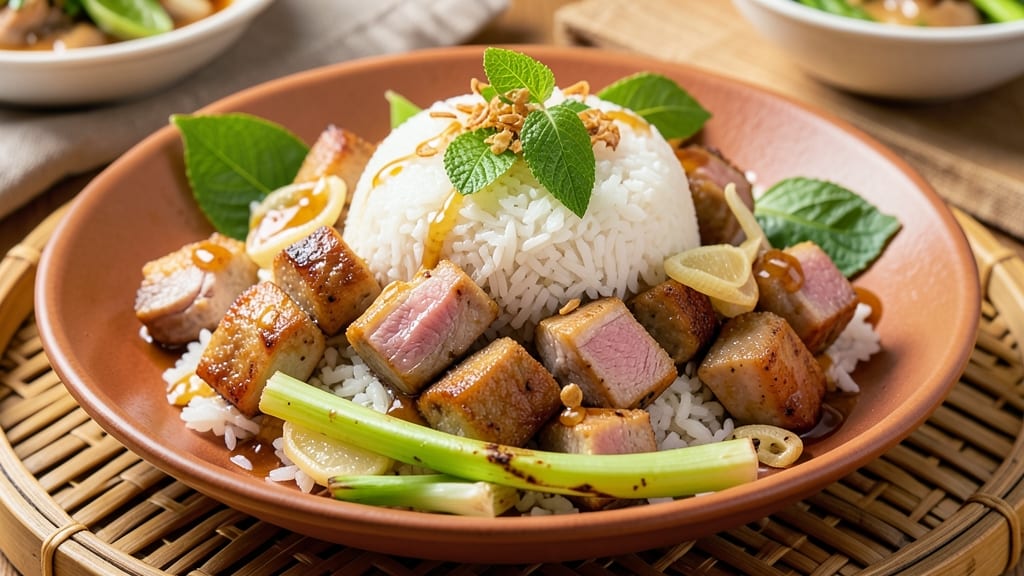
This Cambodian pork and rice recipe brings the aromatic heart of Southeast Asia to your kitchen, where tender pork simmers in fragrant lemongrass and kaffir lime broth until it practically melts. The secret lies in balancing bold flavors—sweet, salty, and herbal—while keeping the preparation approachable.
I've perfected this version after years of adapting traditional techniques to home cooking, ensuring every bite delivers that restaurant-quality depth without requiring specialty ingredients.
The dish centers on succulent pork shoulder, marinated in a blend of fish sauce, garlic, and galangal that infuses it with layers of umami and citrusy brightness.
Over jasmine rice—steamed to fluffy perfection—the pork stew becomes a symphony of textures: crisp edges on the meat, velvety broth, and fragrant rice that soaks up every drop. What makes this recipe special is how it transforms simple ingredients into something extraordinary through slow cooking and careful seasoning.
By the time you serve this dish, your kitchen will smell like a Cambodian street market, and your guests will be transported to Phnom Penh with each forkful. The pork falls apart easily, releasing its juices into the aromatic broth, while the rice stays light and fragrant.
This is comfort food at its finest—warm, inviting, and deeply satisfying on any night.
Pair it with a simple cucumber salad or pickled vegetables to balance the richness, or serve it as-is for a complete meal that feels both celebratory and effortless. The beauty of this recipe lies in its versatility—equally at home for a weeknight dinner or a special gathering. Let's get cooking!
Ingredients for cambodian pork and rice
Transform ordinary pantry staples into a fragrant Cambodian masterpiece with these carefully selected ingredients.
| Ingredient | Amount | Notes |
|---|---|---|
| Pork Shoulder 🥩 | 1 ½ lb | Bone-in for flavor, cut into 1.5-inch cubes |
| Jasmine Rice 🍚 | 1 ½ cups | Uncooked, long-grain preferred |
| Fresh Lemongrass 🌿 | 4 pieces | Lower stems only, bruised for flavor |
| Kaffir Lime Leaves 🍋 | 4 pieces | Fresh, torn into strips |
| Galangal 🌶️ | 1 piece | Fresh, peeled, sliced thin (or ginger in pinch) |
| Fish Sauce 🍶 | ¼ cup | Red Boat preferred for authentic taste |
| Garlic Cloves 🧄 | 8 cloves | Peeled, smashed for intense flavor |
| Coconut Milk 🥥 | 1 can (13.5 oz) | Full-fat for creaminess |
| Palm Sugar 🍯 | ⅛ cup | Or brown sugar if unavailable |
| Palm Oil 🫒 | 2 tbsp | Or neutral oil like vegetable |
| Turmeric Powder 🌿 | 1 tsp | Freshly ground for vibrant color |
| Salt 🧂 | 1 ½ tsp | Diamond Crystal kosher preferred |
| Black Peppercorns 🌶️ | ½ tsp | Freshly cracked for aroma |
| Green Onions 🧅 | 4 whole | White and green parts separated |
The pork shoulder is non-negotiable—bone-in cuts deliver unmatched depth of flavor as they simmer. Whole Foods or Asian markets carry the best quality, but any butcher will cut it for you. Look for well-marbled meat with a vibrant pink hue. Lemongrass and kaffir lime leaves are the aromatic soul of this dish; Thai or Cambodian markets offer the freshest options, but most grocery stores carry them. Galangal, often called 'Asian ginger,' can be tricky to find—substitute ginger if needed, but the dish loses some complexity without it. For fish sauce, Red Boat is the gold standard, but any reputable brand will work.
No galangal? Ginger at half the amount works in a pinch, though purists will notice the difference. Running low on kaffir lime leaves? Lime zest plus a splash of lime juice mimics the citrusy brightness. Palm sugar unavailable? Brown sugar or coconut sugar are direct swaps, though the flavor profile shifts slightly. The coconut milk should be full-fat—Thai Kitchen brand is widely available and reliable. For the green onions, use the white parts in the stew and reserve the greens for garnish. Freshly cracked peppercorns elevate the dish, but pre-ground works if that's all you have.
Pork cubes can be prepped ahead and refrigerated for 2 days before cooking. Lemongrass and kaffir lime leaves keep in the fridge for 1 week wrapped in damp paper towels. The fully cooked stew reheats beautifully—simmer on low heat with a splash of water or coconut milk to restore richness. Portion leftovers into airtight containers for 4 days of fridge storage or 3 months frozen. The jasmine rice stays fresh for 5 days in the fridge, but reheats best when kept separate from the stew until serving.
Why You'll Love This Recipe
- I swear by this trick: toss everything—pork, rice, and fragrant herbs—into the same pot. No fussing between pans, no extra dishes. The galangal and lemongrass infuse the rice and the pork, so you’re basically getting two meals in one.
- One-Pot Magic: I swear by this trick: toss everything—pork, rice, and fragrant herbs—into the same pot. No fussing between pans, no extra dishes. The galangal and lemongrass infuse the rice and the pork, so you’re basically getting two meals in one.
- Flavor Bomb: That first bite? Bright, herbal, and just a little funky from the kaffir lime leaves. The pork shoulder stays tender while the rice soaks up all the citrusy, ginger-like punch of galangal. Honestly, it’s the kind of dish that makes you pause mid-chew.
- Leftovers? Better: This recipe actually improves the next day. The pork gets even more fall-apart tender, and the rice absorbs those aromatic juices like a sponge. Pack it for lunch—your coworkers will ask for the recipe.
Step-by-step instructions for Cambodian pork and rice
Master this aromatic Cambodian dish with precise techniques for tender pork and fragrant coconut rice.
Prepare the Pork and Aromatics
Cut the 1.5 lb pork shoulder into 1.5-inch cubes, ensuring even-sized pieces for consistent cooking. In a mortar or with the flat side of a knife, bruise the 4 pieces fresh lemongrass (lower stems only) and 1 piece galangal (peeled and sliced thin). This releases their essential oils and intensifies the flavor. Tear the 4 pieces kaffir lime leaves into rough strips—this maximizes their citrusy aroma when cooked.
In a small bowl, combine the 8 cloves garlic cloves (peeled and smashed), 1 tsp turmeric powder, 1.5 tsp salt, and 0.5 tsp black peppercorns (freshly cracked). The turmeric will lend a vibrant golden hue to the dish, while the peppercorns add subtle heat. Set aside until ready to use.
Sear the Pork and Build the Flavor Base
Heat 2 tbsp palm oil in a large, heavy-bottomed pot over medium-high heat until shimmering. Working in batches if needed, sear the pork cubes until deep golden brown on all sides, about 3-4 minutes per batch. This step is critical—it develops a rich, caramelized crust that forms the foundation of the dish. Remove the pork and set aside.
In the same pot, add the bruised lemongrass, galangal, and kaffir lime leaves. Sauté for 1 minute until fragrant, then add the garlic-spice mixture and cook for another 30 seconds until the garlic turns golden. This aromatic blend will infuse the entire dish with its complex flavors.
Simmer the Pork in Coconut Milk
Pour in the 1 can (13.5 oz) coconut milk, scraping up any browned bits from the bottom of the pot. Add 0.25 cup fish sauce and 0.125 cup palm sugar, then return the pork to the pot. Bring to a gentle simmer over medium-low heat, then reduce heat to maintain a barely perceptible bubble at the surface. Cover and let it cook for 45-50 minutes, stirring occasionally, until the pork is fork-tender and easily pulls apart.
The coconut milk should reduce slightly, creating a thick, velvety sauce that clings to the pork. If the sauce reduces too quickly, add 2-3 tablespoons water to maintain the proper consistency. The pork is done when it reaches an internal temperature of 203°F—this ensures it's tender but not falling apart.
Cook the Jasmine Rice
While the pork simmers, rinse the 1.5 cups jasmine rice under cold water until the water runs clear. This removes excess starch and prevents the rice from becoming gummy. In a separate pot, combine the rice with 3 cups water and ½ tsp salt. Bring to a boil, then reduce heat to low, cover tightly, and simmer for 15 minutes. Remove from heat and let it steam, undisturbed, for another 10 minutes. Fluff with a fork before serving.
For extra fragrance, you can add 1 torn kaffir lime leaf and 1 bruised lemongrass stalk to the rice pot while cooking. These aromatics will infuse the rice with their bright, citrusy notes, complementing the rich pork stew.
Finish and Serve
Once the pork is tender, discard the lemongrass, galangal, and kaffir lime leaves. Adjust the seasoning if needed—add a splash more fish sauce for saltiness or a pinch of palm sugar for sweetness. The sauce should balance all flavors: rich from the coconut milk, savory from the fish sauce, and slightly sweet from the palm sugar.
To serve, divide the jasmine rice among plates, then top each portion with the pork and its accompanying sauce. Garnish with the white and green parts of the 4 whole green onions, separated and sliced thin. The white parts add a subtle oniony bite, while the green tops bring a fresh, bright finish. Serve immediately while the pork is still steaming and the rice is warm.
Pro Tips For Making Cambodian Pork And Rice
- CRUSH THE GALANGAL: Peel it like ginger, then slice it thin—no thicker than ¼-inch or it’ll turn to mush. I learned this the hard way after ending up with a watery broth that tasted more like soup than sauce. Toss the slices into the pot early and let them simmer; they’ll release their peppery kick without falling apart.
- SALT THE PORK TWICE: Generously season the pork shoulder before searing, then hit it again after browning. The first layer helps the crust form, while the second ensures it doesn’t dry out during the long cook. (Yes, even if you’re impatient like me—trust the process.)
- STEAM THE LIME LEAVES: Tear the kaffir lime leaves in half lengthwise before adding them to the pot. This lets their aroma infuse the broth faster without turning it bitter. Skip the whole-leaf approach—it’s a common misstep that leaves your dish smelling like a spa, not a meal.
- BROWN THE PORK HOT: Get your pan screaming hot—no, really hot—before adding the pork shoulder. You want deep caramelization, not steaming. I used to rush this, and my pork ended up gray and bland. Five minutes of patience here makes all the difference in flavor.
Make-ahead tips for this recipe
Prep Ahead
Marinate the pork cubes in fish sauce, garlic, and galangal up to 2 days ahead—this deepens the flavor. Store in an airtight container in the fridge.
The aromatics (lemongrass, kaffir lime leaves) can be prepped 1 day ahead and kept in a sealed bag with a damp paper towel to maintain freshness. 🌿
Cooking Timeline
Start with the pork—it needs 45-50 minutes of simmering, so plan ahead. While it cooks, prep the rice (it only needs 25 minutes). I like to set the rice pot on low heat while the pork simmers, so it’s ready simultaneously.
The stew reheats beautifully if you need to pause—just warm it gently on the stove with a splash of coconut milk.
Rice Make-Ahead
Cook the jasmine rice 1 day ahead and store it in an airtight container at room temperature (it reheats best this way). To refresh, spread it on a tray and microwave for 1 minute, then fluff with a fork.
For extra fragrance, add a bruised lemongrass stalk while reheating. The rice stays fluffy for 5 days in the fridge.
Storing Leftovers
Let the pork stew cool to room temperature, then store it in airtight containers for up to 4 days in the fridge. The sauce thickens when chilled—stir in 1-2 tablespoons water or coconut milk when reheating.
For longer storage, freeze portions for 3 months. Reheat gently on the stove over low heat to preserve the tender texture. ✨
Freezer-Friendly
Freeze the pork and sauce separately if you plan to reheat them at different times. The pork freezes well for 3 months—thaw overnight in the fridge before reheating.
The sauce can be frozen for 2 months, but add a pinch of turmeric when reheating to restore its golden color. For a quick meal, thaw and reheat both components together for a cohesive dish.
Nutrition facts
Frequently asked questions
Can I substitute regular rice for jasmine rice?
While you can use regular long-grain white rice, jasmine rice is ideal because its delicate floral aroma perfectly complements the dish's rich coconut and lemongrass flavors. For a similar texture, use basmati rice and increase the water ratio by 10%. The rice should be fluffy but slightly sticky to soak up the pork sauce.
What if I can't find galangal or kaffir lime leaves?
For galangal, use ginger at half the amount (about ½ piece)—it won't be identical, but the dish will still be flavorful. For kaffir lime leaves, substitute lime zest plus 1 tbsp lime juice and 1 tsp dried lime leaves (if available). The citrus notes will still brighten the dish, though the aroma won't be as complex.
Why does my pork turn out tough instead of tender?
Overcooking is the most common cause. Pork shoulder should reach 203°F internal temperature but should still pull apart easily with a fork. If it feels tough, you likely simmered it too long or didn't reduce the heat enough. For future attempts, use a meat thermometer and maintain a gentle simmer—just tiny bubbles at the surface.
Can I make this dish in a slow cooker?
Sear the pork first, then transfer everything to a slow cooker. Cook on low for 6-7 hours or high for 3-4 hours, stirring occasionally. The slow cooker's gentle heat keeps the pork moist and tender. Add 2 tbsp water if the sauce reduces too much. The rice can be cooked separately and served on the side.
What's the best way to reheat leftovers?
Reheat the pork and sauce together on the stovetop over low heat with a splash of water or coconut milk to restore moisture. Avoid microwaving—it can make the pork dry. For rice, spread it on a tray and microwave for 1 minute, then fluff with a fork. If the sauce thickens when chilled, stir in 1-2 tbsp water while reheating.