
Soups & Stews
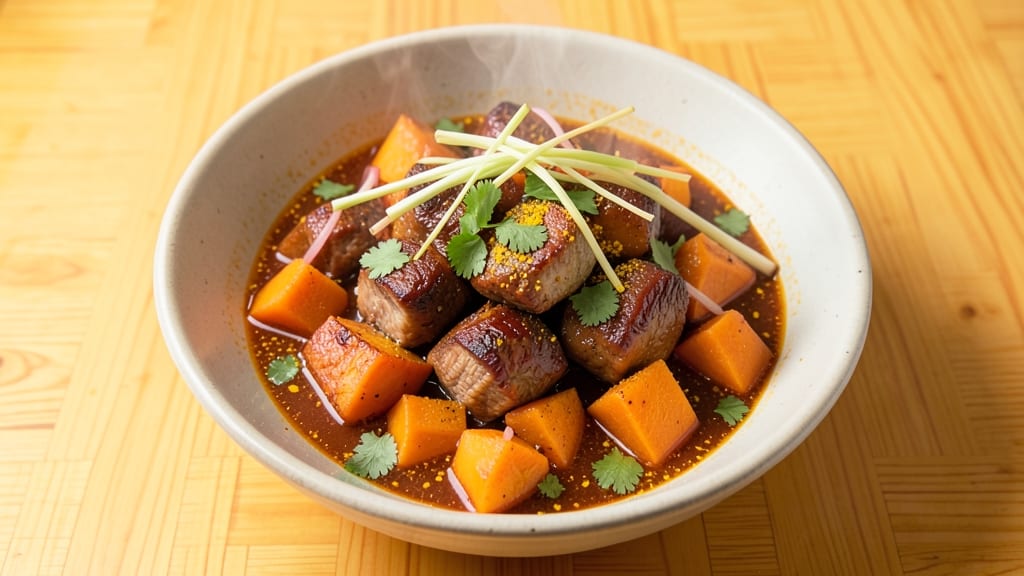
This Burmese pumpkin pork stew recipe brings the aromatic streets of Yangon into your kitchen with its complex layers of lemongrass, galangal, and tamarind. The secret lies in slow-braising pork shoulder until it's fork-tender, then marrying it with sweet pumpkin and earthy spices that create a harmony of flavors.
I first discovered this dish while working in Charleston's international markets, where Burmese chefs shared their techniques for balancing sweet, sour, and umami in every bite.
The recipe begins with a fragrant paste of galangal, lemongrass, and turmeric that infuses the pork with its signature depth. What makes this different from other pork stews is the tamarind paste, which adds that signature tangy brightness that cuts through the richness.
The pumpkin not only adds natural sweetness but also thickens the stew beautifully as it simmers, creating a velvety texture that coats every spoonful.
By the time you serve this dish, you'll have a restaurant-quality stew with tender pork that falls apart at the touch of a fork, surrounded by pumpkin that's perfectly tender yet still holds its shape.
The aroma alone will have everyone gathering at your table - that perfect balance of sweet, sour, and savory that defines Burmese cuisine. Serve it with steamed jasmine rice to soak up every last drop of that fragrant broth.
This isn't just a recipe - it's an experience that transports you to the bustling markets of Myanmar. The slow cooking process allows flavors to develop fully, creating a depth that's impossible to achieve with quick cooking methods.
What you'll end up with is a dish that's both comforting and sophisticated, perfect for special occasions or when you want to impress guests with authentic international flavors.
Ingredients for burmese pumpkin pork stew
Six aromatic ingredients transform simple pork and pumpkin into a fragrant Burmese masterpiece.
| Ingredient | Amount | Notes |
|---|---|---|
| Pork Shoulder 🥩 | 3 lb | Bone-in for flavor, cut into 2-inch chunks |
| Sugar Pumpkin 🎃 | 2 cups | Cubed, skin removed, about 1 lb |
| Stems Lemongrass 🌿 | 4 whole | Bruised, tough outer leaves removed |
| Galangal Root 🍃 | 1 piece | About 2 oz, peeled and sliced |
| Tamarind Paste 🍯 | ½ cup | Unsweetened, or 2 tbsp tamarind concentrate |
| Turmeric Powder 🌶️ | 1 tsp | Freshly ground preferred |
| Coconut Milk 🥥 | 1 can | 13.5 oz can, full-fat preferred |
| Fish Sauce 🍶 | 1 tbsp | Red Boat brand recommended |
| Shallots 🧅 | 4 whole | Peeled, thinly sliced |
| Garlic Cloves 🧄 | 6 cloves | Peeled, smashed |
| Thai Chilies 🌶️ | 2 whole | Seeds removed for mild heat |
| Coconut Oil 🫒 | 2 tbsp | For cooking, or neutral oil |
| Salt 🧂 | 1 ½ tsp | Kosher or sea salt |
| Black Peppercorns 🌶️ | ½ tsp | Freshly cracked |
| Jasmine Rice 🍚 | 2 cups | Uncooked, for serving |
The galangal and lemongrass are non-negotiable for that authentic Burmese flavor. Asian markets carry fresh galangal—it looks like ginger but has a citrusy kick. If you can't find it, extra ginger plus a splash of lime juice works in a pinch. Lemongrass stems should be firm and pale green, never yellow or wilted. I always buy extra because the aroma alone makes my kitchen smell like Yangon. The pork shoulder? Bone-in is better—it adds depth to the broth, but boneless works if that's what you've got. Trim any excess fat to avoid greasy stew.
No tamarind paste? Lime juice plus 1 tbsp brown sugar mimics the tang, though it won't be identical. The fish sauce is essential—Red Boat brand is my go-to, but any good-quality one works. Thai chilies can be swapped for serrano or jalapeño if you're sensitive to heat. The coconut milk should be full-fat for richness, but light works if that's all you've got. For the pumpkin, sugar varieties like Sugar Pie or Kabocha work best—they're sweeter and hold their shape better than carving pumpkins. If using canned pumpkin, drain it well to avoid watery stew.
This stew tastes even better the next day as flavors meld. Store in the fridge for up to 5 days, or freeze portions for 3 months. The rice? Cook it in advance—jasmine rice takes 15 minutes, so set it going while the stew simmers. I always make extra rice because everyone will want seconds. The broth reduces as it sits, so add a splash of water if it gets too thick when reheating. Serve with lime wedges and fresh cilantro if you're feeling fancy.
Why You'll Love This Recipe
- One-Pot Wonder: I swear by this recipe when I’m too tired to wash a million dishes. The pork shoulder and pumpkin simmer together in the same pot—no extra pans, no stress—just rich, fragrant layers of flavor that practically cook themselves.
- Tamarind Magic: Honestly, that tangy tamarind paste is the MVP here. It cuts through the sweetness of the pumpkin and the earthy galangal, giving it this perfect balance—like a hug in a bowl. (Yes, even on a Tuesday night.)
- Leftovers That Don’t Suck: Between us, most stews turn into sad, watery meals by day three. Not this one. The pork gets more tender, the pumpkin soaks up all the juices, and I’ve reheated portions for lunch for weeks without a single complaint.
- Budget Feast: Pork shoulder is cheap, sugar pumpkin lasts forever, and lemongrass and galangal stretch across multiple meals. I’ve made this for date nights, family dinners, and even a potluck—no one ever asks what’s in it, they just ask for seconds.
Step-by-step instructions for Burmese pumpkin pork stew
Let's create a rich, aromatic stew where tender pork and sweet pumpkin meld with fragrant lemongrass and galangal.
Prepare the Aromatic Base
Heat the 2 tablespoons coconut oil in a large Dutch oven over medium heat. Add the 4 whole shallots and cook for 3-4 minutes until they soften and begin to caramelize slightly. This builds flavor depth that will carry through the entire stew.
Add the 6 cloves garlic and 2 whole Thai chilies, cooking for 1 minute until the garlic turns golden and fragrant. Here's where it gets aromatic—toss in the 4 whole stems lemongrass and 1 piece galangal root, crushing them gently with a wooden spoon. Cook for 2-3 minutes until the galangal releases its citrusy aroma and the lemongrass softens slightly. This combination creates the signature Burmese flavor profile.
Sear the Pork and Build the Sauce
Increase heat to medium-high and add the 3 lb pork shoulder in 2-inch chunks, working in batches if needed. Sear for 3-4 minutes per side until the pork develops a golden crust. Remove the pork and set aside temporarily.
Return the pan to medium heat and stir in the 1 teaspoon turmeric powder, letting it bloom for 30 seconds until fragrant. Add the 0.5 cup tamarind paste and 1 tablespoon fish sauce, stirring to combine. Pour in 1 cup water and scrape up any browned bits from the bottom of the pot—these contain concentrated flavor. This sauce will form the rich foundation of your stew.
Simmer the Stew to Perfection
Return the pork to the pot and add the 2 cups sugar pumpkin cubes. Pour in the 1 can coconut milk and bring everything to a gentle simmer. Sprinkle in the 1.5 teaspoons salt and 0.5 teaspoon black peppercorns. Here's the key: maintain a gentle simmer for 1 hour to 1 hour 15 minutes, partially covered, until the pork is fork-tender and falls apart easily.
I know it's tempting to check constantly, but resist the urge to peek. The stew needs this undisturbed time to develop its complex flavors. The pumpkin should soften while maintaining its shape, and the pork should be so tender it practically melts in your mouth. If the stew reduces too much, add 2-3 tablespoons water to maintain the right consistency.
Finish and Serve with Jasmine Rice
Once the pork is tender, taste and adjust seasoning if needed—you might want to add a bit more fish sauce for umami depth or salt to balance flavors. Remove and discard the lemongrass stems and galangal root pieces. The stew is now ready to serve.
Cook the 2 cups jasmine rice separately according to package instructions. Serve the stew hot over the fragrant rice, allowing each spoonful of tender pork, sweet pumpkin, and aromatic sauce to shine. The combination of creamy coconut milk, earthy galangal, and bright lemongrass creates a harmonious balance that's both comforting and exciting.
Pro Tips For Making Burmese Pumpkin Pork Stew
- Brown the Pork First: I learned this the hard way—skipping the sear means your stew will taste more like boiled meat than rich, caramelized flavor. Slice the pork shoulder into 1-inch chunks, pat dry, and cook in a hot pot with 1 tablespoon oil until deeply browned on all sides. That crust locks in moisture and builds depth.
- Slice Galangal Thin: Galangal’s knobby texture makes it tempting to chop roughly, but thin slices (about 1/8-inch) infuse faster and dissolve evenly into the stew. Use a sharp knife—this isn’t the time to brute-force it. If you can’t find fresh, frozen works, but thaw and pat it dry first.
- Simmer Slow and Low: After adding the pumpkin and tamarind, resist the urge to crank the heat. A gentle simmer (small bubbles, occasional skimming) prevents the pumpkin from turning mushy and lets the pork tenderize properly. Cover the pot and let it cook at 180°F (82°C) for at least 90 minutes—yes, even if it feels slow.
- Balance the Tamarind: Tamarind paste is potent—start with 1 tablespoon and adjust. If the stew tastes too sharp, balance it with a pinch of sugar (not sweetener) or a splash of coconut milk. I was skeptical until I tried it: the right amount makes the dish bright, not sour. Taste as you go.
Creative variations of this dish
Spicy Thai Twist
For a fiery kick, add 1 tbsp Thai bird's eye chili paste (like Maesri) when you stir in the tamarind and fish sauce. I like to toast the chilies first in the coconut oil with the shallots—they release their oils and create a deeper, smokier heat.
Balance the intensity with a splash of 1 tsp palm sugar to keep the flavors harmonious. Serve with extra sliced Thai chilies on the side for guests to adjust to their preference. 🌶️
Coconut Curry Fusion
Transform this into a creamy curry by adding 2 tbsp red curry paste (like Maesri) when you sear the pork. Stir in an extra ½ can coconut milk at the end for richness, and top with 2 tbsp toasted coconut flakes.
The galangal and lemongrass still shine, but the curry paste adds a deeper, slightly sweet complexity. This version pairs beautifully with naan bread or extra jasmine rice. 🥥
Vegetarian Adaptation
Swap the pork for 2 cups extra-firm tofu or 1 lb mushrooms (shiitake or oyster work best). Press the tofu to remove excess water, then cube and pan-fry until golden before adding to the stew. For mushrooms, slice them thickly and sear until deeply browned.
The umami from mushrooms or tofu holds up beautifully to the coconut and tamarind flavors. I add 1 tbsp soy sauce to mimic the meaty depth. 🌱
Slow Cooker Version
For a hands-off approach, combine all ingredients in your slow cooker and cook on low for 6-7 hours or high for 4 hours. The pork will be even more tender, and the flavors meld perfectly.
I like to sear the pork and aromatics in a skillet first, then transfer everything to the slow cooker. Add ½ cup water if the stew gets too thick during cooking. The result is just as rich, with less effort. ⏳
Herb-Infused Garnish
Elevate the dish with fresh herbs that complement the Burmese flavors. Add 2 tbsp chopped fresh cilantro and 1 tbsp sliced Thai basil just before serving. For extra depth, stir in 1 tsp lime zest and a squeeze of fresh lime juice.
The herbs brighten the dish and add a fresh contrast to the rich stew. I also like to sprinkle toasted sesame seeds for a nutty crunch. 🌿
Winter Comfort Version
Add 1 cup diced sweet potato along with the pumpkin for extra heartiness. Include ½ cup chopped kale or spinach in the last 10 minutes of cooking so it wilts but stays vibrant.
The sweet potato adds natural sweetness and thickness, while the greens provide a fresh, earthy note. This version is perfect for chilly evenings and feels like a hug in a bowl. ❄️
Nutrition facts
Frequently asked questions
Can I substitute galangal if I can't find it?
Yes, use a mix of 1 oz fresh ginger and ½ tsp lime zest for the closest flavor. Galangal has a citrusy, piney aroma that's hard to replicate, but this combo captures some of its brightness. For extra depth, add ¼ tsp cardamom to the spice blend.
How do I know when the pork is tender enough?
The pork should easily pull apart with two forks and have no resistance. For bone-in cuts, check the meat near the bone—it should separate cleanly. If using a meat thermometer, aim for 205°F in the thickest part. The stew will continue cooking slightly after removing from heat, so pull it out when it's just shy of perfect.
Can I make this stew in a pressure cooker?
Sauté the aromatics as directed, then add all ingredients (including the 2 cups pumpkin) and pressure cook for 25 minutes on high pressure. Quick-release the pressure, then finish with a 5-minute natural release to let flavors meld. The pork will be even more tender, but watch the pumpkin—it may break down faster than with stovetop cooking.
What's the best way to reheat leftovers?
Gently reheat on the stovetop over low heat with 2-3 tablespoons water or coconut milk to restore moisture. Avoid microwaving as it can make the pumpkin mushy. If the stew thickens too much, add a splash of broth or water. Leftovers actually improve as flavors deepen—this is why Burmese cooks often make extra!
How can I make this dish spicier without overpowering it?
Add 1-2 Thai chilies (seeds removed) during the initial sauté. For heat control, serve with extra sliced chilies on the side. Balance with ½ tsp palm sugar or a squeeze of lime juice to maintain the dish's harmony. The tamarind's tang naturally tempers spice, so start with just 1 extra chili and adjust to taste.