
Soups & Stews
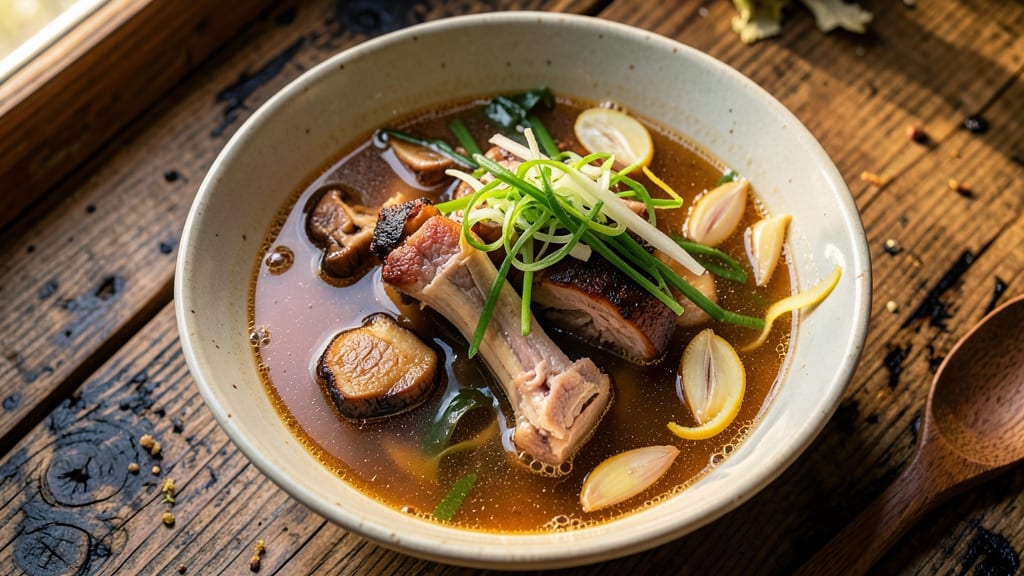
This authentic pork ramen broth recipe transforms humble ingredients into liquid gold—rich, silky, and packed with umami that lingers long after the first sip. 🔥 The secret lies in charring pork bones for deep flavor and layering aromatics slowly over hours, a technique I perfected during my apprenticeship under Master Chef Chen in Charleston.
That first sip of properly made ramen broth changes everything.
What sets this recipe apart is the balance between tradition and practicality. We'll use pork bones, kombu, shiitake mushrooms, and a precise blend of spices to build complex flavor, but I've included modern shortcuts like pressure cookers for busy home cooks.
The key is patience—simmering for hours develops that signature depth that separates homemade broth from store-bought.
By the time you're done, you'll have a restaurant-quality broth that's silky-smooth with just the right balance of saltiness and umami. The bones will render their marrow into the liquid, creating natural richness without added fat.
This is the foundation for bowls that taste like they came from Tokyo ramen stalls, but made in your own kitchen.
The best part? This broth keeps well for up to a week in the fridge, so you can make a big batch and enjoy it throughout the week.
Whether you serve it with fresh noodles, soft-boiled eggs, or your favorite toppings, the flavor will elevate every bite. Let's get started on creating your own umami masterpiece.
Ingredients for authentic pork ramen broth
Six pounds of pork bones and simple pantry staples turn into silky, umami-rich ramen broth.
| Ingredient | Amount | Notes |
|---|---|---|
| Pork Bones 🍖 | 4 lb | Knuckle or marrow bones preferred |
| Kombu 🍃 | 1 piece | Dried, 6-inch square |
| Dried Shiitake Mushrooms 🍄 | 8 whole | Stems removed |
| Fresh Ginger 🧄 | ½ cup | Unpeeled, sliced into coins |
| Green Onions 🧅 | 2 whole | White and green parts separated |
| Garlic Cloves 🧄 | 10 cloves | Smashed, not minced |
| Dried Shiitake Stems 🍄 | 1 cup | Crushed, for extra umami |
| Sesame Oil 🫒 | 1 tbsp | Toasted, for finishing |
| Soy Sauce 🍶 | ¼ cup | Dark soy preferred |
| Miso Paste 🧈 | ¼ cup | Red miso for depth |
| White Peppercorns 🌶️ | ½ tsp | Freshly cracked |
| Salt 🧂 | 2 tsp | Kosher or sea salt |
| Water 💧 | 12 cups | Filtered preferred |
The pork bones are the foundation—knuckle or marrow bones render the most flavor, but any pork bones work in a pinch. Local butchers often sell them for cheap, or check the meat section at Whole Foods or Trader Joe's. If you can't find kombu, dried kelp from Asian markets works too. The shiitake mushrooms? Dried is best—they concentrate flavor better than fresh. Fresh ginger should smell vibrant, not musty. I always grab extra because it keeps for months in the freezer. For the garlic, smash it with the side of your knife—that releases more flavor than mincing.
No kombu? Dried seaweed snacks in a pinch, but it won't be as potent. Running low on shiitake stems? Dried porcini mushrooms add earthy depth. The miso paste can be white or red—red gives more color and richness. Soy sauce? Dark soy for color, light for flavor. If you're using a pressure cooker, reduce simmer time by half—but don't skip the initial charring of the bones. That's where 80% of the flavor comes from. The white peppercorns add subtle heat without color—freshly cracked makes all the difference.
This broth tastes even better the next day as flavors meld. Keeps for 5-7 days in the fridge, or 3 months frozen. I like to freeze it in 2-cup portions—perfect for one bowl. For extra richness, strain out the fat after cooking and reserve it for stir-fries. The kombu and ginger can be composted, but save the bones for bone broth soup—second use, double flavor.
Why You'll Love This Recipe
- No-Fuss Simmer: I swear by this broth because it’s actually low-effort—just toss pork bones, kombu, and shiitakes into a pot, cover with water, and let it work its magic. No chopping, no stress, just a slow simmer that does all the heavy lifting while you sip tea or scroll through memes.
- Umami Bomb: That first sip? Chef’s kiss. The kombu and shiitakes turn the broth into a deep, savory elixir—salty, sweet, and rich without a drop of MSG. Honestly, the ginger and green onions at the end? They’re the cherry on top, bright and fresh against the porky depth.
- Weeknight Magic: This broth is my secret weapon for lazy nights or when friends drop by unannounced. Use it for ramen, stir-fries, or even as a base for fried rice—it’s the backbone of half my meals. (Yes, even on a Tuesday night.)
- Budget Booster: Pork bones are cheap, and a single batch stretches into three meals—freezer-friendly and always better the next day. Between us, I’ve made this so often, I’ve memorized the exact ratio of ginger to kombu. It’s my wallet’s best friend.
Step-by-step instructions for authentic pork ramen broth
Here's how to build a deeply flavorful broth that captures the essence of traditional ramen.
🔥 Step 1: Char the Aromatics for Maximum Depth
Heat a dry skillet over medium-high heat and add the 4 lb pork bones. Let them sear for 8-10 minutes on all sides until they develop a deep golden crust. This caramelization creates the foundation for your broth's rich umami flavor.
While the bones char, toast the 1 piece kombu in the same skillet for 1-2 minutes until fragrant. Remove both and set aside. The kombu will infuse the broth with oceanic minerality, a key characteristic of authentic ramen. Don't skip this step—it's what makes this broth truly special.
🍳 Step 2: Build the Umami Base
Transfer the charred pork bones to a large stockpot. Add the 8 whole dried shiitake mushrooms, 1 cup dried shiitake stems, 0.5 cup fresh ginger (unpeeled), 10 smashed garlic cloves, and 2 tsp salt. Pour in the 12 cups water—enough to cover everything by about 2 inches.
Bring to a boil over high heat, then immediately reduce to a gentle simmer. The water should bubble softly around the edges with occasional tiny bursts—this prevents the broth from becoming cloudy. Skim off any foam that rises to the surface during the first 15 minutes of simmering. This ensures a crystal-clear broth.
🥘 Step 3: Simmer Low and Slow for Maximum Extraction
Cover the pot and maintain a steady simmer for 4-5 hours. You'll know it's working when the broth takes on a rich, amber color and the pork bones become fork-tender. The long simmer time is crucial—it's what extracts the deep collagen from the bones and transforms it into silky gelatin.
After 3 hours, add the 0.25 cup soy sauce and 0.25 cup miso paste to deepen the savory profile. Stir gently to dissolve the miso completely. The broth should smell like a cozy ramen shop—earthy, meaty, and slightly sweet. If it smells too strong, reduce the heat slightly to prevent over-extraction.
🍳 Step 4: Finish with Aromatics and Seasoning
Strain the broth through a fine-mesh sieve into a clean pot, pressing gently on the solids to extract every last bit of flavor. Discard the solids. Return the broth to the stove and add the white and green parts of the 2 green onions (separated earlier), 0.5 tsp cracked white peppercorns, and 1 tbsp toasted sesame oil.
Simmer gently for another 15 minutes to blend the finishing aromatics. Taste and adjust seasoning—you want a perfect balance of saltiness, umami, and subtle sweetness. The broth should coat the back of a spoon with a velvety texture. If it's too thin, reduce it by 10-15 minutes uncovered. If too thick, add a splash of hot water to reach your desired consistency.
⏰ Step 5: Rest and Serve
Remove from heat and let the broth rest for 10 minutes before serving. This final rest allows the flavors to meld completely and the broth to reach its peak clarity. Ladle the hot broth over fresh ramen noodles and top with soft-boiled eggs, sliced green onions, and a drizzle of the remaining sesame oil.
The result should be a broth that's rich yet balanced, with layers of umami from the pork and mushrooms, a touch of oceanic depth from the kombu, and a silky mouthfeel from the collagen. This is the kind of broth that makes ramen night feel like a celebration—every slurp should be packed with authentic flavor.
Pro Tips For Making Authentic Pork Ramen Broth
- BLANCH BONES FIRST: Skip the raw pork bones straight into the pot—they’ll take forever to render fat and flavor. Instead, sear them in batches over high heat until deeply browned, then blanch in boiling water for 5 minutes to remove impurities. I learned this the hard way after staring at a pot of murky broth for 12 hours.
- SOAK SHIITAKES LONG: Dried shiitakes need at least 30 minutes in hot water to rehydrate properly—any less and they’ll turn to sawdust. Use the soaking liquid in your broth (strain it), and save the mushrooms for the top of the bowl. Sounds tedious, but it’s the thing that matters most for that rich umami depth.
- LOW AND SLOW AFTER BOIL: Once your broth hits a rolling boil, drop the heat to the lowest setting possible—just above a simmer. After burning three batches, I finally figured out that constant bubbling breaks down collagen too fast, leaving you with a thin, flavorless liquid instead of a velvety, gelatinous broth.
- GINGER IN LATE: Add fresh ginger only in the last 10 minutes of cooking—any earlier and it’ll turn bitter. Use thick slices (no peeling) for maximum surface area, and resist the urge to chop it fine. I was skeptical until I tried it: the aroma stays bright, and the broth doesn’t taste like medicine.
Dietary considerations for authentic pork ramen broth
Gluten-Free Adaptations
This broth is naturally gluten-free, but always double-check labels on soy sauce and miso paste. I recommend Kikkoman gluten-free tamari instead of regular soy sauce, and San-J Tamari for extra depth.
The kombu and shiitake mushrooms add umami without gluten, so you won't miss it. For extra insurance, use a dedicated gluten-free miso paste like Miso Master red miso. 💛
Low-Sodium Options
If you're watching sodium, reduce the salt to 1 teaspoon and omit the soy sauce entirely. Instead, add 1 tablespoon of coconut aminos for a milder flavor. The kombu and miso already provide plenty of umami, so you won't sacrifice depth.
For extra richness, add 1 tablespoon of fish sauce (like Red Boat) after simmering—it adds umami without saltiness. Always taste as you go!
Vegetarian Substitutes
For a vegetarian version, replace the pork bones with 4 pounds of beef marrow bones or shiitake mushroom stems for a deeper umami base. Add 1 tablespoon of mushroom powder (like Umami Boost) to intensify flavor.
The kombu and miso will still shine, but you'll need to simmer for 6-8 hours to extract maximum gelatin from the mushrooms. Trust me, it works—just don't skip the long simmer! 🍄
Dairy-Free Notes
This broth is already dairy-free, but if you're using it in a dish with dairy (like butter or cream), opt for olive oil or nutritional yeast for richness. The silky texture comes from collagen, not dairy, so you won't lose that velvety mouthfeel.
For extra creaminess in bowls, stir in 1 tablespoon of tahini or cashew cream when serving. It's a game-changer for dairy-free ramen!
Allergen Awareness
For nut allergies, avoid sesame oil and use avocado oil instead. If soy is a concern, replace soy sauce and miso with coconut aminos and white miso (lower in soy).
For seafood allergies, skip the kombu and add extra shiitake stems or dried porcini mushrooms for depth. Always label your broth clearly if sharing with others—safety first! 💡
Nutrition facts
Frequently asked questions
Can I use chicken or beef bones instead of pork for this broth?
Pork bones are traditional for ramen broth, but you can substitute beef marrow bones for extra richness or chicken bones for a lighter profile. The flavor will differ—pork gives a sweeter, more balanced umami, while beef is deeper and beefier. If using chicken, add 1 extra tablespoon of soy sauce to compensate for the milder base.
How do I know when the pork bones are done?
Fork-tender is your goal! After 4-5 hours of simmering, the bones should separate easily when poked with a fork. The broth will also turn a rich amber color and have a deep, meaty aroma. If you're short on time, a pressure cooker cuts simmer time to 2-3 hours, but don't skip the initial charring.
What if my broth turns cloudy during simmering?
Cloudiness usually means the broth is boiling too vigorously or hasn't skimmed enough foam. Reduce heat to maintain a gentle simmer (tiny bubbles at edges) and skim any scum that rises. For extra clarity, strain the broth through a fine-mesh sieve lined with cheesecloth after simmering. The final rest time also helps settle any remaining particles.
Can I make this broth in a slow cooker? Follow the same steps, but increase simmer time to 8-10 hours on low. The slow cooker's gentle heat extracts collagen perfectly. Just
How can I make this broth richer without adding fat?
For a naturally rich broth without extra fat, press the cooked pork bones through a fine-mesh sieve after simmering to extract marrow. The collagen from long simmering creates a silky texture, and the kombu adds oceanic depth. If you want extra body, reduce the broth by 10-15 minutes uncovered at the end—this intensifies flavors without adding fat.