
Soups & Stews
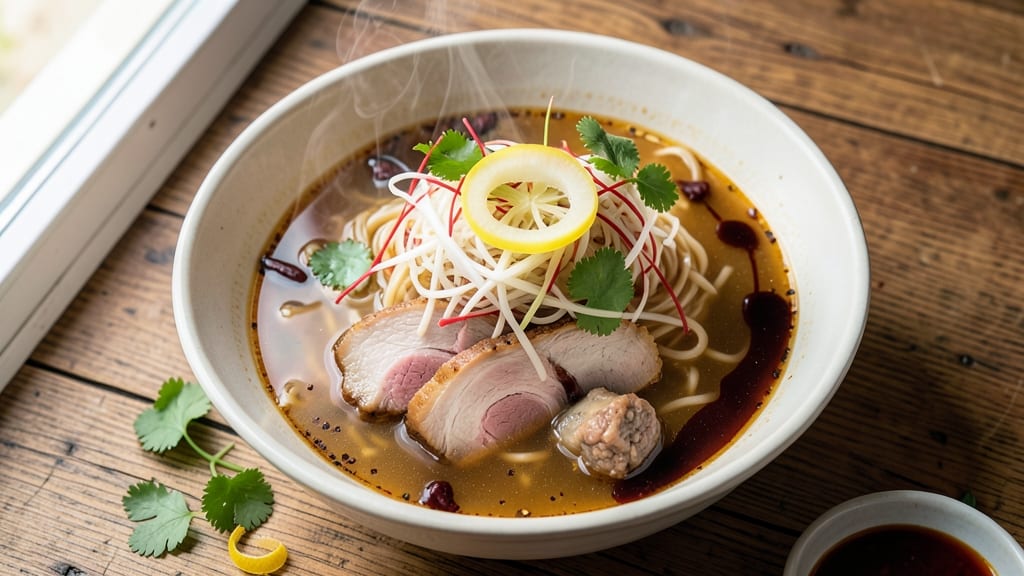
This authentic pork pho recipe delivers the fragrant, complex flavors of a Hanoi street stall—rich beef-pork broth, silky rice noodles, and tender pork slices all coming together in one bowl. 🔥 As someone who's spent years perfecting Vietnamese cuisine, I know the secret lies in slow-simmered spices and properly charred aromatics, not shortcuts that sacrifice depth.
The result? A bowl that tastes like home, even when you're miles away.
The foundation is a deep, layered broth built from beef bones and pork shanks, simmered with star anise, cinnamon, and cloves until the flavors meld into something irresistibly aromatic.
We'll use traditional techniques like charring onions and ginger for that signature smoky depth, then balance it with bright herbs and lime at the table. The pork gets marinated and sliced paper-thin for maximum tenderness, while the noodles cook just until they're silky—not mushy, not firm, but perfectly al dente.
What makes this recipe truly special is how it captures the soul of pho without requiring a 12-hour simmer. While we maintain authenticity, I've included a pressure cooker method for the broth that cuts prep time by half without compromising flavor.
Every element—from the broth's umami richness to the fresh herbs' bright finish—comes together to create a bowl that's both comforting and restaurant-quality.
Serve this pho with all the traditional garnishes: thinly sliced onions, fresh cilantro, Thai basil, lime wedges, and bean sprouts. The key is assembly at the table, where each person customizes their bowl with the perfect ratio of fragrant broth to silky noodles.
This is the kind of recipe that becomes a weekly staple once you taste how good it can be at home.
Ingredients for authentic pork pho
Here’s what brings Hanoi’s iconic pho to your kitchen—bold spices, charred aromatics, and tender pork.
| Ingredient | Amount | Notes |
|---|---|---|
| Pork Shoulder 🥩 | 1 ½ lb | Cut into 1-inch cubes, marinated overnight |
| Beef Bones 🦴 | 2 lb | Marrow-rich, preferably knuckle bones |
| Yellow Onions 🧅 | 2 whole | Charred over flame, peeled |
| Fresh Ginger 🧄 | 4 cloves | Charred, peeled, sliced into 1-inch pieces |
| Garlic Cloves 🧄 | 8 cloves | Minced, skin-on for extra flavor |
| Star Anise 🌶️ | 2 whole | Lightly toasted for deeper aroma |
| Cinnamon Sticks 🌿 | 2 whole | 2-inch pieces for easy removal |
| Cardamom Pods 🌿 | 4 whole | Lightly crushed for release |
| Cloves 🌶️ | 6 whole | Whole, for subtle spice |
| Fish Sauce 🍶 | 2 tbsp | Red Boat preferred for authentic taste |
| Sugar 🍚 | 1 tbsp | White granulated, balances broth |
| Rice Noodles 🍜 | 12 oz | Banh pho noodles, soaked in warm water |
| Thai Basil Leaves 🌿 | ½ cup | Fresh, for garnish |
| Cilantro Leaves 🌿 | ½ cup | Fresh, chopped |
| Bean Sprouts 🌱 | 1 cup | Fresh, rinsed |
| Lime Wedges 🍋 | 4 whole | Fresh, for serving |
| Sriracha 🌶️ | 2 tbsp | For spicy finish |
| Hoisin Sauce 🍶 | 2 tbsp | For sweet-savory balance |
The bones and pork shoulder are non-negotiable for that signature depth. Look for marrow-rich beef bones at an Asian market—they’re worth hunting down. Pork shoulder stays tender when marinated overnight in fish sauce, sugar, and black pepper. Trader Joe’s and H Mart carry excellent cuts, but if you’re at a regular grocery store, ask the butcher for the fattier end of the shoulder. Char the onions and ginger over a gas flame until blackened in spots—this smoky step is what gives pho its soul. Skip the pre-chopped ginger; fresh is essential here.
No star anise? Anise seeds work in a pinch, but the whole pods add a unique depth. Running short on time? Pressure cook the broth for 2 hours instead of simmering 12—it’ll still be rich and aromatic. The rice noodles? Banh pho noodles are ideal, but rice vermicelli works if you can’t find them. Soak them in warm water for 10 minutes before serving. Fresh Thai basil is a must—substitute regular basil at half the amount, but you’ll miss that anise-like flavor. For the garnishes, keep it simple: bean sprouts, lime, and a drizzle of hoisin and sriracha let everyone customize their bowl.
Broth keeps for 5 days in the fridge—taste even better the next day as flavors meld. Freeze portions in airtight containers for up to 3 months. The marinated pork stays fresh for 3 days in the fridge, but slice it just before serving for that signature paper-thin texture. Fresh herbs? Store them in a sealed container with a damp paper towel—they’ll stay vibrant for 5 days. Make a double batch of noodles; they’re handy for quick meals all week.
Why You'll Love This Recipe
- No-Chop Shortcuts: I swear by the onion and ginger prep hack—just slice the onions in thick rounds and smash the ginger with the side of my knife. The broth still builds that deep, aromatic base without the fuss of mincing.
- Umami Bomb Broth: Between the beef bones simmering for hours and that pork shoulder falling apart, the broth is ridiculously rich. Honestly, the first sip makes me forget I ever made anything simpler.
- Weeknight Crowd-Feeder: This recipe stretches for days—leftover broth gets repurposed into ramen or rice bowls, and the pork? Perfect for sandwiches or fried rice. My roommates still ask for seconds, even after three servings.
- Budget-Friendly Powerhouse: Beef bones and pork shoulder stretch farther than you’d think, and the aromatics (garlic, ginger, onions) add layers of flavor without costing a fortune. Here’s what sold me—it’s my go-to for feeding five on $20.
Step-by-step instructions for authentic pork pho
Here's how to build that legendary Vietnamese aroma—layer by layer, spice by spice.
🔥 Step 1: Char and Prepare Aromatics for Maximum Depth
Start by charring the 2 whole yellow onions and 4 cloves fresh ginger directly over a gas flame or under a broiler until blackened in spots. This caramelization creates the pho's signature smoky sweetness. Peel the onions and slice the ginger into 1-inch pieces—keep those charred edges intact.
Lightly toast the 2 whole star anise, 2 whole cinnamon sticks, 4 whole cardamom pods, and 6 whole cloves in a dry skillet over medium heat for 30 seconds until fragrant. The spices should smell warm and earthy—this releases their essential oils. Crush the cardamom pods gently with the side of a knife to break them open without pulverizing.
🍳 Step 2: Build the Broth Base with Beef Bones and Pork
Place the 2 lb beef bones and 1.5 lb pork shoulder (cut into 1-inch cubes) in a large stockpot. Cover with 12 cups cold water and bring to a boil over high heat. Once boiling, reduce to a simmer and skim off any foam that rises to the surface for the first 10 minutes. This ensures a crystal-clear broth.
Add the charred onions and ginger, toasted spices, 8 cloves garlic cloves (skin-on for extra flavor), 2 tbsp fish sauce, and 1 tbsp sugar. The sugar isn't just for sweetness—it helps balance the umami depth of the broth. Simmer uncovered for 3-4 hours until the meat is fork-tender and the broth has reduced slightly, intensifying its flavor.
🥘 Step 3: Strain and Season the Broth to Perfection
Strain the broth through a fine-mesh sieve into a clean pot, pressing gently on the solids to extract maximum flavor. Discard the solids. Taste the broth and adjust seasoning—add 1-2 tbsp fish sauce for saltiness or ½ tbsp sugar for sweetness until it's perfectly balanced. The broth should be rich, aromatic, and just slightly sweet with a deep umami presence.
Keep the broth warm over low heat while you prepare the noodles and toppings. If you're making this ahead, let the broth cool completely before refrigerating—it will keep for up to 3 days. Reheat gently before serving to preserve its clarity.
👨🍳 Step 4: Assemble the Pho Bowls with Fresh Ingredients
Soak the 12 oz rice noodles in warm water for 10-15 minutes until pliable but still firm to the bite. Drain and divide among 4 bowls. Ladle the hot broth over the noodles until they're just submerged. The noodles should soften further from the heat of the broth.
Top each bowl with ¼ cup bean sprouts, 2 tbsp Thai basil leaves, 2 tbsp cilantro leaves, and 1 lime wedge. The herbs should be fresh and vibrant—this is where the pho gets its bright, herbaceous finish. Let everyone customize their bowls with 2 tbsp sriracha and 2 tbsp hoisin sauce for a perfect balance of heat and sweetness.
🍽️ Step 5: Serve with Confidence and Authentic Technique
Serve the pho immediately with a pair of chopsticks and a small spoon for slurping the noodles. The broth should be hot enough to steam the herbs slightly when you take your first sip—that's the true pho experience. Each bowl should have a rich, layered flavor: the deep umami of the broth, the sweetness of the caramelized aromatics, the freshness of the herbs, and the bright acidity of the lime.
Here's the thing about authentic pho—it's all about the balance. Start with a spoonful of broth to coat your mouth with its complexity, then add noodles and toppings. The first bite should make you close your eyes and savor the harmony of flavors. And if you're feeling traditional, slurp those noodles—the noise is part of the fun!
Pro Tips For Making Authentic Pork Pho
- CHAR THE BONES FIRST: Skip the slow simmer with raw beef bones—char them first over high heat until blackened in spots. This unlocks deeper flavor faster, and you’ll end up with a richer broth without waiting hours. (Yes, it smells like a crime scene at first, but trust me.)
- SLICE PORK THIN AFTER CHILLING: Cut pork shoulder against the grain into ¼-inch slices after it’s fully chilled. Cold meat holds its shape better, and thin slices cook evenly in the broth. I used to fight with it warm, and it always turned out chewy.
- USE ONIONS AND GINGER LIKE A LAYERED SANDWICH: Don’t just toss whole onions and ginger into the pot—layer them: char the onions first, then add sliced ginger on top of the bones. This builds flavor in stages instead of muddling everything at once. (Your broth will thank you.)
- LEAVE THE GARLIC WHOLE UNTIL THE END: Add whole garlic cloves to the broth only in the last 10 minutes. Smashing them early burns their delicate flavor and turns them bitter. Whole cloves infuse gently—just remove before serving. (I learned this after one very bitter batch.)
Perfect pairings for this authentic pork pho
Herbal Tea Pairings
Start with a jasmine green tea—its delicate floral notes complement the pho's rich umami without overpowering it. I like Harney & Sons brand for its smooth, aromatic quality.
The tea's subtle sweetness mirrors the broth's natural depth, while its caffeine-free nature makes it perfect for any time of day. 🌿
Vietnamese Coffee
For a true Hanoi experience, serve egg coffee—Vietnam's signature drink made with condensed milk and a frothy egg yolk. The creamy richness balances pho's spice, while the coffee's bitterness cuts through the broth's richness.
If you can't find egg coffee, robusta Vietnamese drip coffee works beautifully. I recommend Trung Nguyen brand for authentic flavor. ☕
Light Beers
A crisp Saigon Lager or Bia Saigon pairs wonderfully with pho's herbal and savory notes. The beer's light body and subtle malt sweetness won't compete with the dish but will cleanse your palate between bites.
For a local option, Miller Lite or Coors Light work in a pinch—they're light enough to let the pho shine. 🍺
Spicy Condiment Pairings
Enhance your pho experience with chili oil or sambal oelek for extra heat. I like Lao Gan Ma chili crisp for its smoky-spicy depth. For a sweeter option, hoisin sauce adds a perfect balance to the dish's complexity.
Keep these on the table so everyone can customize their bowl to their preferred spice level. 🌶️
Non-Alcoholic Options
For a refreshing non-alcoholic pairing, try lychee soda—its floral sweetness contrasts beautifully with pho's savory depth. Thai iced tea is another great option, especially if you prefer something more robust. Both drinks are widely available at Asian markets and add a fun, authentic touch to your meal. 🍹
Wine Pairing
If you prefer wine, a light-bodied Riesling with its bright acidity and citrus notes works surprisingly well. The wine's crispness mirrors the fresh herbs in pho while cutting through the dish's richness. I recommend Dr. Loosen Blue Slate for its perfect balance of sweetness and acidity. 🍷
Nutrition facts
Frequently asked questions
Can I make pork pho without beef bones?
Yes! For a purely pork-based broth, use 3 lb pork bones (neck and foot bones work best) plus 1.5 lb pork shoulder. Simmer for 4-5 hours instead of 3-4 to extract maximum flavor. The broth will be richer and more intense, though slightly less gelatinous than beef-based versions. Add 1 tbsp fish sauce extra to compensate for the lack of beef umami.
How do I get the pork slices perfectly thin?
Freeze the marinated pork for 30 minutes before slicing—this makes it easier to cut paper-thin slices. Use a sharp chef's knife and slice against the grain at a 45-degree angle for maximum tenderness. For extra precision, wrap the meat in plastic wrap before slicing to prevent sticking. The slices should be 1/8-inch thick or less for that signature pho texture.
Can I use regular rice noodles instead of banh pho?
Rice vermicelli works perfectly if banh pho noodles aren't available. Soak them for 5-7 minutes (they cook faster than banh pho) and drain well. The texture will be slightly different—vermicelli are thinner and more delicate—but the flavor remains authentic. For extra authenticity, look for "pho noodles" at Asian markets, which are specifically made for this dish.
Why does my broth taste bitter?
Bitterness usually comes from overcooking the bones or using too much fish sauce. To fix it, skim off any foam during the initial boil, and taste the broth frequently—add ½ tsp sugar or 1 tbsp fish sauce to balance. If it's still bitter, strain out the spices and simmer with 1 bay leaf for 10 minutes to mellow the flavor. For future batches, reduce simmering time to 3 hours and use 1 tbsp less fish sauce initially.
How do I store leftovers without getting soggy noodles?
Store the broth and toppings separately! Keep the broth in an airtight container for 5 days in the fridge. Reheat gently on low heat and assemble fresh noodles when serving. For the pork, store it in the fridge for 3 days and slice just before serving. Fresh herbs and bean sprouts should be used within 2 days for best texture. Pro tip: Freeze broth in 1-cup portions for quick meals.