
Main Courses
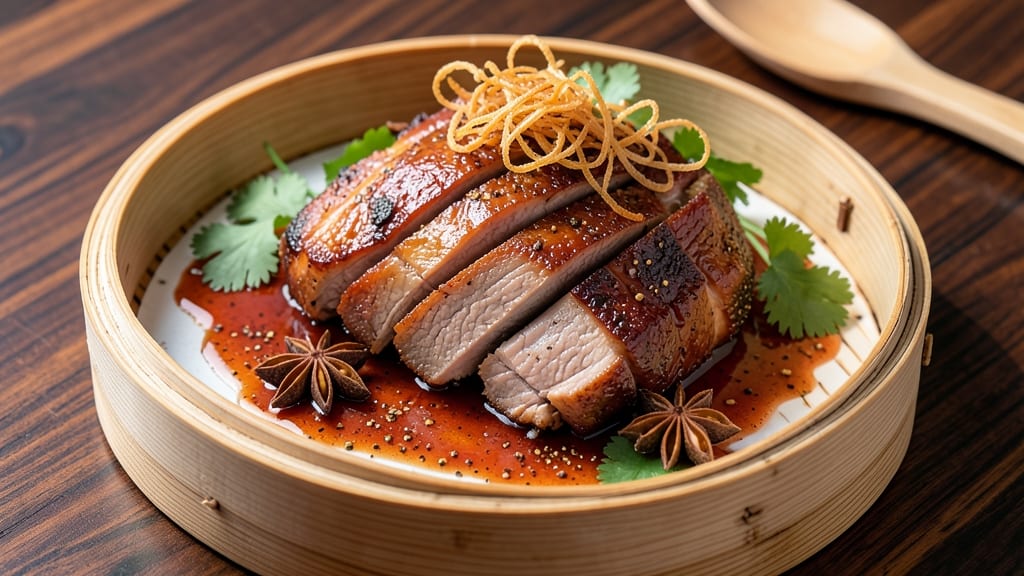
This Asian red pork recipe delivers the perfect balance of sweet, spicy, and umami that makes it a staple in Chinese and Japanese kitchens. 🔥 Growing up in Georgia, I first tasted this dish at a local Hunan restaurant, and it became my obsession—rich, tender pork braised in a deep, caramelized sauce that clings to every bite.
The secret lies in slow cooking, which transforms tough pork shoulder into melt-in-your-mouth perfection while developing layers of flavor through a carefully balanced marinade and braising liquid.
The recipe begins with a marinade of five-spice powder, star anise, and soy sauce, which infuses the pork overnight, creating a fragrant bark on the exterior.
Then, a sweet-savory sauce of hoisin, brown sugar, and vinegar simmers with the pork, reducing into a glossy, sticky glaze that coats every piece. This method ensures the pork stays juicy while developing that signature caramelized crust—something I’ve perfected over years of cooking for crowds at The Smoky Pig.
What makes this dish truly special is its versatility. Serve it over steamed rice for a comforting meal, or pair it with stir-fried vegetables for a complete feast.
The sauce is rich enough to stand alone as a dipping sauce for dumplings or noodles, and it keeps well in the fridge for up to five days, making it ideal for meal prep.
The combination of textures—tender pork, crispy edges, and a glossy sauce—is what keeps people coming back for seconds.
For those who love regional variations, this recipe bridges Chinese red-braised pork and Japanese nikujaga, offering the best of both worlds. The slow-cooked approach ensures deep flavor without requiring specialized equipment, and the balance of sweetness and acidity makes it approachable for home cooks while still feeling restaurant-worthy.
Let’s get cooking—your taste buds will thank you.
Ingredients for asian red pork
Six ingredients transform tough pork into melt-in-your-mouth perfection with sweet-spiced umami depth.
| Ingredient | Amount | Notes |
|---|---|---|
| Pork Shoulder 🥩 | 3 lb | Bone-in preferred for flavor |
| Five-Spice Powder 🌶️ | 1 tbsp | Toasted for deeper aroma |
| Star Anise Pods 🌿 | 2 whole | Lightly crushed for infusion |
| Soy Sauce 🥄 | ½ cup | Dark soy preferred for color |
| Hoisin Sauce 🍶 | ¼ cup | Store-bought or homemade |
| Brown Sugar 🍚 | ½ cup | Light or dark variety |
| Rice Vinegar 🍶 | 2 tbsp | White or seasoned vinegar |
| Garlic Cloves 🧄 | 6 cloves | Minced for marinade |
| Ginger Root 🌿 | 1 tbsp | Freshly grated, peeled |
| Sesame Oil 🫒 | 1 tbsp | Toasted for aroma |
| Red Chili Flakes 🔥 | 1 tsp | Adjust for heat preference |
| Green Onions 🧅 | 3 whole | Sliced for garnish |
| Vegetable Oil 🫒 | 2 tbsp | For searing pork |
| Water 💧 | 1 cup | For braising liquid |
The pork shoulder is the star here—bone-in for maximum flavor, but boneless works in a pinch. Costco or local butchers usually have it pre-cut, but if buying whole, ask for a 3-pound piece. Look for good marbling, not lean cuts. Five-spice powder is non-negotiable—Penzeys or bulk bins have the best quality. Star anise? Whole pods are cheaper than ground, and you can crush them yourself. The hoisin sauce should be thick and glossy—La Choy or Lee Kum Kee are my go-tos, but any brand with no weird additives works. Brown sugar adds caramelization, but muscovado or coconut sugar gives extra depth if you're feeling fancy.
No five-spice powder? Mix 1/4 tsp each of cinnamon, cloves, fennel, and black pepper—it's not identical, but close. Star anise hard to find? Anise seeds work too. Dark soy sauce unavailable? Regular soy sauce plus 1 tsp molasses mimics the color. The ginger and garlic can be swapped for 1 tbsp each of ginger paste and garlic powder if fresh isn't an option. Red chili flakes? Cayenne or crushed dried chilies at half the amount. And if you're out of sesame oil, toasted sesame seeds sprinkled at the end give that nutty aroma—just don't cook with them.
This dish tastes even better the next day as flavors meld. Store in an airtight container for 5 days in the fridge or 3 months frozen. I double the recipe and freeze half—perfect for lazy weeknights. The sauce thickens as it cools, so add 1-2 tbsp water when reheating if it's too stiff. Garnish with those green onions right before serving, or they'll wilt into oblivion. Leftovers reheat beautifully—just cover with a splash of water and simmer until hot through.
Why You'll Love This Recipe
- One-Pan Magic: I swear by this recipe when I’m too tired to wash pots—just toss the pork shoulder with five-spice, star anise, and a splash of soy and hoisin, then let the oven do the work. The aromatics infuse effortlessly while I’m scrolling through my phone or pretending to fold laundry.
- Umami Bomb: That combo of star anise and hoisin? It’s like a flavor explosion in your mouth—sweet, salty, and just a hint of warmth from the five-spice. The pork ends up tender with a glossy, sticky glaze that makes every bite worth it.
- Meal Prep MVP: Between us, this is my go-to for busy weeks. Cook a big batch on Sunday, and you’ve got lunch or dinner covered for days—pack it in buns for sandwiches, toss it into rice bowls, or serve it over noodles. It’s that versatile.
- Budget Stretch: Pork shoulder is affordable, and a single batch feeds four (or two hungry teens). The spices are cheap but pack serious flavor, so you’re not sacrificing taste for savings. Honestly, it’s one of those recipes where you feel like you’re eating fancy without breaking the bank.
Step-by-step instructions for sweet-spiced Asian red pork
Let's create tender, caramelized pork with layers of sweet-spiced flavor that'll impress everyone.
🔥 Step 1: Sear the Pork Shoulder for Deep Flavor
Heat a large Dutch oven over medium-high heat and add the 2 tablespoons vegetable oil. Once shimmering, place the 3 lb pork shoulder fat-side down and sear undisturbed for 8-10 minutes until the fat renders and the skin turns deep golden brown. This creates a flavorful crust that'll melt into the braise.
Flip the pork and sear the other sides for another 5-6 minutes until browned. Remove the pork and set it aside. Here's the thing—don't wipe out the browned bits in the pan. Those are pure flavor that'll dissolve into our sauce later.
👨🍳 Step 2: Build the Sweet-Spiced Marinade
In the same Dutch oven, add the 6 cloves minced garlic cloves and 1 tablespoon freshly grated ginger root. Sauté for 1 minute until fragrant—you'll smell that fresh, zesty aroma. Add the 1 tablespoon toasted five-spice powder and 1 teaspoon red chili flakes, stirring for 30 seconds to toast the spices.
Pour in the 0.5 cup soy sauce, 0.25 cup hoisin sauce, 0.5 cup brown sugar, 2 tablespoons rice vinegar, and 1 cup water. Stir well to combine, scraping up those delicious browned bits from the bottom. The mixture should look glossy and inviting—this is where all the magic happens.
🥘 Step 3: Braise Until Fork-Tender
Return the pork shoulder to the Dutch oven, spooning the marinade over the top. Bring to a gentle simmer over medium heat, then reduce to low heat. Cover and let it cook for 1 hour, then add the 2 lightly crushed star anise pods and 1 tablespoon sesame oil. The star anise will infuse subtle anise notes into the pork.
Continue cooking uncovered for another 2-3 hours until the pork is fork-tender and the sauce has reduced to a glossy, thick consistency. I know it seems like a long time, but patience pays off here—you want that meat to pull apart easily. The pork is done when it reaches an internal temperature of 203-205°F.
🍽️ Step 4: Finish and Serve with Fresh Garnish
Remove the pork from the braising liquid and transfer it to a cutting board. Let it rest for 10 minutes before slicing against the grain into ½-inch thick slices. The resting period lets the juices redistribute, ensuring each bite is moist and flavorful.
Return the braising liquid to the stove and simmer uncovered for 5-7 minutes to thicken slightly. Taste and adjust seasoning if needed—you might want to add a splash more soy sauce or a pinch of sugar. Serve the sliced pork over steamed rice, drizzled with the reduced sauce. Garnish with 3 sliced green onions for freshness and color.
Pro Tips For Making Asian Red Pork
- CRUST THE PORK FIRST: Pat the pork shoulder bone-dry with paper towels, then hit it with a mix of five-spice powder and a pinch of salt before searing—this locks in flavor and builds that caramelized crust you can’t get any other way. I used to skip this, and the sauce just slid off like it was on a greased slide.
- SMASH THE STAR ANISE: Lightly crush the star anise pods with the flat of a knife before adding them to the pot—this releases their oils and aroma without turning the sauce bitter. I learned this the hard way after burning a batch where the pods stayed whole and the dish tasted underwhelming.
- LOW AND SLOW IS NON-NEGOTIABLE: After the initial sear, drop the heat to a gentle simmer (think tiny bubbles, not rolling) and cover partially—this keeps the pork tender without turning it into shoe leather. I’ve rushed this, and the result was chewy, sad pork that needed a fork to cut.
- THICKEN WITH HOISIN LAST: Stir in the hoisin sauce after the pork is nearly done, not at the start—it thickens faster when the meat’s residual heat cooks it down. I used to add it early, and the sauce ended up gloppy instead of glossy. Save it for the final 10 minutes.
Storing and reheating this dish
Fridge Storage Secrets
Let the pork cool for 2 hours before storing in an airtight container—I use glass Pyrex with snap-on lids. The flavors actually deepen overnight as the spices meld into the meat.
Store in your fridge at 40°F or below for up to 5 days. Trust me, the second day is when this dish hits peak deliciousness. 💫
Freezer Prep Tips
For longer storage, freeze portions in quart-sized freezer bags with 1 inch headspace to prevent expansion cracks. I label mine with dates—this keeps well for 3 months without texture loss. Thaw overnight in the fridge for best results, or use the microwave defrost setting if you're impatient. 🥶
Reheating Like a Pro
My preferred method is stovetop—transfer pork and sauce to a pot, add 2-3 tablespoons water, and simmer on low heat for 10-15 minutes until steaming hot.
The sauce will thicken beautifully. For quick versions, microwave covered portions at 70% power in 1-minute intervals, stirring between each, until reaching 165°F. 🔥
Sauce Salvation
If the sauce seems too thick after reheating, simply add 1 tablespoon water at a time until it reaches your desired consistency. I often drizzle a little extra sauce over the pork right before serving—it makes all the difference.
The pork itself reheats beautifully, maintaining its tenderness when done properly. ⏰
Garnish Freshness
Always add fresh green onions right before serving—they add a bright contrast to the rich pork. I also recommend a sprinkle of toasted sesame seeds for extra crunch. The combination of textures is what makes this dish feel restaurant-quality at home. 🌿
Meal Prep Magic
Double the recipe and freeze half—it's perfect for busy weeknights. I portion the pork and sauce separately so you can reheat just what you need. The sauce keeps well in the fridge for 1 week if stored separately, making it great for dipping or stir-fry bases.
This is my go-to for lazy Sundays. 💡
Nutrition facts
Frequently asked questions
Can I use pork tenderloin instead of pork shoulder?
Pork tenderloin works but requires half the cooking time—about 1-1.5 hours total. It's leaner, so slice it thin and sear quickly over high heat for 2-3 minutes per side before braising. The texture will be more delicate, but the sauce flavors will still shine.
What makes this different from Chinese red-cooked pork?
This recipe blends Chinese techniques with Japanese-inspired balance—more hoisin sauce and less sugar than traditional Chinese versions. The star anise and five-spice powder add depth, while rice vinegar brightens the sauce. It's sweeter than Japanese nikujaga but less salty than Cantonese-style pork.
How do I adjust the sweetness level?
Reduce brown sugar by ¼ cup for less sweetness or add 1 tbsp honey for extra depth. For heat lovers, increase red chili flakes to 1.5 tsp or add ½ tsp Sichuan peppercorns to the marinade. Taste the sauce before serving—adjust with vinegar for tang or soy sauce for umami.
Can I make this in a slow cooker?
Sear the pork first, then transfer everything to a slow cooker. Cook on low for 6-8 hours or high for 3-4 hours. The sauce will be thinner—reduce it on the stovetop later by simmering uncovered for 10-15 minutes. Just add 2 tbsp cornstarch mixed with water if you want extra thickness.
What's the best way to serve leftovers?
Cold slices make amazing sandwiches with hoisin mayo, or toss with noodles for a quick stir-fry. Reheat portions in a skillet with 1 tbsp water to revive the sauce. For extra flavor, add 1 tsp oyster sauce or a splash of mirin when reheating. The sauce also works as a dipping sauce for dumplings!