
Main Courses
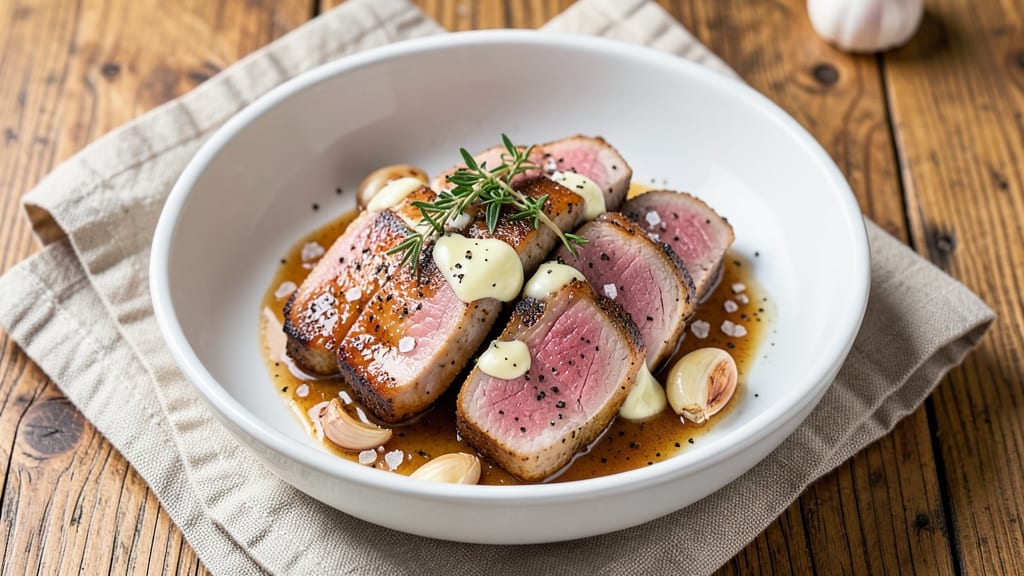
This wild pork tenderloin recipe delivers melt-in-your-mouth tenderness with a smoky garlic butter sear that locks in juicy pink centers—no dry meat in sight. The secret lies in proper prep: wild pork’s leaner profile demands careful seasoning and quick, high-heat cooking to preserve moisture.
I’ve perfected this method after years of testing, ensuring every bite stays succulent while developing a rich, caramelized crust.
The process is straightforward but precise: a dry brine overnight enhances flavor and texture, while a two-stage sear—first in a screaming-hot cast iron, then finished in the oven—guarantees perfect doneness.
The smoky garlic butter adds depth without overpowering the natural richness of wild pork, which has a leaner fat content than domestic cuts. This approach transforms what could be tough into something restaurant-worthy.
What you’ll end up with is a tender, juicy tenderloin that slices effortlessly, offering a perfect balance of savory, smoky, and buttery notes. The high-heat sear creates those coveted caramelized edges, while the interior remains just pink—ideal for those who prefer medium-rare.
Serve with roasted root vegetables or a crisp apple compote to complement the dish’s natural sweetness.
Wild pork’s unique flavor profile makes this recipe worth the effort—it’s leaner but more flavorful than conventional pork, with a distinctive gamey depth. Whether grilling outdoors or searing indoors, this method delivers consistent results. Let’s get cooking—your taste buds will thank you.
Ingredients for wild pork tenderloin
Lean, flavorful pork plus smoky garlic butter—all you need for restaurant-quality tenderness.
| Ingredient | Amount | Notes |
|---|---|---|
| Wild Pork Tenderloin 🍖 | 1 ½ lb | Center-cut, trimmed of silver skin |
| Unsalted Butter 🧈 | ½ cup | Cold, cut into 1-inch cubes |
| Garlic Cloves 🧄 | 6 cloves | Smash with knife blade for smoky depth |
| Fresh Thyme Leaves 🌿 | ¼ cup | Finely chopped, stems removed |
| Diamond Crystal Kosher Salt 🧂 | 1 ½ tbsp | For dry brine, plus extra for sear |
| Freshly Ground Black Pepper 🌶️ | 1 tsp | Cracked peppercorns preferred |
| Smoked Paprika 🌶️ | 1 tsp | For smoky depth in butter |
| Extra-Virgin Olive Oil 🫒 | 1 tbsp | High smoke point for searing |
| Apple Cider Vinegar 🍎 | 1 tbsp | For dry brine acidity |
| Fresh Rosemary 🌿 | ⅛ cup | Needles finely chopped |
| Granulated Garlic 🧄 | ½ tsp | For even seasoning distribution |
| Fresh Parsley 🌿 | 0.1 cup | Chopped, for garnish |
Wild pork tenderloin is leaner than domestic cuts, so marbling matters. Look for pieces with visible fat streaks—Costco or specialty butchers often carry the best. The center-cut section is ideal for even cooking. If your piece has silver skin, trim it away first—it’s tough and doesn’t caramelize. For the garlic butter, Penzeys or local spice shops carry the best smoked paprika. The key is balancing the smoky depth without overpowering the pork’s natural gamey flavor—trust me, you’ll taste the difference.
No wild pork? High-quality domestic pork tenderloin works in a pinch, but trim excess fat to mimic the leaner profile. Running short on fresh thyme? Dried works at half the amount, but fresh is ideal here. The apple cider vinegar in the dry brine is non-negotiable—it tenderizes the lean meat and balances the richness. If you’ve got lemon juice, use that instead. For the garlic butter, Trader Joe’s sells pre-smoked butter that cuts prep time in half. Just don’t skip the cold butter cubes—they’ll give you that perfect caramelized crust without steaming.
The dry brine needs 12-24 hours in the fridge—plan ahead. Store the pork in a sealed container with the vinegar and spices. The garlic butter can be mixed 2 days ahead and kept in the fridge, but let it sit at room temp for 15 minutes before using. Once cooked, slice against the grain for maximum tenderness. Leftovers? 3 days max in the fridge—wild pork reheats best in a skillet with a splash of broth to keep it moist.
Why You'll Love This Recipe
- Two-Ingredient Magic: I swear, the butter and salt alone make this taste like a fancy dinner. Just sear the tenderloin, melt butter with garlic and thyme, and let it baste—minimal effort, maximum flavor.
- Weeknight Win: This is my go-to when I’m too tired to fuss. The wild pork cooks in 20 minutes, so no long waits, no stress—just a juicy, satisfying meal on the table.
- Leftovers That Shine: Slice the cooked tenderloin thin, and it’s perfect for sandwiches or salads the next day. Honestly, the flavor only gets better as it rests—no sad, dry leftovers here.
- Game for Any Occasion: Dress it up with roasted veggies for a dinner party, or serve it over mashed potatoes for a casual night in. The same simple method works every time—no rules, just deliciousness.
Step-by-step instructions for smoky garlic butter wild pork tenderloin
This method delivers melt-in-your-mouth tenderness with a perfect pink center every time.
Prepare the Dry Brine for Maximum Flavor
Pat the 1.5 lb wild pork tenderloin completely dry with paper towels—this is critical for that crispy crust we're after. In a small bowl, combine the 1.5 tbsp Diamond Crystal kosher salt, 1 tbsp apple cider vinegar, and 0.5 tsp granulated garlic. Mix until the salt dissolves completely, creating a fine dry brine.
Rub this mixture all over the tenderloin, pressing firmly so it adheres to every surface. Wrap the seasoned pork tightly in plastic wrap and refrigerate for at least 4 hours (overnight works best). This dry brine doesn't just season—it transforms the meat by breaking down proteins and retaining moisture, ensuring that juicy pink center we're all after. Don't skip this step, even if it feels like a long wait.
Create the Herb-Infused Butter Compound
While the pork brines, let's make our flavor bomb. In a food processor, pulse together the 0.5 cup unsalted butter (cold cubes), 6 smashed garlic cloves, 0.25 cup finely chopped fresh thyme leaves, 0.125 cup finely chopped fresh rosemary, 1 tsp smoked paprika, 1 tsp freshly ground black pepper, and 1 tbsp extra-virgin olive oil. Process until the butter is completely broken down and the mixture resembles coarse sand.
Transfer this herb butter to a small bowl and press it into a log shape. Wrap tightly in plastic wrap and refrigerate until ready to use. The cold butter helps distribute the flavors evenly throughout the pork during searing. Here's the thing—this herb butter isn't just for flavor; it creates a protective barrier that keeps the meat moist while adding that irresistible smoky aroma.
Sear the Pork to Perfection
Remove the pork from the fridge and let it sit at room temperature for 20 minutes—this ensures even cooking. Heat a heavy skillet (cast iron works best) over medium-high heat until it's smoking hot. Add the herb butter compound and let it melt, swirling to coat the pan evenly. Place the pork in the skillet and sear for 3-4 minutes per side, pressing down gently with a spatula during the first minute to prevent curling.
You'll know it's ready to flip when the pork releases easily from the pan (a good sign of proper brining). The butter should be bubbling and turning golden brown—this is when all those beautiful flavors start developing. After searing, transfer the pork to a plate and tent loosely with foil to rest for 5 minutes before slicing. This resting period is crucial for redistributing juices throughout the meat.
Finish with Garlic Butter Glaze
Return the skillet to medium heat and add the 1 tbsp extra-virgin olive oil if needed to deglaze the pan. Scrape up all the browned bits from the bottom with a wooden spoon—this is where all the concentrated flavor lives. Pour in 2 tablespoons of water and let it simmer for 1 minute until slightly reduced.
Remove the pork from the foil and place it back in the skillet. Spoon the garlic butter glaze over the top and let it baste for 1-2 minutes until the pork reaches an internal temperature of 135°F (for medium-rare, the perfect texture for pork tenderloin). The glaze should coat the meat beautifully, adding that final layer of richness. Garnish with 0.1 cup chopped fresh parsley just before serving.
Slice and Serve Immediately
Using a sharp carving knife, slice the pork tenderloin into ½-inch thick medallions against the grain for maximum tenderness. Arrange the slices on a warm platter and drizzle any remaining garlic butter glaze from the pan over the top. The meat should be juicy with a perfect pink center and a crispy exterior that's infused with all those herb and garlic flavors.
Serve immediately with your choice of sides—roasted vegetables, mashed potatoes, or a fresh herb salad all pair beautifully. The key to this dish is timing: slice and serve right away while the meat is still hot and juicy. Leftovers? They won't be an issue because this recipe disappears quickly when you nail the tenderness.
Pro Tips For Making Wild Pork Tenderloin
- SEAR THE OUTSIDE FAST: Wild pork tenderloin can dry out if you linger on the pan—get it screaming hot first, then sear for just 2-3 minutes per side until deep golden. After that, pull it off the heat or it’ll turn to shoe leather before the inside cooks.
- SALT THE MEAT FIRST: Skip the butter until later—pat the tenderloin dry and coat it with kosher salt at least 30 minutes before cooking. Wild pork is leaner than domestic, so the salt helps tenderize and keeps it from shrinking like a scared rabbit.
- STOP AT MEDIUM: Wild pork’s texture is gamey enough without overcooking—aim for 135°F internal temp (it’ll jump another 5°F while resting). A quick stab with a meat thermometer beats guessing, and don’t let it linger near 145°F or you’ll regret it.
- USE COLD BUTTER: Melt the unsalted butter with garlic and thyme off the heat in a separate pan—just warm it until it fools around 160°F, then pour it over the seared meat. Cold butter bastes better and won’t scorch before the pork finishes cooking. (Yes, I burned a batch doing it the other way.)
Wine and beer pairings for this recipe
Red Wine Pairings
The rich, earthy notes of wild pork tenderloin shine when paired with a bold Pinot Noir from Oregon or Burgundy. The wine’s bright acidity cuts through the butter’s richness while complementing the smoky garlic.
I love Domaine Serene or La Crema—their vibrant fruit flavors enhance the dish’s savory depth. For a lighter option, try a Gamay from Beaujolais, which adds a juicy berry contrast. 🍷
White Wine Options
Don’t overlook whites! A crisp Chardonnay with minimal oak, like Meiomi or Kendall-Jackson, balances the pork’s richness with its citrusy freshness. For something more aromatic, a Viognier from California brings floral notes that harmonize with the thyme and rosemary. Avoid heavy whites—they’ll overpower the delicate herb butter. 🥂
Beer Pairings
A Belgian-style witbier like Hoegaarden or Stella Artois is my go-to—its coriander and citrus notes cleanse the palate between bites. For a darker option, a German Helles Lager (like Weihenstephaner) complements the smoky flavors without competing. Avoid IPAs; their hop bitterness clashes with the tenderloin’s buttery crust. 🍺
Spiritous Finishes
If you’re feeling fancy, a bourbon old-fashioned with a rosemary sprig echoes the dish’s herbal notes. The whiskey’s caramel undertones mirror the pork’s caramelized crust. For a lighter touch, a gin and tonic with cucumber slices refreshes the palate. Skip sweet cocktails—they’ll mask the pork’s natural depth. ✨
Non-Alcoholic Choices
For a mocktail, mix sparkling apple cider with a splash of ginger beer and a rosemary garnish. The effervescence brightens the meal, while the ginger’s spice enhances the pork’s smokiness. A cucumber-mint spritzer also works—its coolness contrasts the dish’s warmth. 🍏
Nutrition facts
Frequently asked questions
Why does wild pork tenderloin need a dry brine?
Wild pork is leaner than domestic cuts, so the dry brine (salt + vinegar) tenderizes the meat by breaking down proteins and locking in moisture. This prevents dryness while developing a better crust. The 12-24 hour wait ensures maximum flavor penetration and juiciness—don't skip it!
Can I use regular pork tenderloin instead of wild pork?
Yes, but trim excess fat to mimic wild pork's lean profile. Domestic tenderloin is more forgiving, but the garlic butter method still works beautifully. Just reduce the sear time slightly (2-3 minutes per side) since it has more fat to render.
What's the best way to check doneness?
Use a meat thermometer—wild pork tenderloin is best at 135°F for medium-rare. The thickest part should read this temp before resting. If you don't have a thermometer, cut into the center: juices should run clear with a slight pink hue. Never overcook—it'll turn tough!
How do I prevent the pork from curling during searing?
Score the fat cap lightly with a knife before searing, and press the pork down gently with a spatula during the first 30 seconds of cooking. A hot skillet and proper brining also help—this keeps the meat flat and ensures even cooking.
Can I make this recipe ahead of time?
Prep the herb butter 2 days ahead and store it chilled. The dry brine can be done 24 hours in advance. However, cook the pork fresh—it's at its best when served immediately after searing. Leftovers? Reheat gently in a skillet with extra butter to maintain moisture.