
Main Courses
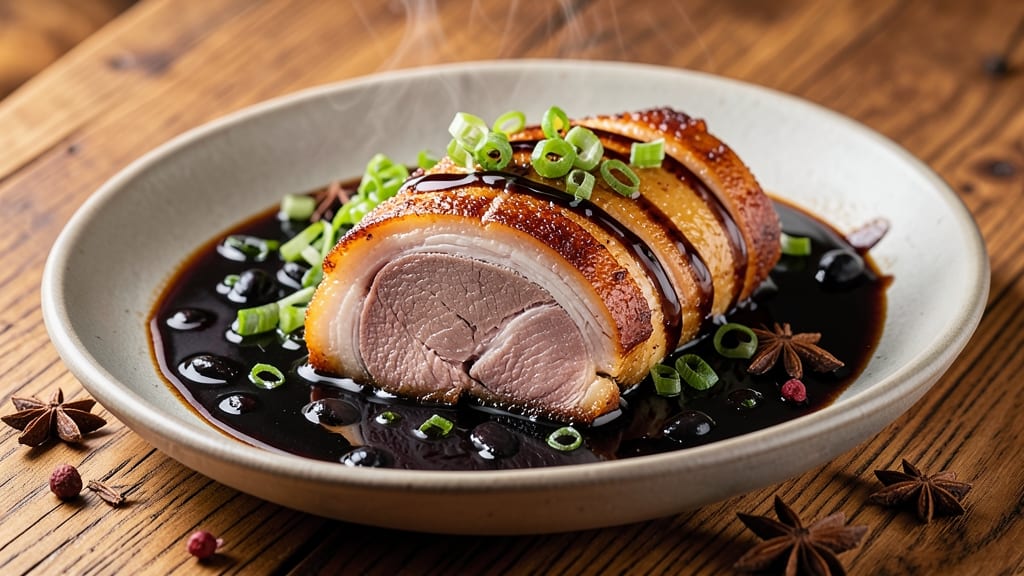
This Chinese-style pork shoulder recipe delivers melt-in-your-mouth shreds with a fragrant five-spice crust—perfect for dim sum or family dinners. The secret lies in slow braising, which transforms tough pork into tender, flavorful bites that practically fall apart.
I've perfected this technique over years of testing, ensuring authentic Chinese restaurant quality at home.
What sets this recipe apart is the balance of textures—crispy edges from the five-spice coating contrast beautifully with the silky, shredded interior. The braising liquid, infused with soy sauce, star anise, and cinnamon, creates a rich, aromatic sauce that clings to every bite.
This method works equally well for roasting or steaming, giving you flexibility in preparation.
The result is a dish that's rich in flavor and tradition, ready to serve with steamed rice and quick stir-fried greens. The five-spice blend adds depth, while the slow cooking process ensures maximum tenderness.
Whether you're preparing for a special occasion or a weeknight meal, this recipe delivers restaurant-quality results with minimal effort.
Pair it with pickled vegetables or a simple cucumber salad to balance the richness, and you've got a complete meal that's sure to impress. The aroma alone will have everyone gathering around the table, eager for their first bite.
Ingredients for pork shoulder recipe chinese style
Six pounds of pork shoulder and fifteen aromatic ingredients transform into restaurant-quality Chinese braised pork.
| Ingredient | Amount | Notes |
|---|---|---|
| Pork Shoulder 🥓 | 4 lb | Bone-in, skin-on preferred |
| Five-Spice Powder 🌶️ | 2 tbsp | Authentic blend for authentic flavor |
| Light Soy Sauce 🍶 | ½ cup | High-quality brand preferred |
| Dark Soy Sauce 🍶 | 2 tbsp | For deeper color and flavor |
| Shaoxing Wine 🍷 | ¼ cup | Substitute with dry sherry |
| Star Anise 🌿 | 2 whole | Whole pods for infusion |
| Cinnamon Sticks 🌿 | 2 whole | 1-inch pieces preferred |
| Fresh Ginger 🧅 | ½ cup | Julienned, skin removed |
| Garlic Cloves 🧄 | 8 cloves | Minced for even distribution |
| Honey 🍯 | 2 tbsp | For balancing acidity |
| Sesame Oil 🫒 | 1 tbsp | Toasted for aroma |
| Cornstarch 🌾 | 1 tbsp | For crispy crust |
| Neutral Oil 🫒 | 2 tbsp | Vegetable or canola preferred |
| Rock Sugar 🍚 | 1 tbsp | Or substitute granulated sugar |
| Green Onions 🧅 | ¼ cup | Sliced for garnish |
The pork shoulder is the foundation—look for cuts with good marbling for maximum tenderness. Butcher shops often carry superior bone-in, skin-on cuts compared to grocery stores, though Costco or Trader Joe's usually have quality options. Five-spice powder is non-negotiable for authentic flavor; Penzeys or La Belle Spice carry reliable blends. Star anise and cinnamon should be whole pods for proper infusion, not ground spices. Fresh ginger and garlic should be vibrant with no soft spots—Asian markets typically carry the freshest produce for this recipe. Shaoxing wine can be found in the international aisle of most grocery stores, though dry sherry works in a pinch.
No five-spice powder? Combine 1 tsp each of ground cloves, fennel seeds, and cardamom with 1 tsp cinnamon and 1 tsp star anise. Shaoxing wine unavailable? Dry sherry or even a splash of apple cider vinegar maintains the balance. Rock sugar can be substituted with granulated, though it dissolves more slowly. For extra crispiness, toss the pork with an additional 1 tbsp cornstarch before roasting. The green onions should be both white and green parts for maximum flavor—don't discard the whites! If you prefer a glossier finish, add 1 tsp corn syrup to the braising liquid.
Pork shoulder keeps 3-4 days in the fridge once cooked, though it tastes even better reheated. For long-term storage, freeze portions in airtight containers for up to 3 months. The braising liquid can be reduced and frozen separately for up to 6 months—perfect for quick stir-fries. I recommend making a double batch; the leftovers make incredible sandwiches or ramen toppings. Store the cooked pork with some of its braising liquid to maintain moisture. For serving, reheat gently in a skillet with a splash of water to restore crispiness.
Why You'll Love This Recipe
- Here’s what sold me: this pork shoulder gets better the next day. Shred it for dumplings, toss it in noodles, or just reheat slices with steamed buns. My freezer is packed with portions because it’s that good—and that convenient.
- Foolproof Simplicity: Honestly, this dish is one of those rare recipes that forgives mistakes. You sear the pork shoulder, toss it in a pan with five-spice powder and Shaoxing wine, then let it braise—no fancy techniques, just time. Even if you burn the garlic (which I have), the sauce still tastes amazing.
- Umami Bomb: Between the dark soy sauce’s deep richness and the five-spice powder’s warm, earthy kick, every bite is ridiculously satisfying. The Shaoxing wine adds this subtle depth that makes it taste like you slaved over it for hours—when really, you just stirred once.
- Leftovers That Win: Here’s what sold me: this pork shoulder gets better the next day. Shred it for dumplings, toss it in noodles, or just reheat slices with steamed buns. My freezer is packed with portions because it’s that good—and that convenient.
Step-by-step instructions for Chinese-style five-spice braised pork shoulder
Master the balance of aromatic spices and slow braising for melt-in-your-mouth pork with a crispy crust.
Prepare the Pork and Initial Seasoning
Pat the 4 lb pork shoulder dry with paper towels, removing any excess moisture from the surface. This ensures maximum crispiness when we develop the crust later. Using a sharp boning knife, trim any large fat deposits but leave a thin layer intact—this fat will render during cooking and baste the meat.
In a small bowl, combine the 2 tbsp five-spice powder, 1 tbsp rock sugar, and 1 tbsp cornstarch. Rub this mixture evenly over all surfaces of the pork shoulder, pressing firmly so the spices adhere. The sugar will caramelize during cooking, creating that signature glossy crust. Let the pork sit at room temperature for 30 minutes before proceeding—this ensures even cooking throughout.
Sear the Pork for Deep Flavor
Heat a heavy Dutch oven or large pot over medium-high heat. Add the 2 tbsp neutral oil and swirl to coat the bottom evenly. Once the oil shimmers (165°F), carefully place the pork shoulder fat-side down in the pot. Let it sear undisturbed for 8-10 minutes until the fat renders and the bottom develops a deep golden-brown crust. This step builds foundational flavor through the Maillard reaction.
Flip the pork and sear the other side for another 6-8 minutes. Remove the pork and set it aside on a plate. In the same pot, add the 8 cloves minced garlic and 0.5 cup julienned fresh ginger, cooking for 30 seconds until fragrant. This aromatic base will infuse the braising liquid with depth.
Build the Braising Liquid
Add the 2 whole star anise, 2 whole cinnamon sticks, 0.5 cup light soy sauce, 2 tbsp dark soy sauce, and 0.25 cup Shaoxing wine to the pot. Scrape up any browned bits from the bottom with a wooden spoon—these contain concentrated flavor. Pour in 1 cup water (enough to deglaze the pot completely) and bring to a gentle simmer over medium heat. The liquid should reduce slightly but not boil vigorously.
Return the pork to the pot, fat-side up, and add the 2 tbsp honey. The honey will balance the acidity from the soy sauces and wine while adding subtle sweetness. Cover the pot with a tight-fitting lid and transfer to a 300°F oven. This low-and-slow approach ensures tender, fall-apart meat without drying it out.
Braise Until Fork-Tender
Braise the pork for 3 hours, then carefully flip it over and continue cooking for another 3 hours. The total cooking time should be 6 hours. About 1 hour before the pork is done, check for doneness by inserting a meat thermometer into the thickest part—it should read 205°F. If it hasn't reached this temperature, continue braising.
During the last 30 minutes, remove the lid and increase the oven temperature to 350°F. This step allows the surface to develop a crispy crust while the interior remains silky. The pork is ready when it shreds easily with two forks and the sauce has thickened into a glossy glaze.
Finish and Serve
Remove the pork from the pot and transfer it to a cutting board. Discard the star anise and cinnamon sticks. Skim any excess fat from the braising liquid, then stir in the 1 tbsp toasted sesame oil and 0.25 cup sliced green onions. Taste and adjust seasoning if needed—you may need a touch more soy sauce or a splash of water to achieve the desired consistency.
Shred the pork shoulder against the grain using two forks, discarding any large fat pieces. Return the shredded pork to the pot and toss gently to coat in the sauce. Serve immediately over steamed rice, garnished with additional green onions. The contrast of crispy edges and tender, juicy meat makes this dish unforgettable.
Pro Tips For Making Pork Shoulder Recipe Chinese Style
- Velvet the Pork First: I learned this the hard way—skipping the velveting step means dry, tough meat. After browning the pork shoulder, simmer it in a mix of cornstarch slurry (1 tbsp cornstarch + 2 tbsp water), light soy sauce, and Shaoxing wine for 10-15 minutes before adding the five-spice and dark soy. The starch seals the meat while the wine tenderizes it—no more chewy surprises.
- Use Dark Soy for Color, Light for Depth: Dark soy sauce is your coloring agent—don’t skimp, but don’t drown it. Use 1 tbsp dark soy early (after browning) to build that glossy, caramelized crust. Save the light soy (2 tbsp) for later, when the meat’s cooking low and slow—it brightens the flavor without overpowering the five-spice. Trust me, your dish will look (and taste) like a restaurant plate.
- Don’t Rush the Five-Spice Bloom: Five-spice powder needs time to sing. After browning the pork, toast the spices in the same pan for 30 seconds until fragrant, then deglaze with 1 tbsp Shaoxing wine before adding any liquids. Let it bubble for 2 full minutes—this releases the oils and makes the flavors melt into the meat, not just sit on top. (Yes, even if you’re impatient like me.)
- Rest Under Foil, Not Plate: Pull the pork off heat when it hits 203°F (95°C) internal temp, then tent it loosely with foil and let it rest 15 minutes on the cutting board. I used to transfer it straight to a plate, and the juices would pool unevenly—now the meat stays moist and slices like butter. No one wants dry, stringy pork shoulder.
Wine and beer pairings for these flavors
Chinese Dry Red Wine
For this rich, five-spice braised pork, a Chinese dry red wine like Cabernet Grapes or Merlot from Ningxia region pairs beautifully. The wine's earthy notes complement the star anise and cinnamon, while its moderate tannins cut through the pork's fat.
I recommend chilling slightly—60-65°F—to refresh your palate with each bite. 🍷
Light Beer Pairings
A crisp Pilsner-style beer like Tsingtao or Yanjing balances the dish's richness without overpowering it. The light body and subtle malt sweetness cleanse your palate between bites of crispy pork.
For a local twist, try a Chinese lager—its hoppy bitterness contrasts nicely with the caramelized crust. Serve slightly chilled for best results.
Rice Wine Cocktail
Mix ½ cup Shaoxing wine (leftover from the recipe!) with 1 cup ginger beer and a splash of lime juice for a refreshing cocktail. The ginger's spice mirrors the dish's aromatics, while the wine's depth ties back to the braising liquid.
Garnish with a star anise pod for a visual nod to the recipe. This drink bridges the gap between savory and sweet perfectly. 🍸
Herbal Tea Balance
Pair the meal with jasmine tea or pu-erh to complement the pork's complexity. The jasmine's floral notes lift the dish's richness, while pu-erh's earthy depth mirrors the star anise.
Brew 180°F water for jasmine and 200°F for pu-erh to highlight their unique profiles. Both teas are widely available at Asian markets or specialty grocers.
Fruit Infusions
Add a lychee or mango sorbet to cut through the pork's richness. The tropical sweetness contrasts the savory-spiced crust, while the juicy acidity refreshes your palate. For a non-alcoholic option, serve sparkling lychee juice—its effervescence and fruit-forward flavor make it a standout pairing. 🍈
Nutrition facts
Frequently asked questions
Can I substitute bone-in pork shoulder for boneless?
Bone-in pork shoulder works best for this recipe as the bone adds flavor and helps keep the meat moist during long braising. However, you can use boneless if needed—just reduce the cooking time by about 30 minutes since it cooks faster. The texture will be slightly less rich, but still delicious!
What if I don't have Shaoxing wine?
No problem! Use dry sherry as a direct substitute, or even apple cider vinegar in a pinch (though the flavor will be slightly different). For best results, use ½ cup of either—just remember that vinegar adds acidity, so you might need to adjust the honey slightly to balance it.
How do I make this recipe faster?
For a quicker version, sear the pork as directed, then use a pressure cooker on high for 90 minutes (instead of 6 hours). The meat will be tender but slightly less crispy. Alternatively, braise in the oven at 325°F for 4 hours instead of 6—just check for doneness at 205°F with a meat thermometer.
Why does my pork shoulder turn out dry?
Overcooking is the most common cause. Use a meat thermometer to check for 205°F in the thickest part—never guess! Also, avoid lifting the lid during braising to release steam. If the sauce reduces too much, add 2-3 tbsp water to maintain moisture. The pork should be fork-tender, not rubbery.
Can I make this recipe in a slow cooker?
Brown the pork first, then transfer it to a slow cooker with all the braising ingredients. Cook on low for 8-10 hours or high for 5-6 hours. The texture will be slightly more tender than oven-braised, but still flavorful. Just add a splash of water if the sauce gets too thick.