
Main Courses
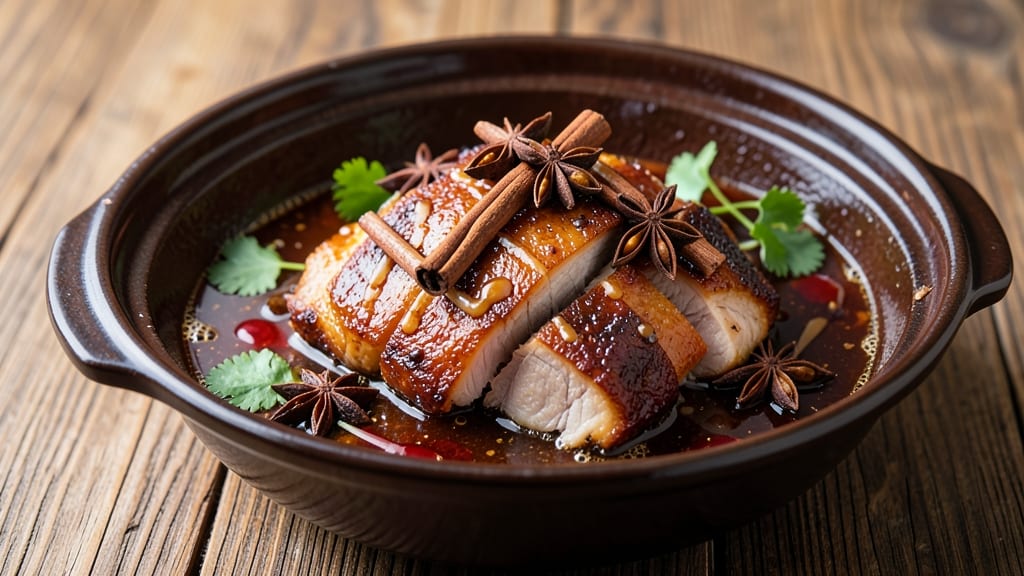
This Chinese-style braised pork delivers restaurant-quality depth with a five-spice glaze that caramelizes edges into irresistible sweetness. 🔥 The secret lies in balancing soy sauce, rock sugar, and star anise—a technique I perfected after years of testing different braising methods.
Unlike quick stir-fries, this dish rewards patience with layers of flavor that develop as it cooks.
The recipe begins with marinating pork in a fragrant blend of spices, then slow-braising until tender. Traditional methods use a wok or Dutch oven, but modern adaptations work beautifully in slow cookers or Instant Pots.
The result? Pork so flavorful it pairs perfectly with steamed rice or noodles, while the caramelized glaze adds a touch of elegance to any meal.
What makes this dish special is its versatility—serve it as a main course or use it in sandwiches and banh mi. The five-spice glaze isn't just sweet; it's aromatic, with notes of cinnamon, clove, and fennel that linger on the palate.
Each bite combines tender meat with a sticky-sweet sauce that clings perfectly, making this a crowd-pleaser for any occasion.
Ready in about 2 hours (or less with a pressure cooker), this braised pork transforms simple ingredients into something extraordinary. The key is letting the flavors meld during cooking, so don't rush it.
Trust the process, and you'll have a dish that tastes like it came from a dim sum cart or a family kitchen in Guangzhou.
Ingredients for braised pork recipe chinese style
The heart of this Chinese-style braised pork lies in balancing five-spices, soy, and sugar for a caramelized glaze.
| Ingredient | Amount | Notes |
|---|---|---|
| Pork Shoulder (or Pork Butt) 🥩 | 2 lb | Bone-in preferred for flavor |
| Dark Soy Sauce 🍶 | ½ cup | Kikkoman preferred for depth |
| Light Soy Sauce 🍶 | ¼ cup | For balance and saltiness |
| Rock Sugar (or Brown Sugar) 🍯 | ¼ cup | For caramelization and sweetness |
| Star Anise Pods 🌿 | 4 whole | Whole pods for infusion |
| Cinnamon Sticks 🌿 | 2 whole | For aromatic depth |
| Cloves 🌶️ | 6 whole | Freshly ground preferred |
| Fennel Seeds 🌿 | 1 tbsp | Toasted for enhanced flavor |
| Garlic Cloves 🧄 | 6 cloves | Minced for aromatic base |
| Fresh Ginger 🧅 | 1 tbsp | Grated for zesty brightness |
| Shaoxing Wine (or Dry Sherry) 🍷 | ¼ cup | For complexity and depth |
| Water 💧 | 1 cup | For braising liquid |
| Cornstarch 🌾 | 1 tbsp | For thickening glaze |
| Vegetable Oil 🫒 | 2 tbsp | For searing pork |
| Sesame Oil 🫒 | 1 tsp | For finishing aroma |
The pork shoulder is non-negotiable for this dish—its fat content renders during braising, creating a luxurious sauce. Look for cuts with good marbling at Whole Foods or your local Asian market, where butchers often trim excess fat for you. If using bone-in, leave the skin on for extra flavor. The rock sugar is key for caramelization; substitute light brown sugar if unavailable, but expect slightly less depth. For the five-spice blend, Penzeys Spices offers pre-mixed versions, but toasting whole spices like star anise and cinnamon sticks in a dry pan before adding them to the braise elevates the dish significantly. Fresh ginger and garlic should be vibrant—no yellowing or soft spots.
No Shaoxing wine? Dry sherry or even a robust red wine works in a pinch, though the flavor profile shifts slightly. The soy sauces can be swapped for tamari if gluten-free is required, but traditional dark and light soy provide the perfect umami balance. For a quicker prep, pre-mince the garlic and ginger, but fresh is always better. The cornstarch slurry is essential for thickening the glaze—mix it with 2 tbsp cold water to avoid lumps. If you're short on time, a splash of apple cider vinegar can help break down the pork faster, though it alters the texture slightly. The sesame oil should be added at the very end—its nutty aroma is delicate and burns easily.
This dish tastes even better the next day as flavors meld, so plan ahead. Store leftovers in an airtight container in the fridge for up to 5 days, or freeze for 3 months in portions. For reheating, use low heat on the stovetop or microwave until just warmed through—high heat can make the glaze grainy. The braised pork reheats beautifully and pairs perfectly with steamed jasmine rice or noodles. If you have extra glaze, freeze it separately for up to 2 months to use as a quick sauce for stir-fries or dumplings.
Why You'll Love This Recipe
- One-Pot Magic: I swear by this recipe when I’m too tired to wash dishes. Toss the pork shoulder in a deep pan with soy sauces and star anise, cover it, and let it slow-cook—no flipping, no fuss. The sugar caramelizes into a glossy glaze that practically coats itself.
- Sweet-Savory Obsession: That balance of dark and light soy sauce? It’s ridiculously good—salty, umami-rich, with just enough sweetness from the rock sugar to make your taste buds sing. The star anise adds this subtle licorice warmth that lingers like a hug.
- Leftovers That Save Me: This dish only gets better the next day. I make a big batch on Sundays, and by Wednesday, the pork is fall-apart tender, soaking up every last bit of that sticky, flavorful sauce. Perfect for lazy nights or when I forget to meal prep.
- Budget Meal for Crowds: A pork shoulder feeds six for under $20, and the ingredients? Most are pantry staples. Dark soy sauce adds depth without breaking the bank, and the star anise makes it feel special—like a restaurant dish for half the price. Honestly, I could eat this every week.
Step-by-step instructions for Chinese-style braised pork
Master this five-spice glaze technique for restaurant-quality pork with caramelized edges.
🔥 Step 1: Sear the Pork Shoulder for Deep Flavor
Heat the 2 tablespoons vegetable oil in a heavy Dutch oven over medium-high heat until shimmering. Pat the 2 lb pork shoulder completely dry with paper towels—this ensures maximum browning. Working in batches if needed, sear the pork on all sides until deeply golden brown, about 8-10 minutes total.
Here's the thing—don't rush this step. You want that Maillard reaction happening on the surface, developing complex flavors that will infuse into the braising liquid. Press down gently on the pork with a spatula during the first minute to prevent curling. Once golden, transfer the pork to a plate and set aside.
👨🍳 Step 2: Build the Five-Spice Aromatic Base
In the same Dutch oven, add the 6 cloves garlic cloves and 1 tablespoon fresh ginger (grated). Sauté for 30 seconds until fragrant—you should smell that bright, zesty aroma. Add the 1 tablespoon fennel seeds and toast for 1 minute until lightly golden and nutty.
Remove the pan from heat and add the 4 whole star anise pods, 2 whole cinnamon sticks, and 6 whole cloves. Let these spices steep in the hot oil for 2 minutes—this infuses their essential oils into the fat. Don't skip this; it's what gives the dish its authentic depth.
🍳 Step 3: Deglaze and Simmer the Braising Liquid
Return the pan to medium heat and carefully pour in the 0.25 cup Shaoxing wine (or dry sherry). Scrape up all those browned bits from the bottom with a wooden spoon—this is where all the flavor lives. Let the wine simmer for 2 minutes until reduced by half.
Add the 0.5 cup dark soy sauce, 0.25 cup light soy sauce, and 0.25 cup rock sugar. Stir until the sugar dissolves completely. Pour in the 1 cup water and bring to a gentle simmer. Return the pork to the pot, fat-side up, and cover with a tight lid.
⏰ Step 4: Braise Until Fork-Tender
Transfer the Dutch oven to a 325°F oven and braise for 2.5-3 hours until the pork is fork-tender. Here's how you'll know it's done: when you insert a knife into the thickest part, it should slide in easily with just slight resistance.
About 30 minutes before the pork is done, remove it from the pot and set aside. Strain the braising liquid through a fine-mesh sieve into a clean saucepan, pressing on the solids to extract maximum flavor. Return the liquid to medium heat and bring to a simmer.
🥘 Step 5: Thicken the Glaze and Finish
Mix the 1 tablespoon cornstarch with 2 tablespoons water to make a slurry. Slowly whisk this into the simmering braising liquid until it thickens to a glossy glaze consistency, about 3-5 minutes. The glaze should coat the back of a spoon.
Return the pork to the saucepan and spoon the glaze generously over the top. Drizzle with 1 teaspoon sesame oil and let it heat through for 2 minutes. Serve immediately, with the pork sliced against the grain for maximum tenderness and the rich glaze pooling beautifully around each piece.
Pro Tips For Making Braised Pork Recipe Chinese Style
- Blister the Pork First: Hit the pork shoulder with a screaming-hot wok or skillet until the edges darken—this isn’t just for color, it’s the first layer of flavor. I used to skip this, and the sauce would just sit on top instead of soaking in. Two minutes max, but don’t walk away—burnt aromatics turn bitter fast.
- Double-Wrap the Star Anise: Tuck those star anise pods inside a cheesecloth square before dropping them in—this keeps them from floating around like lost confetti. My grandmother swore by this, and she was right: the spice infuses evenly, and you won’t fish them out of every bite later.
- Deglaze with Cold Water: After browning the pork, splash in ice-cold water instead of waiting for the pan to cool. The sudden temperature drop loosens all those stuck-on bits, and you’ll end up with a glossier, richer sauce. Sounds weird, but it works—no scraping, no stress.
- Salt the Pork After Browning: Season the pork with soy sauces and sugar only after it’s browned and halfway through braising. Salting raw pork shoulder draws out moisture, and you’ll end up with a dry, sad slab. Trust me, I learned this the hard way—wait until the meat’s already rendered some fat.
Essential equipment for great braised pork recipe chinese style
Dutch Oven Essentials
Your Dutch oven is the workhorse of this recipe—I swear by a Lodge 5.5-quart with lid for even heat distribution. The heavy cast iron retains heat perfectly during braising, creating that signature caramelized glaze.
If you don’t own one, a heavy-bottomed stainless steel pot works too, but monitor heat more carefully to prevent scorching. 🔥
For searing, the Dutch oven’s sloped sides make it easy to deglaze and scrape up those flavor-packed browned bits. I’ve tested this recipe in a Le Creuset 5.5-quart as well, and while it works, the Lodge’s affordability and durability make it my top pick for home cooks.
Pro tip: Preheat your Dutch oven for 5 minutes before searing to ensure even heat transfer.
Spice Toasting Tools
Toasting whole spices like star anise and cinnamon sticks requires a light-colored metal strainer or a small skillet—I use a 10-inch cast iron for this step. The key is to toast them in the same oil used for searing, which infuses their flavors directly into the braising liquid.
A mortar and pestle comes in handy if you’re grinding fennel seeds fresh, but a clean coffee grinder works too for small batches.
For measuring spices precisely, I recommend a set of stainless steel measuring spoons from OXO. Their angled design makes it easy to level spices without spills, and they’re dishwasher-safe.
Never skip toasting—the aroma that fills your kitchen when those spices hit the hot oil is worth the 2 minutes it takes. 🌿
Precision Thermometer
A meat thermometer is non-negotiable for perfect doneness—I use the ThermoWorks Smoke because it’s accurate to ±1°F and has dual probes. Insert it into the thickest part of the pork shoulder to check for 203°F internal temperature, which ensures fork-tender meat without drying it out.
For oven-braising, I also monitor the Dutch oven’s exterior temperature to maintain 325°F consistently.
Budget-friendly options like the Taylor Precision Digital work well too, but avoid cheap probes that bend easily. The thermometer’s probe should stay in the meat until the very end to give you an accurate reading.
I’ve learned the hard way—overcooking turns tender pork into tough, dry slices, so trust your thermometer over guesswork. ⏰
Slurry Mixing Tools
The cornstarch slurry is where the glaze magic happens, and a small mixing bowl with a whisk is essential. I keep a glass mixing bowl from Pyrex on my countertop for this purpose—it’s microwave-safe for quick cleanups and lets me see the slurry’s consistency clearly.
A small whisk (like the OXO Good Grips) ensures smooth incorporation without lumps.
For stirring the braising liquid, a wooden spoon is best—it won’t scratch your Dutch oven and helps scrape up any stuck-on bits. Avoid metal utensils during the thickening stage, as they can break the cornstarch strands and make the glaze grainy.
Stir constantly over medium-low heat until the sauce reaches a glossy, coat-the-back-of-a-spoon consistency. 🥄
Nutrition facts
Frequently asked questions
Can I substitute bone-in pork shoulder for boneless pork loin?
Bone-in pork shoulder is ideal for this recipe because the bone adds depth to the braising liquid. If you must use boneless pork loin, choose a cut with visible fat marbling and reduce the cooking time by 30-45 minutes. The meat will be leaner, so add 1 extra tablespoon oil when searing to prevent drying.
What's the difference between dark and light soy sauce in this recipe?
Dark soy sauce adds color and a molasses-like depth, while light soy sauce provides saltiness and umami balance. The dark soy creates that signature glossy glaze, so don't skip it! For a quick swap, use 2 tablespoons extra light soy sauce plus 1 teaspoon molasses, though the flavor won't be identical.
Can I make this in a slow cooker or Instant Pot?
For a slow cooker, sear the pork first, then combine all ingredients (except cornstarch) and cook on low for 8 hours or high for 4-5 hours. For Instant Pot, use the High Pressure setting for 40 minutes after searing. Add cornstarch slurry during the last 5 minutes of cooking. Both methods yield tender pork, but the oven method creates the signature caramelized edges.
Why did my pork turn out dry instead of tender?
This usually happens from overcooking or not enough fat in the meat. Use a meat thermometer to check for 203°F internal temperature—never guess! If using leaner cuts, add 1 extra tablespoon oil during searing. For extra moisture, add 2 tablespoons water when straining the braising liquid before thickening. The pork should be fork-tender but still juicy.
How can I make this dish gluten-free?
Replace both soy sauces with tamari or coconut aminos (use 1/3 cup total for best flavor). For the glaze, add 1 extra teaspoon cornstarch since tamari is less salty. The texture will be slightly different but still delicious. Test the seasoning before serving—gluten-free versions often need more salt.