
Sauces & Condiments
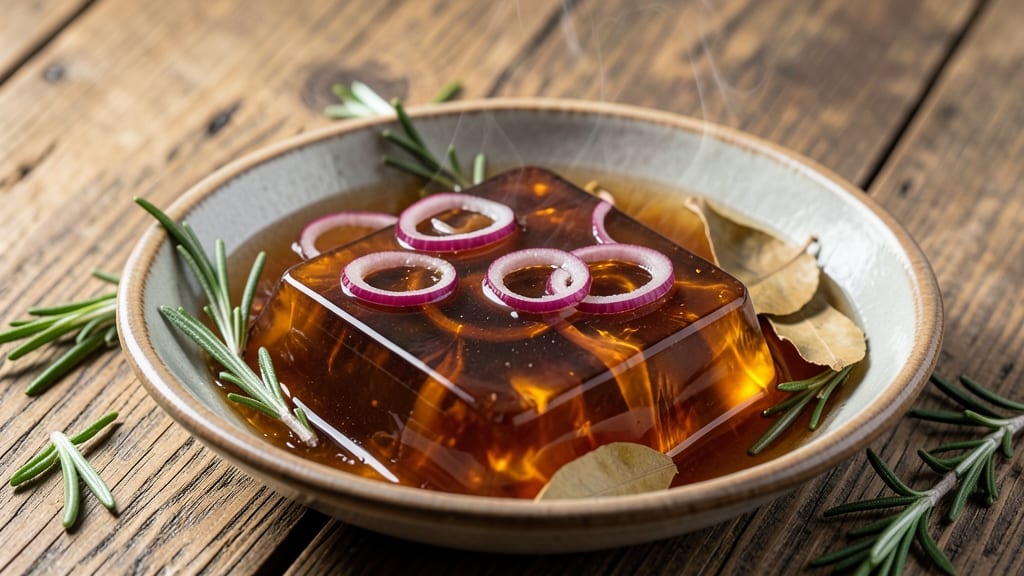
This pork jelly recipe transforms humble pork bones into a silky, golden dessert that's equal parts elegant and comforting. The process begins with simmering pork bones until the collagen dissolves into a rich, flavorful broth—something my Nonna used to do when she wanted to impress guests.
What starts as a simple simmer becomes a luxurious, wobbling masterpiece when chilled, perfect for slicing into delicate sheets that melt on the tongue.
The real magic happens in the chilling phase, where patience pays off with a texture that's neither too firm nor too runny.
I've learned through trial and error that 24 hours in the fridge yields the perfect balance—firm enough to slice cleanly but still tender enough to dissolve into velvety perfection. This isn't just dessert; it's a showstopper that elevates any meal, from holiday feasts to simple weeknight dinners.
What makes this recipe special is its versatility—use it as a glaze for roasted meats, a dipping sauce for fresh fruit, or serve it chilled with a sprinkle of herbs and cracked pepper for an elegant appetizer.
The process might seem intimidating at first, but once you master the simmer and strain, you'll have a skill that makes you the star of any gathering. Let's get started on creating this silky, golden masterpiece.
For those watching their gelatin intake, I'll share my vegetarian adaptation using agar-agar later—it's not the same, but it's a worthy substitute that still delivers that satisfying wobble.
The key is in the technique, not just the ingredients, and once you experience the difference between store-bought and homemade, you'll never go back. This is the kind of recipe that transforms simple ingredients into something extraordinary.
Ingredients for pork jelly
Four simple ingredients transform humble pork bones into golden, wobbling magic for any table.
| Ingredient | Amount | Notes |
|---|---|---|
| Pork Bones 🦴 | 2 lb | Knuckle or marrow bones preferred |
| Cold Water 💧 | 8 cups | Enough to cover bones completely |
| White Wine Vinegar 🍷 | ½ cup | For tenderizing bones (optional) |
| Fresh Rosemary 🌿 | 2 sprigs | For aromatic depth |
| Fresh Thyme 🌿 | 1 sprig | Or 1 tsp dried thyme |
| Bay Leaves 🍃 | 2 whole | Standard dried leaves |
| Salt 🧂 | 1 tsp | Kosher or sea salt |
| Black Peppercorns 🌶️ | 10 whole | Lightly crushed |
| Granulated Sugar 🍚 | ¼ cup | Balances richness |
| Unsalted Butter 🧈 | 4 tbsp | For finishing richness |
| Fresh Cracked Black Pepper 🌶️ | 1 tsp | For garnish (optional) |
| Fresh Parsley 🌿 | ¼ cup | Chopped for garnish |
The bones are everything here. Knuckle or marrow bones give the richest flavor and most collagen, but any pork bone works in a pinch. I always grab mine from Costco when I'm making a big batch, but the butcher section at Whole Foods has great options too. Look for bones with good marbling—they'll render more flavor. If you're using smaller bones, you might need to double the amount. The vinegar is optional but helps tenderize the bones faster, cutting the simmer time by about 30 minutes. Don't skip the herbs though—they infuse that aromatic depth that makes homemade jelly taste like nothing store-bought can match.
No wine vinegar? Apple cider vinegar or lemon juice works just fine, though the flavor will be slightly different. Fresh herbs are ideal, but dried thyme at one-third the amount gets you close if that's all you've got. The sugar is key—it balances the richness of the pork and helps with the gelling process. If you're watching sugar, you can reduce it to 2 tablespoons, but the texture might be slightly less stable. For the butter, European-style unsalted melts beautifully and adds richness without overpowering. If you're making this vegetarian, swap the pork bones for agar-agar powder (about 2 tbsp) and use vegetable stock instead of water.
This isn't a recipe you'll eat immediately—patience is everything. Once you've strained the jelly, pour it into a shallow dish or loaf pan. Let it cool completely at room temperature, then refrigerate for 24 hours for that perfect wobble. It'll keep in the fridge for up to 2 weeks, though I usually use it up faster than that. For serving, I like to chill it a bit longer until it's firm enough to slice into delicate sheets. Store it in an airtight container with a thin layer of water on top to keep it moist. The jelly reheats beautifully—just warm it gently in a saucepan or microwave until it's pourable again.
Why You'll Love This Recipe
- Just Four Ingredients: Honestly, the pantry already has most of what you need—pork bones, vinegar, and herbs I grow in pots on my windowsill. No specialty shopping, no confusing ingredient lists. That’s it. The bones do all the heavy lifting while you sip tea and pretend you’re not cooking.
- Umami Bomb: Between us, that slow-simmered vinegar and rosemary turns tough pork bones into something ridiculously flavorful—think rich, jelly-like perfection with a bright herbal kick. It’s the kind of taste that makes you pause mid-bite, like discovering a secret family recipe.
- Weeknight Magic: I keep a jar in my fridge for lazy nights—slice it onto grilled cheese, toss it with noodles, or just eat it straight with crackers. No last-minute grocery runs, no fancy plating. Just pure, effortless satisfaction when you’re too tired to think.
- Budget Stretch: Pork bones are cheap, and this recipe makes enough to feed a crowd (or my family for a week). The leftovers? Even better the second day. I’ll be real—it’s my go-to for stretching meals without sacrificing flavor, and my wallet thanks me.
Step-by-step instructions for silky pork jelly
Here's how to make a rich, silky pork jelly that transforms ordinary dishes into something extraordinary.
Prepare and Simmer the Pork Bones
Place the 2 lb pork bones in a large stockpot and add the 8 cups cold water. Bring to a boil over medium-high heat, then reduce to a gentle simmer. Skim off any foam that rises to the surface during the first 10 minutes—this ensures a clear, clean jelly.
Add the 0.5 cup white wine vinegar, 2 sprigs fresh rosemary, 1 sprig fresh thyme, 2 whole bay leaves, 1 tsp salt, and 10 whole black peppercorns. Simmer uncovered for 3 hours, maintaining a gentle bubble. The bones should release their collagen and marrow, creating a deeply flavorful base. If the liquid reduces too much, add a little hot water to keep the bones submerged.
Strain and Sweeten the Broth
After simmering, carefully strain the broth through a fine-mesh sieve or cheesecloth into a clean pot, pressing gently on the solids to extract all the flavor. Discard the bones and aromatics. Return the strained broth to the pot and stir in the 0.25 cup granulated sugar. Bring to a boil over medium heat, then reduce to a simmer for 10 minutes to blend the flavors.
Taste the broth and adjust the seasoning if needed—you want a balanced, rich flavor without being overly salty or sweet. The sugar helps stabilize the jelly later, so don't skip this step. Once seasoned, remove the pot from heat and let it cool slightly to room temperature.
Strain and Set the Jelly
Line a shallow baking dish or jelly mold with cheesecloth or a clean kitchen towel. Strain the cooled broth through the cheesecloth into the lined dish, pressing gently to remove any remaining impurities. This step is crucial for achieving a crystal-clear jelly. Let the broth cool completely to room temperature, then refrigerate for 4-6 hours or until fully set.
Once set, the jelly should have a firm, wobbly texture—like a cross between Jell-O and aspics. If it doesn't set properly, it might need more sugar or a longer chilling time. For a richer finish, melt the 4 tbsp unsalted butter in a small saucepan and whisk it into the warm broth before straining. This adds a luxurious depth of flavor and a silky mouthfeel.
Serve and Garnish
To serve, invert the jelly onto a plate or cutting board and carefully peel away the cheesecloth. Slice into squares or diamonds with a sharp knife. Garnish with the 1 tsp fresh cracked black pepper and 0.25 cup chopped fresh parsley for a pop of color and freshness.
This silky pork jelly is perfect for glazing roasted meats, drizzling over fresh bread, or serving as an elegant appetizer with crusty crackers. Store any leftovers in the refrigerator for up to 1 week or freeze for up to 3 months. The flavor only gets better as it sits, so make extra if you can!
Pro Tips For Making Pork Jelly
- Char Bones First: Roast the pork bones uncovered at 450°F (230°C) for 20 minutes before simmering—this caramelizes the bone marrow and deepens the flavor. I used to skip this, and the broth always tasted flat until I realized how much difference a quick sear makes.
- Vinegar in Stages: Add the white wine vinegar after the bones have simmered for 30 minutes, not at the start. Too early, and it’ll make the broth taste harsh; too late, and the acid won’t cut through the richness enough. Split it into two additions—half now, half at the end—for balance.
- Strain Twice, Slowly: After simmering, strain the broth through a fine-mesh sieve and a cheesecloth-lined colander. The first catch removes bone fragments; the second traps the last of the gelatinous bits that make jelly set properly. Rushing this step means gummy, cloudy results—trust me, I’ve made that mistake.
- Chill in Shallow Trays: Pour the finished jelly into wide, shallow containers (like baking sheets) and refrigerate uncovered for 2 hours before slicing. This creates a clean, firm cut instead of a wobbly mess. I learned this when my first batch turned into a gelatinous puddle—now I plan ahead.
Troubleshooting perfect results
Jelly Too Soft?
If your pork jelly turns out too soft or doesn't set properly, the issue is usually sugar content or chilling time. First, try adding an extra 1-2 tablespoons of sugar to the broth before straining—the sugar helps stabilize the collagen.
I've found that 24 hours of chilling in the fridge gives the best texture, but if you're short on time, try freezing the jelly for 4-6 hours instead. For extra firmness, add 1 teaspoon of unflavored gelatin powder (like Great Lakes Gelatin) to the warm broth before straining. 💡
Cloudy or Opaque?
A cloudy jelly usually means impurities weren't removed properly. Double-check your straining step—use double-layered cheesecloth or a fine-mesh sieve for the final strain. For an extra-clear result, I like to pre-strain the broth through a coffee filter after the initial cheesecloth strain.
If you're using marrow bones, they can sometimes leave a slight cloudiness—just accept it as part of the rustic charm! For a truly crystal-clear jelly, consider using knuckle bones only.
Bitter or Off Flavors?
Bitter flavors often come from over-simmering or vinegar imbalance. If your jelly tastes bitter, reduce the simmer time to 2.5 hours next time and taste the broth before straining. For a milder flavor, cut the vinegar to ¼ cup or omit it entirely.
If the bitterness persists, try adding a pinch of baking soda to the broth during the final simmer—it neutralizes acidity without altering the texture. 🌿
Grainy Texture?
A grainy texture usually means collagen didn't fully dissolve. Make sure your bones simmer uncovered for the full 3 hours—this helps release more collagen. If you're in a hurry, try blending the strained broth in a food processor for 30 seconds before straining again.
For a smoother finish, I also recommend skimming the broth more aggressively during the first 15 minutes of simmering to remove any impurities that could contribute to graininess.
Shrinking or Cracking?
If your jelly shrinks or cracks during chilling, it likely didn't cool slowly enough. Let the broth cool to room temperature before refrigerating—this gradual cooling prevents stress on the gelatin. For a larger surface area (which helps prevent cracking), use a shallow dish instead of a deep one.
If cracks still form, try reheating the jelly gently until it melts, then pour it into a silicone jelly mold for a cleaner finish. 🔥
Vegetarian Version Issues?
If you're using agar-agar for a vegetarian version, the texture can be trickier. Agar sets at a higher temperature than gelatin, so let your broth cool to room temperature before adding 2 tablespoons of agar-agar dissolved in ¼ cup hot water.
Simmer the mixture for 5 minutes, then strain as usual. The chilling time might need to be longer (6-8 hours) for a firm set. For a smoother texture, blend the agar mixture into the broth before straining. 🌱
Nutrition facts
Frequently asked questions
Can I use chicken or beef bones instead of pork?
While you can technically use other bones, pork is ideal for its perfect balance of collagen and flavor. Chicken bones yield a lighter, less rich jelly that sets more quickly, while beef bones create a denser, firmer texture. If substituting, reduce simmer time to 2 hours for chicken or increase to 4 hours for beef, adjusting sugar to taste.
How do I know when the collagen is fully extracted?
The broth should be golden and slightly cloudy with a rich, meaty aroma. Test by chilling a small spoonful—if it jiggles like jelly when moved, the collagen is ready. If it's still runny, simmer uncovered for another 30 minutes. Never rush this step, as proper collagen extraction is key to that signature wobble.
What's the best way to slice chilled pork jelly?
First, dip your knife in hot water and wipe dry to prevent sticking. Chill the jelly for 1 extra hour if needed, then slice with gentle pressure at a 45-degree angle for elegant diamond shapes. For clean edges, use a sharp chef's knife and work quickly to maintain the jelly's integrity.
Can I make this in a slow cooker?
Yes! Transfer all ingredients to a 6-quart slow cooker and cook on low for 8-10 hours, skimming foam periodically. The low-and-slow method enhances flavor extraction but requires more hands-off time. For best results, finish with 10 minutes on the stovetop to reduce any excess liquid.
How can I use up extra pork jelly?
This versatile treat works as a glaze for roasted meats, a dipping sauce for fruit, or a luxurious spread on toast. Store in an airtight container with a thin water layer to prevent drying. For creative uses, try folding it into mashed potatoes or using it as a binder in meatballs. The possibilities are endless!