
Main Courses
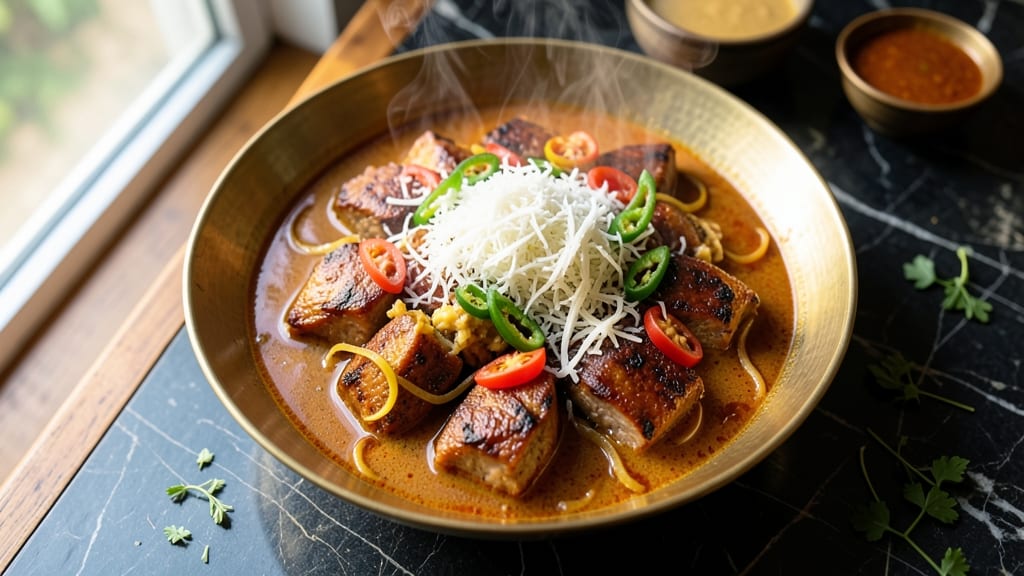
Kerala-style pork curry transforms simple ingredients into a bold, aromatic dish that balances coconut sweetness with tamarind's tangy punch. 🌟 I first tasted this curry in a tiny Kerala restaurant where the chef insisted the secret lies in slow-cooked pork and perfectly tempered spices—no shortcuts, just layers of flavor built over time.
The recipe begins with tender pork simmered until fall-apart, then combined with a rich coconut-tamarind gravy that thickens beautifully. Traditional techniques like dry-roasting whole spices and tempering with mustard seeds elevate this curry beyond ordinary flavors, creating depth that lingers.
The spiced potatoes add texture while soaking up the fragrant sauce.
What makes this curry special is its authentic balance—sweet, sour, spicy, and creamy all in one bite. The coconut milk creates a velvety base, while tamarind adds the signature tang that defines Kerala cuisine. Serve with steamed rice or crispy appam for the full experience.
This dish delivers restaurant-quality results at home with careful technique and patience. The aroma alone will transport you to Kerala's back alleys, where this curry is a staple. Let's bring that authentic taste to your kitchen.
Ingredients for pork curry recipe kerala style
Authentic Kerala flavors begin with these carefully selected ingredients, each playing a vital role in creating depth and balance.
| Ingredient | Amount | Notes |
|---|---|---|
| Pork Shoulder 🥩 | 1 ½ lb | Bone-in, cut into 1.5-inch cubes |
| Fresh Coconut Milk 🥥 | 1 can | Full-fat, 13.5 oz can |
| Tamarind Paste 🍯 | ¼ cup | Unadulterated, unsweetened |
| Fresh Ginger 🧄 | ½ cup | Finely grated, organic preferred |
| Garlic Cloves 🧄 | 8 cloves | Peeled, roughly chopped |
| Green Chilies 🌶️ | 4 whole | Slit lengthwise, seeds removed |
| Russet Potatoes 🥔 | 2 lb | Peeled, cut into 1.5-inch cubes |
| Mustard Seeds 🌿 | 1 tbsp | Whole, dark variety preferred |
| Curry Leaves 🌿 | ¼ cup | Fresh, whole leaves |
| Turmeric Powder 🌶️ | 1 tsp | Freshly ground preferred |
| Ground Cumin 🌿 | 1 tbsp | Toasted for deeper flavor |
| Ground Coriander 🌿 | 1 tbsp | Freshly ground preferred |
| Salt 🧂 | 1 ½ tsp | Diamond Crystal kosher salt |
| Coconut Oil 🫒 | 2 tbsp | For tempering spices |
| Lemon Juice 🍋 | 2 tbsp | Freshly squeezed |
The pork shoulder is non-negotiable for authentic texture—bone-in pieces stay moist and develop rich flavor during slow cooking. Local butchers often carry this cut, or opt for pre-cut pork shoulder at Whole Foods or Trader Joe's. For tamarind paste, Indian grocery stores carry the best quality, unsweetened versions. Fresh ginger and garlic should be vibrant—avoid any with soft spots or sprouting cloves. The curry leaves are the heart of this dish; Penzeys Spices sells them in bulk if local markets don't carry them. Mustard seeds should be dark brown, not yellow, for maximum flavor impact.
No tamarind paste? Lime juice plus 1 tsp sugar mimics the tang, though it won't be identical. Substitute green chilies with jalapeños at half the quantity for milder heat. For the potatoes, Yukon Golds work beautifully if you prefer creamier texture. The coconut milk must be full-fat—light versions won't create the same velvety sauce. If you can't find fresh curry leaves, dried leaves at one-third the amount will work in a pinch, though fresh is ideal. For the spices, toast cumin and coriander seeds in a dry pan before grinding for an intense aroma that elevates the entire dish.
Pork cubes should be marinated with half the spices and ginger for at least 30 minutes before cooking to maximize flavor absorption. Store tamarind paste in the fridge once opened—it keeps for up to 6 months. Fresh curry leaves can be frozen in oil for 3 months to preserve their potency. The finished curry reheats beautifully; simply add 1-2 tbsp water per serving to restore its velvety texture. Portion into containers with a layer of coconut milk on top to maintain moisture during storage. This curry freezes exceptionally well for up to 3 months, with flavors actually intensifying over time.
Why You'll Love This Recipe
- One-Pot Magic: I swear by this recipe when I’m too tired to wash pots—just brown the pork, toss in the ginger-garlic paste, and let the coconut milk do the heavy lifting. The tamarind adds that tangy depth without extra bowls or straining.
- Tangy-Creamy Balance: That first bite? The crispy pork shoulder melts into a sauce that’s rich from coconut milk but brightened by tamarind—like a hug for your taste buds. Honestly, the garlic and ginger sear into the meat, making every spoonful sing.
- Weeknight to Party: It’s my go-to when friends drop by unannounced (yes, even on a Tuesday night). Serve it with steamed rice and appams, or pack leftovers for lunch—same great flavor, zero stress.
- Leftovers That Shine: Between us, this curry only gets better the next day. The flavors meld even deeper, and reheating it? Just a splash of water and a quick stir. Budget-friendly, too—pork shoulder stretches far, and coconut milk makes it feel special without breaking the bank.
Step-by-step instructions for Kerala-style pork curry
Master this authentic Kerala dish with its signature tamarind-coconut tang and tender pork-potato combination.
🍳 Step 1: Temper the Spices for Maximum Flavor
Heat the 2 tablespoons coconut oil in a heavy-bottomed pot over medium heat until shimmering. Add the 1 tablespoon mustard seeds and let them sizzle for 30 seconds until they pop audibly. This is your signal to add the 0.25 cup curry leaves, which should sizzle and darken slightly.
Immediately add the 0.5 cup finely grated ginger and 8 cloves roughly chopped garlic, stirring constantly for 1-2 minutes until the raw aroma gives way to a fragrant, golden paste. This aromatic base forms the flavor foundation of the curry. Watch the heat carefully—ginger burns quickly, and you want it to caramelize rather than darken.
🔥 Step 2: Cook the Pork Until Tender
Add the 1.5 lb bone-in pork shoulder cubes to the pot, stirring to coat evenly in the spice oil. Sprinkle with 1 teaspoon turmeric powder, 1 tablespoon ground cumin, 1 tablespoon ground coriander, and 1 teaspoon salt. Stir well to distribute the spices evenly over the pork.
Pour in 1 cup water and bring to a simmer. Cover partially and cook on low heat for 45-50 minutes, stirring occasionally, until the pork is fork-tender. The liquid should reduce significantly but not disappear completely. You're aiming for pork that pulls apart easily but still holds its shape. If the pork starts to stick, add 2-3 tablespoons water to maintain moisture.
🥘 Step 3: Build the Tangy Coconut-Tamarind Base
While the pork cooks, open the 1 can fresh coconut milk and pour it into a separate bowl. Add the 0.25 cup tamarind paste and whisk vigorously until completely dissolved. The mixture should become smooth with a deep amber color—this is your signature Kerala tang.
After the pork has cooked for 45 minutes, pour the coconut-tamarind mixture into the pot with the pork. Stir gently to combine, then add the 4 slit green chilies and 2 tablespoons lemon juice. Simmer uncovered on medium-low heat for 15-20 minutes, stirring occasionally, until the sauce thickens slightly and coats the back of a spoon. The aroma should be rich and complex—coconut, tamarind, and spice working together.
🍳 Step 4: Add Potatoes and Finish Cooking
Gently add the 2 lb peeled and cubed russet potatoes to the pot, spreading them evenly over the pork. The potatoes should be submerged in the sauce but not swimming in excess liquid. Simmer uncovered on medium heat for 15-18 minutes, stirring occasionally, until the potatoes are tender with slightly crisp edges and the pork is fully cooked through.
Taste and adjust seasoning with additional salt if needed. The curry should balance sweet potatoes, tangy tamarind, rich coconut, and spicy heat. If the sauce is too thick, add 2-3 tablespoons water to reach your desired consistency. Remove from heat and let it sit covered for 5 minutes to allow flavors to meld completely.
Pro Tips For Making Pork Curry Recipe Kerala Style
- Brown the Pork: Don’t skip this step—searing the pork shoulder in small batches over medium-high heat until deep golden (about 5-7 minutes per side) builds flavor that won’t dissolve in the coconut milk. I used to rush it, and the curry always tasted flat until I learned this.
- Grate the Ginger Fine: Use a box grater or microplane for ginger—no food processor here. The finer the texture, the smoother the curry becomes as it cooks, and it blends better with the tamarind and garlic. I tried chopping once; the result was chewy bits that ruined the silkiness.
- Simmer, Don’t Boil: Once the coconut milk hits the pot, drop the heat to low and let it bubble gently. Boiling splits the milk, turning your creamy curry into a greasy mess. I’ve had to start over twice because I ignored this—just keep the temperature steady.
- Toast the Tamarind: Warm the tamarind paste in a dry pan for 30 seconds before adding it to the spices. This deepens its tang and prevents it from clumping in the oil. I was skeptical until I tried it—now it’s non-negotiable for that bright, balanced sourness.
Make-ahead tips for leftovers
Prep Ahead Strategy
Start by marinating the pork cubes with half the spices and ginger for up to 24 hours in the fridge. I wrap mine in plastic wrap and place it in a shallow dish to maximize surface area.
This deepens the flavor significantly—like letting the spices work their magic overnight. Store the marinade in an airtight container with a lid slightly ajar for ventilation. 🌱
Sauce Prep Shortcut
Make the coconut-tamarind base a day ahead and store it in an airtight container. The flavors develop beautifully, and the tamarind softens further, creating a smoother sauce. I keep mine in the fridge for up to 3 days—just reheat gently before using.
This is especially helpful if you're cooking for a crowd and want to focus on the main event on the day itself.
Potato Prep Efficiency
Peel and cube the potatoes the night before and store them in cold water in the fridge. This prevents browning and keeps them crisp. Drain them right before adding to the curry to avoid diluting the sauce.
I use a quart-sized container with a lid for this, and the potatoes stay fresh for 24 hours this way. This simple step saves 15 minutes of prep on cooking day.
Freezer-Friendly Components
Both the pork marinade and the finished curry freeze exceptionally well. Portion the marinade into ziplock bags with 1-inch headspace—it keeps for 3 months. For the complete curry, let it cool completely, then transfer to airtight containers with ½ inch coconut milk on top to preserve moisture.
Thaw overnight in the fridge before reheating. The flavors actually intensify after freezing! ❄️
Reheating Like a Pro
For the best texture, reheat the curry on the stovetop over low heat with a splash of water or coconut milk. I add 2 tablespoons per serving and stir gently until heated through.
Microwaving works in a pinch (covered for 2-3 minutes on 50% power), but stovetop reheating preserves the sauce's velvety consistency. Always taste and adjust salt after reheating—the flavors concentrate during storage.
Make-Ahead Serving Plan
If serving with rice or appam, prepare those components separately and reheat just before serving. I like to steam the rice ahead and keep it covered at room temperature—it reheats beautifully in a pot with 1 tablespoon coconut milk.
For appam, they freeze well too—just reheat in a dry skillet for 1-2 minutes per side. This keeps everything hot and fresh when guests arrive. 🍛
Nutrition facts
Frequently asked questions
What makes Kerala-style pork curry different from other Indian pork dishes?
Kerala-style pork curry stands out with its signature coconut-tamarind balance—unlike North Indian dishes that use yogurt or cream, this version relies on rich coconut milk for creaminess and tangy tamarind for that signature sour kick. The spices are also lighter, focusing on mustard seeds, curry leaves, and ginger rather than heavy garam masala blends. Plus, the potatoes are cooked right in the sauce, creating a hearty one-pot meal.
Can I substitute bone-in pork with boneless for this recipe?
You can use boneless pork, but expect slightly faster cooking (30-35 minutes instead of 45-50 minutes). Bone-in pork stays juicier and develops deeper flavor from the marrow. If using boneless, add 1 extra tablespoon coconut milk to compensate for moisture loss. For best results, cut boneless pork into 1-inch cubes—smaller pieces cook faster and absorb more spice.
How do I adjust the spice level for kids or sensitive eaters?
Remove the seeds and membranes from green chilies before adding them, then reduce the quantity to 2 whole chilies (or omit entirely). For extra mildness, skip the mustard seeds and use ½ teaspoon ground cumin instead. Always taste the final curry before serving—you can balance heat with more coconut milk or a splash of lemon juice. The tamarind provides natural tang without added spice.
What's the best way to store leftovers and reheat for maximum flavor?
Store leftovers in airtight containers with a layer of coconut milk on top to preserve moisture. They keep in the fridge for 4-5 days or freeze for 3 months. To reheat, warm gently on low heat with 1-2 tablespoons water or coconut milk per serving. Never microwave directly—it makes the sauce grainy. Always taste and adjust salt after reheating, as flavors concentrate during storage.
Can I make this curry without tamarind paste?
Yes! Mix 2 tablespoons lime juice with 1 teaspoon sugar to mimic tamarind's tang. For deeper flavor, add ½ teaspoon vinegar (apple cider works best). The sauce will taste slightly different but still delicious. If you can't find tamarind paste, some Indian grocery stores sell tamarind pulp—soak it in warm water for 10 minutes, strain, and use the liquid in place of paste.