
Main Courses
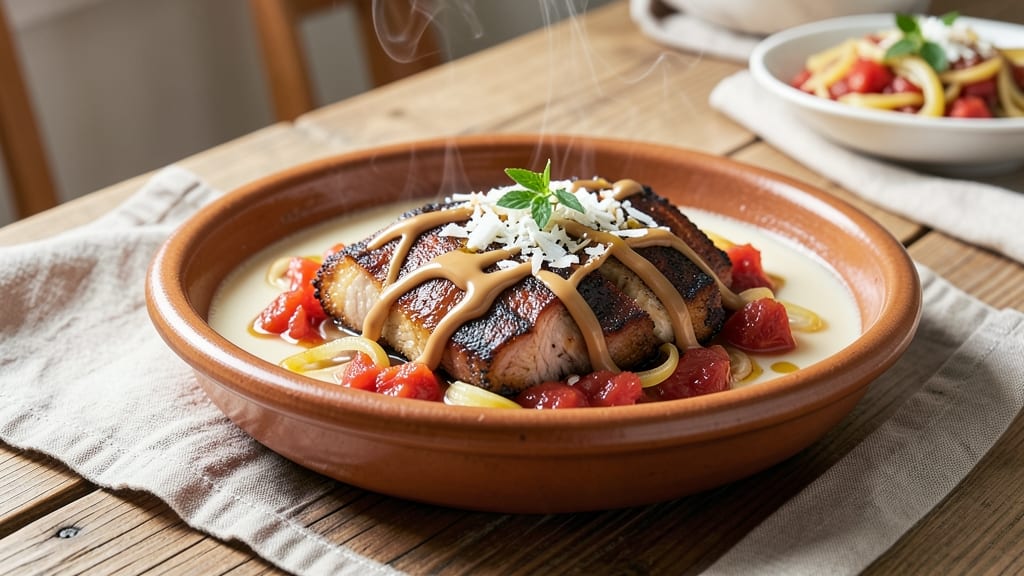
This pork caldereta recipe with peanut butter transforms a classic Filipino stew into a rich, caramelized masterpiece—where creamy peanut depth meets tender pork in one aromatic pot. 🌟 The secret lies in blending peanut butter with coconut milk and tomatoes, creating a sauce that's both velvety and complex, with just enough sweetness to balance the savory pork.
I've perfected this version to deliver deep, layered flavors without overpowering the dish's traditional roots.
The recipe begins with searing pork belly or ribs to develop a deep, caramelized crust, then simmers everything together for 1.5 to 2 hours at 325°F (163°C). This slow cooking transforms tough cuts into melt-in-your-mouth tenderness while allowing the peanut-caramel sauce to thicken into a luxurious consistency.
Traditional ingredients like potatoes and carrots round out the dish, absorbing the rich flavors without stealing the spotlight.
What makes this version stand out is the peanut butter—it adds a subtle sweetness and creamy mouthfeel that complements the pork's savory notes. The sauce finishes with a touch of soy sauce and black pepper for balance, creating a dish that's comforting yet sophisticated.
Serve it over steamed rice or with crusty bread to soak up every last drop of that velvety sauce.
This recipe is perfect for weeknight dinners when you crave something hearty yet elegant, or for special occasions when you want to impress with a dish that feels both familiar and unexpected. The best part? It all comes together in one pot, making cleanup effortless. Let's get cooking!
Ingredients for pork caldereta recipe with peanut butter
Pantry staples meet bold flavors in this rich, caramelized pork stew with peanut depth.
| Ingredient | Amount | Notes |
|---|---|---|
| Pork Belly or Pork Ribs 🥩 | 2 lb | Cut into 1.5-inch cubes, skin-on |
| Unsalted Butter 🧈 | 4 tbsp | For searing pork |
| Natural Peanut Butter 🥜 | ½ cup | Creamy, unsweetened |
| Coconut Milk 🥥 | 1 can (13.5 oz) | Full-fat for richness |
| Crushed Tomatoes 🍅 | 1 can (14.5 oz) | San Marzano preferred |
| Yellow Onion 🧅 | 1 whole | Diced, medium size |
| Garlic Cloves 🧄 | 6 cloves | Minced, fresh preferred |
| Russet Potatoes 🥔 | 2 medium | Peeled, cut into chunks |
| Carrots 🥕 | 3 medium | Peeled, sliced into rounds |
| Soy Sauce 🍶 | 2 tbsp | Light or regular |
| Black Peppercorns 🌶️ | 1 tsp | Freshly ground |
| Salt 🧂 | 1 ½ tsp | Diamond Crystal preferred |
| Bay Leaves 🍃 | 2 whole | Fresh if available |
| Olive Oil 🫒 | 2 tbsp | For deglazing |
The pork cut matters—pork belly delivers unmatched richness, while ribs stay tender without falling apart. Look for well-marbled cuts at Whole Foods or your local butcher shop, where they'll often cut it for you. If using ribs, baby back ribs are ideal—they're leaner and cook faster. For the peanut butter, natural, unsweetened is non-negotiable; brands like Smucker's Natural or Skippy Natural work perfectly. The coconut milk should be full-fat—Thai Kitchen or Goya cans are my go-tos for their creamy consistency. San Marzano crushed tomatoes elevate the sauce with their sweet, rich flavor—avoid the watery brands at all costs.
No pork belly? Pork shoulder works in a pinch, but expect slightly less fat. Substituting coconut milk? Heavy cream or half-and-half adds richness, though the texture won't be identical. Running low on soy sauce? Tamari or coconut aminos are great alternatives, though the flavor profile shifts slightly. The carrots and potatoes can be swapped for sweet potatoes or butternut squash for a seasonal twist. For a deeper caramelized crust on the pork, pat it dry with paper towels before searing—this ensures maximum browning. Fresh bay leaves add complexity, but dried will work at half the quantity if that's all you have.
This dish tastes even better the next day as flavors meld—plan ahead. Store leftovers in an airtight container in the fridge for up to 5 days, or freeze for 3 months in portions. The sauce thickens as it cools, so add a splash of water or coconut milk when reheating if it seems too stiff. For meal prep, double the recipe and freeze half—thaw overnight in the fridge for even cooking. The potatoes and carrots absorb the sauce beautifully, so add them later if you prefer them firmer.
Why You'll Love This Recipe
- One-Pot Magic: I swear by this—just toss the pork, tomatoes, and peanut butter in one pot, then let it simmer. No chopping, no fuss, and honestly? The peanut butter does half the work for you.
- Rich, Unforgettable Taste: That combo of crispy pork belly, creamy peanut butter, and tangy tomatoes? It’s like a hug in a bowl. The coconut milk makes it velvety, but the peanut butter adds this deep, nutty warmth that sticks with you.
- Weeknight Hero: Between us, this feeds a crowd but still feels like a cozy meal. Double the batch, store half for later, and boom—you’ve got dinner covered for days. My kids even ask for it on Tuesdays (yes, even on Tuesdays).
- Budget-Friendly Luxury: Pork ribs or belly stretch further than you’d think, and peanut butter? It’s a pantry staple that turns this into a cheap but ridiculously satisfying dish. Leftovers taste just as good reheated—proof it’s worth making extra.
Step-by-step instructions for pork caldereta with peanut butter
This fusion dish combines traditional Filipino techniques with rich peanut depth—here's how to master it.
🔥 Step 1: Sear the Pork for Maximum Flavor
Heat a large Dutch oven over medium-high heat until hot. Add 2 tablespoons olive oil and swirl to coat the bottom. Working in batches to avoid crowding, add the 2 lb pork belly or pork ribs cut into 1.5-inch cubes with skin-on. Press down gently with a spatula for 1 minute—this prevents curling and ensures even contact with the pan.
Cook undisturbed for 3-4 minutes per side until the pork develops a deep golden-brown crust. The skin should blister slightly, and the meat should release easily from the pan. Remove the pork and set aside, leaving the rendered fat in the pot. Here's the thing—this fat is liquid gold for building the sauce's rich foundation.
🍳 Step 2: Build the Aromatic Base
Reduce heat to medium and add 4 tablespoons unsalted butter to the Dutch oven. Let it melt completely, then add the diced yellow onion and cook for 5-6 minutes until softened and translucent. Add the 6 cloves minced garlic and cook for 30 seconds until fragrant—don't let it brown or it'll turn bitter.
Sprinkle in 1.5 teaspoons salt and 1 teaspoon freshly ground black peppercorns, stirring to combine. Add the 2 whole bay leaves and pour in 2 tablespoons soy sauce. Let this mixture simmer for 2 minutes to meld the flavors together. This aromatic base forms the flavor backbone of your caldereta.
🥘 Step 3: Develop the Peanut-Caramel Sauce
Pour in the 1 can (14.5 oz) crushed tomatoes and stir to deglaze the pan, scraping up any browned bits from the bottom. Add the 0.5 cup natural peanut butter and stir vigorously until completely dissolved and smooth. The peanut butter will initially look like it's not mixing, but keep stirring—it'll emulsify into a rich, velvety sauce.
Add the 1 can (13.5 oz) full-fat coconut milk and stir again. Bring the mixture to a gentle simmer over medium-low heat, then reduce heat to low and let it cook uncovered for 10 minutes. This slow reduction allows the peanut butter to develop its signature caramel depth without curdling. Watch for any skin forming on the sauce—break it up with a wooden spoon.
🍳 Step 4: Cook the Vegetables and Reintegrate Pork
Add the 2 medium russet potatoes cut into chunks and 3 medium carrots sliced into rounds to the sauce. Stir gently to coat the vegetables in the peanut-coconut mixture. Return the seared pork to the pot, spooning some of the sauce over the top to help it reabsorb the flavors. Bring everything to a gentle simmer.
Cover the Dutch oven and let it cook for 30-40 minutes over low heat, stirring occasionally. The potatoes should be tender enough to pierce with a fork, and the carrots should be soft but still hold their shape. The sauce should thicken slightly, coating all the ingredients in its rich peanut-caramel embrace. Here's where it gets fun—taste and adjust seasoning if needed, adding a pinch more salt or a splash of soy sauce if desired.
⏰ Step 5: Finish and Rest for Perfect Texture
Once the vegetables are tender and the pork is fork-tender (it should pull apart easily), remove the 2 whole bay leaves from the pot. Transfer the entire contents to a serving dish and let it rest for 5-10 minutes before serving. This resting period allows the flavors to fully meld and the sauce to thicken slightly as it comes to room temperature.
Serve the caldereta hot, ladling the rich peanut-coconut sauce over the tender pork and vegetables. The dish should balance sweet, savory, and umami notes perfectly, with the peanut butter adding a luxurious depth that transforms this into something truly special. The skin on the pork should be crispy, the meat tender, and the sauce cling to every bite like a velvety blanket.
Pro Tips For Making Pork Caldereta Recipe With Peanut Butter
- CRISP THE BELLY FIRST: Pork belly needs a head start—sear it skin-side down in a cold pan until the fat renders and the skin turns golden, about 8-10 minutes. I learned this the hard way: skipping this step means you’ll end up with a soggy, flavorless slab instead of the crispy, caramelized base your peanut butter sauce needs to cling to.
- STIR IN PEANUT BUTTER LAST: Add the peanut butter when the sauce is already simmering, not boiling—otherwise, it’ll seize up and turn grainy. Whisk it in slowly, a spoonful at a time, until fully emulsified. My grandmother swore by this, and she was right: rushing it ruins the creamy texture.
- SIMMER, DON’T BOIL, THE COCONUT MILK: Coconut milk curdles fast when it hits high heat, so keep the sauce at a gentle simmer (tiny bubbles, occasional swirls) once you add it. After burning three batches, I finally figured out: low and slow is the only way to keep that rich, velvety consistency.
- SALT THE PEANUT BUTTER: Natural peanut butter is unsalted—toss it with a pinch of salt and a splash of warm water to thin it before adding to the sauce. This isn’t the prettiest method, but it’s the tastiest: it blends smoother and balances the coconut’s sweetness without overpowering the pork.
Best sauces and condiments for this pork caldereta recipe with peanut butter
Peanut-Coconut Sauce
The star of this dish is the peanut-coconut sauce, where ½ cup natural peanut butter blends seamlessly with 1 can full-fat coconut milk and 1 can crushed tomatoes. Start by whisking the peanut butter into the tomatoes first—this prevents clumping and creates a smooth base.
The coconut milk adds richness while balancing the peanut's intensity. For extra depth, I stir in 1 tablespoon soy sauce and simmer for 10 minutes—this caramelizes the peanut oils, giving the sauce its signature velvety texture. 🥥
Spicy Chili Oil
To add heat and complexity, drizzle 1 tablespoon chili oil (like La Choy or homemade) over the finished dish. The oil's smoky spice cuts through the peanut's sweetness while enhancing the pork's savory notes.
For a homemade version, blend ½ cup neutral oil with 2 tablespoons red pepper flakes and 1 teaspoon Sichuan peppercorns—let it infuse for 15 minutes before straining. Add it tablespoon by tablespoon to taste.
Lime and Cilantro
Brighten the dish with 2 tablespoons fresh lime juice and ¼ cup chopped cilantro, added just before serving. The lime's acidity cuts through the richness, while the cilantro adds a fresh, herbaceous note that contrasts beautifully with the peanut sauce.
I also sprinkle ½ teaspoon ground white pepper for a subtle, aromatic finish that elevates the dish without overpowering it. ✨
Garlic-Coconut Broth
For a lighter variation, replace half the coconut milk with a garlic-coconut broth—simmer 1 quart chicken or vegetable broth with 3 minced garlic cloves and 1 can coconut milk for 10 minutes.
This adds depth without heaviness, making the dish feel lighter yet still rich. It pairs especially well with leaner pork cuts like pork tenderloin.
Sweet Tamarind Glaze
For a sweet-savory twist, finish the dish with a tamarind glaze. Simmer 2 tablespoons tamarind paste with 1 tablespoon honey and 1 tablespoon water for 5 minutes, then strain.
Drizzle lightly over the caldereta—just enough to add a fruity tang that complements the peanut butter's nuttiness. This works especially well if you prefer a slightly sweeter profile. 🌶️
Nutrition facts
Frequently asked questions
Why does this recipe use peanut butter in a traditional caldereta?
The peanut butter adds a creamy depth and subtle sweetness that balances the dish's savory notes—think of it as a modern twist on the classic Filipino stew. The coconut milk and tomatoes help blend the peanut flavor seamlessly, creating a velvety sauce that clings beautifully to the pork. It's a fusion that keeps the dish's hearty, comforting qualities while adding complexity.
Can I substitute pork belly with another cut?
Yes! For a leaner option, use pork ribs or pork shoulder, but expect slightly less fat. If using ribs, opt for baby back ribs (they cook faster). For extra tenderness, marinate the pork in soy sauce and garlic for 30 minutes before searing. The key is to cut the meat into 1.5-inch cubes for even cooking.
How do I prevent the peanut butter from separating or curdling?
Whisk the peanut butter into the crushed tomatoes first—this creates a smooth base before adding coconut milk. Stir constantly over low heat for the first 5 minutes to emulsify the sauce. If it starts to separate, add 1 tablespoon coconut milk and whisk vigorously. Avoid high heat, as it can cause the oils to separate.
Can I make this dish ahead of time?
This caldereta tastes even better the next day as flavors meld. Store leftovers in an airtight container in the fridge for up to 5 days. Reheat gently on the stove with a splash of water or coconut milk to restore the sauce's creaminess. For meal prep, double the recipe and freeze half—thaw overnight in the fridge for even cooking.
What sides pair best with this rich stew?
Serve with steamed jasmine rice to soak up the peanut-coconut sauce, or pair with crusty bread for dipping. For a lighter option, add a fresh mango or cucumber salad to cut through the richness. The crisp acidity balances the dish's creamy, savory notes perfectly.