
Side Dishes
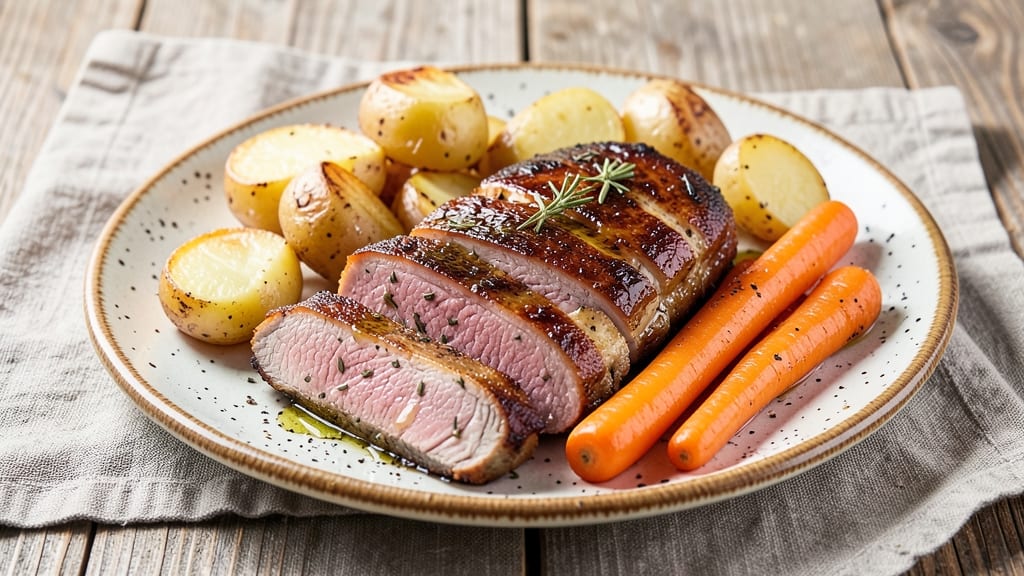
This one-pan pork tenderloin recipe delivers a perfectly balanced dinner where juicy, tender pork meets caramelized carrots and fluffy potatoes—all cooked together for minimal cleanup. 💛 I developed this after years of testing how to get pork so moist it falls apart while keeping vegetables perfectly crisp on the edges.
The secret? Roasting everything at the same temperature with just the right amount of oil and seasoning. What makes this recipe truly foolproof is the combination of simple ingredients and a single cooking method.
You'll start with a basic seasoning blend—salt, pepper, garlic powder, and rosemary—that transforms ordinary pork into something restaurant-worthy. The carrots and potatoes get tossed in olive oil, salt, and pepper, then roasted alongside the pork until they're golden and tender.
By the time you pull this dish from the oven, you'll have perfectly cooked pork with a crispy exterior and juicy interior, paired with sweet carrots and buttery potatoes that soak up all the flavors.
The aromas alone will have everyone at the table asking what's for dinner—because this meal looks and tastes like it took hours, even though it comes together in under one hour. Serve with a drizzle of pan juices for extra richness or a side salad to balance the meal.
This is the kind of dinner that feels special without requiring fancy ingredients or complicated techniques. Let's get cooking!
Ingredients for pork tenderloin recipe with carrots and potatoes
Simple ingredients, one pan, restaurant-quality dinner in under an hour.
| Ingredient | Amount | Notes |
|---|---|---|
| Pork Tenderloin 🥩 | 1 ½ lb | Center-cut for even cooking |
| Baby Carrots 🥕 | 1 ½ lb | Whole or halved for even roasting |
| Yukon Gold Potatoes 🥔 | 1 ½ lb | Cut into 1-inch chunks |
| Extra-Virgin Olive Oil 🫒 | 2 tbsp | High-quality for roasting |
| Kosher Salt 🧂 | 1 ½ tsp | Diamond Crystal preferred |
| Freshly Ground Black Pepper 🌶️ | ½ tsp | For balanced seasoning |
| Garlic Powder 🧄 | 1 tsp | Freshly ground preferred |
| Dried Rosemary 🌿 | 1 tsp | Or 1 tbsp fresh, finely chopped |
| Fresh Thyme Leaves 🌿 | ½ tsp | Or 0.25 tsp dried thyme |
| Fresh Parsley 🌿 | ¼ cup | Chopped, for garnish |
| Fresh Lemon Juice 🍋 | 1 tbsp | Brightens flavors |
| Unsalted Butter 🧈 | 1 tbsp | For basting pork |
The pork tenderloin is the star here—center-cut ensures even cooking without drying out. Most butchers will trim it for you, but if you're buying pre-trimmed, check for even thickness. Whole Foods and Trader Joe's carry excellent quality, but any well-stocked grocery store will have it. For the carrots and potatoes, Yukon Golds and baby carrots are ideal—they caramelize beautifully without turning mushy. If you can't find Yukon Golds, Russets or red potatoes work too, though they may need slightly more time. The secret to crisp edges on the vegetables is cutting them evenly and using enough oil—don't skimp on the extra-virgin olive oil here.
No fresh rosemary? Dried works at double the amount, but the aroma is completely different. Short on thyme? Fresh oregano or marjoram can stand in, though rosemary dominates the flavor profile. The garlic powder is non-negotiable—it's the backbone of the seasoning. For extra richness, substitute half the olive oil with melted unsalted butter—the pork will be even more tender. If you're using baby carrots, skip halving them unless they're particularly large. The lemon juice can be swapped for white wine vinegar at half the amount, but fresh lemon adds a brightness that's hard to replicate.
This dish reheats beautifully—just pop it in a 400°F oven for 10-15 minutes with a splash of water to revive crispiness. Store leftovers in an airtight container for up to 4 days, though the pork is best consumed within 2 days for peak tenderness. For meal prep, portion the vegetables and pork separately—reheat the pork alone at 350°F for 8-10 minutes to avoid drying out. The pan juices can be frozen for up to 3 months—perfect for drizzling over future meals or using as a base for gravy.
Why You'll Love This Recipe
- One-Pan Magic: I swear by this trick—just toss everything on a sheet pan, drizzle with olive oil, and let the oven do the work. No pots, no pans, no stress. (Yes, even on a Tuesday night when I’m exhausted.)
- Crispy-Creamy Perfection: That golden crust on the pork? The buttery Yukon Golds? The carrots caramelizing just enough to stay tender? Honestly, it’s the kind of balance that makes you close your eyes and savor it.
- Meal Prep MVP: Make a double batch—this keeps beautifully for 4 days. Reheat slices for sandwiches, toss cold cuts into salads, or serve it over mashed potatoes. My lunchbox has never been happier.
- Budget-Friendly Feast: Pork tenderloin stretches further than you’d think, and baby carrots plus potatoes are about as affordable as it gets. Between us, this feeds four for under $15, and no one complains about leftovers.
Step-by-step instructions for one-pan roasted pork tenderloin
This method delivers perfectly tender pork with caramelized vegetables every time.
👨🍳 Step 1: Prep and Season the Pork and Vegetables
Pat the 1.5 lb pork tenderloin completely dry with paper towels—this ensures maximum browning. Place it on a cutting board and make 4 shallow slits about ¼-inch deep along each side to prevent curling during roasting. In a small bowl, combine 1.5 tsp kosher salt, 0.5 tsp freshly ground black pepper, 1 tsp garlic powder, 1 tsp dried rosemary, and 0.5 tsp fresh thyme leaves. Rub this mixture all over the pork, pressing it into the slits.
Cut the 1.5 lb baby carrots in half lengthwise and the 1.5 lb Yukon Gold potatoes into 1-inch chunks. Toss the vegetables with the remaining 0.5 tsp kosher salt in a large bowl to distribute seasoning evenly. Real talk: don't skip this step—even distribution means uniform flavor throughout.
🍳 Step 2: Sear the Pork for Maximum Flavor
Heat a large oven-safe skillet over medium-high heat until hot. Add 1 tbsp extra-virgin olive oil and swirl to coat the pan. Place the pork tenderloin in the skillet and sear for 3-4 minutes per side until deeply golden brown. You'll see the fat render out and sizzle—this is where all the flavor develops. If it sticks slightly, that's normal; just let it cook undisturbed.
Remove the pork and set it aside on a plate. In the same skillet, add the remaining 1 tbsp extra-virgin olive oil and the prepared vegetables. Spread them in a single layer, leaving space between pieces for even browning. Sear for 3-4 minutes until the edges begin to caramelize. Here's the thing—this step builds the foundation for that restaurant-quality roast flavor.
🔥 Step 3: Roast Until Perfectly Tender
Preheat your oven to 400°F. Transfer the skillet to the oven and roast for 20-25 minutes, stirring the vegetables once halfway through, until the pork reaches an internal temperature of 145°F and the potatoes are tender when pierced with a fork. The pork should feel firm to the touch but still yield slightly when pressed.
Don't peek at the pork during roasting—every time you open the oven, you lose heat and extend cooking time. Instead, trust your thermometer. When the pork hits 145°F, remove it from the oven and let it rest for 10 minutes before slicing. This resting period allows the juices to redistribute, ensuring each slice stays moist and flavorful.
🥘 Step 4: Finish with Lemon and Butter
While the pork rests, return the skillet to the stovetop over medium heat. Add the 1 tbsp unsalted butter and let it melt, then pour in the 1 tbsp fresh lemon juice. Stir the vegetables in the pan, coating them with the buttery lemon mixture. Taste and adjust seasoning if needed—this is where you can really brighten the flavors.
Slice the pork tenderloin into ½-inch thick medallions and arrange it over the roasted vegetables. Garnish with the 0.25 cup fresh parsley, chopped finely. Serve immediately while the vegetables are still hot and the pork is juicy. The lemon butter sauce ties everything together, balancing the richness of the pork with a bright, fresh finish.
Pro Tips For Making Pork Tenderloin Recipe With Carrots And Potatoes
- CRANK THE HEAT FIRST: Sear the pork tenderloin in a screaming-hot pan with olive oil—no half-measures—until it’s deep golden and releases easily from the pan. I used to lowball the heat and end up with a pale, sad slab of meat that never got that caramelized crust. Trust me, the first 2 minutes at max heat make all the difference in flavor.
- CUT POTATOES IN EVEN SLICES: Yukon Golds cook unevenly if they’re chunky or oddly shaped, so slice them into ¼-inch rounds before boiling. Use a mandoline if you’re impatient (just watch your fingers), but even a sharp chef’s knife works—consistency matters more than speed here.
- SALT THE POTATOES IN THE PAN: After draining the boiled potatoes, toss them in the same pan you seared the pork—just a splash of olive oil and a generous pinch of kosher salt. The residual pork fat and salt will crisp them up in minutes, giving them that restaurant-worthy texture without extra effort.
- DON’T OVERCROWD THE VEGETABLES: Baby carrots and potatoes need room to breathe when roasting or sautéing, or they’ll steam instead of caramelize. Spread them in a single layer, even if it means doing two batches. I learned this after pulling a sad, soggy tray of veggies straight from the oven—no one wants that.
Storing and reheating this recipe
Refrigerator Storage
Store leftovers in an airtight container for up to 4 days—I use glass Pyrex with snap-on lids to keep everything fresh. Let the pork and vegetables cool for 30 minutes before storing to prevent condensation.
The pork stays juicy when refrigerated, but I recommend eating it within 2 days for the best texture. The carrots and potatoes hold up well, though they may soften slightly over time.
Freezer-Friendly Tips
Freeze the pork and vegetables separately for best results. Portion the pork into single-serving bags and the vegetables into quart-sized containers—this makes reheating easier. Label everything with the date and freeze for up to 3 months.
The pork freezes beautifully, but the potatoes and carrots may get slightly mushy when thawed, so I avoid freezing them if I can.
Oven Reheating
For the best texture, reheat the pork in a 400°F oven for 10-15 minutes with a splash of water or broth. This method keeps it moist and prevents drying out. If reheating with vegetables, add them to the pan after the pork has warmed through to avoid overcooking.
The pan juices from the original cook can be frozen separately and used later for gravy or drizzling over reheated meals.
Microwave Shortcut
When I'm in a rush, I reheat individual portions in the microwave on 50% power for 2-3 minutes, stirring halfway. Add a damp paper towel to the plate to retain moisture.
The pork reheats well this way, but the vegetables may lose some crispness. For a quick fix, pop them under the broiler for 2-3 minutes after microwaving to revive the edges.
Reviving Crispiness
If your reheated vegetables look sad and limp, don’t worry—this trick fixes it. Toss them with ½ tbsp olive oil and a pinch of salt, then roast at 425°F for 5-7 minutes until golden again.
The pork benefits from this too—just warm it alongside the vegetables. This method works like magic for restoring that fresh-from-the-oven texture. 🔥
Nutrition facts
Frequently asked questions
Can I substitute potatoes with something else?
Swap Yukon Golds for red potatoes or fingerling potatoes—they hold their shape beautifully. For a heartier dish, try parsnips or sweet potatoes (use 1 cup apple cider instead of lemon juice to balance sweetness). If you prefer a lighter option, cauliflower florets roast well alongside the carrots.
How do I keep the pork tenderloin from drying out?
The key is not overcooking—use a meat thermometer and remove the pork at 145°F (it'll rise to 150°F while resting). Pat it dry before seasoning, but don't skip the 10-minute rest—this lets juices redistribute. For extra moisture, baste with melted butter every 5 minutes during roasting.
Can I make this recipe in a slow cooker?
Yes, but with adjustments! Sear the pork first, then place it in the slow cooker with the vegetables (tossed in 1 tbsp oil and seasonings). Cook on Low for 4-5 hours or High for 2-3 hours until pork reaches 145°F. The texture will be more tender than roasted, but less crispy. Finish with lemon butter as directed.
What if I don't have fresh herbs?
No problem! Use double the dried herbs (e.g., 2 tsp dried rosemary instead of 1 tsp fresh). For thyme, ½ tsp dried works. If you're missing rosemary entirely, dried marjoram or oregano adds a similar earthy note. The garlic powder is essential—it's the flavor backbone of this dish!
How do I adjust the seasoning for a larger group?
Scale all ingredients proportionally—double the recipe for 8 servings (use a 3 lb pork tenderloin, 3 lb carrots, and 3 lb potatoes). For extra flavor, add 1 extra tsp garlic powder and ½ tsp smoked paprika to the pork rub. Use a larger roasting pan or divide the vegetables between two pans to ensure even browning.