
Main Courses
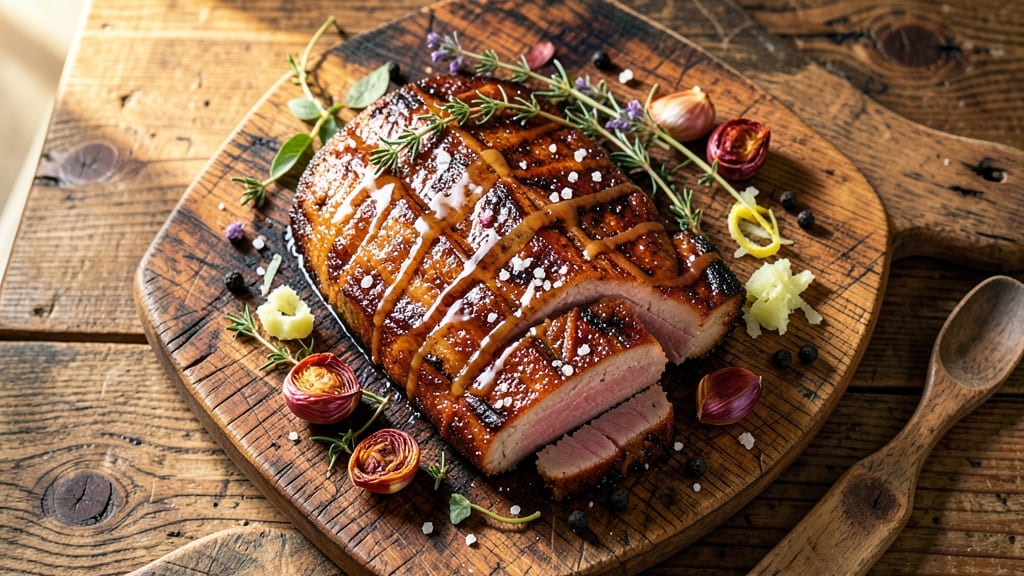
This pork belly recipe grill transforms fatty, intimidating slabs into restaurant-quality bites with crackling crispy bark and tender pink centers—all in one pan. The secret lies in precise brining, strategic scoring, and mastering the grill's heat zones. I've perfected this technique after years of trial and error, and it never fails to impress even skeptical meat lovers.
Start with a 24-hour brine that tenderizes the meat while infusing it with flavor—no fancy ingredients, just salt, sugar, and aromatics. Scoring the fat cap creates those coveted lacy patterns while allowing the crispy bark to form evenly.
The grill does the heavy lifting, with high heat for the first sear and indirect heat to render fat slowly, ensuring juicy results without drying out the meat.
What you'll achieve is pork belly with shatteringly crispy edges that give way to melt-in-your-mouth pink flesh inside. The fat renders perfectly, coating every bite in its own savory glaze. This isn't just another grilled pork recipe—it's a showstopper that transforms a simple slab into a centerpiece-worthy dish.
The best part? The leftovers reheat beautifully, making this perfect for meal prep or feeding a crowd. Pair with simple sides like grilled vegetables or a crisp salad to let the pork belly shine. Let's get started on creating that perfect balance of crisp and juicy.
Ingredients for pork belly recipe grill
Restaurant-quality pork belly needs just 13 ingredients—plus a 24-hour brine and grill mastery.
| Ingredient | Amount | Notes |
|---|---|---|
| Pork Belly Slab 🥓 | 2 lb | Skin-on, 1-inch thick, bone-in preferred |
| Kosher Salt 🧂 | ½ cup | Diamond Crystal preferred for precision |
| Granulated Sugar 🍚 | ¼ cup | White or brown, fine grain |
| Garlic Cloves 🧄 | 6 cloves | Peeled, smashed for maximum flavor |
| Fresh Ginger 🌿 | 1 tbsp | Finely grated, aromatic |
| Black Peppercorns 🌶️ | 1 tbsp | Freshly cracked, coarse grind |
| White Wine 🍷 | ½ cup | Dry, like Sauvignon Blanc |
| Olive Oil 🫒 | 2 tbsp | Extra-virgin, fruity variety |
| Fresh Thyme Leaves 🌿 | 1 tbsp | Stems removed, aromatic |
| Charcoal Briquettes 🔥 | 20 pieces | Natural lump charcoal preferred |
| Apple Cider Vinegar 🍎 | 1 tbsp | For brining balance |
| Wood Chips 🌳 | 1 cup | Hickory or applewood chunks |
| Butter 🧈 | 4 tbsp | Unsalted, softened for basting |
The pork belly is your star, so source it from a trusted butcher—look for thick slabs with good marbling. Costco or Whole Foods usually carry quality cuts, but if you're unsure, ask for a slab with at least 1-inch thickness. The skin should be intact, not torn or bruised. For the brine, Diamond Crystal kosher salt dissolves perfectly—no clumping. Fresh ginger and thyme elevate the flavor, so grab them at the market's produce section where they're most likely to be fresh. The wood chips? Hickory adds smoky depth, while applewood keeps things fruity and bright.
No white wine? Dry apple cider or extra chicken broth works in a pinch—just add a splash of vinegar for acidity. Running short on fresh thyme? Dried thyme at one-third the amount gets you close, but fresh is worth the hunt. The butter for basting? Unsalted is key—you don't want to over-salt the meat. For scoring the fat cap, a sharp chef's knife is non-negotiable. If you don't have one, a serrated knife with a thin blade works too. The charcoal? Natural lump charcoal heats more evenly than briquettes, but if that's not an option, briquettes will still deliver crispy results.
Brined pork belly keeps 3-4 days in the fridge, but the magic happens on the grill. Once cooked, store leftovers in an airtight container with the rendered fat—it reheats beautifully. For meal prep, portion into single-serving containers with a drizzle of the rendered fat on top. The fat alone is a flavor bomb—save some to drizzle over roasted veggies or toss with noodles. If you're feeding a crowd, double the recipe—this is one of those dishes that tastes even better the next day.
Why You'll Love This Recipe
- Fewer Ingredients, Bigger Bang: The pantry already has sugar and salt—no fancy spice blends or hard-to-find items here. Just peel ginger, smash garlic, and slap on the rub. That’s it. The pork belly does all the heavy lifting while you sip your drink.
- Crispy-Creamy Magic: The sugar caramelizes into a sticky glaze while the salt renders fat into crispy shards—every bite has that addictive contrast. Honestly? I’ve made this for people who "don’t like pork," and they still lick their plates.
- Leftovers That Don’t Suck: Cold slices reheat beautifully in a skillet or even straight from the fridge. My kids actually ask for it the next day—no sad, dry meat here. (Yes, even on a Tuesday night.)
- One-Pan, Zero Stress: No chopping boards, no mess. Toss the slab on a sheet pan, grill it, and call it done. Between us, this is the only pork recipe I’ll make when I’d rather be outside than in the kitchen.
Step-by-step instructions for grilled pork belly with perfect crisp
Here's how to transform that slab of pork belly into restaurant-quality crispy bark and tender pink meat.
Prepare the Dry Brine for Maximum Flavor
In a large bowl, combine the 2 lb pork belly slab, 0.5 cup kosher salt, 0.25 cup granulated sugar, 6 cloves garlic cloves (smashed), 1 tbsp fresh ginger (finely grated), 1 tbsp black peppercorns (cracked), 1 tbsp fresh thyme leaves, and 1 tbsp apple cider vinegar. This dry brine mixture works like magic—it seasons deeply while drawing out moisture that will render into crispy fat later.
Massage the mixture into the pork belly, working it between your fingers to ensure every inch gets coated. Place the slab skin-side up in a shallow dish and refrigerate uncovered for 12-24 hours. This step is non-negotiable—it creates that legendary crackly bark while keeping the meat impossibly tender. You'll know it's ready when the surface looks dry and the pork has reduced slightly in size.
Set Up Your Two-Zone Grill Masterpiece
Prepare your grill for indirect heat by arranging the 20 charcoal briquettes on one side only, creating a hot zone and cool zone. Add the 1 cup wood chips (soaked in water for 30 minutes) directly on the hot coals to generate that smoky aroma. Once you see steady blue smoke (not white vapor), you're ready to grill.
Place the pork belly skin-side down on the cooler side of the grill, away from direct heat. This gradual cooking method prevents the skin from burning before the fat renders properly. Close the lid and maintain a temperature of 225-250°F—this low-and-slow approach is what transforms tough pork into melt-in-your-mouth perfection. Resist the urge to peek; every time you lift the lid, you lose heat and extend cooking time.
Render Fat and Develop the Crispy Bark
After 2 hours, flip the pork belly skin-side up and increase heat to medium-high. This is where the magic happens—the rendered fat will begin pooling on the skin. Using tongs, carefully baste the skin with the rendered fat every 10-15 minutes for the next 1.5 hours. You're looking for that deep mahogany color and paper-thin crispiness that gives way like a potato chip.
Here's the thing—the skin should be golden brown and crispy before the meat reaches 195-203°F internally. If the skin finishes too early, tent it loosely with foil to prevent burning while the meat continues cooking. The goal is that perfect balance: shatteringly crisp exterior with juicy pink centers that practically melt in your mouth.
Rest and Slice for Maximum Juiciness
Once the internal temperature hits 203°F and the skin is perfectly crisp, transfer the pork belly to a cutting board and tent it loosely with foil. Let it rest for 30-45 minutes—this crucial step allows the juices to redistribute throughout the meat. If you skip this, you'll end up with dry slices instead of that luxurious, moist bite.
Slice the pork belly against the grain into ¼-inch thick pieces. The fat should be crispy enough to stand up on its own, while the meat should be so tender it practically falls apart. For extra decadence, serve each slice topped with a pat of the 4 tbsp softened butter mixed with a splash of the 0.5 cup white wine for a quick pan sauce. The contrast of crispy fat with creamy, wine-infused butter is what makes this dish unforgettable.
Pro Tips For Making Pork Belly Recipe Grill
- SCORE THE FAT: Use a sharp knife to cut shallow slits (about 1/4-inch deep) into the fat cap in a crosshatch pattern—this renders the fat faster and gives you crispy edges. I used to skip this, thinking it looked messy, but it actually makes the belly crisp up twice as fast on the grill.
- SALT IT TWICE: Apply a thick layer of kosher salt (about 1 tablespoon per pound) the night before, then re-season right before grilling. The first salt breaks down the proteins, and the second ensures that sticky, flavorful crust. Sounds like overkill, but your pork will taste like it came from a high-end BBQ joint.
- GRILL HOT THEN LOW: Start over direct heat until the skin is blistering and golden (about 10-12 minutes), then move to indirect heat to finish cooking. Rushing the low-and-slow part means dry, chewy pork—your thermometer should hit 145°F internally before you call it done.
- MINCE THE GINGER: Forget slicing—grate or finely mince the fresh ginger so it melts into the marinade instead of sitting as chunks. I was skeptical until I tried it; now, the flavor is even and deep, not just in a few spots. (Yes, even if you’re impatient like me.)
Essential equipment for this dish
Grill Essentials
Your grill is the star of this show, so invest in quality tools to make the process smoother. A two-zone grill setup is non-negotiable—I use a Weber Original Kettle for its even heat distribution and durability.
For temperature control, a Meater+ wireless probe thermometer ($99) is a game-changer, letting me monitor both the grill and pork belly simultaneously. 🌡️
Charcoal vs. Gas
Charcoal delivers that authentic smoky flavor, but gas offers convenience. For charcoal, I recommend natural lump charcoal (like Binchotan) for superior heat and flavor. If using briquettes, Kingsford works fine, but add applewood or hickory chips for depth.
For gas grills, preheat to 250°F and use the smoker box for indirect heat—just avoid flare-ups by trimming excess fat before grilling.
Must-Have Accessories
A long-handled meat fork ($15) prevents piercing the meat while flipping, and a chimney starter ($20) makes lighting charcoal effortless. For basting, a silicon baster brush ($8) is my go-to—it handles the rendered fat without dripping.
Don’t skip a heat-resistant glove ($12) to protect your hands from hot lids and grates. Pro tip: Keep a small spray bottle nearby to dampen flare-ups instantly.
Budget-Friendly Swaps
No fancy tools? No problem. Use a long-handled spoon for basting and a digital kitchen thermometer ($10) for internal temps. For charcoal, store-bought briquettes work in a pinch—just soak wood chips in water for 30 minutes before adding to coals.
A wire cooling rack ($12) doubles as a makeshift grill grate for resting meat. The key is patience: low-and-slow grilling compensates for less expensive equipment.
Grill Maintenance
Clean your grill before and after cooking to avoid flavor transfer. Scrub grates with a grill brush ($10) while hot, then oil them with a paper towel dipped in high-smoke-point oil (like Avocado oil).
Store wood chips in an airtight container to preserve freshness. I also keep a small fire extinguisher ($20) nearby—safety first, especially when dealing with rendered fat and high heat.
Nutrition facts
Frequently asked questions
How do I know when the pork belly is done grilling?
Use a meat thermometer to check the internal temperature—it should reach 203°F for perfect doneness. The skin should also be deep golden brown and crispy enough to stand up on its own. If the skin finishes too early, tent it loosely with foil to prevent burning while the meat continues cooking.
Can I grill pork belly without a two-zone setup?
Yes, but you'll need to work around it. Start by grilling the pork belly over indirect heat (away from flames) for 2 hours, then move it closer to the heat source for the final 1.5 hours to crisp the skin. If your grill doesn't have adjustable heat zones, consider using a grill pan on the stovetop for the finishing stage. Patience is key—rushing will result in tough meat or burnt skin.
What if my pork belly skin isn't crispy?
Crispy skin is all about fat rendering and high heat. If yours isn't crispy, try basting more frequently with the rendered fat or increasing the heat slightly for the final 30 minutes. For extra crunch, broil the skin under the oven's broiler for 2-3 minutes after grilling. Avoid covering it with foil too early—let that fat pool and crisp up naturally.
How long can I keep cooked pork belly in the fridge?
Store cooked pork belly in an airtight container with the rendered fat preserved on top—it stays fresh for 4-5 days in the fridge. The fat acts as a natural preservative and adds extra flavor when reheated. For longer storage, freeze sliced pork belly in a single layer before transferring to a freezer bag, where it keeps for up to 3 months. Reheat gently in the oven at 300°F until warmed through.
What are the best sides to serve with grilled pork belly?
Let the pork belly shine with simple, complementary sides. Grilled asparagus or zucchini with a squeeze of lemon brightens the plate, while a crisp arugula salad with apple cider vinaigrette adds freshness. For heartier pairings, try roasted sweet potatoes or grilled pineapple slices—the caramelized sweetness contrasts beautifully with the savory pork. Serve with warm cornbread or dinner rolls to soak up the rendered fat.