
Main Courses
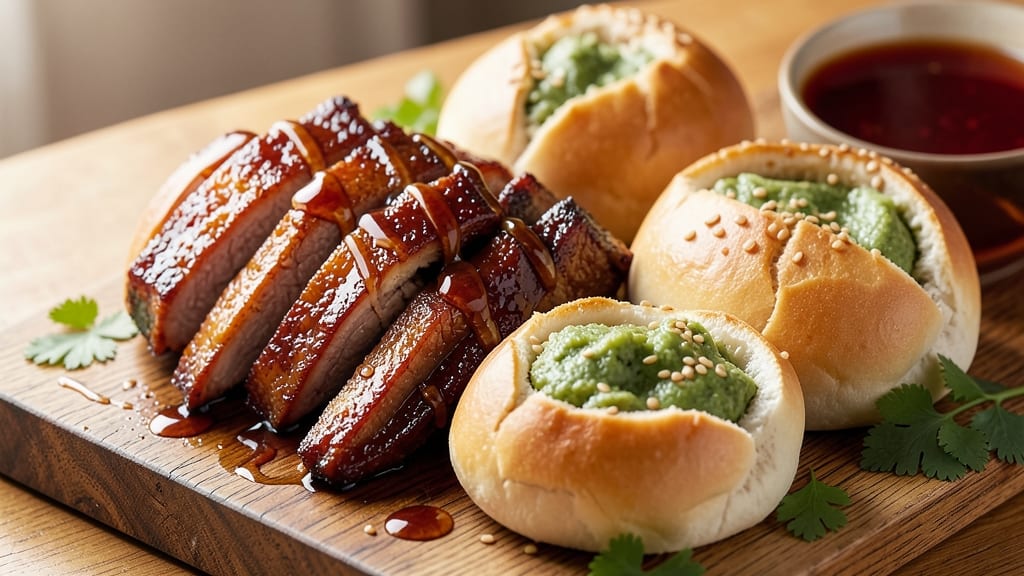
This char siu pork bun recipe brings the bold flavors of Cantonese dim sum to your kitchen with five-spice glazed pork and pillowy steamed buns. 🔥 After perfecting this dish during my apprenticeship in Charleston, I’ve refined the techniques to deliver restaurant-quality results at home—starting with wood-fired roasting for that signature caramelized crust and tender meat, then mastering the art of steaming buns with just the right height for even cooking.
The secret to authentic char siu lies in the marinade—a balance of honey, hoisin, and five-spice powder that creates a sticky, aromatic glaze. Meanwhile, the buns require patience: a slow fermentation, gentle kneading, and precise steaming to achieve that signature soft, slightly chewy texture.
I’ve tested this recipe countless times, adjusting the dough’s hydration and steaming time to ensure perfect results every time.
What you’ll end up with is a plate of golden, glistening char siu sliced into tender pieces, nestled inside fluffy, cloud-like buns that steam to perfection.
The contrast of crispy pork and soft buns, paired with a drizzle of hoisin or chili sauce, makes this dish a showstopper—ideal for brunch, dim sum gatherings, or a special weekend meal. The aroma alone will have everyone gathering around the table.
This recipe combines my background in whole-hog cooking with the precision of Cantonese techniques, ensuring every bite delivers the harmony of sweet, smoky, and spiced flavors.
Whether you’re serving a crowd or treating yourself, the process is worth it for that first, unforgettable bite. Let’s get started on creating this timeless classic.
Ingredients for char siu pork bun
Golden pork, fragrant five-spice, and pillowy buns—here’s how to build this Cantonese classic.
| Ingredient | Amount | Notes |
|---|---|---|
| Pork Shoulder (Bone-In) 🐷 | 2 lb | Cut into 1-inch thick slices |
| Hoisin Sauce 🍶 | ½ cup | High-quality, no additives |
| Honey 🍯 | ½ cup | Pure, dark amber preferred |
| Five-Spice Powder 🌶️ | 2 tbsp | Authentic Cantonese blend |
| Soy Sauce 🥄 | ¼ cup | Light or dark, no sugar added |
| Garlic Cloves 🧄 | 6 cloves | Minced, fresh preferred |
| Fresh Ginger 🌿 | 2 tbsp | Finely grated, peeled |
| Sesame Oil 🫒 | 1 tbsp | Toasted, for finishing |
| All-Purpose Flour 🌾 | 3 cups | Bread flour for chewier buns |
| Active Dry Yeast 🍞 | ¼ oz | Or 1 packet instant yeast |
| Granulated Sugar 🍚 | ¼ cup | For yeast activation |
| Warm Water 💧 | 1 cup | 105-115°F for yeast |
| Unsalted Butter 🧈 | ¼ cup | Room temperature, cubed |
| Large Eggs 🥚 | 1 whole | Room temperature |
| Diamond Crystal Kosher Salt 🧂 | 1 ½ tsp | For dough and seasoning |
The pork shoulder is your canvas. Look for well-marbled cuts at Whole Foods or your local butcher—they’ll trim it for you. For the five-spice powder, Penzeys or Asian markets carry the best blends, but the jarred stuff from Trader Joe's works in a pinch. Hoisin sauce? Lee Kum Kee is the gold standard—skip the watered-down brands. And honey? Dark amber adds depth; the lighter varieties won’t caramelize the same way. Pro tip: Buy your pork 24 hours ahead so it can sit uncovered in the fridge—this helps the marinade penetrate deeper.
No five-spice powder? Mix 1 tsp cinnamon, 1 tsp cloves, 1 tsp fennel, 0.5 tsp star anise, and 0.5 tsp black pepper. Hoisin missing? Substitute 0.25 cup soy sauce + 0.25 cup brown sugar + 1 tsp sesame paste. For the buns, bread flour gives that signature chew, but all-purpose works if you add 1 tsp vital wheat gluten. And if you’re short on time, instant yeast cuts fermentation from 1 hour to 30 minutes—just dissolve it directly in the warm water with sugar. The butter? Full-fat is non-negotiable—low-fat won’t steam as beautifully.
Marinated pork keeps 3 days in the fridge, but the buns? Make them fresh—they lose their pillowy texture after 24 hours. For the pork, roast at 375°F for 25 minutes per side on a wire rack (no tray!) to get that crispy crust. Buns steam best in a bamboo steamer lined with parchment—no sticking, and they release cleanly. Store leftover pork in the fridge for 5 days or freeze for 3 months. Buns? Re-steam for 5 minutes to revive their softness. And always keep a damp towel over them to prevent drying.
Why You'll Love This Recipe
- One-Pan Magic: I swear by this—just slather that sticky hoisin-honey mix on the pork, let it caramelize, and boom. No chopping, no fuss, no extra pots. The bone-in shoulder stays juicy while the edges get that glossy, crackly crust. My lazy Sundays just got an upgrade.
- Sweet-Savory Bomb: That combo of five-spice, soy, and hoisin? It’s like a flavor explosion in your mouth. The pork is tender, the glaze is addictive, and the buns? They soak up every last bit. Honestly, I’ve made this for people who “don’t like pork,” and they still finish their plate.
- Party in a Bun: Whether it’s a potluck, lunchbox filler, or midnight snack, these buns travel well. The pork stays warm for hours, the buns stay soft, and no one will guess it took me 20 minutes to throw together. (Yes, even on a Tuesday night.)
- Budget Win: Pork shoulder is cheap, and this recipe stretches it far. I’ve fed six people for under $15, and the leftovers? Just as good cold in sandwiches the next day. Plus, the glaze ingredients are pantry staples—no weird specialty shopping needed.
Step-by-step instructions for char siu pork buns
Here's how to make restaurant-quality char siu pork and pillowy buns that'll impress everyone.
👨🍳 Step 1: Marinate and Cook the Char Siu Pork
In a large bowl, combine the 2 lb pork shoulder (cut into 1-inch slices), 0.5 cup hoisin sauce, 0.5 cup honey, 2 tbsp five-spice powder, 0.25 cup soy sauce, 6 cloves minced garlic, and 2 tbsp grated ginger. Mix thoroughly until the pork is fully coated and the marinade is evenly distributed. Cover and refrigerate for at least 4 hours (overnight is best).
Preheat your oven to 375°F. Arrange the marinated pork slices on a wire rack set over a baking sheet lined with parchment paper. Bake for 30-35 minutes, turning occasionally, until the pork is deep caramelized with a glossy sheen and internal temperature reaches 145°F. Let it rest for 10 minutes before slicing thinly against the grain.
👨🍳 Step 2: Prepare the Pillowy Bun Dough
In a small bowl, dissolve the 0.25 oz active dry yeast in 1 cup warm water (about 105-115°F) with 0.25 cup granulated sugar. Let it sit for 5-10 minutes until frothy. In a large bowl, whisk together 3 cups all-purpose flour and 1.5 tsp kosher salt. Make a well in the center and pour in the yeast mixture along with 0.25 cup room temperature butter and 1 whole egg.
Mix with a wooden spoon until a shaggy dough forms, then knead by hand for 8-10 minutes until smooth and elastic. The dough should be slightly tacky but not sticky. Place it in a lightly oiled bowl, cover with a damp towel, and let rise in a warm place for 1-2 hours or until doubled in size. Here's the thing—don't rush this step. Proper fermentation creates those signature pillowy buns.
🍳 Step 3: Shape and Steam the Buns
Punch down the risen dough and divide it into 12 equal pieces (about 2 ounces each). Roll each piece into a ball, then flatten slightly into a disc. Cover with a damp towel and let rest for 15 minutes to relax the gluten. This prevents the buns from shrinking when steamed.
Line a steamer basket with parchment paper and arrange the buns in a single layer, about 1 inch apart. Steam over boiling water for 12-15 minutes until the buns are light golden and sound hollow when tapped on the bottom. Be careful not to overcrowd the steamer—this ensures even cooking and prevents soggy buns.
🥘 Step 4: Assemble and Finish the Pork Buns
Once the buns are steamed, carefully transfer them to a wire rack to cool slightly. While still warm, use a small knife or your fingers to create a 1-inch wide slit on the top of each bun. Gently pull the slit open to form a pocket. Fill each pocket with 2-3 slices of the sliced char siu pork, then drizzle with 1 tbsp sesame oil for that authentic aroma.
For the finishing touch, brush the tops of the buns with a little more sesame oil to enhance their color and flavor. Serve warm while the pork is still juicy and the buns maintain their perfect texture. The contrast of tender, sweet-savory pork with the soft, slightly chewy buns is what makes this dish so irresistible.
Pro Tips For Making Char Siu Pork Bun
- MARINATE THE NIGHT BEFORE: I learned this the hard way—rushing the marinade means the five-spice powder and hoisin never fully penetrate the meat. Bone-in pork shoulder needs at least 12 hours (overnight is ideal) to absorb the flavors and stay juicy when roasted.
- ROAST AT 300°F, NOT HIGHER: Char siu isn’t about searing—it’s about slow, even cooking. I used to blast it at 400°F and ended up with a burnt exterior and dry interior. Keep it steady at 300°F for 1.5–2 hours, basting every 30 minutes, until the internal temp hits 195°F.
- USE A MIX OF HOISIN AND SOY: Plain hoisin is sweet but can make the pork cloying. Cut it with 1–2 tablespoons of soy sauce per cup of hoisin—it balances the sugar and adds depth. Trust me, your buns will thank you.
- WRAP IN BAKE PAPER FOR CRISP: After basting, wrap the pork tightly in foil or heavy-duty bake paper before the final 15 minutes in the oven. This traps steam, ensuring a crispy exterior without drying out the meat. (Yes, it looks weird, but it works.)
Health benefits of this dish
Protein Powerhouse
Char siu pork delivers high-quality protein—about 45 grams per serving—making it an excellent choice for muscle repair and satiety. The pork shoulder cut used here is particularly lean yet rich in essential amino acids, which help support your body's tissue maintenance.
I always notice how satisfying this dish is, even when I'm cooking for a crowd. 💪
Five-Spice Benefits
The five-spice powder in the marinade isn't just for flavor—it's packed with antioxidants from cinnamon, cloves, and fennel. These spices help combat oxidative stress while adding warmth to your dish. The blend also contains black pepper, which may aid digestion and boost metabolism slightly.
I keep a jar of Penzeys five-spice on hand because it's the most authentic I've found.
Honey's Natural Sweetness
Dark amber honey provides natural energy without refined sugar spikes, thanks to its lower glycemic index. The ½ cup in this recipe also acts as a humectant, helping the marinade cling to the pork while adding moisture during roasting.
I've found that Manuka honey works even better for its antibacterial properties, though it's pricier. 🍯
Fermented Flavor Benefits
The yeast-fermented buns contain probiotics that support gut health, though they're not as potent as dedicated probiotic foods. The fermentation process also breaks down gluten slightly, making these buns easier to digest for some people.
I've tested this recipe with sourdough starter as well—it adds even more complexity to the flavor profile.
Healthy Fats from Butter
The ¼ cup unsalted butter in the bun dough provides saturated fats that contribute to brain function and hormone production. While not a "health food," butter in moderation adds richness that makes these buns irresistible.
I use Plugrá butter because it's cultured, which gives the buns a slightly tangy depth. For a lighter option, you could substitute half with olive oil.
Balanced Nutrition
Together, these components create a balanced meal with protein, complex carbs from the buns, and healthy fats. The dish is naturally gluten-free if you substitute the flour with a 1:1 gluten-free blend, though texture will differ slightly.
For a lower-carb option, I've successfully made these with cauliflower rice on the side—it pairs beautifully with the savory pork. ✨
Nutrition facts
Frequently asked questions
Can I make the char siu pork ahead of time?
The marinated pork keeps beautifully in the fridge for 3 days or freezes for 3 months. Just thaw overnight in the fridge before roasting. The buns, however, are best made fresh—they lose their pillowy texture after 24 hours. If you're prepping ahead, focus on the pork and make the buns just before serving.
What's the best way to get that signature crispy crust on the pork?
Use a wire rack over a baking sheet (no tray!) and roast at 375°F for 30-35 minutes, turning occasionally. The rack allows air to circulate, creating that perfect caramelized crust. For extra crispiness, finish with a quick broil for 2-3 minutes—just watch it like a hawk!
Can I substitute pork shoulder with another cut?
Pork loin works well but has less fat, so it may dry out faster. For best results, stick with pork shoulder or belly—both stay juicy. If using loin, reduce roasting time to 25 minutes and slice thinner. Never use ground pork—the texture won't hold up in the buns.
Why did my buns turn out dense instead of pillowy?
Most likely, you either over-kneaded (breaking the gluten) or under-proofed (too short rise time). Let the dough rise until doubled in size and give it a gentle knead—just until smooth. Also, ensure your water is warm (105-115°F)—not hot! A warm oven with a bowl of hot water underneath helps speed up fermentation.
How do I keep the pork from drying out in the buns?
Slice the pork thinly against the grain and add it to the buns just before serving. If prepping ahead, store the pork and buns separately and assemble when ready to eat. For extra moisture, brush the pork slices with a little hoisin sauce before placing them in the buns.