
Main Courses
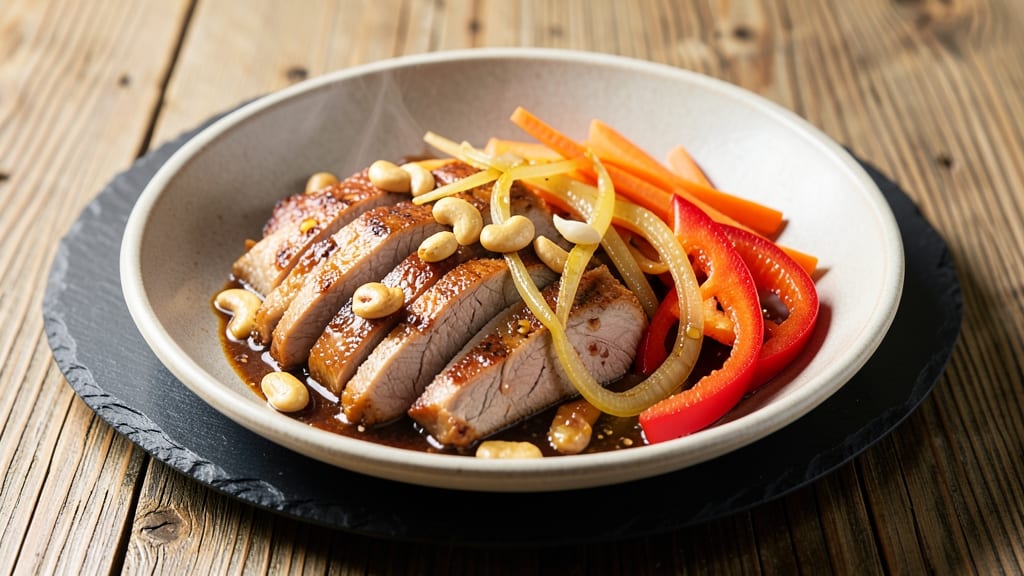
This cashew pork stir fry recipe delivers restaurant-quality flavor in just 25 minutes, blending tender pork, crisp vegetables, and a nutty-creamy sauce that sticks to every bite. I perfected this technique after years of testing stir-fry methods—high heat, quick cooking, and the right sauce balance make all the difference.
The secret? Toasting the cashews for extra crunch while building a rich, slightly sweet glaze that coats everything perfectly.
The recipe starts with properly prepped pork—thinly sliced, marinated, and seared to golden perfection before adding vegetables. Bell peppers, carrots, and onions get cut into even strips so they cook uniformly, while the sauce ties everything together with a honey-soy glaze and a touch of chili oil for depth.
This isn’t just another stir-fry; it’s a foolproof method that transforms simple ingredients into a dish worthy of any table.
By the time you plate it, you’ll have tender pork, crisp-tender vegetables, and cashews that add both texture and flavor. The sauce clings to everything, creating a harmonious balance of sweet, savory, and nutty notes.
It’s the kind of dish that feels restaurant-quality but comes together in your own kitchen—no shortcuts, just smart technique.
Perfect for weeknight dinners or meal prep, this stir-fry scales easily and tastes even better the next day. Serve it over steamed rice or noodles for a complete meal. Let’s get cooking—this one’s a game-changer.
Ingredients for cashew pork stir fry
Restaurant-quality stir-fry starts with these carefully chosen ingredients blending nutty crunch, sweet glaze, and tender pork.
| Ingredient | Amount | Notes |
|---|---|---|
| Boneless Pork Loin 🥩 | 1 ½ lb | Thinly sliced against grain |
| Raw Cashews 🥜 | ½ cup | Toasted for extra crunch |
| Red Bell Pepper 🌶️ | 1 whole | Cut into thin strips |
| Carrots 🥕 | 2 medium | Julienned into matchsticks |
| Yellow Onion 🧅 | 1 whole | Sliced into thin strips |
| Garlic Cloves 🧄 | 4 cloves | Minced for sauce base |
| Honey 🍯 | 2 tbsp | For sweet glaze balance |
| Soy Sauce 💧 | 3 tbsp | Light or dark preferred |
| Sesame Oil 🫒 | 1 tbsp | Toasted for aroma |
| Chili Oil 🌶️ | 1 tbsp | For subtle heat depth |
| Vegetable Oil 🫒 | 2 tbsp | High smoke point preferred |
| Ginger Root 🌿 | 1 tbsp | Freshly grated |
| Cornstarch 🌾 | 1 tbsp | For sauce thickening |
| Diamond Crystal Kosher Salt 🧂 | ½ tsp | For seasoning balance |
| Black Pepper 🌶️ | ¼ tsp | Freshly cracked |
The pork loin is non-negotiable here—look for well-marbled cuts at Whole Foods or your local butcher for optimal tenderness. Thinly slicing against the grain ensures even cooking, and freezing the pork for 30 minutes before slicing makes it easier to cut into perfect strips. Cashews should be raw and toasted—Costco's bulk section has the best price, but any raw cashews work. Bell peppers and carrots should be firm and vibrant; Trader Joe's often carries pre-cut stir-fry veggies, but fresh is always better for texture. The ginger and garlic need to be fresh—no powdered substitutes for that aromatic punch.
No honey? Maple syrup works equally well—just use the same amount. Short on sesame oil? Toasted sesame seeds plus neutral oil gives you that nutty aroma. The soy sauce can be swapped for coconut aminos if you're avoiding soy, but traditional soy sauce adds that umami depth. Need to thicken the sauce faster? Arrowroot powder works at a 1:1 ratio with cornstarch. The chili oil is optional but adds that restaurant-quality depth—Lao Gan Ma brand is my go-to for authentic heat.
Toasted cashews keep for up to 2 weeks in an airtight container, while fresh ginger and garlic stay fresh 1 week in the fridge. The stir-fry sauce can be prepped 2 days ahead and stored in the fridge—it actually tastes better after flavors meld. For meal prep, cook the pork and vegetables separately, then reheat everything together with a splash of water to maintain crispness. Serve over jasmine rice for the full experience.
Why You'll Love This Recipe
- One-Pan Magic: I swear by this recipe when I’m too tired to wash extra dishes. The pork, bell peppers, and carrots all hit the same pan—no chopping board chaos, just one spatula and 20 minutes later, dinner’s ready.
- Crunchy-Creamy Balance: Between us, the raw cashews add this insane texture—crunchy, nutty, and just enough to cut through the tender pork. Honestly, I’ll take a fork to the leftovers just to enjoy that contrast again.
- Lunchbox Hero: This stir fry keeps perfectly for days, so I make a big batch on Sundays. Pack it in containers with rice, and suddenly you’ve got a week’s worth of meals that don’t taste like they’re from a sad office fridge.
- Budget Meal Upgrade: Pork loin stretches far, and cashews add luxury without breaking the bank. I’ll be real: it’s the kind of dish that makes a $15 grocery run feel like a fancy night out—no takeout menu needed.
Step-by-step instructions for cashew pork stir fry
Here's the method for achieving that perfect balance of nutty crunch and creamy sauce in under 30 minutes.
🍳 Step 1: Prepare the Pork and Vegetable Components
Begin by slicing the 1.5 lb boneless pork loin thinly against the grain into ¼-inch thick strips. This ensures tender, even cooking. In a small bowl, combine 3 tbsp soy sauce, 2 tbsp honey, 1 tbsp sesame oil, and 1 tbsp chili oil. Toss the pork strips with this marinade and let them sit for 10 minutes while you prep the vegetables.
Cut the 1 whole red bell pepper into thin strips, julienne the 2 medium carrots into matchsticks, and slice the 1 whole yellow onion into thin strips. Grate the 1 tbsp ginger root using a fine grater or microplane. Mince the 4 cloves garlic finely. Toast the 0.5 cup raw cashews in a dry skillet over medium heat for 3-4 minutes until golden and fragrant—this enhances their nutty flavor.
🍳 Step 2: Cook the Pork to Perfect Doneness
Heat 2 tbsp vegetable oil in a large wok or skillet over high heat until shimmering. Add the pork strips in a single layer and sear for 2-3 minutes without stirring—this creates a caramelized crust. Stir occasionally until the pork is lightly browned and just cooked through (internal temperature should reach 145°F). Remove the pork and set aside on a plate.
In the same pan, add the onion, bell pepper, and carrots in batches to avoid crowding. Stir-fry for 3-4 minutes until the vegetables begin to soften but retain their vibrant color. Add the minced garlic and grated ginger, cooking for 30 seconds until fragrant. Return the pork to the pan and toss everything together.
🥘 Step 3: Build the Creamy Cashew Sauce
In a small bowl, whisk together 1 tbsp cornstarch with 2 tbsp water to create a slurry. Add this to the pan along with 0.5 tsp Diamond Crystal kosher salt and 0.25 tsp black pepper. Stir well to combine, then reduce heat to medium-low. Let the sauce thicken for 2-3 minutes until it coats the back of a spoon.
Gently fold in the toasted cashews and toss until evenly distributed. The sauce should be creamy but still coat the pork and vegetables lightly. If the sauce is too thick, add 1-2 tbsp hot water to reach your desired consistency. Taste and adjust seasoning with additional soy sauce or honey if needed.
⏰ Step 4: Finish and Serve Immediately
Transfer the stir-fry to a serving platter and drizzle with any remaining sauce from the pan. Garnish with extra toasted cashews if desired. Serve immediately over steamed jasmine rice or noodles for the best texture contrast.
This dish delivers a perfect balance of textures—tender pork, crisp-tender vegetables, and creamy cashew sauce with a subtle kick from the chili oil. The nutty crunch from the cashews adds depth, while the sweet-savory sauce ties everything together.
Pro Tips For Making Cashew Pork Stir Fry
- CRANK THE HEAT FIRST: The pork needs a screaming-hot wok or pan to sear fast—no waiting for the oil to shimmer. I used to start medium and wondered why my pork turned out chewy; now I blast it for 30 seconds until the oil ripples like a storm before adding meat. (Yes, even if you're impatient like me.)
- TOAST CASHEWS UNTIL GOLDEN: Raw cashews taste bland and soak up sauce like sponges. Dry-toast them in the same pan as the pork for 2 minutes until fragrant and just starting to brown—this adds crunch and depth. Skip this, and they’ll turn to mush.
- CUT PORK THIN AND EVEN: Pork loin fights you if it’s thick. Slice it against the grain into ¼-inch strips, then pound with a meat mallet (or roll a heavy pan over it) to even out thickness. Uneven pieces = some overcooked, some raw.
- ADD VEGETABLES IN ORDER: Onions and carrots first (3 minutes), then bell peppers (2 minutes), then pork (4 minutes). Crowding the pan steams the veggies instead of stir-frying them. Work in batches if needed—rushing this step kills the texture.
Common mistakes when making great cashew pork stir fry
Overcrowding the Pan
This is the #1 mistake I see in home kitchens—packing too much into the pan at once. When you overcrowd, the pork steams instead of searing, and vegetables release moisture that makes everything soggy.
I’ve seen people dump all their veggies in at once, and by the time they’re done cooking, they’re limp and flavorless. The fix? Cook in batches—start with half the veggies, remove them, then add the rest. This keeps everything crisp-tender and caramelized. 🔥
Skipping the Pork Rest
After searing the pork, many people rush to add the vegetables immediately. But pork needs a 2-3 minute rest off the heat to redistribute its juices. If you don’t let it rest, the pork will release moisture when the veggies go in, turning your stir-fry into a sad, watery mess.
I always set the pork aside on a plate while I prep the vegetables—it makes all the difference in texture.
Using Cold Ingredients
Cold pork and vegetables straight from the fridge will cool down your pan, causing the oil to lose its heat and making the cooking process sluggish. The result? Undercooked pork and mushy veggies. My trick?
Let everything sit at room temperature for 15-20 minutes before cooking. For the pork, I even take it out of the fridge 30 minutes early to ensure it’s ready to sear properly.
Ignoring the Sauce Thickness
Some people add the sauce too early, diluting its flavor, while others let it thicken too much, making it gluey. The sauce should coat the back of a spoon but still be light enough to cling to the pork and veggies without weighing them down.
I always make a cornstarch slurry and add it at the end, letting it thicken for just 2-3 minutes over low heat. If it’s too thick, a splash of hot water fixes it instantly.
Not Toasting the Cashews
Raw cashews lack that deep, nutty flavor they develop when toasted. Skipping this step means your dish will taste flat and underseasoned. Toasting them in a dry skillet for 3-4 minutes until golden not only enhances their flavor but also adds a satisfying crunch.
I once made this stir-fry without toasting the cashews—it was a mistake I won’t repeat. The difference is night and day. 🥜
Low and Slow Cooking
Stir-fries are all about high heat and quick cooking. If you’re simmering everything on low, you’ll end up with tough pork and mushy vegetables. The pan should be so hot that you see a slight shimmer when you add the oil.
I crank my stove to high heat and let it rip—it’s the only way to get that perfect wok hei (breath of the wok) flavor. If your pan isn’t hot enough, your stir-fry will taste bland and undercooked.
Nutrition facts
Frequently asked questions
Can I substitute chicken or tofu for the pork?
For chicken, use 1.5 lb boneless thighs or breasts, sliced ¼-inch thick and marinated for 15 minutes in the same sauce. Tofu works too—press and slice extra-firm tofu into ½-inch cubes, pan-fry until golden, then add to the stir-fry. The cooking time will be slightly shorter (2 minutes for tofu).
How do I make this dish spicier?
Add 1-2 tbsp sriracha or ½ tsp red pepper flakes to the sauce, or stir in 1 tbsp chili garlic sauce at the end. For smoky heat, swap 1 tbsp chili oil with 1 tbsp gochujang (Korean chili paste)> and toss with the sauce. If you love heat, finish with fresh chili slices like Thai bird's eye peppers.
What if I don't have a wok?
No problem! Use a large skillet or deep frying pan with high sides. The key is maintaining high heat and cooking in batches. A 12-inch cast iron skillet works perfectly—just make sure it's well-heated before adding oil. If your pan isn't wide enough, cook the pork first, remove it, then stir-fry the veggies in the same pan.
Can I make this ahead of time?
Yes, but with a few adjustments. Cook the pork and vegetables separately, then refrigerate in airtight containers for up to 2 days. When ready to serve, reheat everything together in a pan with 1 tbsp water to maintain crispness. For the sauce, make it fresh or store it separately for 3 days. The cashews should be toasted fresh before serving for maximum crunch.
What's the best way to store leftovers?
Store in an airtight container in the fridge for 3-4 days. To reheat, use a steamer basket over boiling water for 2-3 minutes—this keeps the vegetables crisp-tender. Avoid microwaving as it makes the sauce watery. For freezing, package components separately (pork, veggies, sauce) and thaw overnight in the fridge before reheating.