
Main Courses
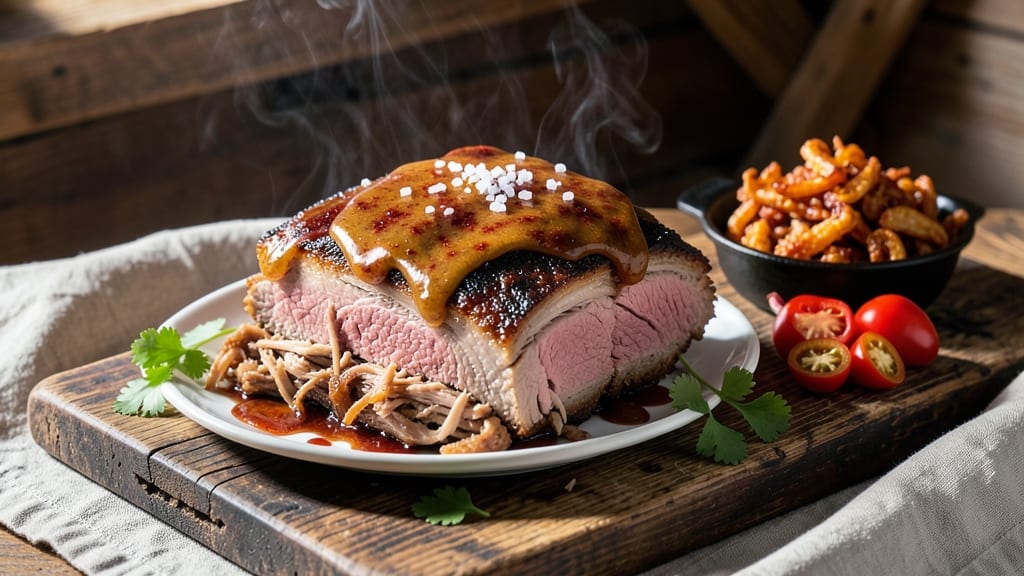
This Carolina pulled pork recipe smoker transforms a simple pork shoulder into tender, fall-apart perfection with that signature smoky crust. I remember my first attempt—after hours of waiting, the moment I pulled back the foil revealed a deep mahogany bark that made my heart race. The secret lies in patience and precision: low temperatures, the right wood, and knowing exactly when to wrap.
What sets this apart is the dry rub—equal parts sweet, spicy, and savory—that clings to the meat as it smokes. I use a mix of brown sugar, paprika, and black pepper, then let the pork shoulder rest overnight in the fridge before hitting the smoker.
This 8-hour cook at 225°F ensures the meat stays juicy while developing that irresistible bark. The wood choice matters too: hickory for classic Carolina flavor, but fruitwoods like apple or cherry add complexity.
When it's done, the pork will be so tender it shreds with a fork, releasing juices that make your mouth water. The bark should be crisp enough to crackle but not burnt—this is where the magic happens.
Serve it piled high on buns with tangy vinegar-based sauce, or let guests build their own sandwiches. Every bite delivers that perfect balance of smoky, sweet, and savory that defines Carolina BBQ.
This recipe isn't just about the pork—it's about the experience. The aroma that fills your backyard as it smokes, the anticipation of that first bite, and the way it brings people together.
Whether you're feeding a crowd or just craving comfort food, this pulled pork delivers restaurant-quality results with minimal fuss. Let's get smoking!
Ingredients for carolina pulled pork recipe smoker
Six pounds of pork shoulder and these simple spices create smoky, fall-apart perfection on your smoker.
| Ingredient | Amount | Notes |
|---|---|---|
| Boneless Pork Shoulder 🍖 | 6 lb | Bone-in preferred for juiciness |
| Brown Sugar 🍚 | ½ cup | Light or dark works best |
| Smoked Paprika 🌶️ | 2 tbsp | For that authentic Carolina bark |
| Ground Black Pepper 🌶️ | 2 tsp | Freshly cracked for best flavor |
| Kosher Salt 🧂 | 1 tbsp | Diamond Crystal preferred |
| Garlic Powder 🧄 | 1 tbsp | Not garlic salt |
| Onion Powder 🧅 | 1 tbsp | For depth of flavor |
| Cayenne Pepper 🔥 | ½ tsp | Adjust for heat preference |
| Apple Cider Vinegar 🍎 | ½ cup | For tangy sauce balance |
| Hickory Wood Chips 🌳 | 2 packages | Classic Carolina flavor |
| Butter 🧈 | ¼ cup | Unsalted, for basting |
| Heavy Cream 🥛 | ¼ cup | For sauce richness |
| Aluminum Foil 📄 | 2 sheets | Heavy-duty for wrapping |
| Buns 🥪 | 12 whole | Potato or brioche preferred |
The pork shoulder is the star—look for a cut with good marbling for maximum juiciness. Costco or local butchers usually have the best quality, but any grocery store pork shoulder works if it's fresh. I always buy bone-in when possible (the bone adds flavor), but boneless is fine if that's what you've got. For the dry rub, Penzeys or bulk bins at Whole Foods have the best quality spices—avoid the pre-mixed BBQ rubs at the store. They're often too salty and lack depth. The brown sugar should be light or dark, not raw—it caramelizes better during the smoke.
No smoked paprika? Regular paprika plus a pinch of liquid smoke gets you close. Short on hickory chips? Apple or cherry wood adds sweetness that pairs beautifully. The apple cider vinegar can be swapped for red wine vinegar in a pinch, but the acidity matters here—don't skip it. For the sauce, if you're avoiding dairy, coconut cream instead of heavy cream works surprisingly well. The cayenne is optional but adds that Carolina kick—start with half a teaspoon and adjust to taste. And if you're serving a crowd, double the sauce ingredients—it disappears fast.
Keep the pork shoulder in the fridge overnight before smoking—this helps the rub adhere better. The wood chips? Soak them for 30 minutes if your smoker runs hot, but don't soak them if you're using a water pan. Wrapped portions reheat beautifully—just add a splash of broth and 10 minutes in the oven. The sauce keeps for 5 days in the fridge, and the pork? It actually tastes better the next day once all the flavors meld. I always make extra—freezes perfectly for 3 months and makes leftovers for sandwiches all week.
Why You'll Love This Recipe
- Sweet-Smoky Magic: That brown sugar isn’t just for looks—it caramelizes into a sticky, tender crust that clings to every bite, while the smoked paprika gives it that deep, woodsy warmth. Honestly, the first time I took a bite, I nearly burned my tongue from how good it was.
- Budget BBQ Win: A single pork shoulder feeds a crowd for less than $10, and the rub costs pennies. I’ll be real: this is my go-to for potlucks, tailgates, or when I’m too tired to order takeout. Solid, reliable, and always a hit.
Step-by-step instructions for Carolina pulled pork
Here's how to transform a simple pork shoulder into tender, smoky perfection.
Prepare and Season the Pork Shoulder
Start by removing the pork shoulder from the refrigerator and letting it sit at room temperature for 1 hour. This ensures even cooking throughout. Pat the meat completely dry with paper towels—this step is crucial for developing that signature crispy bark. I like to use two layers of paper towels to get it really dry.
In a small bowl, combine the 0.5 cup brown sugar, 2 tbsp smoked paprika, 2 tsp ground black pepper, 1 tbsp kosher salt, 1 tbsp garlic powder, 1 tbsp onion powder, and 0.5 tsp cayenne pepper. Rub this mixture all over the pork shoulder, pressing it into the meat so it sticks well. Pay special attention to the edges and corners where the rub tends to fall off. Let it sit at room temperature while you prepare the smoker.
Set Up Your Smoker for Low-and-Slow Cooking
Fill your smoker's water pan with 1 cup of water and add the 2 packages of hickory wood chips to the smoker box. Preheat your smoker to 225°F—this low temperature is key for that tender, juicy result. I've found that maintaining this temperature consistently is more important than exact timing.
Once the smoker reaches temperature and you see clean, blue smoke (not thick white steam), place the pork shoulder fat-side up on the grill grate. The fat will render down and baste the meat as it cooks. Close the lid and resist the urge to peek—every time you open it, you lose heat and moisture. Let it smoke undisturbed for 6-8 hours, or until the internal temperature reaches 165°F.
Wrap and Finish the Pork
When the internal temperature hits 165°F, you'll notice the temperature stall—a point where the meat stops cooking and the internal temperature plateaus. This is normal and happens because the moisture in the meat is evaporating. To push through this stall, wrap the pork shoulder tightly in one of the heavy-duty aluminum foil sheets.
Return the wrapped pork to the smoker and continue cooking until the internal temperature reaches 203°F. This final stage usually takes another 2-3 hours. The foil helps retain moisture while still allowing the smoky flavors to penetrate. Once it reaches 203°F, remove the pork from the smoker and let it rest for 1 hour before shredding.
Prepare the Tangy Sauce
While the pork rests, prepare the sauce by combining the 0.5 cup apple cider vinegar, 0.25 cup butter, and 0.25 cup heavy cream in a saucepan. Bring the mixture to a simmer over medium heat and let it cook for 5-7 minutes until slightly thickened. Taste and adjust the seasoning with additional salt or pepper if needed.
This tangy sauce cuts through the richness of the pork and adds a bright contrast to each bite. The vinegar also helps tenderize the meat slightly as it sits. Keep the sauce warm until you're ready to serve.
Shred and Serve
After the pork has rested for 1 hour, carefully unwrap it and shred the meat using two forks or a meat claw. Discard any large fat chunks. The meat should pull apart easily with minimal resistance—this is your sign that it's perfectly tender. Mix the shredded pork with the warm sauce until fully coated.
Pile the pulled pork onto the 12 whole buns and serve immediately. The contrast of the warm, smoky pork with the soft buns makes every bite irresistible. Don't forget to save some of that delicious sauce for drizzling on top—it makes all the difference!
Pro Tips For Making Carolina Pulled Pork Recipe Smoker
- CRANK THE HEAT FIRST: Start your smoker at 275°F, but blast it to 350°F for the first 30 minutes with the pork shoulder uncovered. I learned this the hard way—skipping the hot start means you’ll spend hours chasing bark that never quite forms. The sugar in your rub will caramelize faster, giving you that deep, glossy crust everyone wants.
- SALT THE MEAT TWICE: Apply half your kosher salt when you first rub the pork, then hit it again with the rest after it’s been smoking for 2 hours. The first layer draws out moisture, and the second locks in flavor as the meat cooks. Yes, it’s an extra step, but your pulled pork will taste richer—no dry, salty skin here.
- DON’T PEEK UNTIL 4 HOURS: Resist the urge to check the temp before then, even if you’re worried. Every time you open the smoker, you’re losing heat and moisture, and your pork shoulder will take longer to tenderize. Trust the process—just let it smoke undisturbed. (I know, I know, but trust the process.)
- USE A MIX OF BROWN SUGAR AND HONEY: Swap half the brown sugar for honey in your rub or mop—it adds stickiness that helps the bark cling better and cuts through the smokiness. I was skeptical until I tried it; now, I can’t go back. The flavor’s sweeter, the texture’s smoother, and cleanup’s easier.
Storing and reheating your leftovers
Fridge Storage Tips
Let your pulled pork cool completely before storing—this prevents condensation that makes meat soggy. Transfer to an airtight container with a splash of the tangy sauce (about ¼ cup) to keep it moist.
Store in the fridge for up to 5 days, but I find the flavor actually deepens after 24 hours as the spices meld. 💪
Freezer Magic
For long-term storage, divide the pork into quart-sized freezer bags with 1 inch headspace to prevent ice crystals. Label with the date—it stays excellent for 3 months.
When reheating frozen pork, thaw overnight in the fridge first, then warm in a pot with ¼ cup apple cider vinegar and 2 tbsp butter over low heat for 15-20 minutes.
Reheating Perfection
My favorite method? Place wrapped portions in a 350°F oven with a light spray of apple cider vinegar (about 1 tbsp per pound) for 10-15 minutes.
The acidity helps restore that tender texture. For microwave reheating, use 50% power in 2-minute intervals, stirring between each, until reaching 165°F internal temperature.
Sauce Revival
The tangy sauce reheats beautifully—simmer on low heat for 5 minutes with a pat of butter (1 tbsp per cup). If it thickens too much, add 1 tbsp water at a time.
I always double the sauce recipe because it disappears faster than the pork! Store leftover sauce separately in the fridge for up to 5 days or freeze for 2 months.
Leftovers Reinvented
Tired of sandwiches? Use pulled pork in tacos with pickled onions and avocado crema, or stuff into baked potatoes with cheese and green onions. The smoky flavors work surprisingly well in breakfast hash too—just mix with diced potatoes and fried eggs.
I swear by pulled pork mac and cheese as a comforting weeknight dinner. 🌟
Bark Preservation
That precious crispy bark? Save it by reheating wrapped portions in the oven—it stays intact when steamed gently. For sandwiches, keep the crusty bark on the outside and serve with extra sauce on the inside.
If reheating causes the bark to soften, toast it briefly in a 400°F oven for 2-3 minutes to restore that satisfying crunch. Trust me, it makes all the difference! 🔥
Nutrition facts
Frequently asked questions
What's the best cut of pork for this smoker recipe?
A bone-in pork shoulder (also called a Boston butt) is ideal—it stays juicy and develops that perfect bark. If you must use boneless, look for a cut with good marbling. Never use pork loin or tenderloin; they're too lean and will dry out at low temperatures.
Can I use a different wood than hickory?
For a sweeter profile, try apple or cherry wood. Oak gives a milder flavor, while pecan adds a nutty depth. Just avoid mesquite—it's too strong and can overpower the pork's natural taste.
Why does my pulled pork turn out dry? Most likely, you unwrapped it too early or cooked it too hot. The 203°F internal temp is critical—don't rush it! Also,
How do I make this recipe in an oven instead of a smoker?
Use a 275°F oven with a water pan on the bottom rack. Place the pork on a rack above the pan, add 1 tbsp apple cider vinegar to the pan, and cook for 4-5 hours until 203°F. The bark won't be as crispy, but it'll still be tender and flavorful.
What's the best way to reheat leftovers without drying them out?
Wrap portions in foil and reheat in a 350°F oven with 1 tbsp apple cider vinegar per pound for 10-15 minutes. The acidity helps restore moisture. Never microwave directly—it turns meat rubbery. For sandwiches, toast the buns first to keep everything warm.