
Soups & Stews
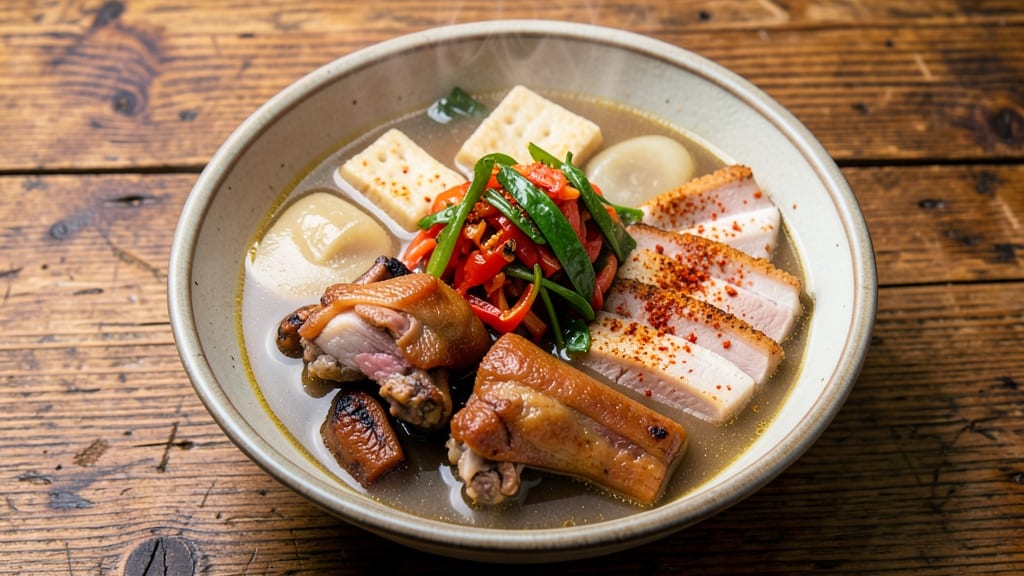
This Busan pork soup recipe brings the bold flavors of Korea’s coastal city to your kitchen, where spicy kimchi and chewy rice cakes transform humble ingredients into a soul-warming bowl. 🔥 I first tasted it in Busan’s bustling markets, where vendors simmered pork bones with fermented heat and seafood undertones—now you can recreate that depth at home.
The secret lies in the broth: pork bones and trotters simmered until rich, then brightened with fermented seafood and gochugaru (Korean chili flakes). Thinly sliced pork belly adds tender, fatty bites that melt into the broth, while rice cakes and kimchi bring texture and tang.
This isn’t just soup—it’s a flavor journey from Busan’s streets to your table.
What makes this recipe special is the balance: spicy yet savory, hearty yet light. The broth reduces to a velvety consistency that clings to every strand of pork and rice cake, while the kimchi’s acidity cuts through the richness.
Serve with steamed rice to soak up every last drop—this is comfort food at its finest.
For those who love regional twists, add a splash of anchovy broth or extra seafood for Busan’s signature coastal touch. The technique is straightforward but transformative—perfect for a weeknight dinner that feels like a celebration. Let’s get cooking.
Ingredients for busan pork soup
Pork bones, belly, and kimchi—this is Busan’s soul in a bowl.
| Ingredient | Amount | Notes |
|---|---|---|
| Pork Trotters 🐷 | 1 ½ lb | Cut into 2-inch pieces |
| Pork Belly 🥓 | 1 lb | Thinly sliced, skin removed |
| Pork Bones 🦴 | 2 whole | Marrow-rich for richness |
| Korean Rice Cakes 🍡 | 8 pieces | Round, chewy kind (songpyeon) |
| Kimchi 🥬 | 1 ½ cups | Spicy, fermented, chopped |
| Gochugaru (Korean Chili Flakes) 🌶️ | 2 tbsp | Adjust for spice preference |
| Anchovy Broth 🐟 | 2 tbsp | Or 1 tbsp anchovy paste |
| Garlic Cloves 🧄 | 4 cloves | Minced for depth |
| Green Onions 🧅 | 4 whole | Chopped, for garnish |
| Sesame Oil 🫒 | 1 tbsp | Toasted sesame preferred |
| Soy Sauce 🥄 | ½ cup | Korean or Japanese |
| Water 💧 | 8 cups | For initial broth |
| Salt 🧂 | 1 tsp | Adjust to taste |
| Black Pepper 🌶️ | ½ tsp | Freshly ground |
| Steamed White Rice 🍚 | 2 cups | For serving (optional) |
The pork is the heart of this soup. Trotters and bones give that deep, savory broth, while the pork belly adds tender, fatty bites. Look for trotters with some meat still attached—they’re sweeter. If you can’t find them, pork shanks work in a pinch. The rice cakes? Grab the round, chewy kind (songpyeon) from the Asian market—they’re worth the hunt. For kimchi, napa cabbage-based is traditional, but any spicy, fermented kimchi will do. Just chop it roughly—no need to be precise.
No anchovy broth? Fish sauce or even soy sauce can stand in, but anchovies give that unmistakable Busan depth. Running low on gochugaru? Substitute cayenne or chili flakes at half the amount, but taste first—it packs heat. The broth starts watery, but it reduces to a rich, velvety consistency. If it’s not quite there, simmer uncovered for another 10 minutes. The pork belly should be tender enough to shred with a fork. If it’s still tough, let it cook another 15 minutes. And trust me, the sesame oil at the end? Toast it first—it makes all the difference.
This soup tastes even better the next day—flavors meld like magic. Store leftovers in the fridge for 4-5 days, or freeze for 3 months. I like to portion it into containers with rice on the side so it’s ready to reheat. When serving, drizzle with a little extra sesame oil and sprinkle those green onions on top. The rice cakes stay chewy when added at the end, so don’t toss them in too early. Leftovers? Double the batch—it disappears fast.
Why You'll Love This Recipe
- One-Pot Magic: I swear by this—just toss in the trotters, belly, and bones, then let the broth do the work. No chopping, no fuss, and the rich, savory steam fills the whole kitchen before you even stir.
- Umami Bomb: That combo of pork bones and kimchi? Chef’s kiss. The broth gets this deep, funky-sweet flavor that’s impossible to resist, and the rice cakes add a satisfying chew that keeps you coming back.
- Budget Feast: Pork trotters and belly are affordable cuts that turn into a hearty meal. Between us, I’ve made this for $10 and fed four people—plus, the bones make broth so rich, you’ll forget you’re saving money.
Step-by-step instructions for Busan pork soup
Here's how to build this rich, spicy broth from scratch—layer by layer.
🔥 Step 1: Char the Aromatics and Pork for Deep Flavor
Heat a heavy pot (like a Dutch oven) over medium-high heat until smoking hot. Add the 1.5 lb pork trotters and 1 lb pork belly in a single layer, letting them sear undisturbed for 5-6 minutes until deeply browned. This creates the Maillard reaction that forms the soup's foundation.
Once browned, flip the pork and add the 2 whole pork bones. Let them sear another 2-3 minutes on all sides. Remove the pork and bones with tongs and set aside. Here's the thing—don't wash out the pot. Those browned bits are pure flavor.
🍳 Step 2: Build the Spicy-Savory Base
Add 1 tbsp sesame oil to the same pot and swirl to coat. Toss in the 4 cloves minced garlic and 1.5 cups chopped kimchi, stirring for 1 minute until fragrant. The kimchi will release its tangy, fermented goodness—this is where the soup gets its signature depth.
Sprinkle in the 2 tbsp gochugaru and 2 tbsp anchovy broth, stirring constantly for 30 seconds to toast the chili flakes. You'll smell that spicy, umami punch developing. Pour in the 0.5 cup soy sauce and 8 cups water, scraping up all those browned bits from the bottom of the pot.
🥘 Step 3: Simmer the Broth Until Rich and Infused
Return the pork and bones to the pot, bringing everything to a boil. Once boiling, reduce heat to low and add the 1 tsp salt and 0.5 tsp black pepper. Cover and simmer for 1.5 hours, skimming off any foam that rises to the surface. This long cook time is crucial—it breaks down the collagen in the pork trotters and bones, creating that signature silky texture.
After 1 hour, check the broth level and add 2 cups hot water if needed to keep it covered. You'll know it's ready when the pork is fork-tender and the broth has reduced slightly, becoming thick and glossy. The aroma should be intoxicating—savory, spicy, and deeply comforting.
👨🍳 Step 4: Finish with Rice Cakes and Garnishes
Remove the pork from the broth and shred it using two forks. Return the shredded pork to the pot and stir in the 8 pieces Korean rice cakes, letting them soak up the flavor for 5 minutes. The rice cakes should plump up slightly but still hold their shape.
Divide the 2 cups steamed white rice among bowls, then ladle the hot broth and pork over the top. Garnish with 4 chopped green onions and a drizzle of sesame oil. Serve immediately while steaming hot—this is when the flavors are at their peak!
Pro Tips For Making Busan Pork Soup
- BLANCH TROTTERS FIRST: I learned this the hard way—skipping the quick 10-minute blanch in salted boiling water makes the trotters tough as boot leather. After blanching, shock them in ice water to stop cooking; this step also removes blood and impurities that’ll cloud your broth later.
- SEAR BONES UNTIL BLACK: Don’t rush this. Char those pork bones on high heat for 10-15 minutes until they’re jet-black in spots—this caramelization unlocks deep umami. I used to stop at brown and wondered why my soup tasted flat.
- SIMMER LOW AND COVERED: After the initial sear, reduce to a gentle simmer with the lid on tight. Too much heat = cloudy broth; too little = undercooked meat. My grandmother swore by this, and she was right: 2-3 hours at 180°F (82°C) is non-negotiable for tender pork.
- ADD RICE CAKES LAST: Tossing them in early turns them to mush. Instead, fold in the sliced rice cakes during the final 10 minutes—just enough time to soften without dissolving. (Yes, even if you’re impatient like me.)
Make-ahead tips for leftovers
Broth Prep Ahead
Start the broth base the night before for maximum flavor. Sear the pork trotters and bones as directed, then refrigerate them in the pot with the browned bits. Cover with cold water and add 1 tbsp soy sauce and 1 tsp salt.
Let it sit overnight in the fridge—this cold soak extracts more collagen and fat, creating a richer broth when you simmer it the next day. I do this all the time when I'm prepping for big family gatherings. 💫
Pork Pre-Cooking
Save time by pre-cooking the pork belly separately. Slice it thinly and simmer in 1 cup water with 1 tsp salt and ½ tsp pepper for 20 minutes until tender. Drain and store in an airtight container in the fridge for up to 3 days.
This step ensures the pork is ready to shred when you assemble the soup, cutting your active cooking time by 30 minutes.
Kimchi Infusion
Boost the kimchi's flavor by pre-infusing it with the broth. After simmering the broth for 1 hour, remove 1 cup and mix it with the chopped kimchi in a bowl. Let it sit at room temperature for 30 minutes before adding it back to the pot.
This step intensifies the kimchi's tang and fermented notes, making every spoonful more vibrant. Store the infused kimchi in the fridge for up to 2 days if you're prepping ahead.
Rice Cake Prep
Prevent soggy rice cakes by pre-soaking them in broth. Place the 8 rice cakes in a bowl and cover with 1 cup hot broth for 10 minutes. Drain and store them in the fridge for up to 24 hours.
When ready to serve, simply reheat the broth and add the rice cakes back in for the final 5 minutes of cooking. This keeps them chewy and prevents them from turning mushy during long simmering.
Freezer-Friendly Packaging
For longer storage, freeze the broth and pork separately. After simmering, let the broth cool completely, then transfer it to freezer-safe containers, leaving 1 inch headspace for expansion. Freeze the shredded pork in a separate container.
When ready to serve, thaw the broth in the fridge overnight and reheat it on the stovetop. Add the pork back in and finish with fresh rice cakes and garnishes. This method preserves the soup's texture and flavor for up to 3 months. 🧊
Reheating Like a Pro
Reheat the soup gently to maintain its texture. Pour it into a pot and warm over low heat for 10-15 minutes, stirring occasionally. Avoid high heat, which can make the broth too thin or turn the rice cakes rubbery.
If the broth seems too thick after reheating, add ¼ cup hot water and stir until smooth. For extra richness, stir in 1 tsp toasted sesame oil before serving. This method keeps the soup just as comforting as when it was first made. 🔥
Nutrition facts
Frequently asked questions
Why does Busan pork soup taste different from other Korean pork soups?
Busan's coastal location gives it a unique twist! This version incorporates anchovy broth and often seafood undertones (like squid or clams) that reflect the city's fishing traditions. The broth also tends to be slightly spicier with more gochugaru and fermented flavors from the kimchi, creating that signature Busan heat.
Can I make this soup without anchovy broth?
For a vegetarian version, replace the anchovy broth with 1 tbsp soy sauce + 1 tsp fish sauce substitute (like mushroom powder). For meat lovers, try 2 tbsp shrimp or clam juice instead. The key is that umami depth—without it, the broth will taste flatter.
What's the best way to store leftovers?
Store the broth and pork separately in airtight containers for up to 5 days in the fridge. For longer storage, freeze the broth (up to 3 months) and pork (up to 2 months). Reheat gently on low heat—never microwave directly, as it can make the rice cakes rubbery.
Are the rice cakes essential, or can I substitute them?
While traditional, you can swap them for chewy tapioca pearls or even extra pork if you're avoiding gluten. For authenticity, look for Korean songpyeon rice cakes—they're chewy but hold their shape beautifully. If you can't find them, thick slices of yuca work in a pinch.
How can I make this soup less spicy?
Reduce the gochugaru to 1 tbsp and skip the anchovy broth (which adds subtle heat). For milder kimchi, use less spicy varieties or remove the stems before chopping. You can also add 1 tsp sugar to balance the heat while cooking. The broth will still taste rich and savory!