
Main Courses
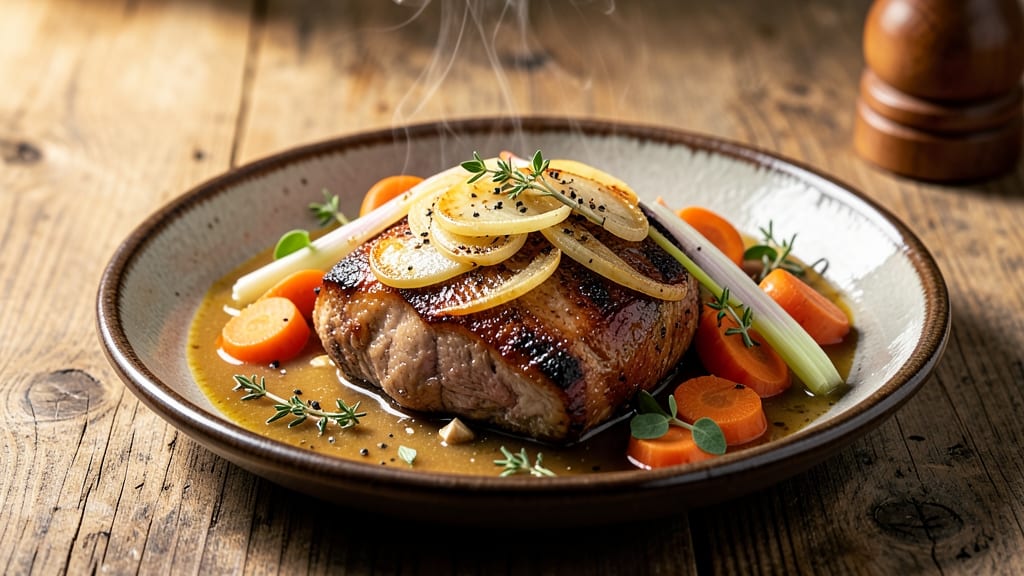
This Bavarian pork knödel recipe brings hearty German comfort to your table with tender pork and pillowy dumplings in rich broth. 💛 As someone who's spent years perfecting pork dishes, I can tell you the secret lies in slow-braised pork shoulder and homemade dumplings that float like clouds in the savory sauce.
The dish begins with a flavorful pork shoulder, marinated and braised until fork-tender, then served with soft knödel dumplings that absorb the aromatic broth. This traditional recipe delivers restaurant-quality results with simple techniques you can master at home.
The combination of tender meat, fluffy dumplings, and savory gravy creates a meal that feels like a warm embrace.
What makes this recipe special is the balance of textures—crispy edges on the pork, tender meat, and light-as-air dumplings that melt in your mouth. The aroma alone will transport you to a Bavarian beer hall, while the flavors satisfy even the heartiest appetites.
Perfect for family dinners or special occasions, this dish is sure to become a new favorite.
Pair with classic sides like sauerkraut or a fresh green salad to complete the meal. The techniques I'll share ensure authenticity without requiring specialized equipment—just patience and attention to detail. Let's create this comforting classic together.
Ingredients for bavarian pork
Pork shoulder, aromatic vegetables, and fluffy dumplings transform into a Bavarian masterpiece.
| Ingredient | Amount | Notes |
|---|---|---|
| Pork Shoulder (Boston Butt) 🥩 | 3 lb | Bone-in for flavor, cut into 2-inch chunks |
| Yellow Onions 🧅 | 2 whole | Medium-sized, roughly chopped |
| Carrots 🥕 | 3 whole | Medium-sized, peeled and cut into chunks |
| Celery Stalks 🌿 | 3 whole | Cut into 1-inch pieces |
| Garlic Cloves 🧄 | 6 cloves | Peeled and smashed |
| Fresh Thyme 🌿 | 2 sprigs | Or 1 tsp dried thyme |
| Fresh Parsley 🌿 | ¼ cup | Chopped, for garnish |
| Bay Leaves 🍃 | 2 whole | Dried, removed before serving |
| All-Purpose Flour 🌾 | 2 cups | Plus 1 tbsp for dusting |
| Baking Powder 🍞 | 1 tsp | For fluffy knödel |
| Salt 🧂 | 1 ½ tsp | Kosher or sea salt |
| Black Pepper 🌶️ | ½ tsp | Freshly ground |
| Butter 🧈 | ½ cup | Cold, cubed for knödel |
| Beef Broth 💧 | 4 cups | Homemade or high-quality store-bought |
| Whole Milk 🥛 | 1 cup | Full-fat for richness |
The pork shoulder is the heart of this dish—bone-in, cut into 2-inch chunks—so it stays juicy during the long braise. Look for good marbling at Whole Foods or your local butcher. If you can't find bone-in, bone-out works too, but add a splash of broth to compensate. The yellow onions, carrots, and celery form your mirepoix base; chop them evenly so they cook at the same rate. Fresh thyme adds depth, but dried works in a pinch (use half the amount). For the knödel dough, King Arthur flour is my go-to for consistency, but any all-purpose will do.
No beef broth? Chicken or vegetable broth works, though the flavor will differ slightly. Running short on milk? Heavy cream or half-and-half adds richness, but stick to whole milk for authentic texture. The baking powder is crucial—it's what makes the dumplings light. If you don’t have it, whisk 1 tsp baking soda with 1 tbsp vinegar as a substitute. For the butter, European-style unsalted melts beautifully, but regular salted butter works if you reduce the added salt slightly. The bay leaves should be removed before serving—no one wants a leafy surprise in their dumpling!
This braise tastes even better the next day, so make extra broth for leftovers. Store the pork and dumplings separately in the fridge for up to 3 days—reheat gently in the broth. For the dough, prep it ahead and refrigerate up to 24 hours before shaping. The dumplings freeze beautifully too—drop them into boiling water straight from the freezer (no thawing needed). Leftovers reheat best in a 350°F oven with a splash of broth until warmed through. Pair with sauerkraut or a crisp green salad for the full Bavarian experience.
Why You'll Love This Recipe
- One-Pot Magic: I swear by this—just toss the pork shoulder, onions, carrots, and celery into a Dutch oven (or a heavy pot) with some broth, let it simmer, and walk away. No chopping boards full of scraps, no messy sauces to strain. The veggies soften right into the meat, so you’re basically making two things at once.
- Deep Umami Bomb: That pork shoulder? It melts into tender, pull-apart perfection, while the onions and garlic caramelize into this rich, savory base. Honestly, the longer it cooks, the better it gets—like a slow dance of flavors that turns your kitchen into a cozy German beer hall (minus the pretentiousness).
- Leftovers That Don’t Suck: Between us, most pulled pork leftovers are sad. Not this. The sauce clings to the meat, so reheating it later is still juicy and flavorful. I make a double batch on Sundays because it’s the star of my lunchboxes all week—no sad, dry sandwiches here.
- Budget Stretch King: Pork shoulder is the ultimate budget hero—cheap, hearty, and packed with protein. Add a few cheap veggies (onions, carrots, celery), a splash of broth, and you’ve got a meal that feeds four for under $15. Plus, it’s the kind of dish that makes you look fancy without breaking the bank.
Step-by-step instructions for Bavarian pork knödel
Here's how to create tender pork shoulder and light-as-air dumplings that soak up every drop of flavor.
🔥 Step 1: Brown the Pork Shoulder and Sauté the Vegetables
Pat the 3 lb pork shoulder dry with paper towels and cut it into 2-inch chunks. Heat a large Dutch oven over medium-high heat and add the pork in batches, letting each batch sear for 3-4 minutes until deeply browned on all sides. This step builds incredible flavor through the Maillard reaction.
Once all pork is browned, remove it from the pot and set aside. In the same Dutch oven, add 2 tablespoons of the 0.5 cup butter and let it melt completely. Add the 2 whole yellow onions, 3 whole carrots, and 3 whole celery stalks. Cook for 8-10 minutes until the vegetables soften and begin to caramelize.
Add the 6 smashed garlic cloves, 2 sprigs fresh thyme, and 2 whole bay leaves. Stir everything together and cook for another 2 minutes until fragrant. Here's the thing—don't skip this step. The vegetables form the flavor base for both the broth and the dumplings.
🍳 Step 2: Build the Flavorful Broth
Pour in the 4 cups beef broth, scraping up any browned bits from the bottom of the pot. Return the pork to the Dutch oven and bring everything to a simmer. Cover and cook for 2 hours, stirring occasionally, until the pork is fork-tender and easily pulls apart.
Once the pork is tender, remove it from the broth and let it rest on a cutting board for 10 minutes. Strain the broth through a fine-mesh sieve into a clean pot, pressing on the vegetables to extract all their flavor. You should have about 3 cups of rich, aromatic broth.
Return the broth to the Dutch oven and keep it warm over low heat. This broth will be the perfect vehicle for your knödel to absorb all those wonderful flavors.
👨🍳 Step 3: Prepare the Knödel Dough
In a large bowl, combine the 2 cups all-purpose flour, 1.5 tsp salt, 0.5 tsp black pepper, and 1 tsp baking powder. Make a well in the center and add the 1 cup whole milk and 0.5 cup cold cubed butter. Mix with a wooden spoon until a shaggy dough forms.
Turn the dough onto a lightly floured surface and knead gently for 2-3 minutes until smooth. The dough should be soft but not sticky. If it's too dry, add a splash of milk; if too sticky, add a bit more flour. This dough is the foundation for your fluffy dumplings.
Divide the dough into 6 equal portions, rolling each into a smooth ball. Here's where the magic happens—don't worry if they're not perfect. Bavarian knödel are meant to be rustic and comforting.
🥘 Step 4: Poach the Knödel in the Broth
Bring the pork broth back to a gentle simmer. Carefully add the knödel balls to the broth, spacing them out so they don't touch. Here's the crucial part—don't stir them once they're in the broth. You want them to rise gently and cook evenly.
Simmer the knödel for 15-20 minutes until they float to the surface and are cooked through. They should be light and airy inside with a slightly crisp exterior. If they brown too quickly, you can cover the pot for the last few minutes to prevent over-browning.
Once cooked, remove the knödel with a slotted spoon and transfer them to a serving platter. Spoon some of the flavorful broth over the top and garnish with the 0.25 cup chopped fresh parsley.
🍽️ Step 5: Serve with Confidence
Shred the rested pork shoulder and return it to the Dutch oven with the broth. Let it warm through for 5 minutes. Ladle the pork and broth over the knödel, serving each portion with 2-3 dumplings floating in the rich sauce.
Each bite should deliver tender pork, fluffy dumplings that melt in your mouth, and a deeply flavorful broth. The knödel should be light enough to float but substantial enough to hold their shape. Serve immediately while everything is hot and the dumplings are at their peak texture.
Pro Tips For Making Bavarian Pork
- Brown the Shoulder First: Don’t skip the sear—get that pork shoulder screaming hot in a dry skillet for 5-7 minutes per side before adding liquid. I learned this the hard way when my first batch turned out pale and bland; the crust locks in flavor and keeps the meat from falling apart later.
- Dice Onions Like Dice: Cut yellow onions into ¼-inch cubes, not thin slices—this ensures even cooking and prevents mushiness. I used to slice them too finely, and they’d turn to soup before the pork got tender. Uniform pieces mean consistent texture.
- Skip the Boil, Sauté Veggies: After browning the pork, sweat the onions, carrots, and celery in the same pot with a splash of water or broth—no need to boil. This builds flavor without dissolving the veggies into the sauce. My grandmother swore by this, and she was right: the veggies stay intact and add depth.
- Rest Before Slicing: Let the pork shoulder rest for 15 minutes under foil after cooking—yes, even if you’re impatient. Cutting it too soon means dry, shredded meat. I know, I know, but trust the process; the juices redistribute, and every slice stays moist.
Make-ahead tips for this bavarian pork
Prep Ahead for Pork
Start your pork shoulder the night before by marinating it in a mix of 2 tbsp olive oil, 1 tbsp Dijon mustard, 1 tsp caraway seeds, 1 tsp salt, and ½ tsp black pepper.
Store it in a sealed container in the fridge—this jumpstarts the flavor development. I swear by this method because it cuts down on active cooking time by 30 minutes on the day of your meal. 🥩
Dough Prep in Advance
The knödel dough can be made up to 24 hours ahead and stored in an airtight container in the fridge. This is a game-changer—I often prep mine the night before while I'm watching TV.
When ready to cook, simply divide the chilled dough into balls and poach them fresh. The cold dough handles better and creates even lighter dumplings. Trust me, your future self will thank you. 🍞
Broth Booster
Make your beef broth 2 days ahead and store it in the freezer. I use a 5-quart freezer-safe bag for easy thawing. When you're ready to cook, simply add the frozen broth directly to your Dutch oven—it'll thaw as it heats up.
For extra depth, add 1 crushed juniper berry and 1 tsp marjoram to the broth while it simmers. These herbs are classic in Bavarian cooking and add a subtle piney aroma. ❄️
Freezer-Friendly Dumplings
Uncooked knödel dough balls freeze beautifully! Shape your dough balls as directed, then place them on a parchment-lined tray and freeze for 1 hour. Transfer to a sealed container and store for up to 1 month.
When ready to cook, drop them straight from the freezer into simmering broth—no thawing needed. This is my secret for stress-free weeknight dinners. Just add broth and let the magic happen. ⏰
Reheating Leftovers
To reheat your Bavarian pork knödel, place the pork and dumplings in a pot with ½ cup fresh beef broth and warm over medium-low heat for 10-15 minutes. Stir occasionally to prevent sticking. For the best texture, avoid microwaving—the dumplings will turn gummy.
If you're reheating from frozen, add 10 extra minutes to the cooking time. The result? Dumplings that are just as light and fluffy as when they were first made. 🔥
Make-Ahead Serving Platter
Assemble your entire meal 1 hour ahead and keep it warm in a 200°F oven. This works perfectly for dinner parties—just reheat everything together before serving. For a restaurant-worthy presentation, arrange the dumplings on a platter, ladle the pork and broth over them, and garnish with fresh parsley.
The aromas alone will have your guests thinking you've been cooking all day. Honestly, this is my favorite trick for effortless entertaining. 💫
Nutrition facts
Frequently asked questions
Can I substitute pork shoulder with another cut?
Yes, but choose wisely! Pork shoulder (Boston butt) works best because of its fat content and collagen for rich flavor. For a leaner option, try pork loin, but it may dry out faster. If you prefer bone-in, pork rib chops or pork shanks add wonderful depth. Just reduce braising time by 30-45 minutes for leaner cuts.
Why do my knödel turn out dense instead of fluffy?
Most likely, your dough needs more baking powder or gentle handling. The secret is in the kneading—don't overwork it! Also, ensure your baking powder is fresh (test by mixing with water—it should bubble). Another trick: add 1/4 tsp lemon juice to the dough for extra lift. And remember, don't pack the dough balls too tightly when shaping.
What's the best way to serve this Bavarian dish?
For a complete meal, serve with classic sides like sauerkraut, roasted root vegetables, or a crisp green salad. The dumplings should float in the rich pork broth, so arrange them on a platter with the meat and sauce ladled over them. Garnish with fresh parsley and a sprinkle of cracked black pepper. For extra authenticity, pair with a dark lager or dry Riesling.
Can I make this recipe in a slow cooker?
Brown the pork first, then transfer everything to your slow cooker. Cook on low for 6-8 hours until tender. For the knödel, shape them as directed and add them to the broth during the last 30 minutes of cooking. The slow cooker method actually enhances the flavors—just be sure to skim excess fat before adding the dumplings.
How do I know when the pork is fully cooked?
The pork is done when it reaches 195°F internally and falls apart easily with a fork. For bone-in cuts, check the thickest part of the meat near the bone. If it's still slightly pink, continue cooking for another 15-20 minutes. The meat will continue carrying over to perfect doneness as it rests. Never rely on color—always use a meat thermometer for accuracy.