
Main Courses
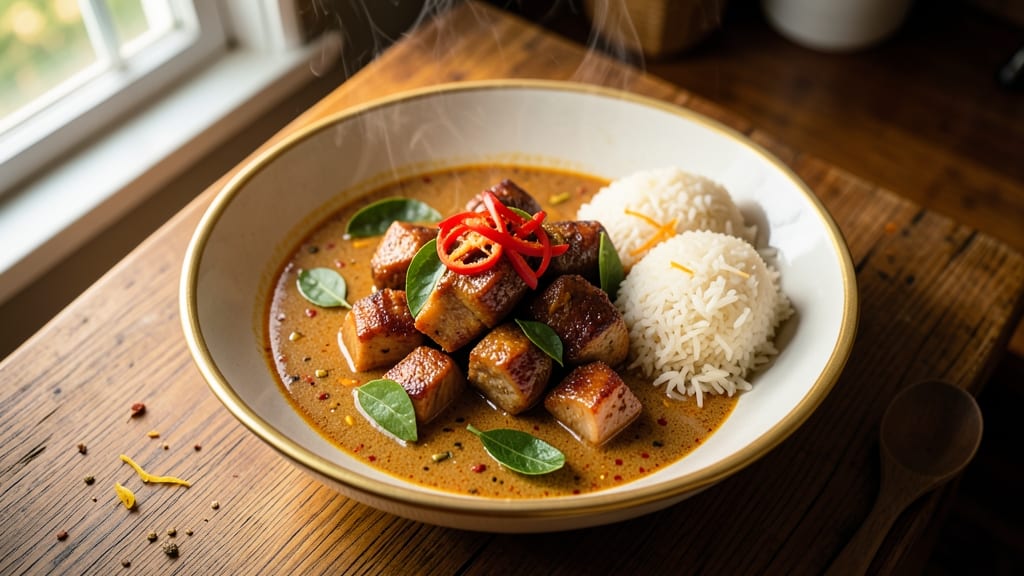
This Burmese pork curry recipe brings the aromatic streets of Yangon to your kitchen with its signature golden turmeric and fiery galangal. 🌟 I first tasted it during my time in Southeast Asia, where the balance of sour, spicy, and umami created a dish that lingers in memory.
The secret lies in marinating the pork with turmeric and tamarind, which infuses the meat with vibrant color and complex flavor before it's cooked in a rich coconut milk broth.
The dish begins with a fragrant paste of galangal, lemongrass, and kaffir lime leaves that forms the flavor base. This aromatic blend is sautéed until fragrant, then combined with coconut milk and tamarind for that signature tangy-sweet balance.
The pork, marinated overnight, cooks slowly in this rich sauce until tender and infused with all the flavors of Burma.
What you'll end up with is a dish that's visually stunning with its golden hue and tender pork that falls apart at the touch. The sauce is rich yet balanced, with just enough heat from the galangal to warm you from the inside out.
This curry is hearty enough to be a main dish but flavorful enough to stand up to rice or noodles.
Pair it with steamed jasmine rice to soak up every last bit of that fragrant sauce, or serve with crispy fried shallots for added texture. The dish keeps well in the fridge for up to 3 days, making it perfect for meal prep.
Let's bring the flavors of Burma to your table tonight.
Ingredients for burmese pork curry
Golden turmeric, fiery galangal, and tender pork make this curry unforgettable.
| Ingredient | Amount | Notes |
|---|---|---|
| Pork Shoulder 🥩 | 1 ½ lb | Cut into 1.5-inch cubes |
| Turmeric Powder 🌿 | 1 tbsp | Freshly ground for vibrant color |
| Galangal 🌱 | 3 inches | Fresh, peeled, sliced thin |
| Lemongrass 🌿 | 2 stalks | Bruised, cut into 2-inch pieces |
| Kaffir Lime Leaves 🍋 | 4 whole | Torn into strips |
| Tamarind Paste 🍯 | 2 tbsp | Unsweetened, or substitute lime juice |
| Coconut Milk 🥥 | 13 ½ oz | Full-fat can, well-shaken |
| Fish Sauce 🍶 | 1 tbsp | Red Boat brand preferred |
| Sugar 🍚 | 1 tbsp | White or brown |
| Garlic Cloves 🧄 | 6 cloves | Minced, or 1 tsp garlic powder |
| Shallots 🧅 | 2 whole | Minced, or 2 tbsp onion powder |
| Vegetable Oil 🫒 | 2 tbsp | For sautéing |
| Salt 🧂 | 1 tsp | Kosher or sea salt |
| Black Pepper 🌶️ | ½ tsp | Freshly ground |
| Jasmine Rice 🍚 | 1 ½ cups | Uncooked, for serving |
Pork shoulder is your best bet here—it stays tender and absorbs all those aromatic flavors. Trader Joe's or Asian markets usually carry it pre-cut, but if you're buying a whole roast, ask for the bone-in shoulder. Galangal can be tricky to find; 99 Ranch or H Mart stock it fresh, but if you can't locate it, ginger works in a pinch (though it won't taste identical). The kaffir lime leaves? Freeze them once you get them—they last forever and save you from buying a whole bunch at once. Tamarind paste is a game-changer for that signature tangy-sweet balance, but if you're out, a mix of lime juice and a touch of sugar does the trick.
No fish sauce? Soy sauce plus a splash of vinegar gets you close, though the umami won't be quite the same. Fresh galangal and lemongrass are non-negotiable for authentic flavor, but if you're in a bind, dried galangal powder (at half the amount) and lemongrass paste will work. The coconut milk should be full-fat—no light versions here. For the rice, jasmine is ideal, but basmati in a pinch will still soak up that glorious sauce. And if you're feeling fancy, crispy fried shallots from Asian grocery stores add a perfect crunch on top—worth the extra step.
This curry tastes even better the next day as all the flavors meld together. Store it in an airtight container in the fridge for up to 3 days, or freeze portions for 3 months. The rice? Cook it fresh when you're ready to eat—it reheats beautifully with a splash of water. Double the batch if you can; this freezes wonderfully for lazy weeknights. And trust me, the leftovers are just as delicious as the first serving—if that's even possible.
Why You'll Love This Recipe
- One-Pot Magic: I swear by this recipe—just the pork, galangal, and lemongrass simmering together in one pot. No chopping mountains of veggies, no last-minute ingredient hunts. The galangal’s peppery bite and lemongrass’s citrusy punch build flavor while you’re still deciding what to watch on Netflix.
- Golden, Spiced Depth: That turmeric? It doesn’t just color the dish—it wraps the pork in a warm, earthy glow. The kaffir lime leaves add a whisper of floral brightness, and the pork shoulder? It falls apart like it’s been slow-cooked for hours, even if you’re rushing. Honestly, the balance of heat and creaminess hits different.
- Leftovers That Shine: This curry tastes better the next day—yes, really. The flavors meld into something richer, and reheating it is a breeze. Pack it for lunch or freeze portions for those nights when takeout feels like too much effort. My freezer is full of these jars, and I’ve never regretted it.
- Budget-Friendly Feast: Pork shoulder is affordable, and these ingredients stretch far. A single batch feeds four, and the spices last for multiple recipes. Between us, I’ve made this for date nights, lazy Sundays, and even a potluck—no one ever guessed it was my wallet-friendly secret weapon.
Step-by-step instructions for Burmese pork curry
Let's create a rich, aromatic curry where turmeric's golden glow meets galangal's fiery kick.
🍳 Step 1: Sauté the Aromatics Until Fragrant
Heat the 2 tablespoons vegetable oil in a large pot over medium-high heat. Add the 2 whole shallots and 6 cloves garlic—minced finely—and cook for 3-4 minutes until the shallots turn translucent and the garlic releases its pungent aroma. Here's the thing—don't let the garlic burn, or it'll turn bitter. Watch closely and stir frequently.
Next, add the 3 inches galangal (peeled and sliced) and 2 stalks lemongrass (bruised and cut into 2-inch pieces). Cook for another 2 minutes until the galangal softens slightly and the lemongrass releases its citrusy scent. You'll notice the galangal has a ginger-like appearance but with a more peppery bite—this is what gives Burmese curry its signature depth.
🍳 Step 2: Build the Curry Base with Spices
Lower the heat to medium and add the 1 tablespoon turmeric powder, stirring constantly for 30 seconds until the spices bloom and fill your kitchen with an earthy aroma. I like to press the turmeric into the aromatics with a wooden spoon—this ensures even distribution and prevents clumping.
Now add the 4 whole kaffir lime leaves (torn into strips) and cook for 1 minute until they wilt slightly. This step is crucial—it releases the lime leaves' floral notes that balance the heat. Be careful not to overcook them, or they'll turn bitter. After a minute, add the 2 tablespoons tamarind paste and stir until fully dissolved. The tamarind adds that signature tangy sweetness that's essential to Burmese flavors.
🥘 Step 3: Add Pork and Simmer Until Tender
Increase the heat to medium-high and add the 1.5 lb pork shoulder (cut into 1.5-inch cubes). Sear the pork for 3-4 minutes until it develops a light brown crust. This step gives your curry that beautiful caramelized flavor that carries through the entire dish.
Pour in the 13.5 oz coconut milk and stir to combine. Add the 1 tablespoon fish sauce, 1 tablespoon sugar, 1 teaspoon salt, and 0.5 teaspoon black pepper. Bring to a gentle simmer, then reduce heat to low. Here's where the magic happens—cover the pot and let it cook for 1 hour to 1 hour 15 minutes, stirring occasionally, until the pork is fork-tender and easily pulls apart. You'll know it's ready when the meat shreds easily and the sauce has thickened slightly, coating the pork in a glossy, aromatic layer.
⏰ Step 4: Cook the Jasmine Rice
While the pork simmers, rinse the 1.5 cups jasmine rice under cold water until the water runs clear. This removes excess starch and prevents the rice from becoming gummy. In a separate pot, combine the rice with 3 cups water (or follow your rice cooker's instructions) and bring to a boil. Reduce heat to low, cover, and simmer for 15 minutes or until the water is absorbed and the rice is tender. Don't peek during cooking—every time you lift the lid, you release steam and risk uneven cooking.
Once the rice is cooked, let it sit covered for 5 minutes before fluffing with a fork. The rice should be separate and fluffy, with no liquid remaining. This is the perfect base for your fragrant curry—each grain should be distinct and ready to soak up those rich, spiced flavors.
🍽️ Step 5: Serve with Fresh Herbs and Lime
Once the pork is tender, taste the curry and adjust the seasoning if needed. You might need a bit more fish sauce for saltiness or sugar to balance the acidity. Garnish with fresh cilantro or Thai basil if you like, and serve the curry hot over the jasmine rice. A squeeze of lime juice just before serving adds a bright finish that cuts through the richness.
This curry is best enjoyed immediately while the pork is still juicy and the aromatics are at their peak. The turmeric-infused pork will have a beautiful golden hue, and the galangal will lend its distinctive peppery heat. Each bite should deliver a perfect balance of creamy coconut, spicy galangal, tangy tamarind, and savory fish sauce. Pair it with a simple cucumber salad or steamed greens to round out the meal.
Pro Tips For Making Burmese Pork Curry
- Sear the Pork First: Get that Dutch oven or heavy pot smoking hot before adding pork shoulder—no cold meat here. A deep, caramelized crust locks in flavor and keeps the meat from turning rubbery later. I used to skip this, and the curry always tasted flat until I realized how much difference a 3-minute sear makes.
- Slice Galangal Thinly: Galangal’s fibrous texture fights back when it’s chunky. Use a sharp knife to shave it into paper-thin slices—this way, it softens completely without leaving tough bits. (Yes, even if it looks like you’re making noodles.) My first attempt with thick chunks had me straining the curry afterward.
- Add Turmeric Last: Stir in the turmeric powder after the pork has browned and the aromatics are fragrant. This prevents it from burning and ensures it brightens the dish evenly. I learned this the hard way when my first batch turned bitter—turns out, burnt turmeric is a real mood killer.
- Simmer Low and Slow: Once everything’s in the pot, drop the heat to a gentle simmer and cover partially. Too much heat, and the lemongrass and kaffir lime leaves will release bitterness. Let it cook for at least 45 minutes—patience here makes the pork fork-tender and the flavors meld. (I know, I know, but trust the process.)
Make-ahead tips for this burmese pork curry
Marinate Overnight
I can't stress enough how much flavor you gain by marinating the pork overnight. In a bowl, combine the 1.5 lb pork shoulder with 1 tbsp turmeric powder, 1 tbsp fish sauce, 1 tbsp sugar, and 1 tbsp tamarind paste.
Seal in a ziplock bag or airtight container and refrigerate for 12-24 hours. This step infuses the meat with vibrant color and deep flavor—trust me, it makes all the difference. 💛
Double the Batch
This curry tastes even better the next day as the flavors meld together. I always double the recipe when I make it—3 lb pork shoulder and 27 oz coconut milk—so I can freeze half for busy weeknights. Portion into quart-sized freezer bags, leaving 1-inch headspace for expansion.
Thaw overnight in the fridge before reheating on the stovetop with 2 tbsp water to restore moisture. The leftovers reheat beautifully with a splash of water or coconut milk.
Rice Prep Ahead
Cook the 1.5 cups jasmine rice in advance and store it in an airtight container at room temperature for up to 2 days. I like to keep it in the fridge for 3 days if I'm prepping multiple meals.
When reheating, spread the rice on a baking sheet and warm in the oven at 300°F for 10 minutes to prevent sogginess. This keeps the grains separate and fluffy—perfect for soaking up that rich curry sauce.
Sauce Storage Tips
The sauce keeps beautifully in the fridge for 3 days if stored separately from the pork. Simply strain out the pork and store the sauce in a glass jar with a tight-sealing lid. Reheat the sauce separately and add the pork back in just before serving.
This prevents the pork from drying out during storage. For freezing, portion the sauce into ice cube trays—once frozen, transfer to a bag and store for up to 3 months. Thaw overnight in the fridge before using.
Freezer-Friendly Pork
If you're freezing the entire curry, let it cool completely before transferring to a freezer-safe container. Leave 1-inch headspace to account for expansion. Label with the date—this curry stays delicious for 3 months in the freezer.
When ready to eat, thaw overnight in the fridge, then reheat on the stovetop over low heat with 2 tbsp water. Stir occasionally to prevent sticking. The pork will be just as tender and flavorful as the day you made it. ✨
Nutrition facts
Frequently asked questions
What makes Burmese pork curry different from other Southeast Asian curries?
The signature elements are the galangal (not ginger) and kaffir lime leaves, which give it that distinctive peppery-citrus aroma. Unlike Thai curries that often use lemongrass and chili pastes, Burmese versions rely on tamarind for tang and fish sauce for umami depth. The slow-cooked pork shoulder also creates a more tender, fall-apart texture compared to quick-seared cuts.
Can I substitute galangal if I can't find it?
Yes! Use ginger at half the amount (1.5 inches) for a milder flavor, or dried galangal powder (3/4 teaspoon). For authenticity, look for it in Asian markets—it's worth tracking down once. If you're in a pinch, a mix of ginger + a pinch of black pepper mimics the peppery kick. The dish will still taste great, though the aroma won't be identical.
How spicy is this curry, and can I adjust the heat?
The galangal provides a mild peppery heat, not the fiery burn of chili. For more spice, add 1-2 teaspoons of red chili flakes or 1/2 teaspoon cayenne when sautéing the aromatics. For a smoky depth, stir in 1/2 teaspoon smoked paprika at the end. Remember, the tamarind and coconut milk balance any heat—so go ahead and experiment!
What's the best way to serve this curry with sides?
Pair it with jasmine rice to soak up the sauce, or serve over rice noodles for a lighter option. For freshness, add a cucumber salad with rice vinegar and chili, or steamed bok choy with garlic. A cold Thai iced tea or lime soda cuts through the richness. Pro tip: Garnish with crispy fried shallots for crunch and extra flavor!
Why did my curry turn out too sour or too sweet?
Tamarind paste is the key—use 2 tablespoons for balance. If it's too sour, add 1/2 teaspoon sugar or a splash of coconut milk. Too sweet? Brighten with 1 teaspoon fish sauce or a squeeze of lime. Always taste as you go! The galangal and fish sauce should harmonize—if one flavor dominates, adjust the other. Trust your palate—this curry is all about balance.