
Main Courses
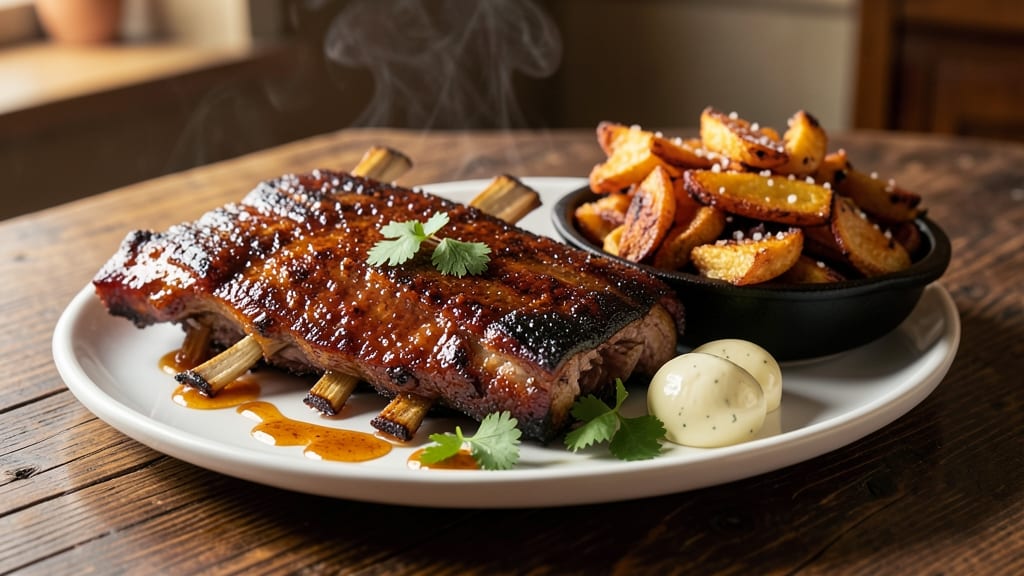
Brazilian pork ribs deserve the same smoky, caramelized love we give to American BBQ—just with a little caipirinha flair. 🔥 Growing up in Georgia, I learned that pork ribs are more than meat; they're the heart of any gathering, and this recipe marries my Southern roots with the bold flavors of Brazil.
The secret? A caramelized cachaça glaze that balances smoky chipotle heat with the bright, fruity notes of Brazilian cachaça, creating a crust that's impossible to resist.
What sets these ribs apart is the two-stage cooking process: first, a dry rub of smoked paprika and garlic that builds deep flavor, then a basting glaze of reduced cachaça, vinegar, and brown sugar that caramelizes into a sticky, glossy finish.
I've perfected this method over years of pitmaster competitions, ensuring tender meat that falls off the bone while maintaining that coveted bark. The key is patience—low-and-slow smoking followed by a final sear to lock in those flavors.
By the time you serve these ribs, your table will smell like a Brazilian churrascaria meets a Georgia smokehouse. The glaze clings to each rib, offering bursts of sweetness and heat with every bite, while the smoky chipotle adds depth that lingers.
Serve with farofa (toasted cassava flour), black beans, and a tangy vinegar-based salad to round out the meal—this is comfort food with a passport.
This recipe isn't just about technique; it's about connection. Whether you're feeding a crowd or treating yourself to a Sunday feast, these ribs deliver restaurant-quality results at home. Let's get cooking—your taste buds (and your guests) will thank you.
Ingredients for brazilian pork ribs
Six ingredients for the rub, six for the glaze—just enough to create restaurant-worthy Brazilian pork ribs.
| Ingredient | Amount | Notes |
|---|---|---|
| Pork Ribs 🥓 | 4 lb | Bone-in, country-style ribs |
| Smoked Paprika 🌶️ | ¼ cup | For deep smoky flavor |
| Garlic Powder 🧄 | 2 tbsp | Freshly ground preferred |
| Ground Black Pepper 🌶️ | 1 tbsp | Freshly cracked for heat |
| Kosher Salt 🧂 | ½ cup | Diamond Crystal preferred |
| Brown Sugar 🍚 | ½ cup | Light or dark variety |
| Cachaça 🍹 | 1 cup | Brazilian sugarcane liquor |
| Apple Cider Vinegar 🍎 | ¼ cup | For tangy balance |
| Chipotle Peppers in Adobo 🌶️ | 2 whole | Mince for smoky heat |
| Olive Oil 🫒 | ¼ cup | For basting and rub |
| Fresh Garlic Cloves 🧄 | 6 cloves | Minced for rub and glaze |
| Fresh Cilantro 🌿 | ¼ cup | Chopped, for garnish |
The ribs are the star, so look for bone-in country-style cuts—they've got more meat and flavor than spare ribs. Costco or local butcher shops usually carry them fresh, but frozen works if you're prepping ahead. The cachaça is non-negotiable here—51 or Leblon are my go-tos, but any good-quality Brazilian brand will do. If you can't find it, white rum with a splash of lime juice is a decent stand-in, though it won't have that same caramelized depth. For the chipotle peppers, buy them whole and mince them fresh—the canned sauce has additives that can make the glaze taste off.
No smoked paprika? Regular paprika plus a pinch of liquid smoke gets you close, though it won't be quite the same. Running short on cachaça? Substitute equal parts bourbon and orange juice—it adds a nice citrus note that pairs well with the smoky flavors. The brown sugar can be swapped for turbinado or muscovado if you want a deeper molasses flavor. Fresh cilantro is ideal for garnish, but dried works at half the amount if you're in a pinch. The garlic? Roast it first for the glaze—toss whole cloves in olive oil, roast at 400°F for 10 minutes, then mince. Sweetens the flavor and adds depth.
Prep the ribs a day ahead if you can—they taste even better after resting. Store them in the fridge in a sealed container with the rub, and let them come to room temp before cooking. The glaze keeps for 1 week in the fridge, so make extra—it's perfect for drizzling over grilled chicken or tofu later. Leftovers? Freeze for up to 3 months—just reheat in a 300°F oven until warmed through. And trust me, you'll have leftovers—these ribs disappear fast.
Why You'll Love This Recipe
- One-Pan Magic: I swear by this—just ribs, salt, and a handful of spices on a sheet pan. No basting, no flipping drama, just hands-off perfection while you sip wine and pretend you’re a grill master.
- Smoky Kick: That smoked paprika? It’s the secret weapon. Deep, earthy, and just a whisper of heat—like a Brazilian beach breeze in every bite, with garlic powder tying it all together in a way that makes you want to lick the plate.
- Weeknight Hero: I make these when I’m too tired to plan. Toss them in the oven, then shred them into tacos, sandwiches, or even a quick pasta. (Yes, even on a Tuesday night when you’d rather eat cereal.)
- Budget-Friendly Feast: Pork ribs stretch farther than you’d think. A single rack feeds four, and leftovers? Even better cold in sandwiches or reheated with a splash of vinegar. My wallet and my family thank me every time.
Step-by-step instructions for Brazilian pork ribs
Transform these ribs into a sticky-sweet masterpiece with smoky chipotle heat.
👨🍳 Step 1: Build the Smoky Dry Rub
In a large bowl, combine the 0.25 cup smoked paprika, 2 tbsp garlic powder, 1 tbsp ground black pepper, 0.5 cup kosher salt, and 0.5 cup brown sugar. Mix until the spices are evenly distributed and the sugar breaks down slightly into the mixture. This creates a cohesive paste that will cling beautifully to the ribs.
Here's the thing—don't skip the sugar. It caramelizes during cooking, creating that perfect balance of sweet and smoky flavors. I like to use my hands to really work the rub into the meat, pressing it into all the crevices. This ensures maximum flavor penetration and prevents the rub from falling off during cooking.
🔥 Step 2: Coat and Rest the Ribs
Pat the 4 lb pork ribs completely dry with paper towels—this is crucial for crispy bark. Then generously coat them with the dry rub, pressing it into every inch. Place the ribs on a wire rack set over a baking sheet (this allows air circulation for even cooking). Cover and refrigerate for at least 4 hours, or overnight if possible.
This resting period lets the rub penetrate deeply and the meat dry out slightly, which prevents steam from forming during cooking. I know it seems like a long wait, but trust me—it makes all the difference in the final texture and flavor. If you're short on time, you can speed this up by letting them sit uncovered in the fridge for 1 hour.
🍳 Step 3: Sear the Ribs for Maximum Flavor
Preheat your oven to 250°F. Heat a large oven-safe skillet over medium-high heat and add 0.25 cup olive oil. Once the oil is shimmering, carefully add the ribs in a single layer. Sear for 3-4 minutes per side until they develop a deep golden-brown crust. This step locks in juices and builds flavor.
Don't walk away during this step. You want to see those ribs develop a nice sear without burning. If they're crowded in the pan, work in batches to ensure even browning. Transfer the seared ribs to the preheated oven and cook for 2 hours, flipping once halfway through.
🥘 Step 4: Create the Cachaça Glaze
While the ribs cook, prepare the glaze in the same skillet. Add the 6 cloves minced fresh garlic cloves and cook for 30 seconds until fragrant. Pour in the 1 cup cachaça and scrape up all those delicious browned bits from the bottom of the pan. Bring to a simmer and cook for 5 minutes until reduced by half.
Next, add the 0.25 cup apple cider vinegar and the 2 minced chipotle peppers in adobo. Simmer for another 3 minutes until the mixture thickens slightly. Here's where it gets good—taste and adjust seasoning with more salt if needed. The glaze should be sticky and slightly tangy with a hint of smoky heat.
🔥 Step 5: Glaze and Finish
Remove the ribs from the oven and increase the heat to 425°F. Pour the glaze evenly over the ribs, making sure to coat them completely. Return them to the oven and cook for an additional 15-20 minutes until the glaze caramelizes and the ribs are tender.
You'll know they're done when the glaze is bubbly and slightly crispy on top, and the ribs are fork-tender. Let them rest for 10 minutes before serving. Garnish with 0.25 cup chopped fresh cilantro right before serving to add a bright, fresh contrast to the rich, smoky flavors.
Pro Tips For Making Brazilian Pork Ribs
- CRACK THE BONE FIRST: Skip the whole rib rack—cut between the bones with kitchen shears before cooking. This lets the seasoning penetrate deeper and cooks faster, especially when you’re using smoked paprika and garlic powder. (I used to ignore this, and the ribs always tasted uneven.)
- SALT THE MEAT TWICE: Slather the ribs with kosher salt before applying the dry rub, then let them sit uncovered in the fridge for at least 30 minutes. The second layer of salt in the rub sticks better, and the meat stays juicier when you sear it. (Yes, even if you’re impatient like me.)
- LOW AND SLOW AFTER SEAR: After that initial high-heat sear, drop the temp to 250°F (120°C) and wrap the ribs in foil with a splash of water. The steam keeps them moist while the smoked paprika infuses—no need to babysit the oven. (I learned this the hard way after dry, tough ribs.)
- USE WARM WATER FOR RUB: Mix your garlic powder, smoked paprika, and black pepper with warm water (not oil) to make a paste before slathering it on. It clings like glue, so you won’t waste half the seasoning rubbing off. (Sounds weird, but it works—my grandmother swore by it.)
Regional styles of brazilian pork ribs
Churrascaria-Style
In Brazilian churrascarias, ribs are cooked over open flames on giant vertical rotisseries, basted constantly with citrus and spices. My adaptation mimics this by using a two-zone oven—place ribs on the top rack with a pan of orange slices and cachaça on the bottom.
The steam keeps them moist while the alcohol infuses flavor. For extra authenticity, finish with a sprinkle of farofa (toasted cassava flour) and serve with vinagrete (vinegar-based salad). 🔥
Nordestino Spice Blend
The Northeast region of Brazil adds dendê oil (palm oil) and malagueta peppers to ribs for a vibrant, slightly funky flavor. Swap half the olive oil in the rub for 2 tbsp dendê oil (available at Latin markets) and add 1 tsp malagueta pepper (or cayenne).
The oil’s deep red color and nutty taste elevate the dish—just don’t overdo it, as it’s potent. Pair with feijoada (black bean stew) for a full Nordestino feast.
Paulista BBQ Twist
In São Paulo, ribs are often marinated in vinegar and garlic before grilling, then basted with mustard and cachaça. For this version, marinate the ribs in ½ cup apple cider vinegar + 4 minced garlic cloves for 2 hours before applying the dry rub.
During the final glaze step, add 1 tbsp Dijon mustard to the cachaça mixture. The tangy mustard cuts through the richness, balancing the sweet glaze beautifully. Serve with couve à mineira (collard greens with bacon).
Carioca Street Food
Rio’s street vendors serve ribs in pão de queijo (cheese bread) or as part of pastel (fried dough pockets). For a fun twist, wrap cooked rib pieces in homemade pão de queijo dough, stuff with mozzarella and cilantro, and pan-fry until golden.
Alternatively, shred the ribs and mix with 1 tbsp cachaça glaze to stuff into pastel dough, frying in small batches for crispy, flavor-packed bites. Perfect for game day or parties! 🌟
Nutrition facts
Frequently asked questions about Brazilian pork ribs
Can I substitute cachaça if I can't find it?
Yes! For a similar flavor profile, use white rum with a splash of lime juice (1:1 ratio). If you prefer bourbon, mix 1 cup bourbon + 2 tbsp orange juice for that caramelized depth. Just know cachaça's unique sugarcane notes are irreplaceable—these subs will be close but not identical.
How do I prevent the ribs from drying out?
Keep them moist by using a wire rack over a baking sheet for even air circulation and resting them uncovered in the fridge for 4 hours before cooking. The low-and-slow oven method (250°F) ensures tender meat, and the final glaze locks in juices. Never skip the rest time—it's key for texture!
What's the best way to serve these ribs?
Pair them with farofa (toasted cassava flour), black beans, and a tangy vinagrete (vinegar-based salad). For a complete Brazilian meal, add feijoada (black bean stew) or couve à mineira (collard greens with bacon). The contrast of textures and flavors makes every bite unforgettable!
Can I make this recipe in a smoker?
Smoke the ribs at 225°F for 3-4 hours until tender, then transfer to a grill or broiler for the final 15-20 minutes with the glaze. The smoker adds deeper flavor, but monitor closely—wood smoke can intensify the chipotle heat. Use fruitwoods like apple or cherry for balance.
Why does my glaze turn out too thin?
Simmer the glaze longer (7-8 minutes instead of 5) to reduce it further. If it's still too runny, mix 1 tsp cornstarch with 1 tbsp water, stir into the glaze, and cook until thickened. Avoid adding sugar—it can make the glaze too sweet and prevent proper caramelization. Patience is key!