
Main Courses
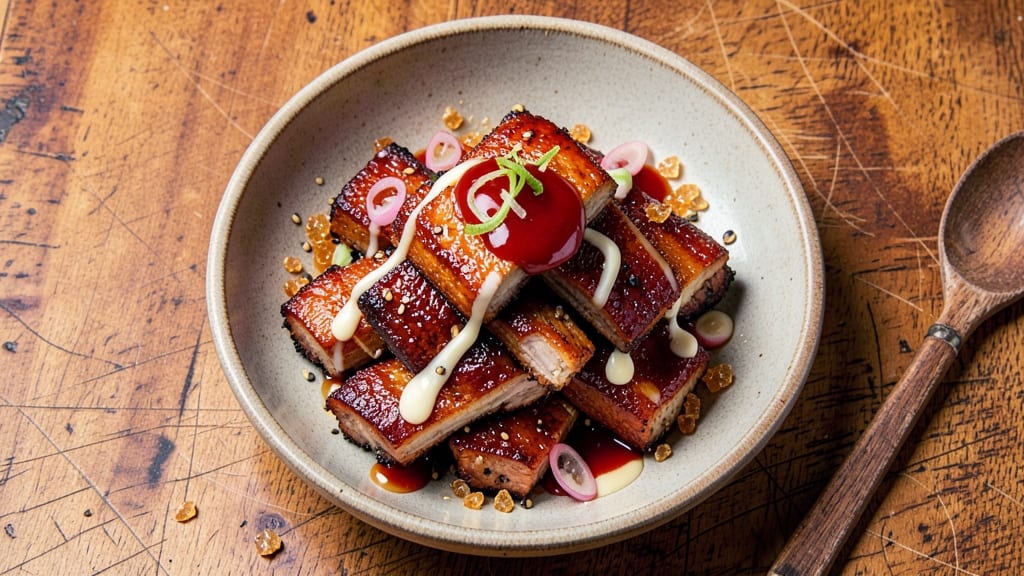
This char siu pork spare ribs recipe transforms humble pork into a showstopping dish with five-spice glaze that caramelizes into a sticky, aromatic crust. The secret lies in balancing smoky ribs with sweet-savory marinade—something I perfected after years of testing at The Smoky Pig.
Every bite delivers tender meat with that signature crispy bark, making it a crowd-pleaser for any occasion.
The process starts with a 24-hour marinade of five-spice powder, honey, and hoisin, which infuses the ribs with deep umami and warmth. We then slow-roast them to fall-apart tenderness before finishing with a quick broil to create that glossy, crackling glaze.
The result? Ribs that taste like they came straight from a Cantonese dim sum spread but with the smoky depth of Southern BBQ.
What makes this recipe special is the textural contrast—juicy, smoky ribs paired with a crunchy-sweet glaze that clings to every bite. The five-spice blend (star anise, cloves, cinnamon) adds complexity, while the honey and soy create that signature sticky finish.
This isn’t just another pork recipe; it’s a fusion of East and South, proving how bold flavors can elevate simple ingredients.
Serve these ribs with steamed jasmine rice and quick-pickled cucumbers to balance the richness, or stack them on buttered buns for a char siu burger twist. The leftovers? Even better reheated with a splash of water to restore that glossy sheen. Let’s get cooking—your taste buds will thank you.
Ingredients for char siu pork spare ribs
Six pounds of pork ribs meet a five-spice marinade that transforms humble cuts into showstopping centerpieces.
| Ingredient | Amount | Notes |
|---|---|---|
| Pork Spare Ribs 🍖 | 4 lb | Bone-in, meaty cut preferred |
| Five-Spice Powder 🌶️ | 2 tbsp | Authentic blend with star anise |
| Hoisin Sauce 🍶 | ½ cup | Store-bought or homemade |
| Honey 🍯 | ½ cup | Wildflower for floral notes |
| Light Soy Sauce 🥄 | ½ cup | Kikkoman preferred |
| Brown Sugar 🍚 | ½ cup | Packed firmly for accuracy |
| Garlic Cloves 🧄 | 8 cloves | Minced, fresh preferred |
| Fresh Ginger 🌿 | 2 tbsp | Finely grated, peeled |
| Sesame Oil 🫒 | 1 tbsp | Toasted, for aroma |
| Red Wine Vinegar 🍷 | 1 tbsp | For tangy balance |
| Cornstarch 🌾 | 2 tbsp | For glaze thickening |
| Vegetable Oil 🫒 | ½ cup | High smoke point |
| Kosher Salt 🧂 | 2 tbsp | Diamond Crystal preferred |
| Black Pepper 🌶️ | 1 tsp | Freshly cracked |
| Sesame Seeds 🥜 | 1 tbsp | Toasted for garnish |
The ribs must be meaty spare ribs—look for cuts with good meat coverage between bones, not too thin. Costco or Whole Foods carry excellent quality, but any butcher worth their salt will have them. Five-spice powder is non-negotiable here; Penzeys or Spicewalla sell authentic blends with star anise, cloves, and cinnamon. If you can't find it, mix 1 tsp each of ground cinnamon, cloves, and fennel seeds with ½ tsp ground Szechuan peppercorn. The honey should be wildflower or orange blossom—avoid the processed kind that crystallizes quickly. For the hoisin, Lee Kum Kee is the gold standard, but any quality brand will work. Prep the ribs by trimming excess fat but leaving the membrane intact for better glaze adhesion.
No five-spice powder? Substitute 1 tsp each of cinnamon, cloves, and fennel seeds—it won’t be identical, but close. Running low on hoisin? Mix 3 tbsp soy sauce, 1 tbsp honey, 1 tsp rice vinegar, and ½ tsp sesame oil. The brown sugar can be swapped for white sugar in a pinch, though it won’t caramelize as beautifully. Fresh ginger and garlic are ideal, but if you’re using dried, reduce to 1 tsp each. For the cornstarch glaze, arrowroot powder works too—just use the same amount. The sesame oil is for aroma, not cooking; don’t substitute with regular oil. If you’re making this ahead, prep the marinade a day early and let the ribs soak overnight for maximum flavor infusion.
Marinated ribs keep 3-4 days in the fridge, covered tightly. The uncooked marinade itself lasts 1 month in the fridge or 6 months frozen. For leftovers, reheat in a 350°F oven with a splash of water or broth until the glaze is glossy again—never microwave, or it’ll turn rubbery. Store cooked ribs in an airtight container with a paper towel pressed on top to absorb moisture. The glaze hardens when chilled, so reheating is key. Portion into individual servings for easy reheating—these ribs are worth the effort, and they’re even better the second day.
Why You'll Love This Recipe
- Sweet Glaze, Zero Fuss: Honestly, the ribs marinate in that sticky hoisin-honey mix while you sleep—no babysitting required. I just toss them in a bag with five-spice and soy, then bake. That’s my kind of effortless dinner.
- Flavor Bomb Combo: The five-spice gives it that warm, aromatic kick, while the hoisin and honey caramelize into a glossy, addictive crust. That crispy edge with the tender meat? It’s the kind of bite that makes people ask for the recipe mid-bite.
- Leftover Goldmine: These ribs reheat like a dream—crispy again in the oven or straight from the fridge with a quick pan sear. I meal prep a whole rack on Sundays, then snack on them all week without getting tired of them.
- Budget Crowd-Pleaser: A pound of spare ribs and a few pantry staples feed four for under $15. My college roommates and I lived on this—it’s hearty enough for a full meal but simple enough to make when you’re broke (or just lazy).
Step-by-step instructions for char siu pork spare ribs
Mastering these ribs delivers crispy edges, tender meat, and a glossy five-spice glaze every time.
Prep and Marinate the Ribs
Pat the 4 lb pork spare ribs completely dry with paper towels, pressing firmly to remove all moisture. This step is critical—wet skin won't crisp properly. In a large bowl, combine the ribs with 2 tbsp five-spice powder, 2 tbsp kosher salt, and 1 tsp black pepper. Use your hands to massage the spice blend into every crevice, ensuring even coverage.
In a separate mixing bowl, whisk together 0.5 cup hoisin sauce, 0.5 cup honey, 0.5 cup light soy sauce, 0.5 cup brown sugar, 8 cloves minced garlic, 2 tbsp finely grated ginger, 1 tbsp sesame oil, and 1 tbsp red wine vinegar. Pour this marinade over the ribs, turning them to coat completely. Cover and refrigerate for at least 4 hours—overnight yields the best results as the flavors penetrate deeply.
Sear the Ribs for Depth of Flavor
Preheat your oven to 375°F. Heat 0.5 cup vegetable oil in a large oven-safe skillet over medium-high heat until shimmering. Working in batches if needed, add the marinated ribs and sear for 3-4 minutes per side until the exterior develops a deep golden-brown crust. The oil should sizzle vigorously—this creates the foundational Maillard reaction for maximum flavor.
Transfer the seared ribs to a plate and tent loosely with aluminum foil. This resting period allows the marinade to set slightly, preventing it from sliding off during roasting. The ribs should maintain their seared color but won't be fully cooked yet—this comes next.
Roast Until Tender with Crispy Edges
Return the skillet with rendered oil to the oven and place the ribs back in, bone-side down. Roast uncovered for 1 hour 15 minutes, basting with the accumulated pan juices every 20 minutes. The ribs are done when they reach an internal temperature of 195°F at the thickest point and the edges are deeply caramelized with crispy edges that crackle when touched.
For the final 10 minutes, increase the oven temperature to 425°F to intensify the caramelization. This high-heat finish creates that signature char siu bark. Watch carefully—they cook quickly at this temperature, so check frequently to prevent over-browning.
Glaze and Garnish for Showstopping Finish
While the ribs rest for 10 minutes (critical for juices to redistribute), prepare the glaze by whisking together 2 tbsp cornstarch with 2 tablespoons of the reserved pan juices until smooth. Return the skillet to medium-high heat and pour in the glaze mixture, stirring constantly for 2-3 minutes until it thickens to a glossy consistency that coats the back of a spoon.
Brush the glaze generously over the ribs, then sprinkle with 1 tbsp toasted sesame seeds for texture and aroma. Serve immediately with the crispy edges facing up—this is when the dish truly shines. The contrast of tender meat beneath crispy, glossy bark with those toasted sesame seeds creates the perfect char siu experience.
Pro Tips For Making Char Siu Pork Spare Ribs
- Trim the Fat First: Spare ribs have that stubborn fat layer that refuses to render cleanly. Grab kitchen shears and snip off the thickest patches before marinating—it crisps up faster and lets the five-spice powder cling better. I used to skip this, and my ribs always ended up greasy instead of caramelized.
- Marinate Overnight, Not Hours: Five-spice powder needs time to penetrate, but 4–6 hours is plenty—any longer and the pork turns mushy. Toss the ribs in a mix of hoisin, honey, and soy sauce, then let them sit uncovered in the fridge. The acid in the sauce works better when the meat’s cold, not room temp.
- Double-Baste for Glaze: After the initial sear, brush on half the glaze, then flip and roast. When the ribs hit 160°F, pull them out, baste again, and return to the oven. The second coat locks in moisture and builds that sticky, lacquered finish. I learned this the hard way—dry ribs ruin everything.
- Use a Meat Thermometer: Char siu ribs are done at 160°F, but they’ll keep cooking off the heat. Pull them when the probe hits that temp, then tent with foil for 5 minutes. Overcooking turns them chewy, and undercooking leaves them rubbery—this is the non-negotiable step. (Yes, even if you’re impatient like me.)
Flavor customization for char siu pork spare ribs
Sweet-Savory Balance
Adjust the honey-to-soy ratio to suit your taste: I like 1:1 for a balanced sweetness, but swap to 1.5:1 for extra caramel depth. For a tangier profile, add 1 extra tbsp red wine vinegar—it cuts through the richness beautifully.
If you prefer less sugar, reduce honey by 2 tbsp and add 1 tbsp rice vinegar instead. 🍯
Spice Level Control
For milder ribs, reduce five-spice powder to 1 tbsp and add ½ tsp ground cinnamon for warmth without heat. If you love spice, boost it to 3 tbsp five-spice and add ½ tsp Szechuan peppercorns for a tingling kick.
Freshly toasted spices intensify flavor—always toast whole spices for 30 seconds before grinding. 🌶️
Umami Boosters
Enhance depth with 1 tbsp fish sauce (like Red Boat) or 1 tbsp oyster sauce—both add complexity without overpowering. For vegetarian-friendly ribs, replace hoisin with 3 tbsp soy sauce + 1 tbsp miso paste.
My secret? A splash of 1 tsp liquid smoke in the marinade for that smoky Cantonese-BBQ fusion. ⚡
Texture Variations
For extra crunch, broil the ribs for 2-3 minutes at the end with 1 tbsp brown sugar sprinkled on top. Prefer softer edges? Reduce the high-heat finish to 5 minutes and brush with 1 tbsp butter instead.
The cornstarch glaze can be swapped for 1 tbsp tapioca starch for a glossier finish. 🥜
Regional Twists
For a Hong Kong-style version, add 1 tbsp Shaoxing wine to the marinade and finish with 1 tsp sesame paste. In Atlanta, I’ve seen char siu ribs glazed with BBQ sauce and topped with pickled jalapeños—a Southern fusion worth trying.
The key is balancing tradition with local flavors. 🗺️
Nutrition facts
Frequently asked questions
Can I use pork shoulder instead of spare ribs?
While pork shoulder works for other recipes, spare ribs are ideal for char siu because of their natural fat marbling and bone structure. The bones help create steam during cooking, keeping the meat tender. If you must substitute, use bone-in pork chops cut into strips and reduce cooking time by 15-20 minutes—they won't have the same texture but can still deliver great flavor.
How do I fix ribs that are too dry?
If your ribs turn out dry, it's usually from overcooking or insufficient marinating. For future attempts, ensure you marinate for at least 24 hours and use a meat thermometer—remove ribs when they hit 195°F at the thickest point. To rescue dry ribs, slice them thinly and serve in a sticky rice bowl with extra glaze and steamed bok choy to add moisture.
What's the best way to reheat char siu ribs?
Reheat in a 350°F oven for 10-15 minutes with a splash of water or broth to restore moisture and gloss. For a quick fix, use a skillet over medium heat with 1 tbsp honey and 1 tsp soy sauce—brush it on while reheating. Never microwave, as it destroys the crispy texture. The glaze will harden when chilled, so reheating is essential.
Can I make this recipe without hoisin sauce?
Mix 3 tbsp soy sauce, 1 tbsp honey, 1 tsp rice vinegar, and ½ tsp sesame oil as a substitute. For deeper flavor, add 1 tsp grated ginger and 1 minced garlic clove. The texture will be slightly less sticky, but the taste will remain rich and aromatic. This works especially well if you're avoiding processed ingredients.
How do I store leftovers?
Store cooked ribs in an airtight container with a paper towel pressed on top to absorb moisture. They'll keep for 4-5 days in the fridge. For long-term storage, freeze for up to 3 months—wrap individual portions tightly to prevent freezer burn. To reheat, use the oven method mentioned above. The glaze may harden when chilled, but reheating restores that signature glossy finish.