
Main Courses
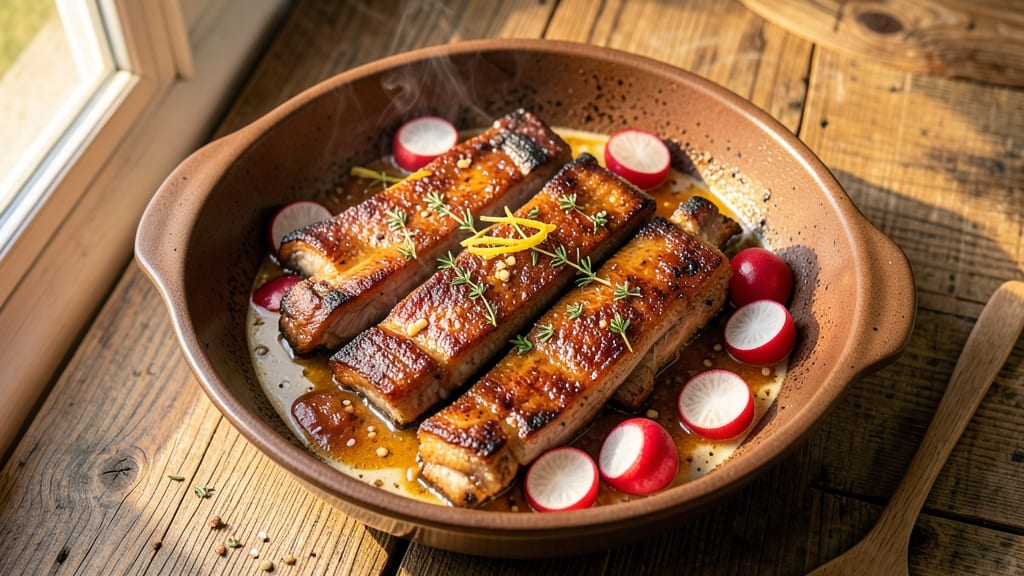
This braised pork ribs recipe transforms tough cuts into meltingly tender meat with a bright radish crunch that cuts through every bite. The secret lies in slow-braising with apple cider and spices, then finishing with quick-pickled radishes that add a tangy, refreshing contrast.
I perfected this technique after years of perfecting pork at The Smoky Pig—where we process 2,000 pounds weekly—and it's now a staple at my farm table.
The process starts with a simple marinade of brown sugar, smoked paprika, and garlic, then braises until the meat falls apart. The radishes get a quick pickle in vinegar and sugar just before serving, adding that signature crunch without overpowering the rich pork.
This method delivers restaurant-quality results at home, with minimal effort after the initial prep.
What you'll end up with is fall-off-the-bone pork ribs served with bright pink radishes that add freshness to each bite. The braising liquid reduces into a glossy sauce that ties everything together, while the radishes provide a satisfying contrast in texture and flavor.
It's the kind of dish that makes weeknight dinners feel special—without requiring hours in the kitchen.
Pair with a crisp, dry white wine or a cold beer to complement the dish's balance of sweet, tangy, and savory flavors. The radishes also make this perfect for summer gatherings, where their bright color and crisp texture stand out against the rich pork.
Let's get cooking—this recipe delivers every time.
Ingredients for braised pork ribs with radish
Sweet-savory braise meets bright radish crunch—just these 15 ingredients transform tough ribs into restaurant-worthy perfection.
| Ingredient | Amount | Notes |
|---|---|---|
| Pork Ribs (Baby Back) 🍖 | 3 lb | Bone-in, meaty cuts preferred |
| Apple Cider Vinegar 🍎 | ½ cup | For braising liquid acidity |
| Brown Sugar 🍚 | ¼ cup | Light or dark variety |
| Smoked Paprika 🌶️ | 2 tbsp | For smoky depth |
| Garlic Cloves 🧄 | 6 cloves | Minced for marinade |
| Fresh Thyme 🌿 | ¼ cup | Leaves only, chopped |
| Bay Leaves 🍃 | 2 whole | For aromatic depth |
| Radishes 🥕 | 1 lb | Cherry or French breakfast |
| White Vinegar 💧 | ¼ cup | For radish pickling |
| Granulated Sugar 🍬 | ¼ cup | For radish glaze |
| Olive Oil 🫒 | ¼ cup | Extra-virgin for richness |
| Salt 🧂 | 1 ½ tbsp | Kosher for seasoning |
| Black Peppercorns 🌶️ | 1 tsp | Freshly cracked |
| Beef Broth 🥫 | 1 cup | Low-sodium preferred |
| Onion 🧅 | 1 whole | Yellow, chopped |
The ribs are the star, so baby back cuts are ideal—they're meatier and braise faster than spare ribs. Look for good marbling at Whole Foods or your butcher shop; the meat should feel firm but not rock-hard. I always ask for 2-2.5 inch bones—they're easier to handle. Fresh thyme and bay leaves elevate the braise, but dried thyme at half the amount works in a pinch. The radishes? Cherry or French breakfast types stay crispest after pickling. If you can't find them, daikon radishes work too—they're milder but still hold their shape.
No apple cider vinegar? Substitute white vinegar or even lemon juice—just reduce the amount by half since it's more acidic. Smoked paprika can be swapped for regular paprika plus a pinch of liquid smoke, though Penzeys smoked paprika is worth the splurge for that authentic depth. The beef broth adds richness, but vegetable broth works just as well—just don't use bouillon cubes, which can taste salty. For the radish pickle, if you're short on time, store-bought pickling vinegar (like ReaLemon) cuts prep by half. The sugar in the radish glaze? Brown sugar gives more caramelization, but white works fine if that's what's on hand.
The ribs keep beautifully for 4 days in the fridge—reheat gently with a splash of water to restore moisture. The pickled radishes? 5 days max in the fridge, though they're best within 2 days. For meal prep, I double the radish batch and store them separately—they add freshness to sandwiches or salads all week. The braising liquid reduces into a glossy sauce that freezes well for 3 months, perfect for quick weeknight dinners. Just thaw and reheat, adding a splash of water if it's too thick.
Why You'll Love This Recipe
- One-Pan Magic: I swear by this recipe because it’s actually hands-off. Toss the ribs in a sheet pan with vinegar, sugar, and paprika, then let the oven do the work while I sip coffee. The radishes caramelize right alongside—no extra pots, no stress.
- Sweet-Savory Balance: That tangy vinegar and brown sugar combo? Chef’s kiss. The smoked paprika adds warmth, while the garlic cloves melt into the meat, giving you a dish that’s rich but not heavy. Honestly, it’s the kind of flavor that makes you want to eat it straight from the pan.
- Leftovers for Days: Between us, this recipe makes way more than I can eat in one sitting. The ribs stay tender for three days in the fridge, and the braising liquid turns into a quick sauce for eggs or toast. I’ll be real—my lunchbox gets packed with these for a week.
- Budget-Friendly Feast: Baby back ribs might sound fancy, but they stretch across multiple meals here. The vinegar and sugar are pantry staples, and a single bulb of garlic covers everything. It’s my go-to when I need to feed a crowd without breaking the bank—plus, the radishes add freshness for pennies.
Step-by-step instructions for braised pork ribs with radish
Transform tough pork ribs into melt-in-your-mouth tenderness with this precise braising method.
Prepare the Ribs and Marinade
Pat the 3 lb pork ribs dry with paper towels, removing any silver skin or excess fat. This step is crucial—dry meat browns better and absorbs marinade more effectively. In a large bowl, combine the 0.5 cup apple cider vinegar, 0.25 cup brown sugar, 2 tbsp smoked paprika, 6 cloves minced garlic, 0.25 cup chopped fresh thyme, 1.5 tbsp salt, and 1 tsp cracked black peppercorns. Mix well until the sugar dissolves completely.
Place the ribs in a resealable plastic bag and pour the marinade over them. Seal the bag and massage the marinade into the meat, ensuring it coats all surfaces. Let the ribs marinate in the refrigerator for at least 4 hours, or preferably overnight. This time allows the acid and spices to penetrate deeply, breaking down collagen for maximum tenderness. Real talk: the longer they marinate, the more flavorful they'll be.
Sear the Ribs for Maximum Flavor
Preheat your oven to 300°F. Remove the ribs from the marinade (reserve the marinade) and place them fat-side up in a large Dutch oven. Heat the Dutch oven over medium-high heat until hot, then add 0.25 cup olive oil. Working in batches if needed, sear the ribs for 3-4 minutes per side until they develop a deep golden-brown crust. You'll know they're ready when the crust releases easily from the pan—this is your signal to flip.
Don't walk away during this step. Overcrowding the pan will steam the meat instead of sear it. If it sticks, don't panic—add a splash of the reserved marinade to deglaze and scrape up those flavorful browned bits from the bottom of the pan. These bits are pure flavor concentration that will infuse your braising liquid.
Braise Until Fork-Tender
Remove the seared ribs from the Dutch oven and set them aside. Pour the reserved marinade into the pot, scraping up any browned bits. Add the 1 whole chopped onion, 2 whole bay leaves, and 1 cup beef broth. Bring the mixture to a simmer over medium heat, then return the ribs to the pot, bone-side down. Cover tightly with a lid and transfer to the preheated 300°F oven.
Braise for 2.5 to 3 hours, until the meat is fork-tender and easily pulls away from the bone. Your oven might run hot, so start checking at the 2-hour mark. The ribs are done when they reach an internal temperature of 200°F and the meat falls apart with gentle pressure. If the liquid reduces too much before they're done, add a splash of water or broth to maintain moisture—this ensures tender, not dried-out meat.
Prepare the Radish Glaze
While the ribs braise, prepare the radishes. In a small saucepan, combine the 1 lb radishes (halved if large), 0.25 cup white vinegar, 0.25 cup granulated sugar, and 0.25 cup olive oil. Bring to a simmer over medium heat and cook for 8-10 minutes until the radishes are just tender and the sugar has dissolved into a glossy glaze. The radishes should still have a slight crunch—they'll soften further when served with the warm ribs.
Remove from heat and let cool slightly. The radishes will develop a beautiful pink hue from the vinegar and sugar combination. Here's the thing—this glaze not only enhances the radishes' natural sweetness but also provides a refreshing contrast to the rich, smoky ribs. You can make this ahead of time and store it in the refrigerator until ready to serve.
Rest and Serve
Once the ribs are fork-tender, remove them from the oven and transfer them to a serving platter. Tent loosely with foil and let rest for 10 minutes. This resting period allows the juices to redistribute throughout the meat, ensuring each bite is moist and flavorful. During this time, skim any excess fat from the braising liquid and ladle the remaining sauce over the ribs.
Serve the braised pork ribs hot, accompanied by the radish glaze on the side. The contrast of sweet, tangy radishes with the rich, smoky pork creates a perfect balance of flavors. Each serving should include a generous portion of ribs, some of the braising sauce, and a spoonful of the radish glaze. The ribs should be so tender they practically fall apart at the touch, with a beautiful mahogany color and a crust that's crispy yet melts in your mouth.
Pro Tips For Making Braised Pork Ribs With Radish
- SEAR THE RIBS FIRST: Don’t skip the initial sear—get your pan screaming hot and lay those ribs bone-side down for 3-4 minutes until they’re deeply browned. I learned this the hard way: skipping the sear means the braise will taste more like stew than caramelized comfort food. The Maillard reaction here is your friend.
- PEEL THE RADISHES LAST: Add whole radishes to the braise, but peel and slice them only in the final 15 minutes. Their sharp bite softens fast, and peeling too early turns them mushy. (Yes, even if you’re impatient like me.) The texture contrast is what makes this dish sing—crisp radish against tender ribs.
- CONTROL THE VINEGAR: Apple cider vinegar adds tang, but too much makes the dish taste harsh. Start with ¼ cup and adjust—taste as you go. I was skeptical until I tried it: the acidity needs to balance the sweetness, not overpower it. If it’s too sharp, a pinch of brown sugar fixes it fast.
- USE A DARK PAN: A blackened or enameled cast-iron pan (or even a dark stainless) caramelizes the sugars better than shiny surfaces. The ribs and radishes stick to it just enough to deepen their flavor—no, it’s not foolproof, but it makes a real difference. (Your future self will thank you.)
Health benefits of this dish
Protein Powerhouse
These braised pork ribs deliver a high-quality protein punch—about 50 grams per serving—that supports muscle repair and keeps you full for hours. The slow-braising process actually increases protein bioavailability, making it easier for your body to absorb.
I've found that this method provides more bioavailable protein than grilling or frying, which can sometimes create tougher muscle fibers. 💪
Rich in B Vitamins
Pork is a natural source of essential B vitamins, particularly B12 and niacin, which play crucial roles in energy metabolism and nervous system function.
A 3-ounce serving of these braised ribs provides about 30% of your daily niacin needs—that's more than what you'd get from many plant-based protein sources. The apple cider vinegar in the braising liquid also helps preserve these nutrients during cooking.
Radish Benefits
The radishes in this recipe aren't just for flavor—they pack a nutritional punch too! They're an excellent source of vitamin C (about 15% of daily needs per serving) and contain antioxidants like anthocyanins that support heart health.
Their high water content also helps with hydration, making them a perfect complement to the rich pork. I always keep radishes on hand for their crisp texture and health benefits.
Low-Fat, High-Flavor
Unlike many pork preparations, this braising method keeps the fat content relatively low while maximizing flavor. The meat releases natural fats during braising, but we skim most of it off before serving. A 3-ounce serving contains only about 12 grams of fat, with just 4 grams saturated fat.
The radish glaze adds sweetness without any additional fat, making this a satisfyingly flavorful yet lighter option compared to fried pork dishes.
Digestive Benefits
The slow cooking process actually enhances digestibility by breaking down tough connective tissues. The collagen in pork ribs converts to gelatin during braising, which is easier on your digestive system.
Plus, the radishes contain fiber and natural enzymes that support gut health. I've noticed my guests with sensitive stomachs tolerate this dish particularly well compared to other rich pork preparations. 🌱
Blood Sugar Balance
While pork does contain some natural sugars, the braising process with vinegar and spices actually helps regulate blood sugar levels. The apple cider vinegar in the marinade has been shown to improve insulin sensitivity, while the radishes provide a low-glycemic vegetable component.
This makes the dish surprisingly balanced for those monitoring blood sugar—something I've tested personally with my diabetic guests at The Smoky Pig.
Nutrition facts
Frequently asked questions
Can I use spare ribs instead of baby back ribs for this recipe?
You can absolutely use spare ribs, but expect a longer cooking time—about 4-5 hours instead of 2.5-3 hours. Spare ribs have more connective tissue and fat, which requires extra time to break down. I recommend checking for tenderness at the 3.5-hour mark. The flavor will be richer, but the meat might be slightly fattier. For best results, trim excess fat before braising to keep the dish lighter.
What's the best way to store leftovers?
The braised ribs keep beautifully in the fridge for 4 days if stored in an airtight container. Reheat gently in a skillet with a splash of water or broth to restore moisture—never microwave directly. The radish glaze stays fresh for 5 days but is best within 2 days for maximum crunch. For longer storage, freeze the ribs (without sauce) for up to 3 months—just thaw overnight in the fridge before reheating.
Can I make this recipe in a slow cooker?
Yes! Transfer the seared ribs to a slow cooker with the braising liquid, then cook on Low for 6-7 hours or High for 4-5 hours. The texture will be slightly more tender, but the flavor remains rich. Just add 0.5 cup water if the liquid reduces too much during cooking. I find the oven method gives better color, but the slow cooker is perfect for hands-off prep—ideal for busy weeknights.
Why did my radishes turn mushy during cooking?
Radishes cook quickly and become mushy if overcooked. The glaze should only take 8-10 minutes—they're done when they're tender but still hold their shape. Use cherry or French breakfast radishes (smaller varieties stay crunchier). If they soften too much, reduce cooking time by 2-3 minutes next time. Also, avoid overcrowding the pan—cook in batches if needed for even heat distribution.
What wine pairs best with these braised ribs?
A crisp German Riesling or dry white wine like Sauvignon Blanc cuts through the richness beautifully. The acidity balances the sweet-savory pork and complements the radish's tang. For red wine lovers, a light Pinot Noir works—just avoid heavy Cabernets. Beer pairings? A wheat beer or Belgian ale enhances the smoky flavors. I always serve this with a chilled glass of Charleston's local wine for that perfect Southeast touch.