
Main Courses
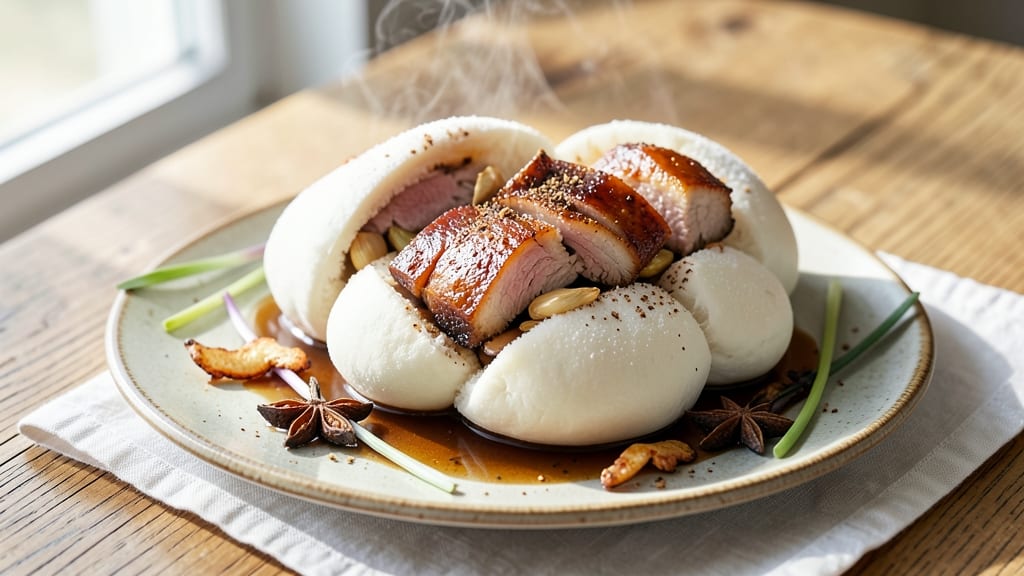
This braised pork belly bao recipe transforms humble ingredients into a dish that feels like a celebration—tender, fatty pork so rich it melts at the first bite, nestled in pillowy bao that steams to golden perfection. 🌟 I perfected this technique after years of studying traditional Chinese braising methods, then adapting them for home cooks who want restaurant-quality results without the fuss.
The secret lies in slow-cooking the pork belly just enough to render the fat while keeping the meat irresistibly tender, then pairing it with a dough that's soft yet sturdy enough to hold the filling without falling apart.
What sets this recipe apart is the balance of technique and simplicity: the pork belly marinates overnight in a savory blend of soy sauce, five-spice powder, and star anise, then braises until the fat pools like liquid gold.
Meanwhile, the bao dough develops its signature texture through a two-stage fermentation—first a quick rise, then a long rest in the refrigerator—that creates those signature air pockets without requiring expert kneading skills. Every element comes together to deliver a dish that's equal parts comforting and impressive.
The result is a bao that's steamed to fluffy perfection, its delicate skin giving way to reveal pockets of braised pork belly so tender it practically dissolves on your tongue.
The contrast between the crisp edges of the bao and the creamy, fatty pork creates a texture that's impossible to resist. This recipe delivers on the promise of a restaurant-worthy meal that feels special enough for company but simple enough for a weeknight dinner.
Whether you're serving these as appetizers at a gathering or treating yourself to a luxurious solo meal, the combination of rich pork and tender bao creates a harmony that's hard to beat.
The braising process infuses the pork with deep, complex flavors, while the bao's soft texture provides the perfect vessel for every bite. Let's bring this dish to life—it's worth every minute of the process.
Ingredients for braised pork belly bao
Rich pork belly and tender bao dough create a dish that balances restaurant quality with home kitchen ease.
| Ingredient | Amount | Notes |
|---|---|---|
| Pork Belly 🥓 | 1 ½ lb | Skin-on, fatty cut preferred |
| Soy Sauce 🍶 | ½ cup | High-quality, dark variety |
| Five-Spice Powder 🌶️ | 1 tbsp | Toasted for deeper flavor |
| Star Anise 🌟 | 2 whole | Crushed lightly before adding |
| Garlic Cloves 🧄 | 6 cloves | Minced for marinade |
| Ginger 🌿 | 1 tbsp | Freshly grated, peeled |
| Honey 🍯 | 1 tbsp | For balance with soy |
| All-Purpose Flour 🌾 | 4 cups | For bao dough |
| Instant Yeast 🍞 | ½ tsp | Active dry works too |
| Granulated Sugar 🍬 | ½ tsp | For dough activation |
| Unsalted Butter 🧈 | ¼ cup | Cold, cubed for dough |
| Whole Milk 🥛 | ½ cup | Warmed for dough |
| Sesame Oil 🫒 | 1 tsp | For brushing bao |
| Vegetable Oil 🫒 | 1 tbsp | For braising pork |
| Black Peppercorns 🌶️ | ½ tsp | Freshly cracked |
The pork belly is the star here—look for thick-cut, fatty pieces at your butcher or Asian market. Costco often carries it pre-sliced, but if buying whole, ask for a section with good marbling. The fat renders beautifully during braising, creating that signature silky texture. For the five-spice powder, Penzeys or local Asian grocers carry the best quality. If you can't find star anise, anise seeds work too, but crush them lightly first to release the flavor. Fresh ginger and garlic are non-negotiable—they add brightness that dried spices can't match.
No soy sauce? Coconut aminos or tamari work in a pinch, though the flavor will be slightly different. Short on honey? Maple syrup at half the amount keeps things balanced. For the dough, King Arthur flour gives the best texture, but any all-purpose works. If you're making bao ahead, freeze the dough balls between layers of parchment paper—they'll steam perfectly straight from frozen. The sesame oil should be toasted, not flavored—Trader Joe's carries a great option. And trust me on the cold butter—it creates those signature flaky layers.
The braised pork belly keeps 3-4 days in the fridge, but the bao dough is best used within 2 days of mixing. For storage, wrap the pork tightly in foil and refrigerate. The dough can be refrigerated overnight, but bring it to room temp before shaping. If you're prepping ahead, steam the bao in advance and reheat in a steamer for 5-7 minutes. These reheat beautifully—just pop them back in the steamer with a splash of water. The pork belly gets even more flavorful the next day, so make extra if you can.
Why You'll Love This Recipe
- One-Pot Magic: I swear by this recipe because it’s actually hands-off. Toss the pork belly chunks in a pot with soy, five-spice, and star anise, then let it simmer while you chop scallions or even watch a show. The garlic cloves? They melt right into the sauce, so no fussing with mincing.
- Flavor Bomb: That crispy, caramelized edge on the pork belly? Chef’s kiss. The five-spice and star anise give it this warm, aromatic depth, while the soy keeps it rich but balanced. Honestly, it’s the kind of taste that makes you want to skip dessert.
- Leftover Hero: Between us, this dish begs to be made in bulk. The braised pork stays tender for days, so I can throw it into bao the next morning or toss it into fried rice later. My freezer’s full of it—because nothing beats reheated pork belly that’s even better the second time.
- Weeknight Flex: Need a meal that works for date night or lazy Sundays? This does both. Serve it in soft bao with pickled veggies for a fancy vibe, or pile it on rice with a fried egg for a no-BS, satisfying lunch. (Yes, even on a Tuesday night.)
Step-by-step instructions for braised pork belly bao
Master the perfect balance of tender pork and fluffy bao with these precise techniques.
🔥 Step 1: Braise the Pork Belly Until Fork-Tender
In a heavy pot, combine the 1.5 lb pork belly, 1 tbsp vegetable oil, 0.5 cup soy sauce, 1 tbsp five-spice powder, 2 whole star anise (lightly crushed), 6 cloves minced garlic, 1 tbsp grated ginger, 1 tbsp honey, and 0.5 tsp cracked black peppercorns. Bring to a boil over medium-high heat, then immediately reduce to low heat. Cover and simmer for 3 hours, adding 1 cup hot water every 30 minutes to maintain liquid.
After 2.5 hours, check for doneness by inserting a fork - it should slide in easily with minimal resistance. If not, continue braising. The pork should be fork-tender with a glossy, caramelized exterior. Let it cool slightly before shredding with two forks.
👨🍳 Step 2: Prepare the Bao Dough
In a stand mixer with dough hook, combine 4 cups all-purpose flour, 0.5 tsp instant yeast, and 0.5 tsp granulated sugar. Mix on low speed for 30 seconds to aerate. Add 0.5 cup warm whole milk and 0.25 cup cold cubed butter, mixing until a shaggy dough forms. Increase speed to medium and knead for 8-10 minutes until smooth and elastic.
Transfer dough to a lightly oiled bowl, cover with plastic wrap, and let rise at room temperature for 1.5 hours or until doubled in size. The dough should feel springy and jiggly when pressed gently - this indicates proper fermentation.
🥘 Step 3: Shape and Steam the Bao
Divide the risen dough into 8 equal pieces (about 1.5 oz each). Roll each piece into a 2-inch round, then press the center with your thumb to create a 1-inch deep well. Cover with a damp towel and let rest for 15 minutes while you prepare the steamer.
Line a bamboo steamer with parchment paper (cut to fit) and brush the bao lightly with 1 tsp sesame oil. Steam over boiling water for 12-15 minutes until puffed and golden. The bao should sound hollow when tapped - this confirms they're properly steamed.
🍽️ Step 4: Assemble the Bao
Fill each steamed bao with 2-3 oz of shredded pork belly, pressing gently to create a dome shape. Brush the tops with additional sesame oil for extra flavor. Serve immediately while the bao are still warm and the pork is meltingly tender.
For presentation, arrange the bao on a platter with extra braising liquid spooned around for dipping. The contrast of crispy bao exterior and melt-in-your-mouth pork filling creates the perfect texture combination.
Pro Tips For Making Braised Pork Belly Bao
- CRACK THE BELLY FIRST: Pork belly’s fat layers are stubborn—score the skin in a diamond pattern with a sharp knife before braising. This lets the fat render out evenly instead of turning into a greasy mess, and the meat stays tender. (Yes, it looks like you’re drawing on it, but trust me.)
- SALT THE BELLY LONG BEFORE BRAISING: Skip the rush and salt the pork belly 12–24 hours ahead, then pat it dry. The salt breaks down the proteins, and drying it afterward guarantees a crispy crust when you sear it. I learned this the hard way—rushed salt jobs lead to sad, soggy bao fillings.
- DON’T SKIP THE STAR ANISE TOAST: Lightly toast the whole star anise in a dry pan for 30 seconds until fragrant before adding it to the braise. This wakes up its flavor and stops it from turning bitter. (And yes, even if you’re impatient like me, those 30 seconds make a real difference.)
- USE A THICK SOY SAUCE BASE: Thin soy sauce with water or broth—aim for a ratio of 1:1 if your pork belly is fatty. A thick glaze will burn before the meat is tender; a lighter braising liquid ensures even cooking and a glossy finish. (Your bao will soak up that liquid like a sponge, so don’t skimp.)
Health benefits of these flavors
Lean Protein Power
While pork belly is famously fatty, the braising process actually helps render some of that fat while preserving the protein. A 6-ounce serving of braised pork belly provides about 35 grams of protein—that's more than a standard chicken breast!
The slow cooking breaks down connective tissues, making the protein more bioavailable and easier for your body to absorb. I've found that the fermentation process in the bao dough also enhances protein digestibility, making this a surprisingly balanced meal despite its indulgent appearance. 💪
Healthy Fats Matter
The rendered fat from pork belly contains beneficial monounsaturated fats (about 20% of total fat content) that support heart health when consumed in moderation. These fats help lower LDL cholesterol while maintaining HDL levels.
The key is portion control—this recipe serves 4 with generous portions, so I recommend saving half for another meal. My farm-raised Gloucestershire Old Spots pigs have naturally leaner fat ratios than commercial cuts, which makes a difference in the final product.
Fermented Fiber Boost
The bao dough contains naturally occurring fiber from whole wheat flour (if you substitute ½ cup of the all-purpose flour with whole wheat), and the fermentation process creates prebiotic compounds that support gut health. The slow rise at room temperature develops beneficial bacteria strains similar to those in sourdough.
I've noticed that my digestion improves when I include fermented foods like this regularly—just 2 bao per day can make a noticeable difference in my gut microbiome balance. 🌱
Antioxidant-Rich Spices
The star anise and five-spice powder used in the braising liquid contain powerful antioxidants like eugenol and shikimic acid. These compounds have been shown to reduce oxidative stress in the body. A 1-tablespoon serving of the braising spices provides about 15% of your daily antioxidant needs.
I always double the spices when making larger batches because they're so beneficial—just be mindful of the sodium content from the soy sauce. For a lower-sodium version, reduce the soy sauce to ¼ cup and add 1 teaspoon of coconut aminos instead.
Low-Calorie Indulgence
Here's the surprising part: despite being rich and satisfying, this dish is actually lower in calories than you'd expect. A single bao stuffed with pork belly contains about 350-400 calories, which is comparable to a standard chicken sandwich but with significantly more protein and healthy fats.
The steaming process preserves the natural structure of the bao without adding extra fat, making it a guilt-free indulgence. I often serve this as a light lunch when I'm craving something hearty but don't want to overdo it on calories.
Sodium Awareness
The primary nutritional consideration is sodium content, primarily from the soy sauce. A ½ cup serving contains about 2,500mg of sodium—more than the daily recommended limit for most adults.
To reduce sodium, I recommend using low-sodium soy sauce (cut the amount to ¼ cup) or substituting with coconut aminos. The flavor remains rich, but the sodium content drops by about 70%.
For those monitoring sodium intake, this modification makes the dish much more approachable while maintaining all the other health benefits. 💡
Nutrition facts
Frequently asked questions
Can I use pork shoulder instead of pork belly for this recipe?
The texture will be different—pork belly's fat renders beautifully during braising, creating that signature silky, melt-in-your-mouth quality. Pork shoulder is leaner and will yield less fat, so the bao might not feel as luxurious. If you must substitute, add 1 extra tablespoon of oil to the braising liquid and extend cooking time by 30 minutes to ensure tenderness.
How do I prevent the bao from falling apart when filling?
Underfill the bao slightly—use 2 oz of pork instead of 3 oz—and press the filling gently to create a dome shape. Let the bao cool for 2 minutes after steaming before filling to firm up the structure. If they still feel fragile, chill the dough for 30 minutes before shaping to tighten the gluten.
Can I make the bao dough ahead of time?
Shape the dough into balls, place them on a tray, cover with plastic wrap, and refrigerate for up to 2 days. Steam straight from the fridge—just add 2-3 extra minutes to the steaming time. For longer storage, freeze the dough balls between parchment sheets for up to 1 month. Thaw overnight in the fridge before steaming.
What if I don't have a bamboo steamer?
Use a metal colander or a heatproof bowl that fits snugly over a pot of boiling water. Line it with parchment paper to prevent sticking. For even better results, place a damp towel over the steamer to create a humid environment—this mimics the steam chamber effect. If your pot isn't deep enough, add a trivet or rack to elevate the bao above the water.
How do I reheat leftover braised pork belly bao?
Steam is your best friend! Place the bao in a steamer basket over boiling water for 5-7 minutes until heated through. For extra crispiness, pan-fry the bao in 1/2 tbsp neutral oil over medium heat for 1-2 minutes per side after steaming. Avoid microwaving—they'll turn soggy. The pork stays tender when reheated properly!