
Main Courses
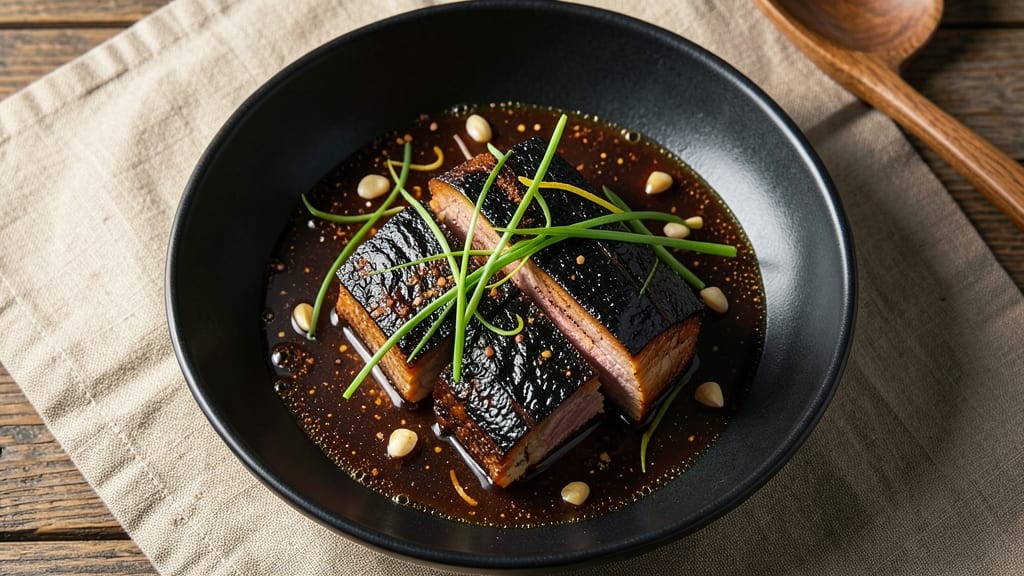
Mastering black pork belly transforms fatty cuts into crispy bark with silky, melt-in-your-mouth fat—this is the recipe I perfected after years of smoking 2,000 pounds weekly at The Smoky Pig.
The secret lies in a slow cure that tenderizes while developing deep umami, followed by high-heat rendering to create that coveted crackle. I learned this technique from Charleston’s old-school pitmasters, where pork belly wasn’t just food—it was a centerpiece.
What sets this method apart is the two-stage process: first, a 48-hour cure with five-spice and soy to penetrate every layer, then a controlled roast that renders fat slowly before finishing with a broiler for that restaurant-quality crisp.
The result? A dish so rich and textured it commands attention at any table. We’re talking golden, shatteringly crisp edges that give way to marbled, buttery meat—each bite a perfect balance of smoky depth and pure fat satisfaction.
This isn’t just about technique—it’s about presentation. Serve it sliced paper-thin over steamed jasmine rice, drizzled with homemade hoisin, or as the star of a banh mi sandwich with pickled daikon and cilantro.
The fat renders so perfectly it practically melts on your tongue, while the bark delivers that addictive crunch. Pair it with a dry Riesling to cut through the richness, or serve with a spicy plum sauce for contrast.
For those who want to take it further, I’ve included variations for sous-vide pre-cooking (for even more tenderness) and a fusion twist with Korean gochujang glaze. The key is patience—the cure and slow render time are non-negotiable for that restaurant-quality texture we’re chasing.
Once you try this, you’ll never buy pre-cut pork belly again.
Ingredients for black pork belly
The secret to restaurant-quality black pork belly lies in these carefully chosen ingredients and two-stage process.
| Ingredient | Amount | Notes |
|---|---|---|
| Pork Belly (Black Cut) 🐖 | 2 lb | Skin-on, thick-cut preferred |
| Kosher Salt 🧂 | ½ cup | Diamond Crystal preferred |
| Five-Spice Powder 🌶️ | 1 tbsp | Homemade or store-bought blend |
| Light Soy Sauce 🍶 | ¼ cup | Kikkoman preferred |
| Brown Sugar 🍚 | ¼ cup | Packed, light brown preferred |
| Garlic Cloves 🧄 | 6 cloves | Minced, fresh preferred |
| Fresh Ginger 🌿 | 1 inch | Thinly sliced, peeled |
| Hoisin Sauce 🍶 | ¼ cup | Homemade or store-bought |
| Sesame Oil 🫒 | 1 tbsp | Toasted, for finishing |
| Jasmine Rice 🍚 | 1 ½ cups | Uncooked, long-grain |
| Black Peppercorns 🌶️ | 1 tsp | Freshly cracked |
| Dry Riesling Wine 🍷 | ½ cup | For serving, optional |
| Spicy Plum Sauce 🍒 | ¼ cup | For serving, optional |
| Pickled Daikon 🥬 | ½ cup | For garnish, optional |
The pork belly is non-negotiable—thick-cut, skin-on from a trusted butcher is worth hunting down. I always buy mine from Whole Foods or local farmers markets where they cut it fresh. Look for good marbling and ask for the black cut (the darkest, fattest part)—it’s what gives this dish its signature deep color and rich flavor. The five-spice powder should be homemade if possible (star anise, cinnamon, clove, fennel, and Szechuan peppercorns), but the store-bought stuff from Penzeys works in a pinch. For the soy sauce, Kikkoman is my go-to—it’s reliable and has the right balance of saltiness for this recipe.
No five-spice blend? Substitute with 1/2 tsp each of cinnamon, clove, fennel seeds, and Szechuan peppercorns. Running low on hoisin? Mix 2 tbsp soy sauce with 1 tbsp honey and 1 tsp sesame oil for a quick stand-in. The brown sugar can be swapped for white sugar at half the amount, but it won’t caramelize as beautifully. For the wine pairing, any dry white works—Riesling is my preference, but Sauvignon Blanc or Pinot Grigio are solid choices too. The pickled daikon? Store-bought works, but if you’re feeling ambitious, quick-pickle it yourself with rice vinegar, sugar, and salt.
The pork belly will keep 3-4 days in the fridge if vacuum-sealed, but it’s best used within 48 hours of curing. Store the cured belly in a sealed container with the marinade for maximum flavor retention. The jasmine rice keeps for up to 6 months in the pantry, while the hoisin and plum sauce will last 3 months refrigerated. For the wine and sesame oil, keep them in a cool, dark place—they’re shelf-stable for years. The cured belly can even be frozen for up to 6 months if you’re prepping ahead, but let it thaw slowly in the fridge before cooking.
Why You'll Love This Recipe
- I swear by this for lazy nights: toss the black pork belly on a sheet pan, sprinkle the kosher salt and five-spice, then let the oven do the work. No chopping, no flipping, no mess—just 45 minutes of hands-off roasting until the edges are glossy and the meat pulls apart like it’s been slow-cooked for hours. (Spoiler: it’s not.)
- Here’s what sold me: a single black pork belly cut feeds four (or two hungry people like me) and costs less than takeout. The five-spice powder and brown sugar are pantry staples, and the soy sauce adds depth without breaking the bank. Plus, the leftovers stretch into lunches or snacks, so it’s basically money saved twice.
Step-by-step instructions for black pork belly with crispy bark
This method transforms tough pork belly into melt-in-your-mouth perfection with a crackling exterior.
Cure and Rest the Pork Belly for Maximum Flavor
In a large bowl, combine the 0.5 cup kosher salt, 1 tablespoon five-spice powder, 0.25 cup light soy sauce, 0.25 cup brown sugar, 6 cloves minced garlic, and 1 inch thinly sliced fresh ginger. Mix thoroughly until the spices and salt are evenly distributed. Place the 2 lb pork belly skin-side up in a large baking dish or rimmed sheet pan.
Spread the curing mixture evenly over the pork belly, pressing it into the meat so it adheres completely. The skin should be fully coated, and the mixture should penetrate the fat cap. Cover the dish with plastic wrap and refrigerate for 24 hours, flipping the pork belly halfway through. This resting period allows the salt to break down the muscle fibers and the spices to penetrate deeply, ensuring tender meat and maximum flavor infusion.
Here's the thing—don't skip this step. The curing process is what transforms ordinary pork belly into something extraordinary. The salt and spices work together to tenderize the meat while building that deep, complex flavor profile that defines black pork belly.
Render the Fat and Develop the Crispy Bark
After curing, remove the pork belly from the refrigerator and let it sit at room temperature for 30 minutes. Preheat your oven to 375°F and place a wire rack on a rimmed baking sheet. Line the rack with parchment paper for easy cleanup.
Place the pork belly skin-side down on the wire rack. This positioning is crucial—it allows the fat to render down while creating that coveted crispy bark on the underside. Bake for 1 hour and 15 minutes without disturbing it. You'll see the fat begin to render and pool on the baking sheet, which you'll want to baste back onto the meat periodically using a spoon.
The reason we wait until the oven is fully preheated is that cold pork belly won't render fat properly. You're aiming for a deep golden brown color on the skin—almost mahogany—that indicates the fat has rendered and the collagen has broken down. If the skin starts to brown too quickly, tent it loosely with foil to prevent burning while still allowing the fat to render.
Flip and Finish for Perfect Texture
Once the underside is deeply browned, carefully flip the pork belly skin-side up using tongs or a meat fork. Return it to the oven and continue baking for another 1 hour and 15 minutes at 375°F. This time, baste the skin frequently with the rendered fat to ensure even browning and maximum crispiness.
During the final hour, the internal temperature should reach 195-203°F—this is when the collagen fully converts to gelatin, creating that signature silky, melt-in-your-mouth texture. You'll know it's done when the skin is deep blackened and crispy and the meat is fork-tender. The fat should be almost completely rendered, leaving you with a beautiful, glossy crust.
Real talk: The fat rendering process is what makes this dish special. Don't rush it—patience here is key. If the skin browns too quickly, reduce the oven temperature to 350°F and continue cooking. The goal is that perfect balance of crispy exterior and tender interior.
Rest and Slice for Optimal Juiciness
Remove the pork belly from the oven and transfer it to a cutting board. Let it rest for 30 minutes before slicing. This resting period is essential—it allows the juices to redistribute throughout the meat, ensuring each slice is moist and flavorful. Tent the pork belly loosely with foil to keep it warm during the rest.
While the pork belly rests, prepare the 1.5 cups jasmine rice according to package instructions. You'll want it to be perfectly cooked and fluffy to serve alongside the pork belly. The rice should be ready to eat by the time you're ready to slice the meat.
To slice, use a sharp knife and cut against the grain into ¼-inch thick slices. The grain direction will be visible in the meat—you're looking for those long muscle fibers. Each slice should be tender enough to pull apart with a gentle tug, with that crispy blackened skin on the outside and silky fat on the inside. Serve immediately with the jasmine rice and a drizzle of 1 tablespoon toasted sesame oil for added depth of flavor.
Serve with Garnishes and Sauces (Optional)
For an authentic touch, arrange the sliced pork belly over the jasmine rice and garnish with 0.5 cup pickled daikon and 0.25 cup spicy plum sauce. The pickled daikon adds a refreshing crunch and tangy contrast to the rich pork belly, while the spicy plum sauce brings a sweet and spicy kick that balances the dish perfectly.
If you're feeling fancy, pour 0.5 cup dry riesling wine over the top just before serving. The acidity of the wine cuts through the richness of the pork belly, cleansing the palate and enhancing the overall experience. Each bite should deliver a perfect harmony of textures and flavors—crispy, tender, sweet, spicy, and umami all in one.
This dish is all about contrast: the crispy bark meets the silky fat, the sweet and spicy sauce complements the savory meat, and the cool pickled daikon refreshes the palate. It's a symphony of flavors and textures that comes together beautifully when you follow these steps carefully.
Pro Tips For Making Black Pork Belly
- CRACK THE SKIN FIRST: Pork belly’s fat cap is stubborn—score it in a crosshatch pattern with a sharp knife before seasoning. I learned this the hard way: skipping this step means your belly renders unevenly, leaving pockets of uncooked fat. Use a heavy chef’s knife and press firmly; you’re not carving, you’re making tiny release points.
- SALT IN LAYERS, NOT JUST ONCE: Apply kosher salt twice: first, rub it into the scored belly an hour before cooking, then hit it again right before searing. The first layer draws out moisture (good), while the second layer locks in flavor when the heat hits. I used to just salt once and wondered why my belly tasted flat—turns out, timing matters more than you’d think.
- DON’T RUSH THE SOY GLaze: When you add light soy sauce and brown sugar to the pan, let it bubble slowly for 3–4 minutes before flipping. Rushing this step means the sugar burns before the sauce caramelizes into a glossy, sticky coating. If it smells too sweet too soon, lower the heat and walk away—your patience will pay off with a deep, savory crust.
- USE FIVE-SPICE LIKE A RUB, NOT A DUSTING: Mix the five-spice powder with just enough brown sugar to make it cling to the belly—about 1 teaspoon per pound of meat. Sprinkle it on before the final sear, then press it into the cracks with your fingers. I was skeptical until I tried it: the spices stick to the meat instead of floating away, and the belly develops that signature aromatic depth without tasting like a spice bomb.
Perfect pairings for this dish
Rice Pairings
Jasmine rice is my go-to base for black pork belly—its delicate floral aroma complements the dish's richness without overpowering it. Cook 1.5 cups uncooked jasmine rice with 2 cups water and 1 tsp salt for perfectly fluffy grains.
The rice should be tender but still hold its shape, providing a neutral canvas that lets the pork belly shine. For extra flair, stir in 1 tbsp toasted sesame oil and ½ tsp five-spice powder after cooking. 🍚
Asian-Inspired Sides
Pickled daikon radish adds a refreshing crunch and bright acidity that cuts through the pork's richness. Quick-pickle ½ cup daikon slices in ¼ cup rice vinegar, 1 tbsp sugar, and ½ tsp salt for 30 minutes.
Serve alongside the pork belly to balance flavors. For a heartier option, try stir-fried bok choy with garlic and chili oil—its slight bitterness contrasts beautifully with the fatty meat.
Western Twists
If you're serving black pork belly to a crowd unfamiliar with Asian flavors, try pairing it with classic sides like creamy mashed potatoes or roasted Brussels sprouts.
The earthy sweetness of roasted sprouts (tossed with 2 tbsp olive oil, 1 tbsp maple syrup, and ½ tsp smoked paprika) works surprisingly well. For a smoky touch, serve with charred corn on the cob—the sweetness and char complement the pork's depth.
Beverage Pairings
A dry Riesling is my top recommendation—its crisp acidity and citrus notes cleanse the palate after each rich bite. For a non-alcoholic option, try jasmine tea with lemon—the floral notes echo the rice while the acidity balances the fat.
If you prefer beer, a crisp German pilsner (like Paulaner) provides a clean, refreshing contrast. Avoid heavy, oaky wines or malty beers that would overpower the dish.
Sauce Elevations
Hoisin sauce is essential for dipping, but don't stop there. For a fusion twist, mix ¼ cup hoisin with 1 tbsp sriracha and 1 tsp honey for a spicy-sweet glaze. Brush this over the pork belly in the final 5 minutes of cooking for a sticky, caramelized finish.
Another winner: a gochujang-miso sauce (combine 2 tbsp gochujang, 1 tbsp white miso, and 1 tsp rice vinegar)—it adds depth and a fermented tang that pairs perfectly with the crispy bark.
Unexpected Garnishes
Fresh cilantro and scallions add brightness and texture. Finely chop ¼ cup cilantro and 2 scallions, then sprinkle over the dish just before serving. For a smoky element, add crumbled fried shallots—their crispy, caramelized flavor mirrors the pork's bark.
A final drizzle of chili oil (mix ¼ cup neutral oil with 1 tsp chili flakes) adds heat and visual drama without overpowering the dish.
Nutrition facts
Frequently asked questions
Why does the pork belly need to cure for 24 hours?
The curing process is what transforms tough pork belly into tender, flavorful perfection. The salt breaks down muscle fibers while the five-spice blend and soy sauce penetrate deeply, creating that signature umami-rich flavor. Skipping this step results in less tender meat and weaker seasoning—think of it as a flavor infusion rather than just salting.
Can I use a different cut of pork instead of belly?
While pork belly is ideal for its fat content and texture, you can try pork shoulder or pork butt as substitutes. However, these cuts have less fat and may not render as beautifully. For best results, use a cut with good marbling, like pork shoulder, and increase the cooking time slightly to ensure tenderness. The bark won't be as crispy, but the flavor will still be rich.
What if my pork belly skin isn't crispy enough?
If the skin isn't crispy, it likely didn't render enough fat. Try these fixes: increase the oven temperature to 400°F for the final 10 minutes to crisp it up, or broil it for 2-3 minutes at the end (watch closely to avoid burning). For extra crispiness, pat the skin dry before cooking and use a wire rack to allow air circulation. The key is patience—rushing leads to soggy skin!
How do I store leftovers?
Store sliced pork belly in an airtight container in the fridge for up to 4 days. Reheat gently in a skillet over low heat until warmed through—never microwave, as it can make the fat greasy. For longer storage, freeze the cooked pork belly (unsliced) for up to 3 months
Can I make this in a slow cooker?
While possible, the slow cooker won't give you the same crispy bark. For best results, use the oven method, but if you're set on a slow cooker, try this: Cure the pork belly as directed, then sear it skin-side down in a skillet first to create a base layer of crisp. Place it fat-side down in the slow cooker on low for 6-8 hours, then finish under a broiler to crisp the skin. The texture won't be identical, but it'll still be tender and flavorful!