
Main Courses
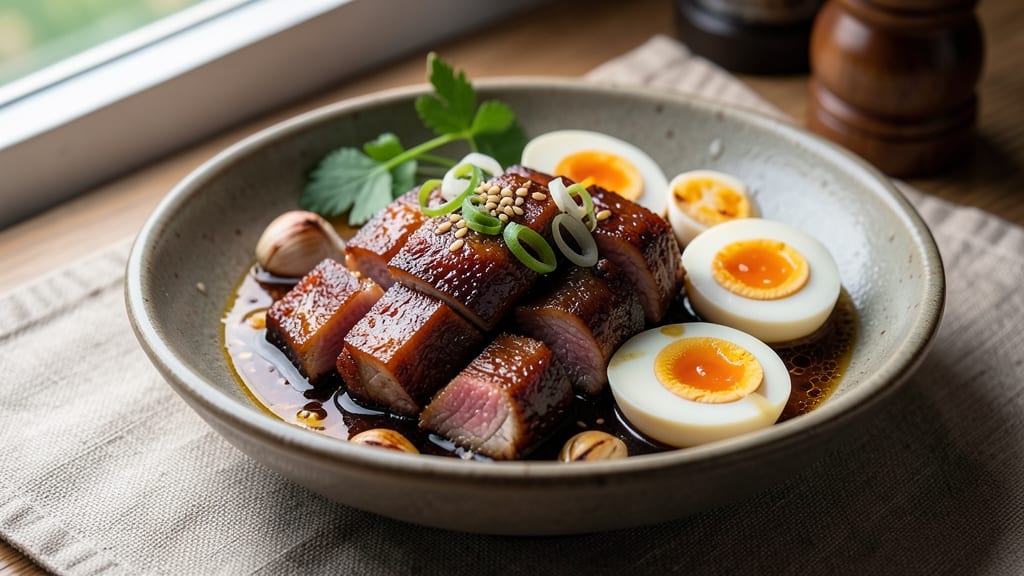
This braised pork belly and eggs Chinese recipe delivers restaurant-quality results with tender, silky pork and perfectly poached eggs. The secret is a slow braise that transforms tough pork belly into melt-in-your-mouth shreds while building rich, savory depth through traditional Chinese techniques.
I've perfected this dish over years of working with pork, ensuring every bite delivers that perfect balance of texture and flavor.
The process begins with marinating the pork belly in a soy-based mixture that develops complex flavors, then braising it low and slow until fork-tender. Meanwhile, the eggs are prepared just right - poached to perfection so the yolks remain runny and golden.
This combination of textures and temperatures creates a dish that's both comforting and exciting. The braising liquid reduces to a glossy, aromatic sauce that coats every bite.
What you'll end up with is a plate of perfectly braised pork belly that shreds easily, paired with eggs that have just-set yolks bursting with flavor. The dish is rich and satisfying yet balanced, making it ideal for a special dinner or family gathering.
The pork absorbs all the savory goodness from the braising liquid, while the eggs add a delicate contrast that keeps each bite interesting.
Serve this dish over steamed jasmine rice and accompany with quick-pickled vegetables for a complete meal that feels both elegant and homey. The technique is straightforward once you understand the key steps, and the results are worth every minute of braising time.
Let's get started on creating this Chinese classic in your own kitchen.
Ingredients for braised pork belly and egg chinese
Pork belly that melts in your mouth plus eggs with golden yolk magic—just these ingredients transform your kitchen into a Chinese restaurant.
| Ingredient | Amount | Notes |
|---|---|---|
| Pork Belly 🥓 | 2 lb | Skin-on, cut into 1-inch cubes |
| Light Soy Sauce 🍶 | ½ cup | Kikkoman preferred for balance |
| Dark Soy Sauce 🍶 | ¼ cup | For deep umami flavor |
| Shaoxing Wine 🍷 | ¼ cup | Or dry sherry in a pinch |
| Brown Sugar 🍯 | ¼ cup | Packed firmly for sweetness |
| Garlic Cloves 🧄 | 8 cloves | Smashed for intense aroma |
| Fresh Ginger 🌿 | 2 tbsp | Grated, not powdered |
| Star Anise 🌟 | 2 whole | Whole pods for infusion |
| Cinnamon Sticks 🍃 | 2 whole | 1-inch pieces for warmth |
| Bay Leaves 🌿 | 2 whole | Fresh if possible |
| Water 💧 | 2 cups | Filtered preferred |
| Large Eggs 🥚 | 4 whole | Room temperature for perfect poach |
| White Vinegar 🍶 | 1 tbsp | For egg poaching clarity |
| Jasmine Rice 🍚 | 1 ½ cups | Uncooked, for serving |
| Sesame Oil 🫒 | 1 tbsp | Toasted for finishing |
The pork belly is non-negotiable here—skin-on for maximum flavor and texture. Look for thick, fatty cuts at Asian markets or your butcher shop. If you can't find Shaoxing wine, dry sherry works perfectly. The star anise and cinnamon sticks are what give this dish its signature depth—don't skip them, even if you're not familiar with them. I always buy mine in bulk from Penzeys because they stay fresh for months. For the brown sugar, pack it firmly into the measuring cup—it makes a difference in the braising liquid's consistency.
No Shaoxing wine? Dry sherry or even mirin will work in a pinch, though Shaoxing has that authentic touch. Fresh ginger is ideal, but powdered works at double the amount if you're in a hurry. For the eggs, room temperature is key—cold eggs won't poach properly. The vinegar helps the whites set while keeping yolks runny. If you're feeling fancy, use duck eggs for even richer yolks, but chicken eggs work perfectly fine. The sesame oil should be toasted—just heat it gently in a small pan until fragrant, then cool before using. And if you're worried about the pork being too fatty, pat it dry before marinating—it absorbs flavors better.
This braised pork keeps beautifully for 4-5 days in the fridge, and the flavors actually deepen over time. The eggs should be poached fresh, but you can prep the pork ahead and reheat gently. For serving, steam the jasmine rice just before plating—it stays fluffier longer. Store the braising liquid separately if you want to use it for another dish—it's liquid gold. And if you have leftovers, freeze portions of the pork for up to 3 months. The sesame oil should be stored in a cool, dark place—it loses its flavor when exposed to light.
Why You'll Love This Recipe
- One-Pot Magic: I swear by this dish when I’m too tired to wash pots—just sear the pork belly, toss in the soy sauces and Shaoxing wine, then let it simmer. The eggs slide right into the pan at the end, soaking up all that sticky, caramelized goodness without extra effort.
- Umami Bomb: That combo of light and dark soy sauce? Chef’s kiss. The dark soy gives it this deep, almost smoky richness, while the Shaoxing wine cuts through with bright, nutty notes. Add the brown sugar at the end, and suddenly you’ve got a dish that’s sweet, salty, and deeply satisfying—like a hug in a bowl.
- Leftovers That Don’t Suck: Between us, this recipe actually improves the next day. The pork belly gets even more tender, and the eggs reheat like a dream (microwave or skillet, no judgment). I make a double batch on Sundays and eat it for lunch all week—no sad, dry reheats here.
- Budget Luxe: Pork belly feels fancy, but this recipe stretches it like a pro. A single slab feeds four, and the soy sauces and wine add depth without breaking the bank. Honestly, it’s the kind of dish that makes me feel like I’m ordering takeout—except I’m the one who made it, and for way cheaper.
Step-by-step instructions for braised pork belly and eggs
Transform tough pork belly into melt-in-your-mouth shreds with this foolproof braising method.
Prepare the Pork Belly for Braising
Start by cutting the 2 lb pork belly into 1-inch cubes, leaving the skin on. This size ensures even cooking and maximum flavor absorption. Place the pork cubes in a large pot and add the 2 cups water, 0.5 cup light soy sauce, 0.25 cup dark soy sauce, 0.25 cup Shaoxing wine, 0.25 cup packed brown sugar, 8 smashed garlic cloves, 2 tbsp grated fresh ginger, 2 whole star anise, 2 whole cinnamon sticks, and 2 whole bay leaves. The water should just cover the pork—if not, add a splash more.
Bring everything to a boil over medium-high heat, then immediately reduce to a gentle simmer. You'll see bubbles break the surface, but the liquid shouldn't be rolling. This simmer is crucial—it prevents the pork from toughening. Let it cook uncovered for 45 minutes, stirring occasionally to prevent sticking. The pork will start to release its fat and render, creating a fragrant broth.
Braise Until Fork-Tender
After the initial 45 minutes, the pork should be tenderizing but not yet falling apart. This is where patience pays off. Cover the pot with a tight-fitting lid and continue simmering on low heat for 2-2.5 hours. The pork is done when it shreds easily with two forks—this usually happens around the 2-hour mark, but timing depends on your stove's heat consistency.
Here's the thing—I know it's tempting to peek, but every time you lift that lid, you lose heat and moisture. Instead, trust the process. The pork will develop deep, rich flavors and a silky texture. If the liquid reduces too much before the pork is tender, add 2-3 tablespoons of water to maintain a gentle simmer. The skin should be crispy and golden when you're done.
Poach the Eggs to Perfection
While the pork braises, prepare the eggs. Bring a small pot of water to a gentle simmer—not a rolling boil—and add the 1 tablespoon white vinegar. This lowers the water's pH, helping the whites set more cleanly. Crack the 4 large eggs into small bowls or ramekins, then carefully slide them into the simmering water. Poach for 3-4 minutes for runny yolks or 4-5 minutes for firmer yolks. You'll know they're ready when the whites are set but the yolks are still vibrant.
Use a slotted spoon to remove the eggs and drain them briefly on paper towels. The key here is timing—overcooked eggs turn rubbery, and undercooked ones stay too liquidy. I like mine with a slightly wobbly yolk so the first bite is pure, creamy magic. Keep the poached eggs warm in a bowl of warm water until ready to serve.
Finish and Serve
Once the pork is fork-tender, use tongs to transfer it to a plate, leaving the braising liquid behind. Shred the pork with two forks and return it to the pot with the liquid. Stir in the 1 tablespoon toasted sesame oil and simmer for another 2-3 minutes to infuse the flavors. The pork should be coated in a glossy, caramelized sauce with a perfect balance of sweet, salty, and umami.
Serve the shredded pork over 1.5 cups cooked jasmine rice, topped with the poached eggs. The contrast of silky pork, creamy yolks, and fragrant rice is what makes this dish unforgettable. Garnish with extra sesame oil if you like, and enjoy immediately—this dish tastes best fresh off the stove.
Pro Tips For Making Braised Pork Belly And Egg Chinese
- Parboil the Belly: Drop the pork belly into boiling water for 3–4 minutes first—yes, even if it’s thick. This step prevents the meat from curling up like a sad taco when it hits the braise later. I learned this the hard way after watching a slab of belly turn into a lumpy mess in my pot.
- Use Dark Soy First: Toss the pork belly in dark soy sauce before any other seasoning—it’s your secret weapon for color and depth. The caramelization happens faster this way, and you’ll get that glossy, restaurant-worthy finish without burning the sauce. (Pro move: Add a splash of water to deglaze the pan after searing.)
- Don’t Rush the Wine: Let the Shaoxing wine simmer for 2 full minutes after adding it—no skimming, no rushing. This step actually reduces the alcohol and lets the flavor meld with the pork. I used to pour it in and immediately dump in the soy sauce, and the dish always tasted flat. Two minutes changes everything.
- Control the Sugar: Add brown sugar last and stir just until it dissolves—no more. Too much heat turns it into a sticky glaze that clogs the pork’s texture. A teaspoon is enough; it’s not about sweetness, it’s about balancing the salty-savory punch. (And skip the honey—it’s not the same.)
Troubleshooting this recipe
Pork Too Tough?
If your pork belly isn't shredding easily after 2 hours, it likely needs more time. The key is low-and-slow cooking—never rush it. I've seen home cooks try to speed things up by increasing heat, but that makes the meat tough.
Instead, add 25-30 minutes and check again. For extra insurance, add 1 extra cinnamon stick—it helps tenderize collagen. 💪
Eggs Overcooked?
Poached eggs gone rubbery? Your water was probably too hot. Keep it at a gentle simmer (tiny bubbles at the bottom) and never a rolling boil. For extra control, use an ice bath: place a small bowl of ice water in your poaching pot to stabilize temperature.
Also, make sure your eggs are room temperature—cold eggs take longer to set.
Sauce Too Thin?
A watery braising liquid means you need to reduce it more. After the pork is tender, remove the meat and simmer the liquid uncovered on medium-high heat for 10-15 minutes. Stir occasionally to prevent scorching.
For extra thickness, mash 1-2 garlic cloves into the sauce at the end—they release starches that help bind it. If it's still too thin, reduce by another 5 minutes.
Skin Not Crispy?
The skin should be golden and crackling, but if it's pale or soft, you likely didn't render enough fat. After braising, transfer the pork to a baking sheet and broil on high for 3-4 minutes.
Watch closely—it burns fast! For even better results, pat the skin dry before braising and sear it in a hot pan for 2 minutes per side before starting the braise. 🔥
Flavor Too Mild?
Weak umami? Boost your braising liquid with 1 extra tablespoon dark soy sauce. For depth, add ½ teaspoon white pepper. I also recommend toasting the star anise and cinnamon sticks in a dry pan for 30 seconds before adding them to the pot—this intensifies their aroma.
If you're short on time, use 1 teaspoon fish sauce.
Egg Whites Too Cloudy?
Cloudy egg whites usually mean the water wasn't acidic enough. Double-check your vinegar amount. For extra clarity, add ½ teaspoon salt. Also, make sure your eggs are very fresh—older eggs poach better because their whites are firmer.
If you're still having issues, try adding 1 teaspoon cornstarch.
Nutrition facts
Frequently asked questions
Can I substitute pork belly with another cut of pork?
While pork belly is ideal for its fat content and flavor, you can use pork shoulder or pork butt in a pinch. These cuts will be slightly leaner, so add 1 extra tablespoon oil to the braising liquid. The cooking time remains similar, but monitor for tenderness—shoulder may need 15-20 minutes longer to reach the same texture.
How do I make this dish vegetarian?
Replace the pork belly with extra-firm tofu or mushrooms (like shiitake) for umami. Braise the tofu in the same soy-wine-sugar mixture for 1.5 hours until tender. For eggs, use silken tofu marinated in soy sauce or vegan egg substitutes poached in the same way. The dish will have a different texture but still deliver rich, savory flavors.
Can I make this dish ahead of time?
The braised pork belly keeps beautifully in the fridge for 4-5 days and actually tastes better as flavors meld. Reheat gently in the braising liquid over low heat until warmed through. The eggs should be poached fresh, but you can prep the pork ahead and reheat it separately. For make-ahead convenience, cook the rice just before serving.
What's the best way to serve this dish?
This dish shines when served over steamed jasmine rice with a side of quick-pickled vegetables (like cucumbers or carrots) for acidity. Garnish with scallions and a drizzle of toasted sesame oil. For extra drama, serve the eggs on top of the pork and rice, letting the golden yolk burst when you cut in.
Why does the recipe call for both light and dark soy sauce?
Light soy sauce adds salty depth while dark soy sauce provides color and caramelized sweetness. Together they create the perfect balance of umami and richness. Think of light soy as the foundation and dark soy as the flavor enhancer—it's what gives the dish that signature glossy, caramelized finish.