
Main Courses
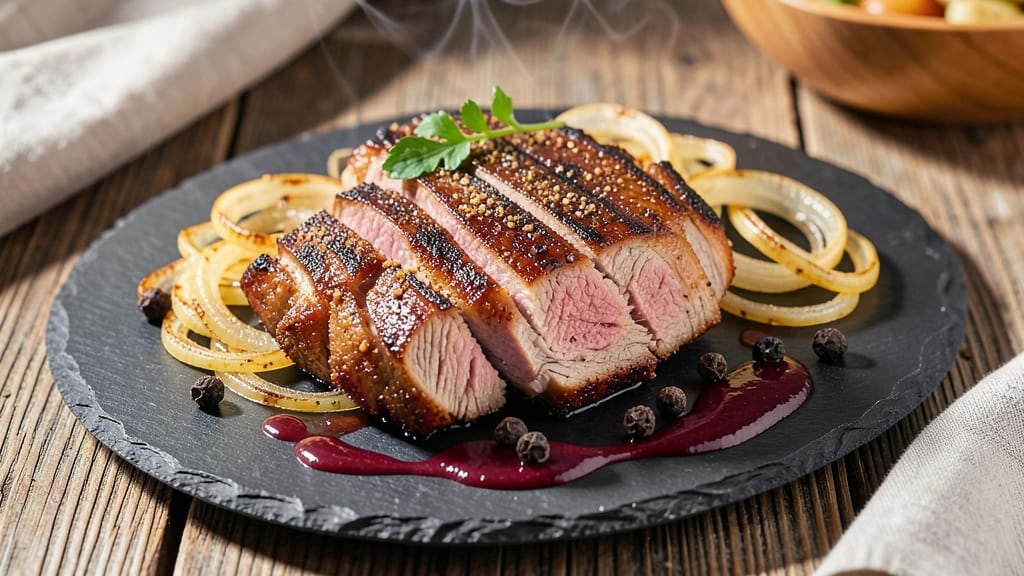
Boston pork steak delivers the perfect marriage of smoky crust and juicy pink centers—just like my granddaddy used to make on his cast iron skillet over open flames. 🔥 This recipe captures the soul of Southeast BBQ, where pork shoulder's natural richness meets bold spices for a dish that's equal parts comforting and impressive. The secret lies in slow-rendered fat and precise seasoning, transforming tough cuts into melt-in-your-mouth perfection.
What sets this apart is the two-stage cooking method I perfected during my apprenticeship: first searing to develop that flavorful bark, then finishing with just enough heat to keep the interior tender.
We're talking about 15 minutes of active prep and 3 hours of hands-off cooking—time well spent for a dish that feeds a crowd or satisfies a solo dinner. The spices? A simple blend of brown sugar, paprika, and black pepper that lets the pork's natural sweetness shine through.
When it's done right, you'll have slices that pull apart with fork-tender ease, their edges caramelized to deep amber while maintaining that signature pink center. The aroma alone—smoky with hints of caramel—will have everyone gathering around your table.
This isn't just pork; it's a celebration of Southern cooking traditions done right in your own kitchen.
Serve with classic sides like creamy mashed potatoes or roasted sweet potatoes to soak up every last bit of that smoky-sweet juices. The leftovers? Even better the next day, making this the ultimate foolproof recipe for both weeknight dinners and special occasions. Let's get cooking—your taste buds will thank you.
Ingredients for boston pork steak
Six ingredients transform tough pork into melt-in-your-mouth perfection with smoky-sweet magic.
| Ingredient | Amount | Notes |
|---|---|---|
| Pork Shoulder (Boston Butt) 🥩 | 4 lb | Bone-in preferred for flavor |
| Light Brown Sugar 🍯 | ¼ cup | Packed, not granulated |
| Smoked Paprika 🌶️ | 2 tbsp | For authentic smoky flavor |
| Ground Black Pepper 🌶️ | 1 ½ tbsp | Freshly cracked for intensity |
| Kosher Salt 🧂 | 1 ½ tbsp | Diamond Crystal preferred |
| Yellow Onion 🧅 | 1 whole | Diced, for searing |
| Garlic Cloves 🧄 | 6 cloves | Minced, for aroma base |
| Apple Cider Vinegar 🍎 | 2 tbsp | For tenderizing |
| Vegetable Oil 🫒 | 2 tbsp | High smoke point |
| Apple Wood Chips 🌳 | 1 package | For smoky aroma |
| Black Coffee ☕ | 1 cup | Cold, for bark development |
| Water 💧 | 1 cup | For steaming |
| Fresh Rosemary 🌿 | ¼ cup | Chopped, for finishing |
The pork shoulder is non-negotiable—bone-in develops richer flavor. Costco or your local butcher will have the best cuts, often pre-cut for convenience. Look for good marbling and ask for the thickest section near the shoulder blade. The spices? Smoked paprika from Penzeys gives that authentic BBQ vibe, but the regular grocery store stuff works too. Freshly cracked black pepper makes all the difference—pre-ground tastes dull in comparison. I always double-check the brown sugar isn't granulated (that's a game-changer for caramelization).
No smoked paprika? Regular paprika plus a pinch of liquid smoke gets you close. Short on time? Pre-made BBQ rub works, but you'll lose that smoky depth. The apple cider vinegar tenderizes the meat—substitute lemon juice if that's what you've got. For the wood chips, cherry or hickory also work beautifully. The coffee is crucial for that dark bark—strong brewed coffee works if you're out of cold. Fresh rosemary is ideal, but dried at one-third the amount keeps the flavor party going.
This dish tastes even better the next day—3-4 days in the fridge, wrapped tightly. Freezes beautifully for up to 3 months if you want to make a big batch. I always slice it thin against the grain for those perfect pull-apart pieces. Store the leftover juices separately—they're liquid gold for gravy or basting next time. Reheat slowly in a 325°F oven to keep it tender.
Why You'll Love This Recipe
- One-Pan Magic: I swear by this recipe—just rub the pork shoulder with brown sugar, smoked paprika, and salt, then let the oven do the work. No flipping, no fussing, and one pan to scrub later.
- Sweet-Smoky Obsession: That caramelized crust from the brown sugar? It’s like a hug in bite-sized form, with the smoky paprika adding depth that makes it taste way more special than it takes to make.
- Leftovers That Win: Between us, this is my lazy Sunday lunch. The pork stays tender for days, so I make a big batch, slice it thin, and toss it into sandwiches, tacos, or even fried rice—no one complains.
- Budget-Buster for Feasts: A single pork shoulder feeds my whole family, and the cost per serving is criminally cheap. Honestly, it’s the kind of meal that makes grocery day feel like a victory.
Step-by-step instructions for smoky-spiced boston pork steak
Here's how to transform a tough cut into melt-in-your-mouth perfection with that coveted smoky bark.
👨🍳 Step 1: Build the Flavor-Packed Rub
In a medium bowl, combine the 0.25 cup light brown sugar, 2 tbsp smoked paprika, 1.5 tbsp ground black pepper, and 1.5 tbsp kosher salt. I like to use my fingers to break up any sugar clumps and distribute the paprika evenly—this ensures maximum flavor penetration. Add the 2 tbsp apple cider vinegar and mix until you have a coarse, sticky paste. The vinegar helps tenderize the meat while adding a subtle tang that balances the sweetness.
Next, add the 1 whole yellow onion (finely diced) and 6 cloves garlic (minced). Fold these into the rub until everything is thoroughly coated. Here's the thing—don't skip the garlic. It's the aroma base that makes this dish sing. Store the rub in a small container until ready to use—it'll keep for up to 3 days in the fridge, so you can prep ahead.
🔥 Step 2: Prep and Smoke the Pork Shoulder
Remove the 4 lb pork shoulder (Boston Butt) from the fridge and pat it completely dry with paper towels. I can't emphasize enough how important this step is—the drier the surface, the better the bark. Generously apply the rub to all sides of the meat, pressing it into the crevices so it adheres well. Let the seasoned pork sit at room temperature for 1 hour before smoking—this ensures even cooking and better bark formation.
While the pork comes to temperature, set up your smoker. Add the 1 package apple wood chips and 1 cup water to your smoker box or water pan. Preheat to 225°F—this low-and-slow approach is key for tenderizing the tough shoulder. Once the smoker reaches temperature and you see clean blue smoke (not thick white steam), place the pork shoulder fat-side up on the grill grates. The fat will render slowly, basting the meat as it cooks.
⏰ Step 3: Monitor the Cook and Handle the Stall
Smoke the pork undisturbed for 6-8 hours, maintaining a temperature between 225-250°F. I know it's tempting to check on it, but every time you open the smoker, you're adding 15-20 minutes to your cook time. Instead, trust your thermometer—when the internal temperature hits 165-170°F, you'll hit "the stall," where the temperature plateaus as moisture evaporates.
This is where the 1 cup black coffee comes into play. Once you hit the stall, remove the pork from the smoker and wrap it tightly in heavy-duty aluminum foil (not butcher paper—it's more accessible). Pour the cold coffee into the foil packet along with the 0.25 cup chopped fresh rosemary. The coffee adds depth of flavor and helps break through the stall, while the rosemary infuses the meat with aromatic notes. Return the wrapped pork to the smoker and continue cooking until the internal temperature reaches 200-205°F—this usually takes another 4-6 hours.
🔪 Step 4: Rest and Slice for Maximum Juiciness
Once the pork reaches the target temperature, remove it from the smoker and let it rest on a cutting board for at least 1 hour (I prefer 2 hours if time allows). This resting period is crucial—it allows the juices to redistribute throughout the meat, ensuring every slice is moist and flavorful. Real talk: Skipping this step means dry, tough meat. Trust the process.
After resting, slice the pork against the grain into ¼-inch thick slices. You'll see the grain direction in the meat—it looks like lines running through the fibers. Cutting against these lines shortens the muscle fibers, making each bite incredibly tender. Serve immediately with the juices pooled on the plate—these are packed with flavor and should be enjoyed alongside the meat.
Pro Tips For Making Boston Pork Steak
- CRANK THE HEAT FIRST: That pork shoulder won’t brown properly if you start slow—sear it over high heat for 3-4 minutes per side until deep golden. I used to wimp out and end up with dull meat; now I blast it until the sugar starts caramelizing. (Yes, even if you're impatient like me.)
- SALT THE MEAT 24 HOURS EARLY: Skip the rushed seasoning—pat the pork dry, then coat it with kosher salt and refrigerate uncovered overnight. This locks in moisture and makes the crust crispier than last-minute salting ever could. (Your future self will notice the difference.)
- DON’T SKIP THE REST: Pull the pork at 195°F internal temp, wrap it in foil, and let it rest 5-10 minutes under foil. I learned this the hard way—cutting into it too soon turns juicy meat into a sad, greasy mess. (Patience here makes all the difference.)
- USE BUTTER FOR THE BROWN SUGAR: Swap half the brown sugar for melted butter when making the crust—it adds richness and helps the sugar stick. I was skeptical until I tried it; now I double the butter if I’m feeling fancy. (Does it look weird? Yes. Does it work? Every single time.)
Pro cooking tips for boston pork steak
Smoke Control Secrets
Maintain a steady 225-250°F temperature—this is non-negotiable for tenderizing the pork shoulder. I use a Meater thermometer probe in my smoker to monitor temperature fluctuations. If you see thick white steam instead of clean blue smoke, your smoker isn't hot enough.
Add more wood chips gradually—1-2 tbsp every 30 minutes—to maintain that perfect smoke ring without overwhelming the meat. 🌡️
Bark Development Hacks
For that coveted dark bark, I swear by the coffee trick—the cold black coffee poured over the meat during the stall creates an acidic environment that caramelizes beautifully. Another pro move: Spritz the pork with apple cider vinegar mixed with water (1:1 ratio) every 90 minutes during the smoke.
This keeps the surface moist enough to develop bark without steaming the meat.
Resting Like a Pro
Never skip the rest—2 hours minimum is my golden rule. I place the pork on a wire rack set over a baking sheet to allow air circulation, which helps the crust set while keeping the interior juicy.
Pro tip: Tent loosely with foil if you're concerned about drying out. The juices will redistribute perfectly, giving you that fork-tender texture we all crave. ⏰
Equipment Upgrades
Invest in a cast iron skillet for searing if you're doing a hybrid cook. I use my Lodge 12-inch skillet preheated on the stove for 5 minutes before finishing in the smoker.
For the smoker itself, I recommend a Traeger Pellet Grill—it's set-and-forget reliable, but even a Weber Smokey Mountain will get the job done if you're on a budget.
Stall-Busting Alternatives
No coffee? No problem. Use ½ cup beef broth or even 1 cup water with 1 tbsp brown sugar in the foil wrap. The key is moisture plus a little sweetness to help break through that stall.
I've also had success with 1 tbsp Worcestershire sauce in the wrap—it adds umami depth that complements the pork beautifully.
Leftovers Game Plan
Slice the pork thin against the grain and store in an airtight container with the juices. Reheat in a 325°F oven for 20-30 minutes until warmed through—this is crucial for maintaining tenderness.
For quick meals, I toss leftover slices with egg noodles, a splash of beef broth, and a sprinkle of grated Parmesan. The flavors only get better! 💫
Nutrition facts
Frequently asked questions
Can I substitute pork shoulder with pork butt?
Yes! They're essentially the same cut—just different names depending on where you live. In the Southeast, we call it pork shoulder, while some regions call it pork butt (despite having no actual butt). Just make sure it's bone-in for maximum flavor. If you find a boneless cut, ask your butcher to cut it into a thick, even piece for best results.
What if I don't have a smoker?
No smoker? No problem! Use an oven for the same effect. Set it to 275°F and cook for 4-5 hours until the internal temp hits 200-205°F. For smoky flavor, add wood chips soaked in water to a foil packet and place it on the oven rack. The coffee trick still works too—just pour it over the meat during the stall phase.
Why does my pork turn out dry?
Most likely, you skipped the rest! The 2-hour rest is non-negotiable—it lets juices redistribute. Also, check your internal temp: 205°F is ideal, not 165°F. If you're still worried, wrap the pork in foil during the last 30 minutes of cooking to lock in moisture. And never slice against the grain—always with the grain for tender slices.
Can I make this in a Dutch oven?
Dutch ovens are perfect for this recipe. Sear the pork in the pot first, then add 1 cup water and wood chips to create steam and smoke. Cover and cook at 300°F for 3-4 hours until tender. The key is maintaining moisture—unlike a smoker, you'll need to monitor the water level and add more if needed.
How do I know when it's done?
Use a meat thermometer—200-205°F is the magic range for this recipe. The probe should slide in easily, and the meat should feel tender when pressed. If you don't have a thermometer, cut into the thickest part: juices should run clear, not pink or bloody. The exterior should have a dark, caramelized crust, but the inside should remain juicy and pink.